
1/ Russian warbloggers are furious about the catastrophic defeat of a Russian armoured column in the Kursk region, reportedly causing hundreds of casualties. They are bitterly critical of the commanders responsible. ⬇️
https://x.com/JimmySecUK/status/1891122148174856261
2/ The failed assault happened near the hamlet of Nikolskiy, near Malaya Loknya in Russia's Kursk region. According to the Russian 'North Channel' Telegram channel, Nikolskiy was mostly recaptured by North Korean forces, who then lost it in what may have been a failed rotation. 
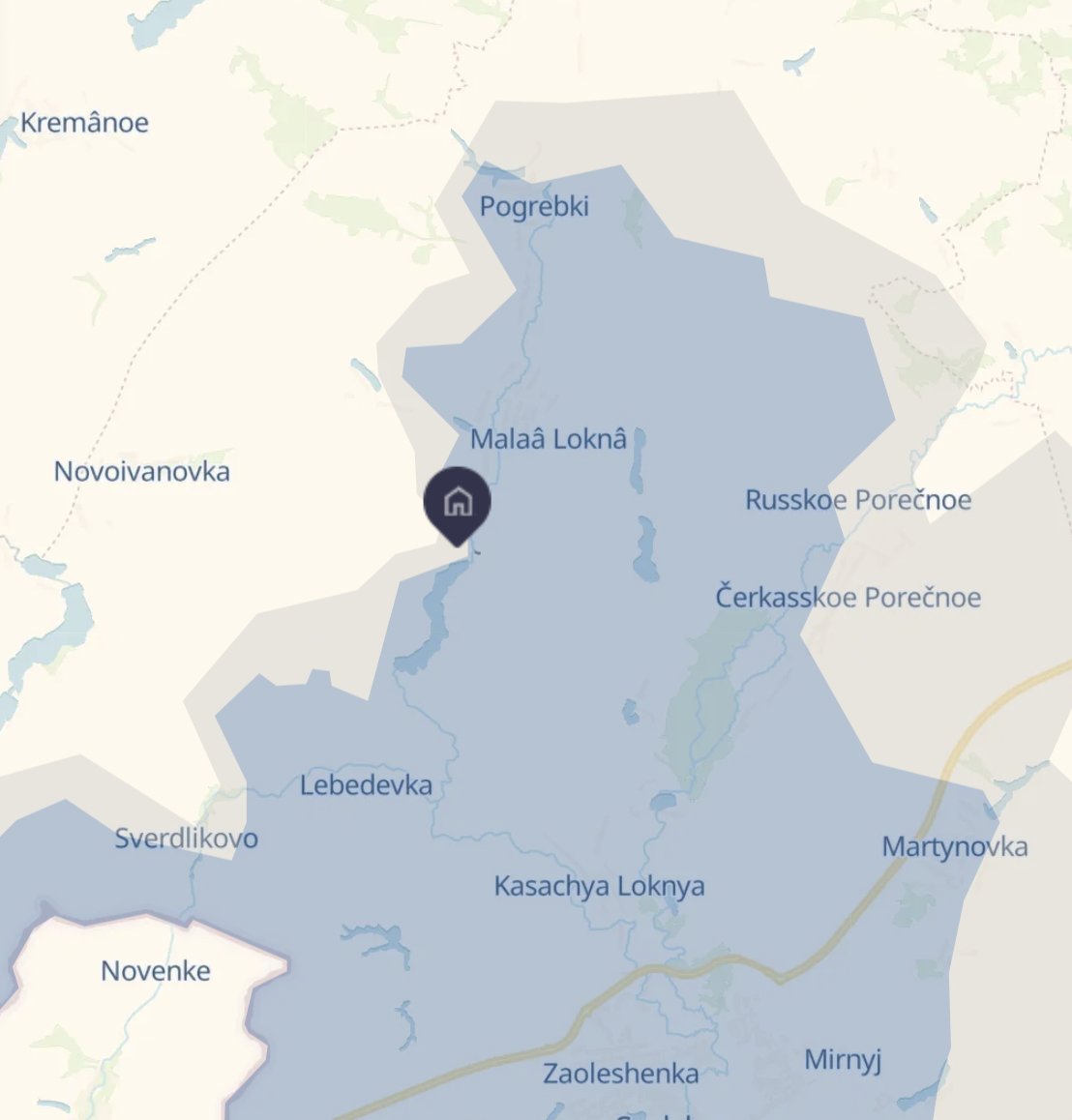
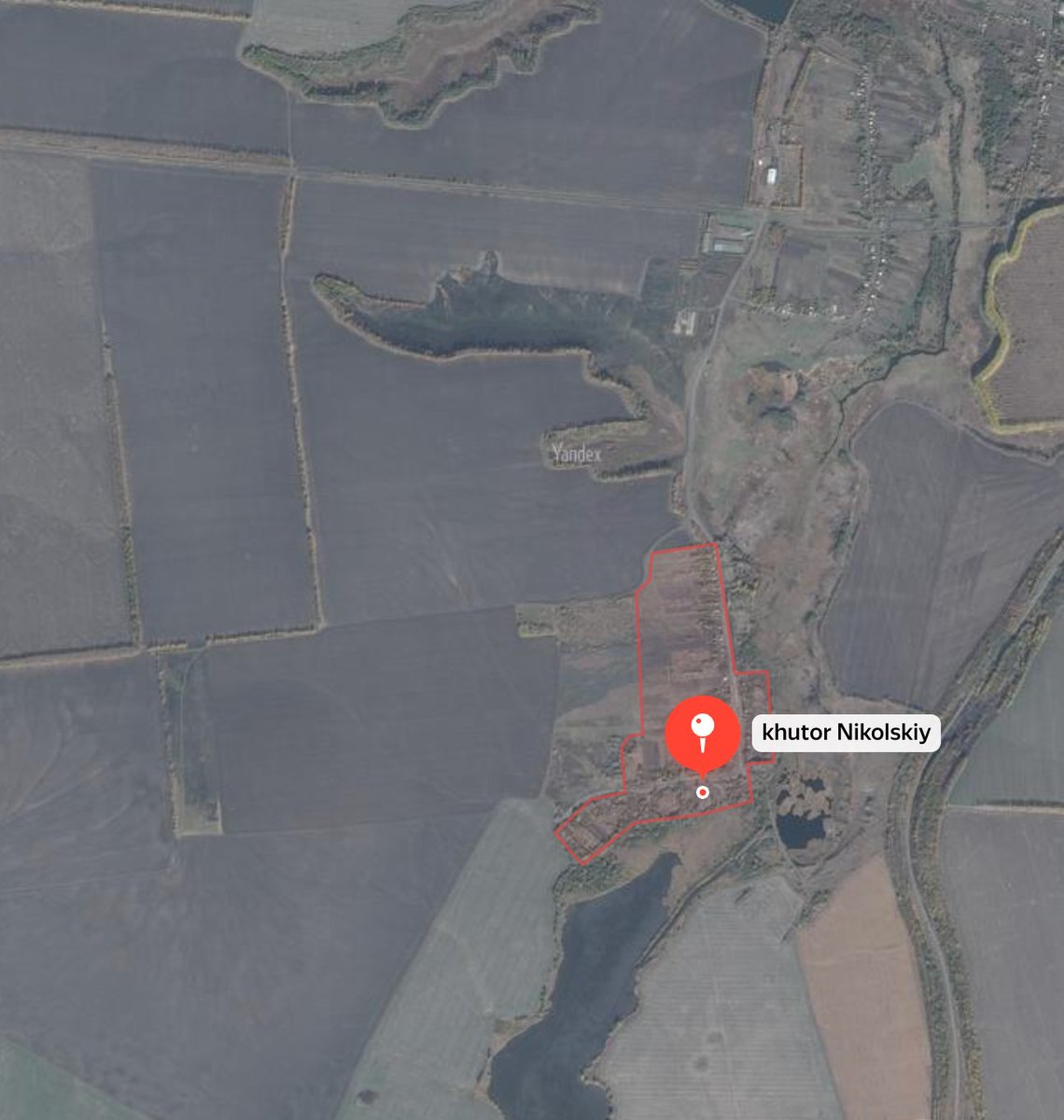
3/ North Channel wrote on 15 February: "Our allies were one step away from liberating the Nikolskiy farmstead in the Malaya Loknya area. As of yesterday evening, they controlled 80% of the settlement under intense fire pressure."
4/ "They waited for reinforcements from the [Russian] 155th Brigade for several days, but they never came (hello, [155th Brigade commander Colonel Mikhail] Gudkov).
This morning, North Korean stormtroopers began to slowly, in organised groups, leave Nikolskiy."
This morning, North Korean stormtroopers began to slowly, in organised groups, leave Nikolskiy."
5/ The channel asks why there was a "betrayal" of the North Koreans which "turned out ugly in front of our allies."
It's unclear why the Russians didn't reinforce them, but it may either have been a botched rotation or (as the channel goes on to suggest) a deliberate ploy.
It's unclear why the Russians didn't reinforce them, but it may either have been a botched rotation or (as the channel goes on to suggest) a deliberate ploy.
6/ The following day, Colonel Gudkov ordered an assault by T-80BV tanks and BTR-82A APCs across open fields. The column drove into a minefield and was swarmed by Ukrainian drones, taking heavy losses. The infantry was forced to dismount and was then largely wiped out.
7/ 'North Channel' writes: "There's a fucking shit going on near Nikolskiy right now. The 155th column, under red fucking flags like on parade, went head-on into a swarm of Ukrainian drones on a mined road!!!!"
8/ "Don't rub your eyes, we wrote it right - exactly under the red flags of Victory and exactly along the mined road. We'll have more details later. Praying for the lads who are in the fields now!
9/ "[Commanders] Gudkov, Tatarchenko, Solodchuk - you are complete bastards! Two out of three are hohols [Ukrainians]. These are not planning errors - this is betrayal and murder!"
10/ The channel says "the brilliant plan was to attack in two waves with a pause: first the allies wear down the enemy defence, the Ukies lose their vigilance due to the supposed retreat of the assault groups, and then the 155th heroically breaks through the weakened resistance."
11/ "On paper, it does look pretty good. It is obvious that they tried to save the personnel of our brigade. albeit at the expense of cynically using allies as bait.
12/ "But apparently in the rapture of their tactical genius, Gudkov and [Igor] Tatarchenko took a huge bolt on all other aspects of planning the operation.
13/ "The second wave came forward not after a short pause, but a full day later. During this time, those among the Ukrainians who were tired had time to either rest or be replaced by fresh fighters.
14/ "The assault was launched in broad daylight. And in clear weather. So the enemy saw you still fucking knows where, and had 15-20 minutes to think about how he should react.
15/ "It is somehow inconvenient to write about the lack of engineering reconnaissance on the main offensive road. A couple of months ago the 810th went onto the mines near Pogrebki in the same way. Didn't those losses teach anyone anything???
16/ "In the end, our column was dispersed in about 40 minutes.
The Ukrainians probably threw all their drones into the battle when they saw such a tasty target.
The Ukrainians probably threw all their drones into the battle when they saw such a tasty target.
17/ "It's disgusting to imagine how they then hunted with a sly grin for a couple dozen of our infantrymen who had to parachute into the middle of an open field.
18/ "It makes sense to reinvent the wheel when there are no questions about the basics. All these tactical manoeuvres are worthless when we can't provide the basics.
19/ "Excellent students in their second year at a military academy plan more competently, but here everyone wants to be [the 19th century generals] Kutuzov-Suvorov.
20/ "A week ago, the leadership of the "North" group of forces removed [Colonel Pavel] Filyaev from the post of brigade commander of the 11th Airborne Assault Brigade. It was the right move, but Filyaev was not the only one of his kind in our direction.
21/ "If we gather all the power of the northerners under adequate command, the enemy will not be pleased."
After the failure of the assault, 'North Channel' writes, blame is being put on the now-deceased drivers of the armoured vehicles:
After the failure of the assault, 'North Channel' writes, blame is being put on the now-deceased drivers of the armoured vehicles:
22/ "They were driving too slowly. There is no longer any way to punish them, the senior officers will get it for poor training of personnel.
They are now starting to make excuses that the electronic warfare worked and everything was well organised – but nothing good happened.
They are now starting to make excuses that the electronic warfare worked and everything was well organised – but nothing good happened.
23/ "Almost all the [Ukrainian] FPVs flew in and did their job. It is quite possible that the attack would have been successful if it had been carried out a day earlier.
24/ "Red flags on the vehicles. By and large, there is nothing terrible about this. Well, in the sense that it is stupid to write that the flags were a giveaway factor. A large armoured vehicle in an open snow field is in itself a pretty good giveaway object.

25/ "There is a suspicion that these flags were some kind of compliment to the North Korean allies, like, well, you and I are of the same blood. But this is an unfounded assumption.
26/ "We will not write about the number of the dead. Some of the fighters were later hit by air drops, some ran away to the treelines. At a temperature of minus 15, frostbite is not the worst option, everything can be much worse."
27/ 'Military Informant' considers the wider lessons from this fiasco:
28/ "With the current dominance of drones over the battlefield, even a relatively well-prepared attack with anti-mine trawls and electronic warfare systems has every chance of failing simply because several FPV drones at different frequencies will fly at each armoured unit,…
29/ …breaking through the jamming. Without a systemic solution to the problem of drones in the sky and continuous minefields on the ground, such attacks, in most cases, will end either unsuccessfully or with heavy losses, as they ended for the Ukrainian Armed Forces…
30/ …during their recent counterattacks near Sudzha." /end
Sources:
🔹 t.me/severnnyi/3468
🔹 t.me/severnnyi/3474
🔹 t.me/severnnyi/3475
🔹 t.me/severnnyi/3478
🔹 t.me/severnnyi/3482
🔹 t.me/milinfolive/14…
Sources:
🔹 t.me/severnnyi/3468
🔹 t.me/severnnyi/3474
🔹 t.me/severnnyi/3475
🔹 t.me/severnnyi/3478
🔹 t.me/severnnyi/3482
🔹 t.me/milinfolive/14…
• • •
Missing some Tweet in this thread? You can try to
force a refresh






