1/ A young Russian soldier who has fled to France has spoken of life as a stormtrooper. He says that supplies are routinely stolen, almost everyone on combat missions ends up wounded or dead, and those who return uninjured are shot by their own side as suspected deserters. ⬇️ 

2/ Kamil M., who used the call sign 'Virus' while doing his compulsory service in the 15th Motorised Rifle Regiment (military unit 31134), described his military service in an interview with Novaya Gazeta Europa.
3/ Kamil found his compulsory conscript service to be a desultory experience. He was put to work painting the grass green in the spring and removing water with a shovel. He says that "everywhere around there was laziness" and he ended up doing his commander's work for him.
4/ He "had an officer sitting there, playing Dota on his laptop — for clarity, on my laptop, by the way. I was a conscript, an 18-year-old boy at the time — I read and edit the regiment’s combat training plan. I don't have access to secrets, and this is a level 1 secret."
5/ After returning home, he ended up in prison on what he claims were fabricated charges. He got out by signing a contract to fight in Ukraine in a 'Storm V' unit of the 74th Independent Motorised Rifle Brigade (military unit 21005). Unlike many, he received a month's training.
6/ Kamil says that at the front, the officers treated the convict soldiers brutally, corruption and theft were rampant, salaries went unpaid and Ukrainian drones made it almost certain that combat missions would result in the death or injury of almost all the participants.
7/ Nothing was provided to the stormtroopers. They had to buy everything with their own money, including their vehicles and food, or rely on volunteer aid. However, theft in the rear areas was so prevalent that the men usually received little or nothing from Russia.
8/ "Loaves [UAZ-452 vans] are sent to the front. Not a single UAZ loaf ever makes it. The Nivas don't make it. Everything is stolen at the shipping stage and while it's on the way.
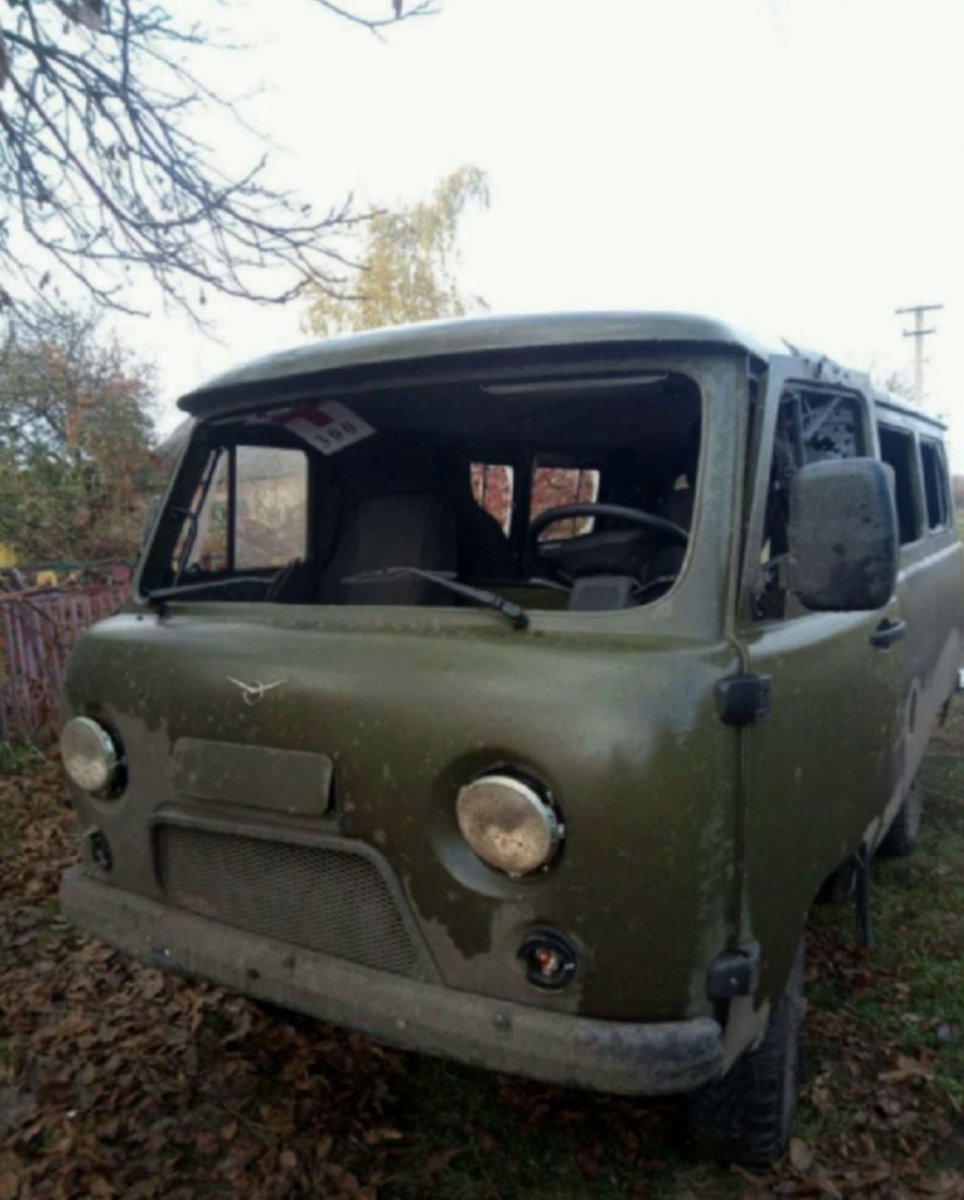
9/ "In one region it's minus five, in another it's minus three, and in a third it's minus two, and there were only ten [cars]." Vehicles are almost immediately destroyed by Ukrainian artillery and drones when they reach the front.
10/ He describes the T0511 road between Ocheretyne and Prohres as a 'road of death', littered with corpses from constant Ukrainian bombardment. Ukrainian drone activity is almost continuous, around the clock.

11/ At the front line, the slightest activity by the Russian soldiers would immediately trigger an attack. This led to draconian punishments for men who inadvertently attracted the attention of drones:
12/ “If a person, roughly speaking, goes out into the field and is noticed by a drone, and there are his own people nearby, his own people will shoot him, because he burned his position and theirs."
13/ According to Kamil, going on an assault is almost guaranteed to result in being wounded. This leads to men who return uninjured coming under suspicion of sitting out the mission – in effect, deserting. They face equally draconian punishments.
14/ "Those who return absolutely healthy, these are the ones who are extinguished. They will find a leg, sit down, turn off the radio and sit, wait. There are a lot of them. They can be zeroed out calmly. This is normal."
15/ Unburied bodies are everywhere around the Russian positions. "At the front I counted a cluster of 200s [dead]. Every 50 metres, maybe 100 metres maximum, the 200s are lying."
16/ Kamil characterises many of the soldiers as either "pseudo-patriots" or men who need money. Some come with the declared intention of dying for their country, which is soon fulfilled.
17/ "There was even one who was in my platoon, he came with the words: “I have come to die.”" He was 65 or 70 years old. He burned alive. He was carrying a five-liter canister of gasoline: a kamikaze drone flew at him."
18/ Soldiers take drugs and drink alcohol to escape the fear and boredom, but this is as likely as not to result in them getting killed.
19/ "Half of them use something there: smoke weed and so on. But you can understand them – when you see so many deaths around, you want to relax anyway, and weed, as far as I understand, helps at least somehow.
20/ "In our platoon, in our company, there were people who died because of alcohol. Back in August, three just died. They found some moonshine, either 10 or 20 liters – and got drunk.
21/ "One comes out and says: "I'm going to shoot everyone now" – and a machine gun burst comes immediately at him, he's 200 at once. A man with a gun and drink – this is really an explosive mixture. In fact, as sad as it may sound, I would rather 'zero' such people."
22/ Kamil says that soldiers very quickly realise the futility of their service. "For the most part, the ideological pumping on the front lines is: do this and you will live."
23/ "After the first, well, at most the second [incoming attack], it dawns on a person that in reality he is fighting simply, well, for nothing."
He found that he was indeed literally fighting for nothing, as the promised salary and bonuses were not paid.
He found that he was indeed literally fighting for nothing, as the promised salary and bonuses were not paid.
24/ "By the way, they didn't pay anything. Nothing at all, if that matters. So they didn't pay anything like 1,000,000.
"That's exactly what they told me, or rather, my parents, the category of payment is not due."
"That's exactly what they told me, or rather, my parents, the category of payment is not due."
25/ There was no point in trying to go to court to get the money that was owed, as the legal proceedings would take longer than the life expectancy of a Russian stormtrooper.
26/ "This is Russia. By the time you sue for these payments, yes, from the budget, your relatives will have already sued for them, that’s it. That is, it will no longer matter to you.
27/ "If you signed a contract, there is a year to litigate – after a year, the person will definitely have no questions. He usually doesn't exist after six months – no questions, no person."
28/ Kamil could not simply walk away, as there were Russian drones watching for deserters. The Russia-Ukraine border is also strictly policed by Russian border guards to prevent Russian deserters slipping across.
29/ Kamil resolved to shoot himself and desert. He carefully shot himself through the fleshy part of his leg, avoiding the bone, and walked a kilometre to an evacuation point. He planned to use some of his injury compensation pay to bribe a doctor to issue an invalid certificate.
30/ However, the authorities at the hospital evidently suspected that something was amiss. They told him that he would be getting no convalescent leave but would be sent straight back to Ukraine with an escort.
31/ "And this escort was supposed to take me first to the unit and then immediately to the front... There would simply be a one-way ticket, there were such, that is, they were sent to the front straight away." Rather than accept this, he deserted, fleeing home to Kazan in a taxi.
32/ For a while, he found himself left in peace. "For four months, not a single call, no search for me… Neither doctors, nor military police, nor the military, nor the command, no one at all." He was subsequently able to leave Russia and apply for asylum in France. /end
• • •
Missing some Tweet in this thread? You can try to
force a refresh