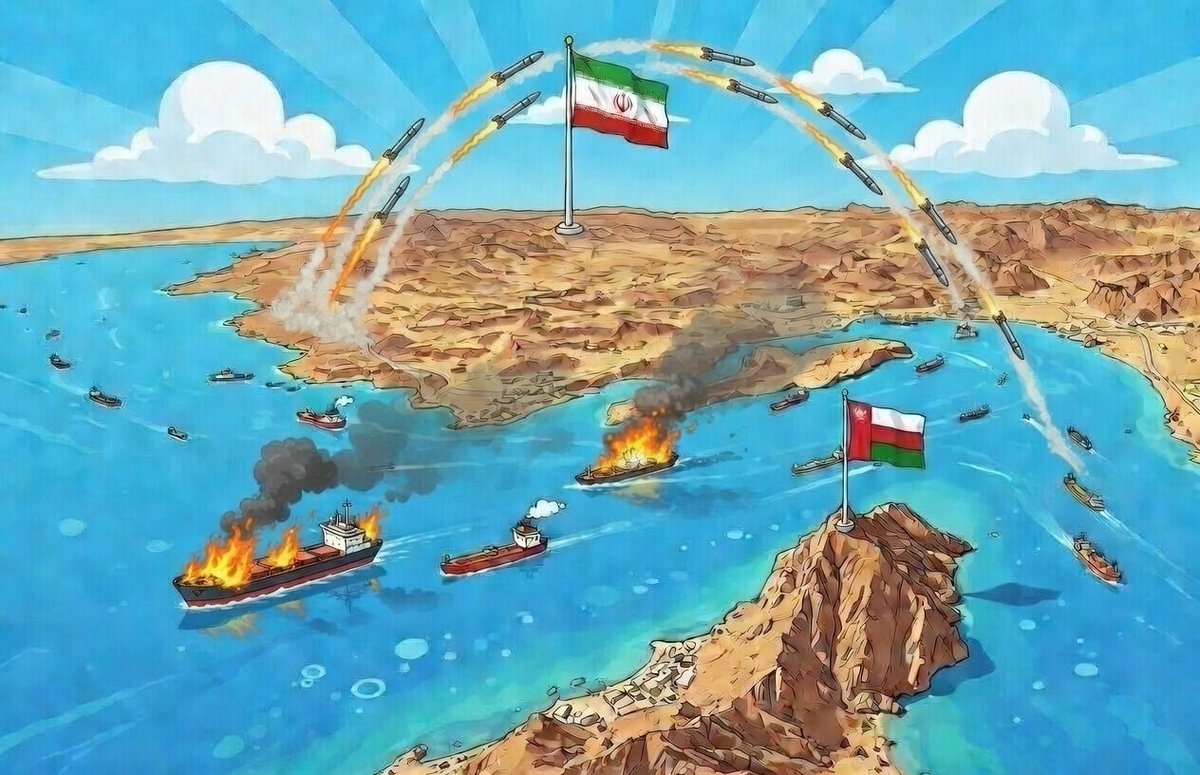
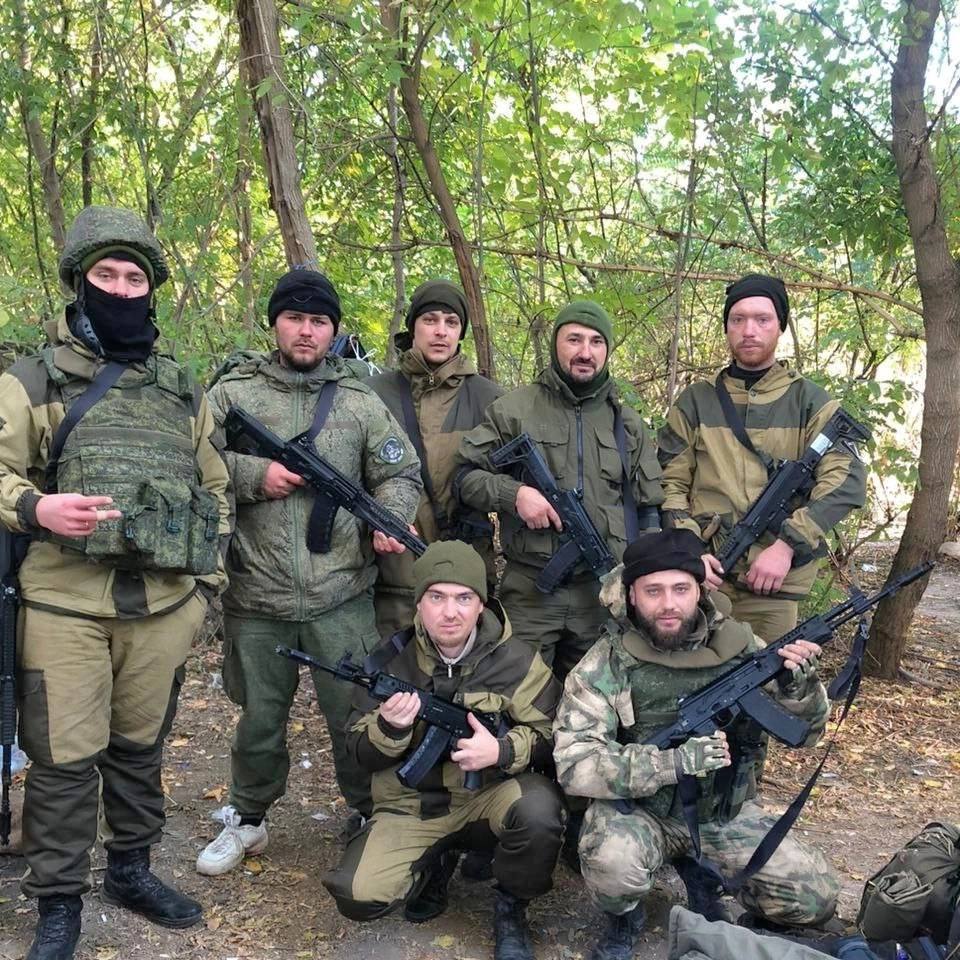
1/ Iran intends to leverage its stranglehold on the Strait of Hormuz to force the US and Gulf Arab states to accept an agreement in which Iran has set "appropriate political and security conditions", in which its security is guaranteed and US bases in the region are closed. ⬇️
2/ Mohammad Bagher Ghalibaf, the Speaker of the Parliament of Iran, has told the London-based Arabic newspaper The New Arab (Al-Araby al-Jadeed) that Iran will keep fighting and "will not return to the conditions that prevailed before the war."
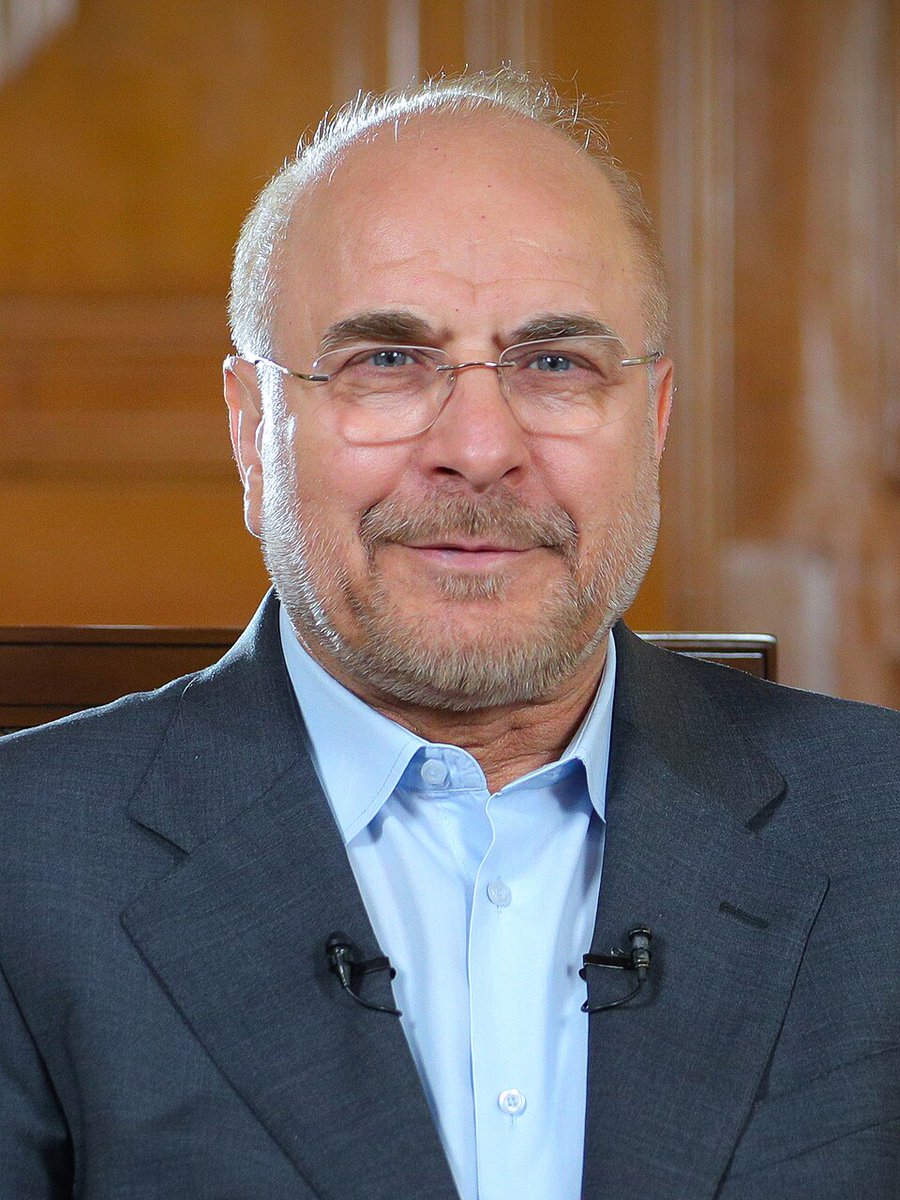
3/ He says that a ceasefire agreement will not be acceptable without guarantees "that war will not resume, not if it gives the enemy an opportunity to fix its problems, such as the destruction of its radars or the shortage of interceptor missiles,…
4/ …only to return and attack us again. We will continue fighting until the enemy genuinely regrets its aggression, and until the appropriate political and security conditions are in place in the world and the region, and the threat and war."
5/ Ghalibaf says that Iran had prepared for a long attritional war, "because we knew we would come under attack. Based on our experience in the previous war, we knew how they would try to impair our operational capabilities. Therefore, we took the necessary precautions."
6/ He claims that "no one believes the American claims about destroying Iran's offensive capabilities anymore."
7/ "We have a sufficient stockpile of missiles and drones, and since this technology is indigenous, we are able to produce them at higher rates and at a much lower cost than the enemy's interceptor missiles."
8/ Ghalibaf contrasts the newly selected Supreme Leader, Mojtaba Khamenei, to the deposed Bashar al-Assad and the abducted Nicolás Maduro: "Iran is not like Syria, where the leader abandons the country, nor like Venezuela, which succumbs to force."
9/ "All the people, from the Supreme Leader of the Revolution to officials and ordinary citizens, stand united in defence of Iran's dignity, independence, and territorial integrity. A nation that relies on divine providence cannot be defeated."
10/ He blames the United States for forcing Iran to attack its Gulf neighbours, saying that the US "established military bases there under the pretext of providing security, but they exploited these bases to attack Iran, forcing us to respond."
11/ "The destabilisation began with the United States on the soil of these countries, and it is only natural that we are in an existential war and compelled to defend ourselves."
He demands that the Gulf states should expel the US from their territories:
12/ "We believe that the region's security must be ensured by its own countries without external interference. Therefore, we believe this war will significantly alter regional relations, and we will not return to the conditions that prevailed before it.
13/ "We are prepared to conclude sustainable security agreements with the countries of the region that can provide mutual guarantees and create stable and lasting security for investors.
14/ "My message is the same as our new leader's: you granted America military bases to ensure your security, but they have become a threat to your security because they betrayed you...
15/ This war has proven once again that these [Gulf Arab] countries are of no real importance to the United States. If it has come to this, make a decisive move and close the American bases in your countries."
16/ From his comments, it seems apparent that Iran aims to keep blocking the Strait of Hormuz and bombarding Gulf Arab oil infrastructure until the Gulf states conclude that they need to push the US out in order to secure peace and end the damage to their economies. /end
1/ Ukraine is systematically attacking Russian forces with AI-controlled kamikaze drones. Russian warbloggers are seriously worried, calling them a "scourge", and say it's no longer safe within 150 km (93 miles) of the front line. ⬇️
"All major roads within 150 km of the line of contact will be within the strike zone."
3/ "What we've seen over the past two months on the Pokrovsk and Kremensk sectors of the front, as well as in the Valuysk direction, were, as we expected, tests of new types of Hornet ("Martian") drones with an AI-based guidance system.
1/ Russian warbloggers are becoming increasingly open in expressing fears that Russia will lose the war unless various problems are resolved. 'Denazification UA' complains that Russia's failure to wean itself off imported Chinese drones and components will lead to defeat. ⬇️
2/ Over the past four years, Ukraine has undertaken a massive effort to scale up and indigenise its drone production. There are now over 40 drone component manufacturers in Ukraine, producing an increasing number of indigeneously-made drone parts.
3/ While both Ukraine and Russia still depend heavily on Chinese components, Russia is still stuck in Ukraine's former position of also having to import finished systems. Now, 99% of Ukraine's drones are assembled entirely in Ukraine, albeit with a lot of Chinese components.
1/ Moscow is being disrupted badly by a widespread shutdown of the Internet ahead of the May 9 Victory parade. A scathing Russian commentary complains that it is costing the economy trillions of rubles, sacrificing economic health for illusory security. ⬇️
2/ Russia's increasingly draconian Internet shutdowns have come as a huge shock to a country which had come to rely heavily on online services. Although the Russian government has whitelisted certain websites and services, the latest shutdown seems to have broken that, too.
3/ 'Political Report' complains:
"Russian citizens today experienced the full impact of the government's "concern" for their own security: authorities shut down mobile communications in most regions of the country,…
1/ The world is very rapidly running out of refined fuel due to the Strait of Hormuz blockade, according to a new Goldman Sachs report, with only 45 days' worth of stockpiles of jet fuel, naphtha, and LPG remaining. Rationing, surcharges, and mass cancellations are forecast. ⬇️
2/ A research note authored by Goldman Sachs strategists Yulia Zhestkova Grigsby and Daan Struyven has examined the impact of Middle East disruptions on refined product markets, finding that jet fuel and diesel are being hit far harder than crude oil.
3/ The analysts estimate that about 101 days' worth of usable global oil stocks remain in stockpiles. (While more oil than that is stockpiled, it can't all be used, as the JP Morgan report summarised below explains.)
1/ Russia's (allegedly) most incompetent general says he plans to stand for election in Tatarstan as a candidate for Vladimir Putin's United Russia party. Russian warbloggers are unimpressed at Colonel General Alexander Lapin's continued failure upward. ⬇️
2/ Lapin has repeatedly been dismissed from his positions since the start of the Ukraine war, and has attracted a great deal of criticism – likely justified – for his failures in command. Now retired, this unpopularity has not stopped him from declaring his candidacy:
3/ "At this stage in my life, I have a great desire to serve my multinational people, to defend the interests of my small homeland, to help people, to fight for truth, to fight for justice, to defend the interests of our republic and, as a whole, our great Motherland – Russia."
1/ Oil prices will rise to at least $140 per barrel by June if the Strait of Hormuz is not reopened by July, and will not return to pre-Iran War levels before 2028 even in a best-case scenario, predicts Goldman Sachs. It warns of price surges and major economic impacts. ⬇️
2/ A new report from Goldman Sachs predicts that 14.5 million barrels per day of production have been lost in April 2026. Global stockpiles are being drained at a record 11-12 mb/d which, as JP Morgan has noted, risks a cliff-edge drop in oil supplies.
3/ The longer the blockade continues, the worse the damage becomes. Goldman predicts that in all but the best-case scenario, there will be permanent reductions ("scarring") in Gulf oil production of between 0.5 mb/d and 2.5 mb/d.