I've been really enjoying the Naturalistic Decision Making podcasts over at anchor.fm/ndmpodcast
For those who don't know, NDM is a branch of judgment and decision making that *embraces* the power of heuristics, and looks for ways to strengthen it.
It's a bit more than that, of course.
For instance, it focuses on decision making in the real world, as opposed to those in the lab (which the cognitive biases tradition tends to favour). And unlike more mainstream approaches, it doesn't attempt to fight cognitive biases.
And it turns up in all sorts of interesting places. Nasdaq, for instance, uses NDM techniques to tease out how expert compliance officers are able to detect rogue trading on their platform, and then uses those insights to design better interfaces for all their officers.
I should probably do a longer thread/essay at some point. NDM is full of practical ideas to try in one's life/career, and it doesn't seem to enjoy as much fame as the more famous cognitive biases tradition.
Which is a shame for 2 reasons:
1. NDM-derived techniques are easier to use, because they lean into how our brain naturally works (heuristics!)
2. There are few good interventions in the cognitive biases paradigm, because they fight against how our brains naturally work.
(Yes, people who make these long lists of cognitive biases and stuff their spaced repetition software with biases to memorise aren't likely to be helped by any of it — you either have the genetics to overcome your heuristics or you don't. Training helps a little, but not enough.)
• • •
Missing some Tweet in this thread? You can try to
force a refresh

1) a reading program is for research & synthesis of knowledge — usually land-and-expand reading into some topic I'm interested in (and will likely write about). 2) a practice program is for practice — primarily for actionable books.
2/ Land-and-expand: I aim to read a handful of books, usually a minimum of three, about some topic. commoncog.com/blog/the-land-…
I usually have a couple projects in parallel. Currently I have one for Charlie Munger's analogical thinking, and one for tech company histories.
3/ Actionable books: this one is a lot simpler. I read a book chapter by chapter, only moving on to the next chapter once I've put the ideas from the previous chapter to practice.
1/ For all of its warts, Goodreads is still pretty darned good.
I was trying to wrap my head around Lisa Feldman Barrett's work, and so I hop onto the Goodreads page for How Emotions are Made. goodreads.com/book/show/2371…
From there, it's a short hop to more scholarly sources.
2/ David Clarke's review seems like it's written by someone with a background in psychology; he points out that Barrett presents her theory as being close to consensus, but in more scholarly publications, she is reserved and says more work needed. goodreads.com/review/show/29…
3/ And this question ("Can anyone point me to a review that would indicate how well-received this research is received in the professional community?") contains good answers — at least, solid enough to kickstart a dive into the more scholarly sources. goodreads.com/questions/1446…
There are four categories of responses to this type of article. Each of these correspond to one of the four classical theories of truth. Let's examine each of them in turn, as an exercise in critical thinking.
The first response is to evaluate the argument based on its argumentative structure. Do the conclusions flow logically and coherently from the premises? Are there inconsistencies or logical fallacies in the reasoning?
This is the coherence theory of truth.
The coherence theory of truth states that a claim is true if it is logically coherent with all of its upstream propositions.
Basically, the whole 'Socrates is a man, all men are mortal, therefore Socrates is mortal shebang.'
On this basis, Milo's piece passes the bar for truth.
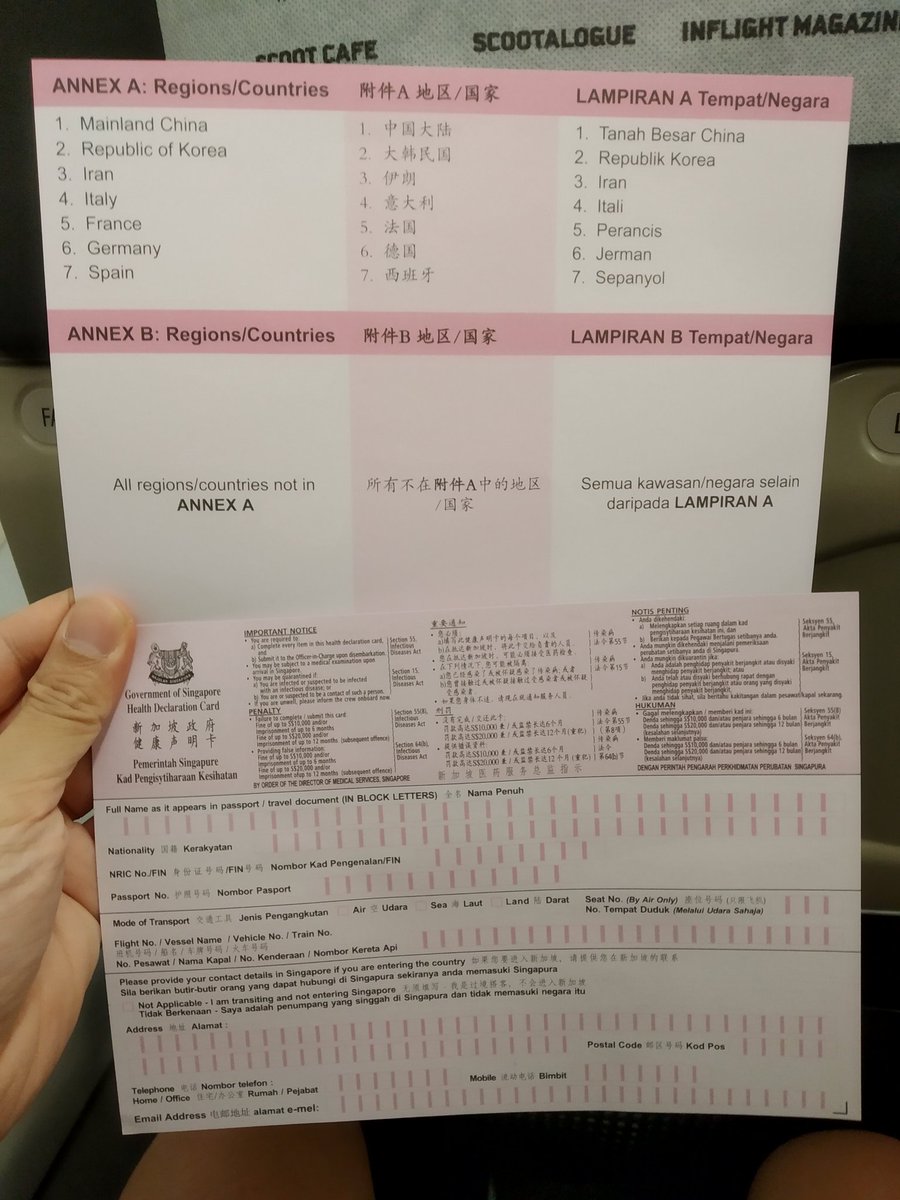
Singapore's stay home notice procedures (aka arrival quarantine), a thread.
(Yes, that's a coffee cup on the ledge of my hotel room; more on this in a bit).
I arrived in Singapore on Monday morning, around midnight. I was in Vietnam for business at the end of 2019, and skipped going back to SG in favour of going to Kuching, my hometown, for CNY. Then the Malaysian lockdown happened and I was stuck in Kuching for 6 months.
The aircraft had all of 11 passengers. This made boarding and social distancing easier. We were seated near the back of the plane, likely for aircraft balancing reasons. No more than one person per row, with an empty row between us.
The capital allocator playbook is simple to grok. Build a free cash flow generating business. Wait. Take the FCF and then use it to purchase another FCF-generating business. Wait. Use those cash flows to buy yet another FCF generating business. Wait.
Rinse and repeat.
There are many variations of this, of course. The model I described above is pretty much the one @awilkinson uses; it's also the Berkshire model.