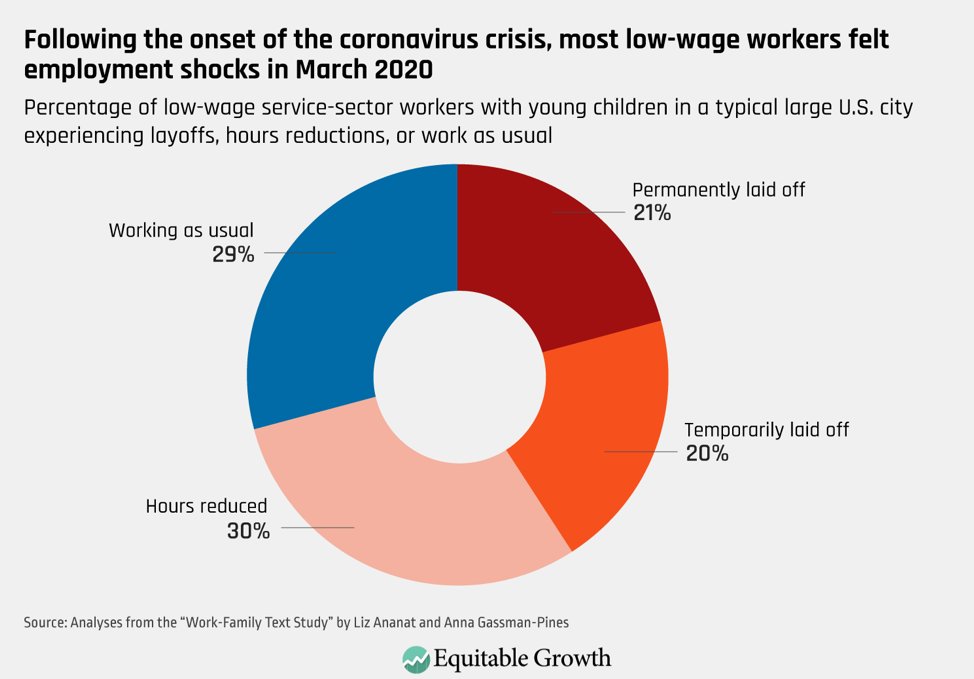
Lately, there’s been a lot of speculation about what's happening with low-wage workers who are benefiting from the $600 boost in weekly unemployment benefits. I’d like to introduce you to one of those workers: Casey Miller. 1/11
Casey’s job designing and serving high-end cocktails was his passion. He made about $700 a week, including tips. When the coronavirus hit, he feared contracting COVID-19 at work. Then, the bar closed, and his worries shifted to his economic future. 2/11
The servers hosting his state's Unemployment Insurance system crashed. But Casey was persistent. He filed at 3 in the morning, when web traffic was low. Now, each week, he receives $360 in regular benefits and a $600 pandemic-specific top-off. 3/11
The simple $600 increase lets average workers cash unemployment checks roughly equal to their old paychecks. The lowest earners bring home more than they made on the job, and the highest earners bring home less. 4/11
nytimes.com/interactive/20…
nytimes.com/interactive/20…
This is a smart way to target benefits. What did Casey do when he received an unemployment check that was larger than his paycheck? He spent it. To make ends meet, he needed every penny of his unemployment check. 5/11
Research shows that while high-earning workers save benefit dollars, low-earning workers spend them out of financial necessity. And these low-earning workers are precisely who is being affected by the coronavirus recession. 6/11 

So, the extra $600 creates a virtuous cycle. Directing cash to those who need it most channels dollars to businesses, which employ more workers, who in turn have income to spend. 7/11
Those worrying that the $600 will disincentivize a return to work miss the point: With 4.6 unemployed workers per opening, what jobs are they trying to incentivize people to take? And many low-wage employers are operating at the expense of worker safety.
hiringlab.org/2020/06/09/apr…
hiringlab.org/2020/06/09/apr…
Letting the $600 top-off expire in July spells disaster for our families and for our economy. If we reduce the amount of money circulating in the economy now, there won’t be jobs for people like Casey to return to when it's safe to do so. 9/11
Instead, thoughtful rules that phase down benefits as the health crisis📉and employment📈will keep the $600 payments flowing when the economy needs it most and let workers search for a job that is a good match for their skills, health, and family. 10/11
beyer.house.gov/uploadedfiles/…
beyer.house.gov/uploadedfiles/…
Want more? I was honored to tell Casey’s story in full for @BridgeMichigan. I became a Bridge reader as a @UMSociology + @UMSocialWork grad student and am still reading-- years after graduation and living in DC. I'm addicted to their great reporting. 11/11
bridgemi.com/guest-commenta…
bridgemi.com/guest-commenta…