Our new preprint on #COVID19 with Stefan Pöhlmann, Markus Hoffman, and @joans is up. We show that proteases other than TMPRSS2 are capable of promoting SARS-CoV-2 uptake, but camostat (and its active metabolite) can still inhibit their activity.
TMPRSS2 is commonly described as “necessary” for SARS-CoV-2 activation. Many papers look at the expression patterns of ACE2+/TMPRSS2+ double-positive cells, ostensibly to shed light on which cell types are vulnerable to coronavirus infections. But it isn’t that simple!
ACE2 is necessary for viral uptake. TMPRSS2 expression in an ACE2+ cell is sufficient for uptake. But that DOES NOT mean that TMPRSS2 is also necessary! Hoffman et al. show that other TMPRSS-family proteases - particularly TMPRSS13 - are fully capable of activating SARS-CoV-2:
.@joans and I looked at the expression of these TMPRSS genes in tissues targeted by SARS-CoV-2. In the respiratory epithelium, many other TMPRSS’s are expressed in TMPRSS2-negative cells. TMPRSS11D is high in basal cells, TMPRSS13 in the nose, and TMPRSS11E in ionocytes.
21% of ACE2+ cells co-express TMPRSS2. 24% of ACE2+ cells are TMPRSS2-negative but co-express a different TMPRSS capable of viral activation. This likely expands the number of cells and the range of cell types that can be infected by SARS-CoV-2.
Hoffman et al. go on to show that these other TMPRSS proteases can still be inhibited by camostat, a “TMPRSS2 inhibitor” in clinical trials for COVID19.
Additionally, one concern with camostat as a treatment is that it has a very short half-life in vivo. Camostat is rapidly converted into GBPA, which is its major metabolite in the body.
Hoffman et al. found that FOY-251 (a methanesulfonate of GBPA) is about as effective at blocking SARS-CoV-2 pseudoparticle uptake as camostat, suggesting that camostat’s short half-life won’t necessarily be a problem for its use as a COVID19 therapy.
Take-aways from this work: sufficient ≠ necessary, COVID drugs, like cancer drugs, can have off-target activity against their target’s homologs, and a camostat metabolite remains able to block SARS-CoV-2 uptake.
New paper from @joans and me! A pan-cancer, cross-platform analysis identifies >100,000 genomic biomarkers for cancer outcomes. Plus, a website to explore the data (survival.cshl.edu) and a (controversial?) discussion of “cause” vs. “correlation” in cancer genome analysis.
We used every type of data collected by TCGA (RNASeq, CNAs, methylation, mutation, protein expression, and miRNASeq) to generate survival models for each individual gene across 10,884 cancer patients. In total, we produced more than 3,000,000 Cox models for 33 cancer types.
Within each cancer type, we identified thousands of biomarkers for favorable and dismal patient outcomes. The most common adverse biomarkers included overexpression of the mitotic kinase PLK1, methylation of the transcription factor HOXD12, and mutations in TP53.
In a blinded name-swap experiment, black female high school students were significantly less likely to be recommended for AP Calculus compared to other students with identical academic credentials. Important new paper from @DaniaFrancis:
Some background: one of the best ways to collect real-world evidence of discrimination is through name-swapping "audit" studies. In these experiments, people are presented with job applications, resumes, mortgage applications, etc., that are identical except for the name…
The applicant’s name is varied to suggest the individual’s race/ethnicity/gender. Think “John” vs “Juan” or “Michael” vs. “Michelle”.
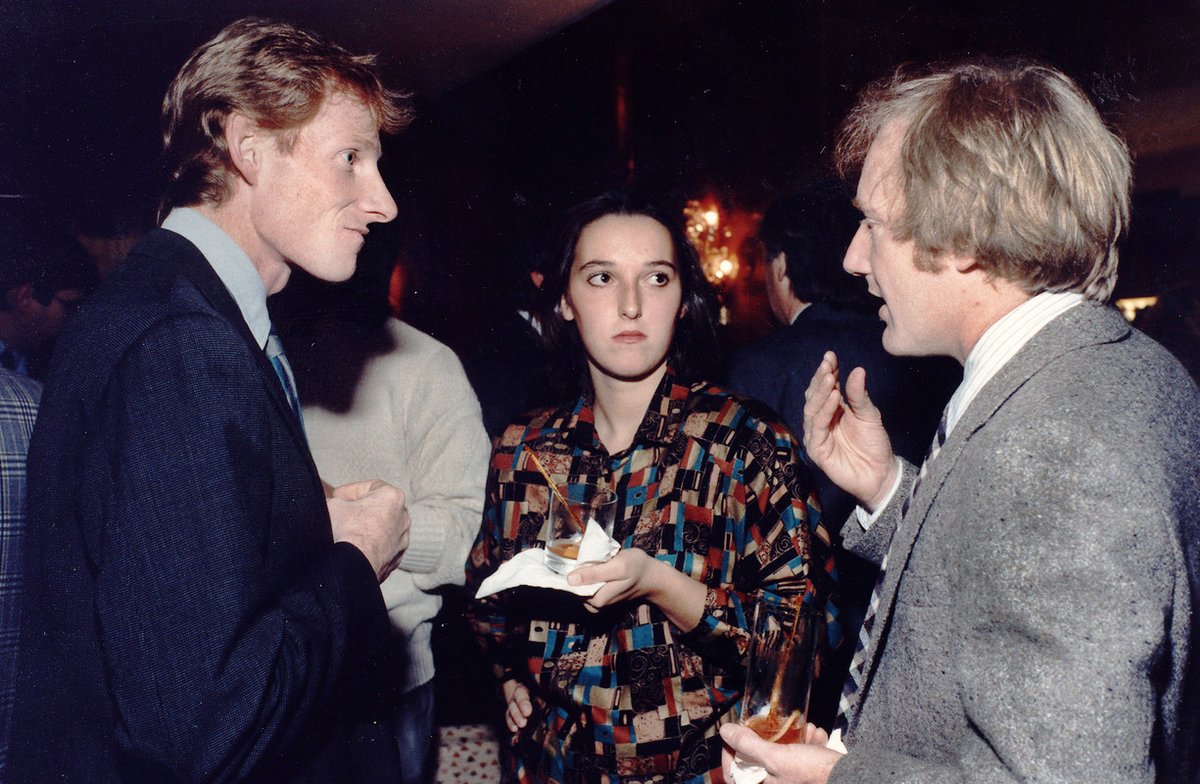
Angelika Amon passed away this morning. She was the greatest scientist I’ve ever met. This is a huge loss for her family, her friends, and for every biologist.
As a grad student with Kim Nasmyth and then an independent fellow at the Whitehead, Angelika changed our understanding of the cell cycle.
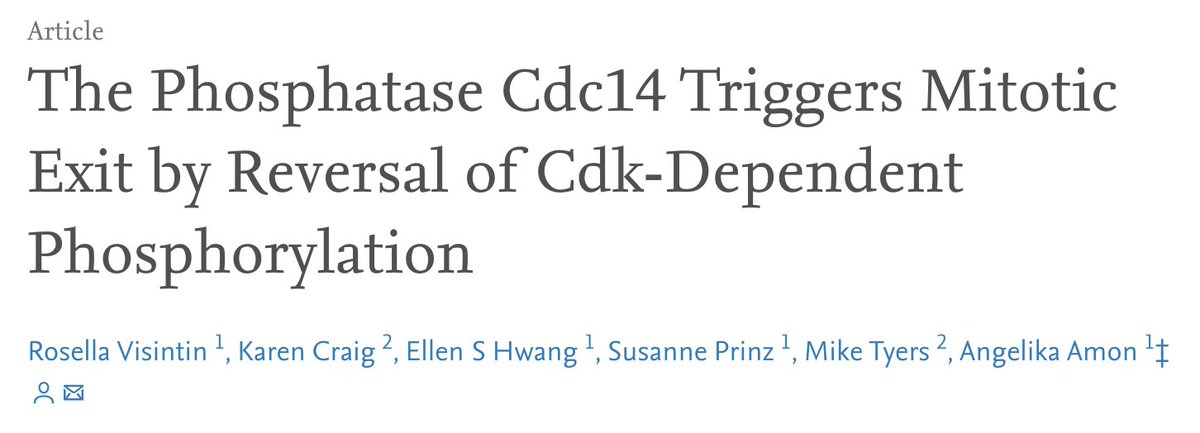
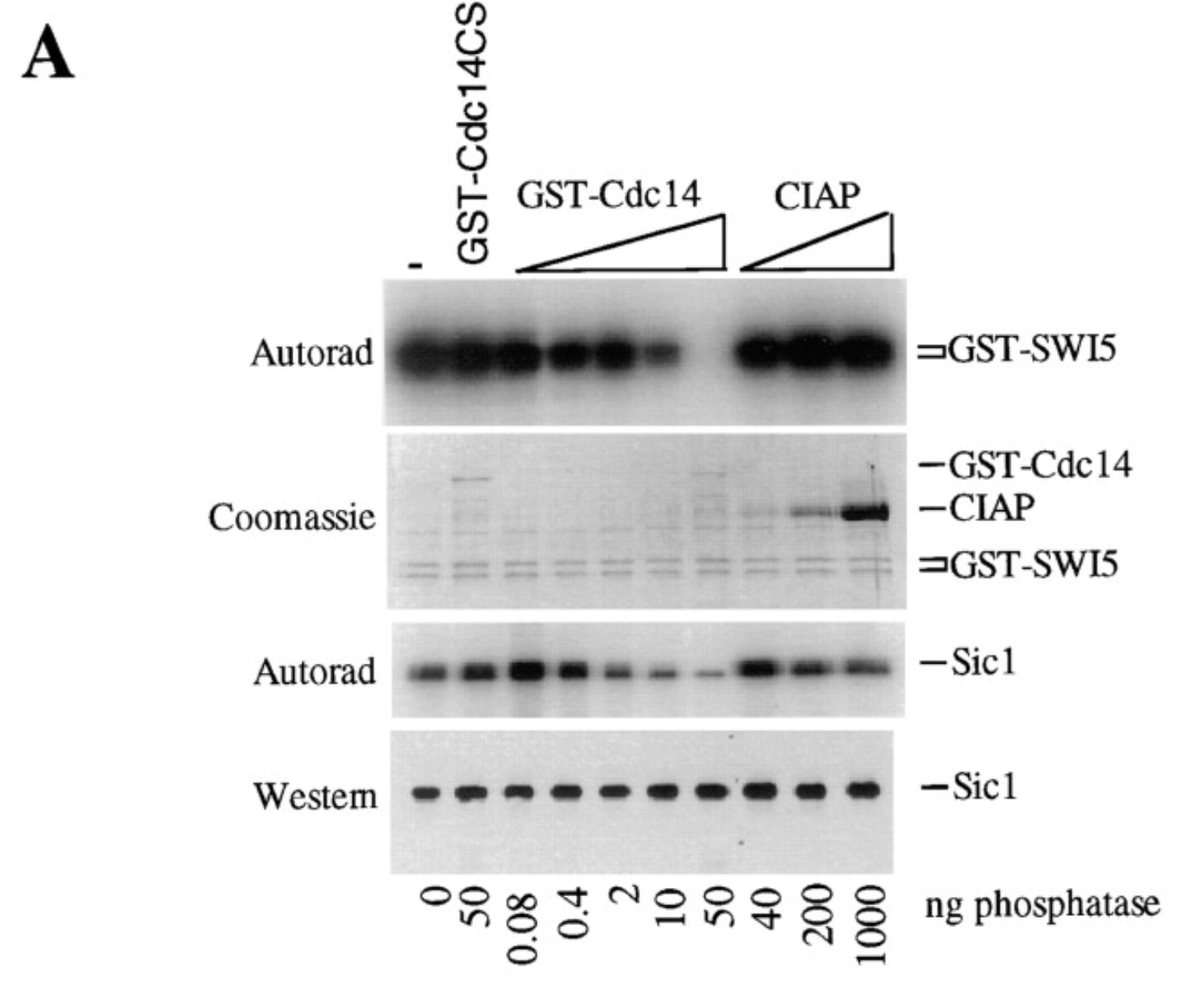
People thought that cell cycle kinases just got degraded at the end of mitosis, but she showed that regulated phosphatase activity was actually crucial to completing the cell cycle and re-entering G1:
In two weeks, the Nobel Committee at the Karolinska Institute will award the 2020 Nobel Prize in Medicine/Physiology.
Who will win? We don’t know for sure - but I think that we can make some educated guesses.
Science is dominated by a phenomenon called “the Matthew effect”. In short, the rich get richer. Getting one grant makes it more likely you’ll get the next. Winning one prize makes it more likely you’ll win another.
Here are the award rates for 11 different postdoc fellowships in 2019.
There’s a huge variation in success rates: four different organizations fund fewer than 6% of applications that they receive, while the success rates for the K99 and F32 are >24%.
To back up - my appointment at CSHL let me run a lab without doing a postdoc, so I never had the experience of applying for these grants. To help out my current postdocs, I wanted to make up for my lack of experience by doing some research.
I collected the award rates for each of these grants either from the org’s website or by emailing them directly. (I included an asterisk to indicate uncertainty. For instance, Beckman said they received “over” 150 applications, and I used 150 as the denominator).
Question: can anyone name a paper whose findings were challenged by a “matters arising” or “technical comment”-type rebuttal, but subsequent research proved that the original paper was actually correct?
One example: Charles Sawyers published that leukemia patients who relapsed on Gleevec developed ABL-T315I mutations.
Science then published 2 technical comments reporting that other groups didn't find this mutation in independent patient populations:
Larger surveys subsequently confirmed that T315I was a common (though not universal) cause of Gleevec resistance, T315I became the paradigmatic example of a “gatekeeper” resistance mutation, and Sawyers won the Lasker prize.