[NEET EXAMS]
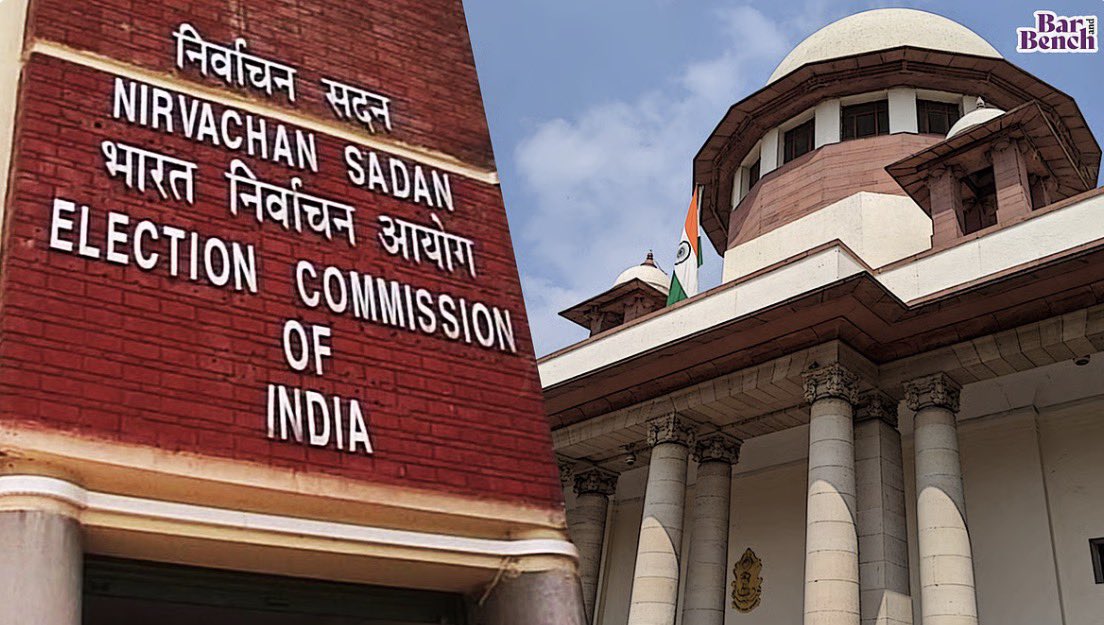
A Justice Ashok Bhushan led bench of the Supreme Court to hear a batch of petitions today seeking to postpone the NEET-UG exams set to be held on September 13.
@advocate_alakh @anubha1812
#NEETisSocial_Injustice
#SupremeCourt
#neet2020postpone
#ExamsInCovid
A Justice Ashok Bhushan led bench of the Supreme Court to hear a batch of petitions today seeking to postpone the NEET-UG exams set to be held on September 13.
@advocate_alakh @anubha1812
#NEETisSocial_Injustice
#SupremeCourt
#neet2020postpone
#ExamsInCovid

There are three cases listed. Lead case of Keshav Maheshwari is set to be argued by @advocate_alakh .. the other two of Arijit Sau and Pragya Pranjal too seeks to postpone NEET-UG exams. Pleas filed through @anubha1812
#NEET2020
#neetpostpone
#SpeakUpForStudentSafety
#NEET2020
#neetpostpone
#SpeakUpForStudentSafety


Item 6 is being heard at the moment by the 3 judge bench
Item 10 (NEET) matter to come up in a bit
@advocate_alakh @anubha1812 @MPKTSTulsi
#NEETisSocial_Injustice
#SupremeCourt
#neet2020postpone
#ExamsInCovid
Item 10 (NEET) matter to come up in a bit
@advocate_alakh @anubha1812 @MPKTSTulsi
#NEETisSocial_Injustice
#SupremeCourt
#neet2020postpone
#ExamsInCovid
[𝗛𝗲𝗮𝗿𝗶𝗻𝗴 𝗯𝗲𝗴𝗶𝗻𝘀 in NEET case]
@advocate_alakh @anubha1812 @MPKTSTulsi
#NEETisSocial_Injustice
#SupremeCourt
#neet2020postpone
#ExamsInCovid
@advocate_alakh @anubha1812 @MPKTSTulsi
#NEETisSocial_Injustice
#SupremeCourt
#neet2020postpone
#ExamsInCovid

Senior Advocate Arvind Datar: NEET exams are starting on Sept 13. We are asking for a postponement.
Justice MR Shah: Mr. Datar, exams will start in a Few days
Datar seeks to Submit before the Court to highlight the practical difficulties
#NEETisSocial_Injustice
Justice MR Shah: Mr. Datar, exams will start in a Few days
Datar seeks to Submit before the Court to highlight the practical difficulties
#NEETisSocial_Injustice
Justice MR Shah: Mr. Datar, all arrangements will be made for the #NEET exams
Arvind Datar refers to UGC judgment by #SupremeCourt
Datar seeks to highlight the example of Bihar where there are only 2 exam centres
Arvind Datar refers to UGC judgment by #SupremeCourt
Datar seeks to highlight the example of Bihar where there are only 2 exam centres

SC observes that there cannot be different dates for different States.
SC: Whatever date is fixed, there might be some difficulty
Datar urges for the exam to be considered to be postponed by three weeks
SC points out that a review petition was also dismissed
SC: Whatever date is fixed, there might be some difficulty
Datar urges for the exam to be considered to be postponed by three weeks
SC points out that a review petition was also dismissed

Senior Advocate KTS Tulsi arguing for petitioners: #COVID19 cases are increasing and now there are 90,000 daily case.
Tulsi shows example of the Bombay HC's recent order where the JC said those who could not appear for the exam should be appropriately considered @MPKTSTulsi
Tulsi shows example of the Bombay HC's recent order where the JC said those who could not appear for the exam should be appropriately considered @MPKTSTulsi

Justice Ashok Bhushan: Whether the students should be considered or not is for the body to decide not for this Court to pass directions on
@MPKTSTulsi cites the Disaster Management Act and says that the students are at a high risk of contracting the virus
@MPKTSTulsi cites the Disaster Management Act and says that the students are at a high risk of contracting the virus
Senior Adv Tulsi cites Article 21
Advocate Shoeb Alam now arguing: My petition (Arijit Sau) is different from the petitions so far and is not seeking for deferment of the exams
Alam: I want to point out some lacuna in the guidelines issued by the NTA
#neetjeeaspirants
Advocate Shoeb Alam now arguing: My petition (Arijit Sau) is different from the petitions so far and is not seeking for deferment of the exams
Alam: I want to point out some lacuna in the guidelines issued by the NTA
#neetjeeaspirants
Advocate Shoeb Alam refers to the guidelines and advisory which provides for students in containment zones etc to take the exam later on
#NEETisSocial_Injustice
#NEET_IN_OCTOBER
#speakforstudentsafety
#NEETisSocial_Injustice
#NEET_IN_OCTOBER
#speakforstudentsafety
Adv Shoeb Alam cites the Standard Operating Procedure issued which are applicable for all exams
#NEETisSocial_Injustice
#NEET_IN_OCTOBER
#speakforstudentsafety
#NEETisSocial_Injustice
#NEET_IN_OCTOBER
#speakforstudentsafety
The three-judge bench observes that the concerned authorities will take all the necessary precautions for the safety of students
Adv Shoeb Alam: (On admit cards) I'm praying that it may be used as a curfew pass
#NEET_IN_OCTOBER
#NEETisSocial_Injustice
Adv Shoeb Alam: (On admit cards) I'm praying that it may be used as a curfew pass
#NEET_IN_OCTOBER
#NEETisSocial_Injustice
Adv Shoeb Alam Alam prays that there might be some facilitation for aspirants to reach the exam centres.
Alam: The local authorities may be directed to ensure that the guidelines are enforced
SC: All this will be done
Alam: The local authorities may be directed to ensure that the guidelines are enforced
SC: All this will be done
Adv Shoeb Alam: A slight nudge from your lordships will go a long way. At a time when there is a cap on large gatherings, there are hundreds of students who have to go out to take the exams so a direction from the Court will go a long way
#COVID19
#ExamsInCovidASuicide
#COVID19
#ExamsInCovidASuicide
Advocate Neela Gokhale seeks to make submissions.
SC cuts short her argument.
SC "We are not inclined"
#neet2020postpone
SC cuts short her argument.
SC "We are not inclined"
#neet2020postpone
𝐒𝐮𝐩𝐫𝐞𝐦𝐞 𝐂𝐨𝐮𝐫𝐭 𝐫𝐞𝐟𝐮𝐬𝐞𝐬 𝐭𝐨 𝐞𝐧𝐭𝐞𝐫𝐭𝐚𝐢𝐧 𝐟𝐫𝐞𝐬𝐡 𝐩𝐞𝐭𝐢𝐭𝐢𝐨𝐧𝐬 𝐬𝐞𝐞𝐤𝐢𝐧𝐠 𝐭𝐨 𝐩𝐨𝐬𝐭𝐩𝐨𝐧𝐞 𝐍𝐄𝐄𝐓 𝟐𝟎𝟐𝟎 𝐞𝐱𝐚𝐦
#NEETisSocial_Injustice
#NEETpostpone
@advocate_alakh
@anubha1812
@MPKTSTulsi
#NEETisSocial_Injustice
#NEETpostpone
@advocate_alakh
@anubha1812
@MPKTSTulsi
Supreme Court hears pleas concerning NEET 2020 [LIVE UPDATES]
#neetJEE2020 #NEETisSocial_Injustice
barandbench.com/news/litigatio…
#neetJEE2020 #NEETisSocial_Injustice
barandbench.com/news/litigatio…
Breaking: Supreme Court refuses to interfere in fresh pleas seeking to postpone NEET 2020 amid COVID-19
#NEET #NEETisSocial_Injustice #neetpostpone2020 @anubha1812 @advocate_alakh @MPKTSTulsi
barandbench.com/news/litigatio…
#NEET #NEETisSocial_Injustice #neetpostpone2020 @anubha1812 @advocate_alakh @MPKTSTulsi
barandbench.com/news/litigatio…
• • •
Missing some Tweet in this thread? You can try to
force a refresh