I am the luckiest person in the world to have such wonderful trainees who organized the most amazing #IwasakiLabReunion/birthday zoom party yesterday. I am still in awe of how incredibly inspiring it was. Here are a few highlights I want to share with you. (1/)
The event started with a delicious lunch delivered to my door for me and my family, to be followed later by my favorite dinner 🍣and 🎂 🍾 🎁 in the evening 😋 They really know how to spoil me! The entire day was packed with amazing talks, trivia sessions and Prince songs 💜(2/)
The talented @YYexin drew this beautiful picture with my quote, “To be successful in anything, you have to enjoy it and enjoy yourself while doing it.” (4/)
What I found to be a common thread in all the amazing talks is that everyone is so resilient in their pursuit of their scientific quest. In their own respective labs, they found answers to long standing questions they began asking while they were still trainees. (5/)
For example, @EllenFoxman took 10 years to find the right experimental system to solve her question, “what is the basis of viral interference?” in this awesome study just published 👇🏽 (6/)
.@YosukeKumamoto took enormous effort to generate mouse models that allow conditional deletion of genes in his favorite dendritic cell type (CD301b+ DC2) to solve an inexplicable observation he made 7 years ago in this fantastic study👇🏽(7/)
Just before leaving my lab to join Irv Weissman’s lab, @ImmunoFever told me how excited she was to test her hypothesis that CD47 (don’t eat me signal) may be induced on infected cells to regulate immunity. She published a paper showing just that! (8/)
In 2012, @HShin_Lab observed that Prime and Pull reduced disease without affecting viral load in the vaginal mucosa after HSV-2 infection👇🏽 In her own lab, she figured out how disease is dissociated from viral load. Stay tuned for her publication. (9/)
Carrying the torch to @fredhutch, @JennyLund15 continues to uncover new roles of #Tregs in immunity to genital herpes infection. Xinyan Zhao is now a president & CEO of Adept Therapeutics focused on cancer immunotherapy. Norifumi Iijima uncovering how adjuvant works. (10/)
Our current trainees gave fabulous talks, too! @weizmano on his new discovery of innate immune control of metastasis (pub in preparation), and @ericsongg on his study on neuron infection by #SARS_CoV_2 (11/)
A surprise video of my dear friends, colleagues and role models giving birthday wishes to me. OMG 🤩😭 it made me soooo happy! I will cherish this forever… Thank you all 🙏🏼 (12/)
During the reception, we discussed the problems of toxicity and discrimination in academia. My dream would be to make changes so that everyone is given a safe environment to excel in science. As @aliceluculligan points out, science isn’t a zero-sum game! (13/)
The most gratifying revelation of #IwasakiLabReunion was that my former trainees, wherever they are in whatever profession, are spreading #kindness & #generosity to their own mentees. If I had anything to do with it, this is by far the greatest contribution of my career 🙏🏼 (End)
Oops how can I forget to mention Will Khoury-Hanold! Thank you Will!
• • •
Missing some Tweet in this thread? You can try to
force a refresh

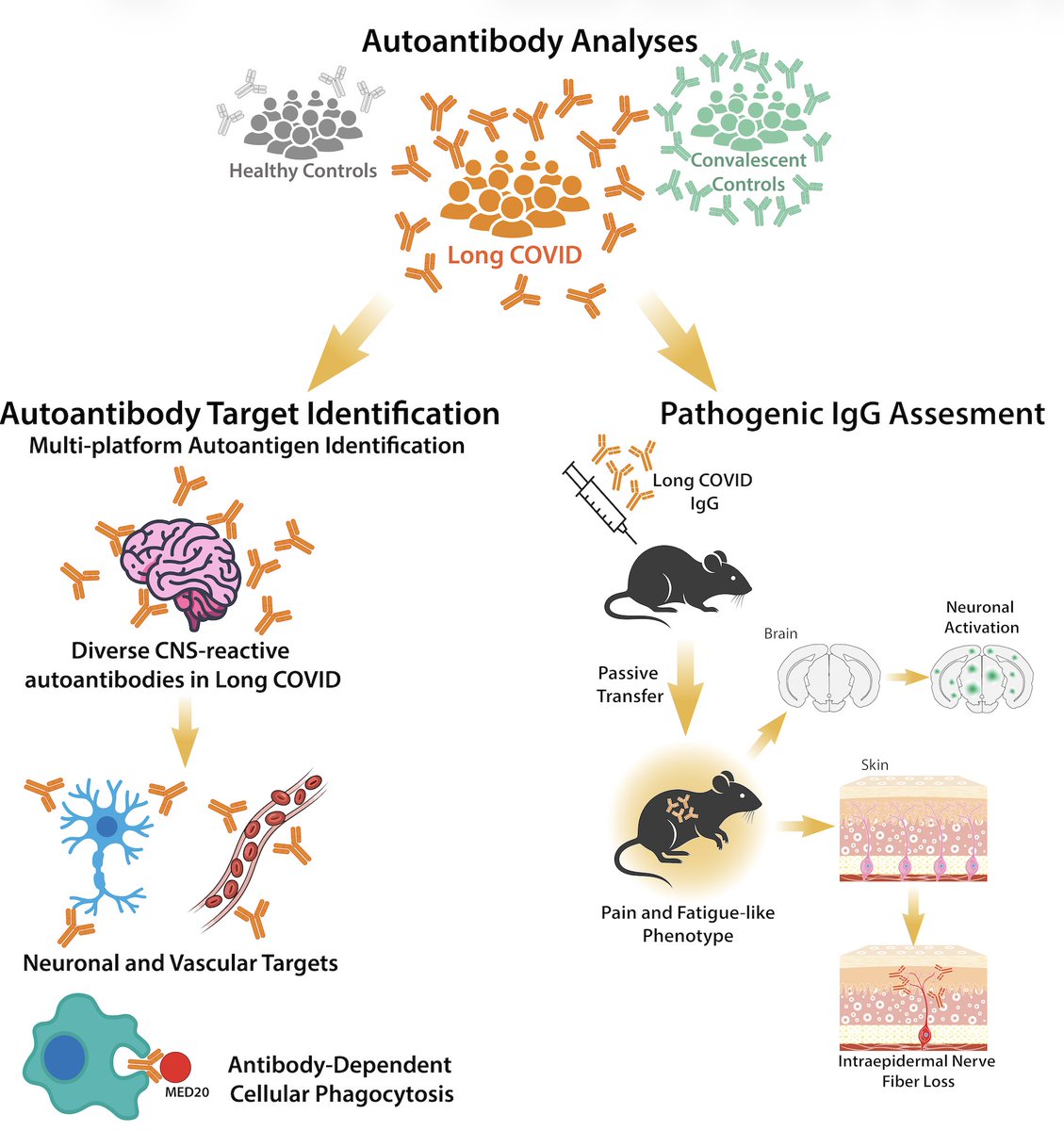
Excited to share our study by @keylas3 et al. on pathological autoantibodies in people with Long COVID. We asked whether IgG in patients with Long COVID bind to human tissues/antigens and cause pathologies when transferred into mice. With @PutrinoLab
Using tissue-based staining, a human proteome array, ELISA, IgG-pull down and mass spec, we identified a wide array of autoantibodies in those with LC. IgG targeting neurological antigens, such as NMDAR, were elevated in LC. Collab with CellTrend and @C_Scheibenbogen 🙏🏼
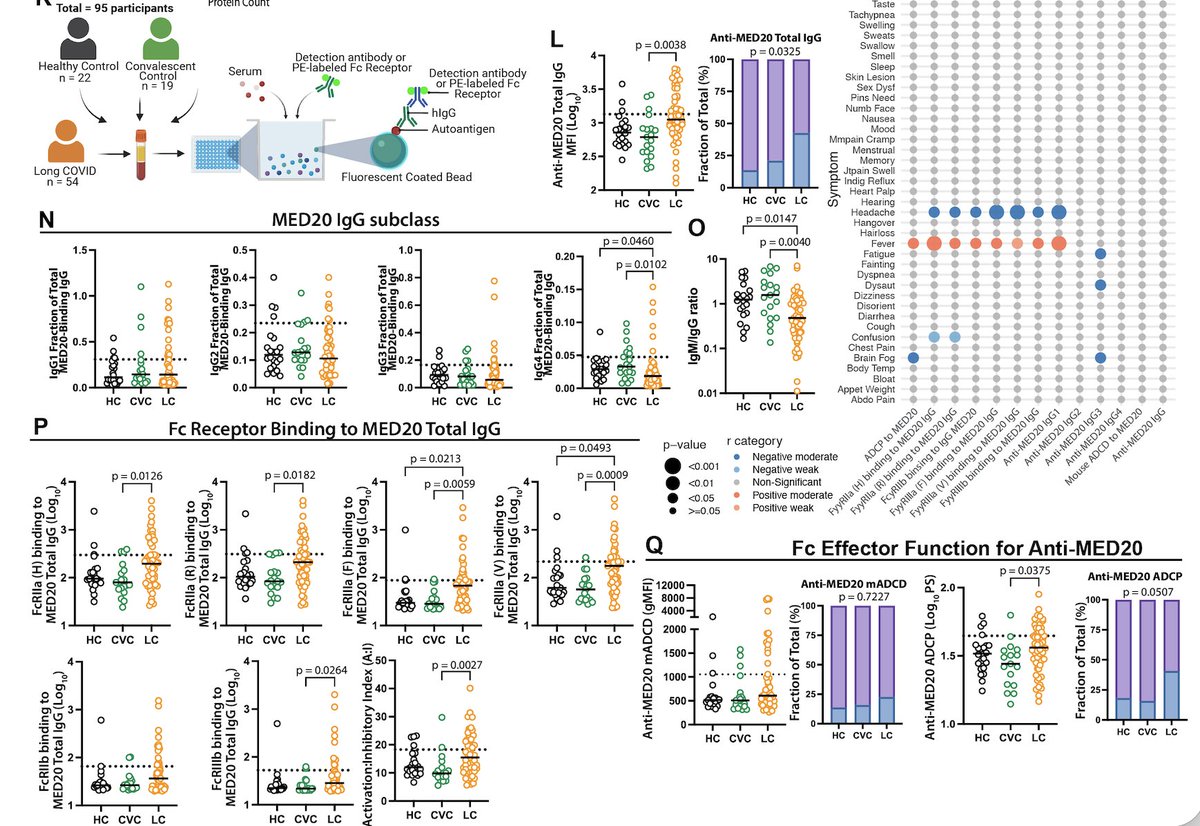
With SeromYx, we found that autoantibodies to MED20 in LC have undergone class switching to IgG from IgM, bind to many FcgRs, and induce robust phagocytosis when in immune complexes compared to IgG from control participants
Is there an association between human herpesviruses (HHVs) reactivation and Long COVID? We analyzed HHV DNA shedding in saliva and found that HHV-6 correlates with Long COVID severity. Claire Laxton, @S_Tabachnikova, Lily Cooke, Kexin Wang et al.
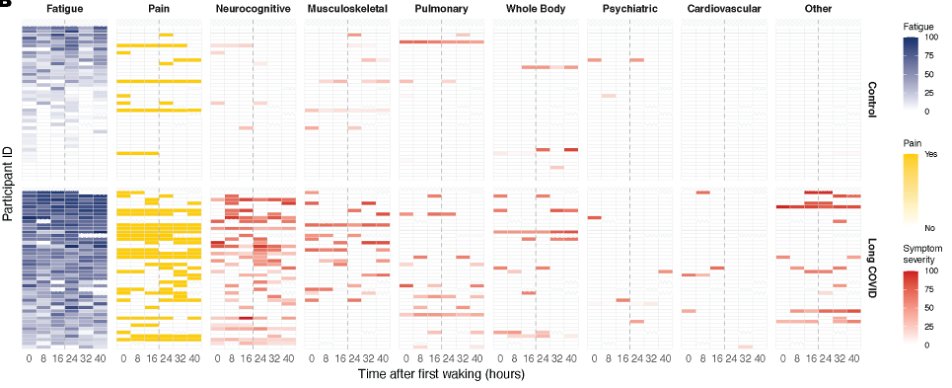
Our study enrolled 45 participants with LC and 45 age-sex-matched controls. Surveys and health questionnaires were used to collect symptom profiles. Note the intense levels of fatigue, pain, and other symptoms in our LC group (bottom half) throughout the days 😱 (2/)
We quantified DNA from multiple HHVs in saliva to ask a simple question: are any of these viruses more active in those with worse Long COVID? HHV-6 stood out. Higher HHV-6 levels were associated with more severe symptoms and greater functional impairment (3/)
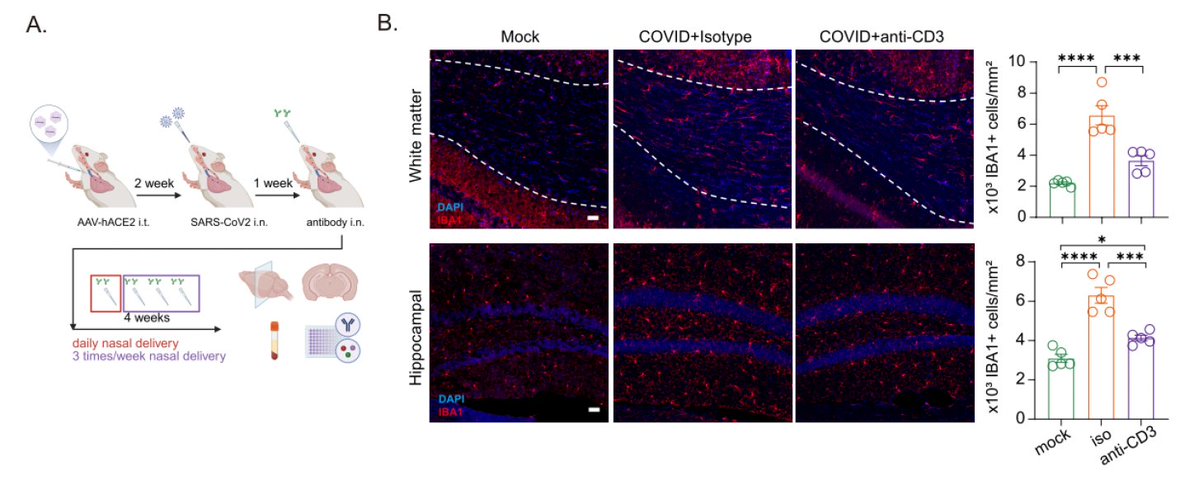
Our new preprint by @peowenlu @SaefIzzy @weinerlabhms and colleagues shows that nasal anti-CD3 monoclonal antibody treatment can reduce neuroinflammation in a mouse model of Long COVID, even when administered at 4 weeks after infection 🧠 biorxiv.org/content/10.648…
Neuroinflammatory damage is a hallmark of Long COVID. Nasal delivery of anti-CD3 mAb induces Treg and has shown therapeutic benefit in various autoimmune and CNS models of disease. In this study, we asked whether anti-CD3 mAb can reduce damage and restore neurogenesis.
First, we tested whether anti-CD3 mAb administered nasally starting at 1 week post-infection for 4 weeks. The treatment restored microglial and astrocyte densities and reduced inflammatory cytokines.
A groundbreaking paper by @younis_sh1 et al. @stanfordimmuno provides an answer to the long-standing question about how EBV infections are linked to lupus. A short thread to explain the key findings. (1/) science.org/doi/10.1126/sc…
The authors developed a new method called EBV-seq, enabling them to overcome the barrier of studying rare cells (~25 per 10,000 B cells in lupus patients) that are infected by EBV. Note that in healthy people, only 1/10,000 B cells are EBV-infected. (2/)
First, the authors found that EBV infects autoreactive B cells that express anti-nuclear antibodies in lupus patients, but not in healthy people or in patients with multiple sclerosis. (3/)
Introducing BEACON (Bioactive Enhanced Adjuvant Chemokine Oligonucleotide Nanoparticles) to stimulate mucosal immune responses against genital #HSV infection. Awesome work led by @sachinbhag, who designed and developed BEACON to guide T and B cells (1/) biorxiv.org/content/10.110…
The BEACON nanoparticle is composed of CpG ODN (TLR9 agonist) and CXCL9 (chemokine). When applied to the vaginal mucosa, the recruitment of antiviral T cells is achieved with minimal local inflammation - much more potent than CpG or CXCL9 separately. (2/)
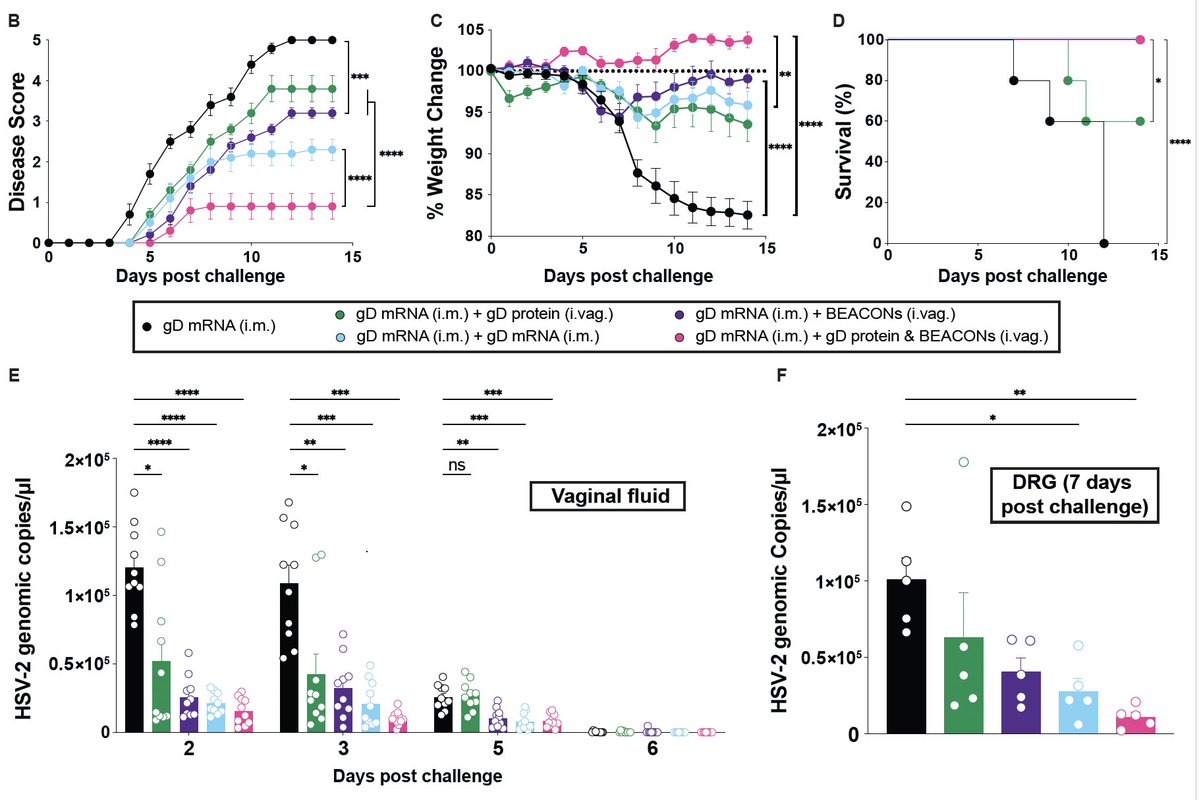
Intramuscular vaccines do not promote mucosal immunity. BEACON can be used as a local adjuvant to boost HSV-2 gD- or gB-specific T and B cells, preventing not only disease/death but also blocking viral load in both vaginal tissue and dorsal root ganglia (🚫latency)(3/)👇🏼
A fascinating new study by Vishnu Shankar et al. @stanfordimmuno shows that oxidative stress is a shared characteristic of ME/CFS and Long COVID in lymphocytes due to inability to clear reactive oxygen species. This happens in sex-specific manner. (1/) pnas.org/doi/abs/10.107…
Females show higher mtROS levels and insufficient antioxidant levels, while males show mitochondrial lipid oxidative damage. While the reason for this is unclear, it may explain the sex differences in lymphocyte dysfunction we see in PAIS in general. (2/) science.org/doi/10.1126/sc…
ROS-targeting therapies were tested. Metformin treatment in vitro showed some impact on CD4 T cell proliferation. I suspect that other therapies to induce autophagy/mitophagy might also benefit restoration of T cell phenotype. #LowDoseRapamycin 👇🏼 (3/) polybio.org/projects/long-…