Non-communicable diseases & injuries (NCDI) cause more death & disability at every age among the world’s poorest billion than in wealthy countries— new @NCDIpoverty Commission provides cost-effective & equitable interventions to address #NCDIPovertyhubs.li/H0wd1XP0
Among the world’s poorest people, almost 800,000 under age 40 die each year from #NCDs & injuries
The @NCDIpoverty Commission outlines how to reverse the neglect of the world’s most marginalised people living with these conditions #NCDIPovertyhubs.li/H0wd1XP0
"Partnerships & coalition building will be key not only within the #NCD community but also in alliances forged with the UHC & anti-poverty movements"—The Lancet Editors reflect on the #NCDIPoverty Commission calling for expansion of the global NCD agenda hubs.li/H0wfQsN0
Progressive implementation of affordable, cost-effective,
& equitable NCDI interventions between 2020 & 2030 could save the lives of 4.6 million of the world’s poorest, incl 1.3 million who would otherwise die before 40 years: #NCDIPoverty outlines how hubs.li/H0wd1XP0
"The Commission's report provides a much-needed, comprehensive analysis of #NCDIPoverty and the achievable key interventions to make a substantial change. It calls on all of us to build global solidarity"—Comment from Karen Sliwa & Magdi Yacoub hubs.li/H0wgj1S0
Between 2011-16, even as #NCDs were adopted as priorities in #UHC & #SDG agendas, external financing for NCDIs in poorest countries was US$83 million, only 0.3% of development funds for health: @NCDIpoverty calls for financing of essential NCDI services hubs.li/H0wd1XP0
• • •
Missing some Tweet in this thread? You can try to
force a refresh

Retraction—Today, we retract an unsigned 1977 commentary suggesting talc powder containing asbestos was not harmful. The Lancet was informed that the author had undisclosed competing interests and breached publication ethics. /4
“Asbestos, talc, and The Lancet’s 1977 publication” – Correspondence from David Rosner and Gerald Markowitz tinyurl.com/yathv6ne
“Asbestos, talc, and The Lancet’s 1977 publication – Editors’ reply” tinyurl.com/y9ad4e9t
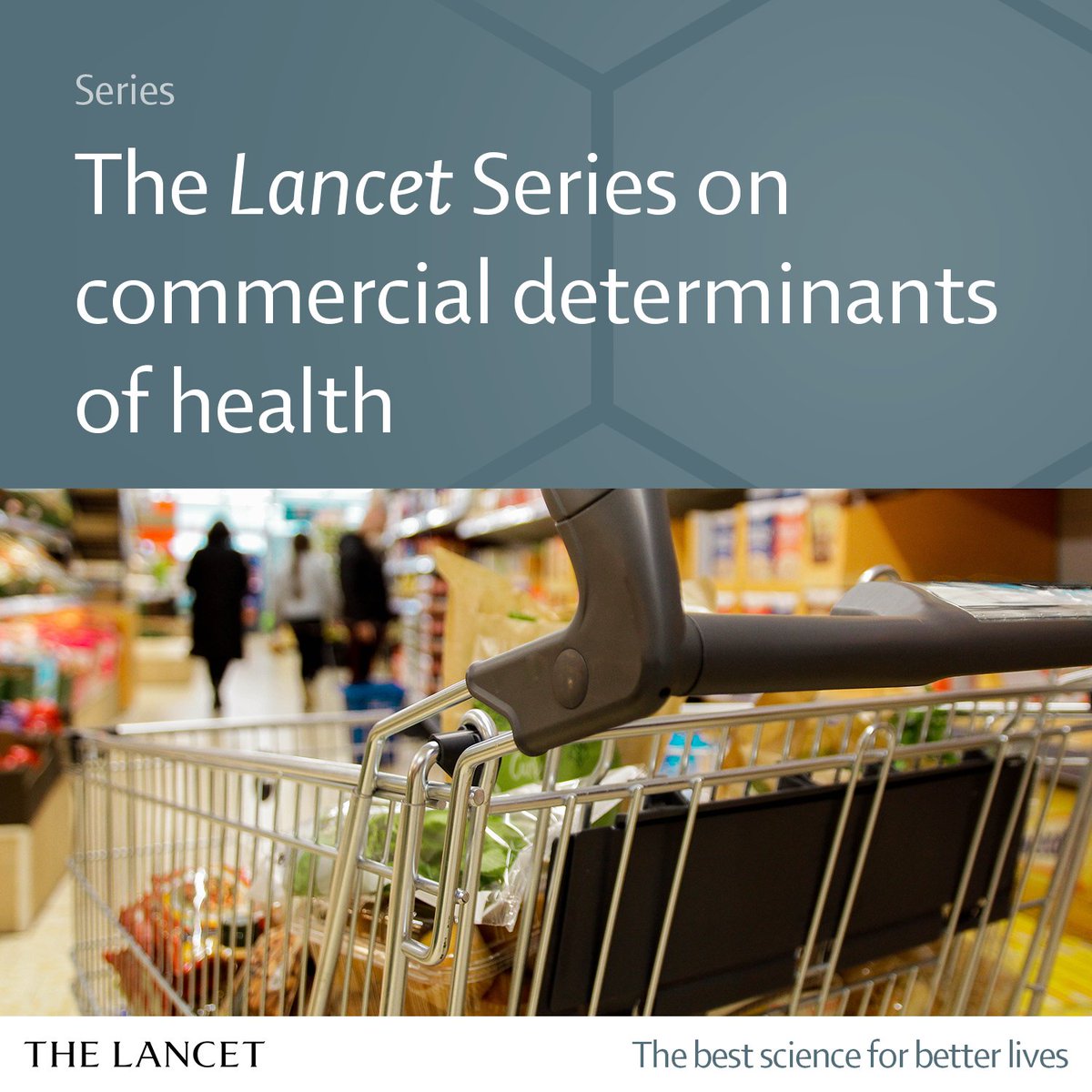
‘Policy inertia’ is enabling the products and practices of some commercial actors to cause significant, ongoing harm to health, warn experts.
A new Lancet Series argues for a bold system overhaul that puts people and planet first: hubs.li/Q01HD8h_0
What are the commercial determinants of health?
Lack of consensus on the definition has been a sticking point, hampering action.
The Series authors provide an explanation and outline potential pathways to health benefits or harms: hubs.li/Q01J2gbV0
While commercial actors can contribute positively to health and society, a significant proportion are not.
Just 4 industry sectors are responsible for at least 1/3 of global deaths every year:
🚬 Tobacco
🍺 Alcohol
🍔 Unhealthy foods
🏭 Fossil fuels hubs.li/Q01J2gbV0
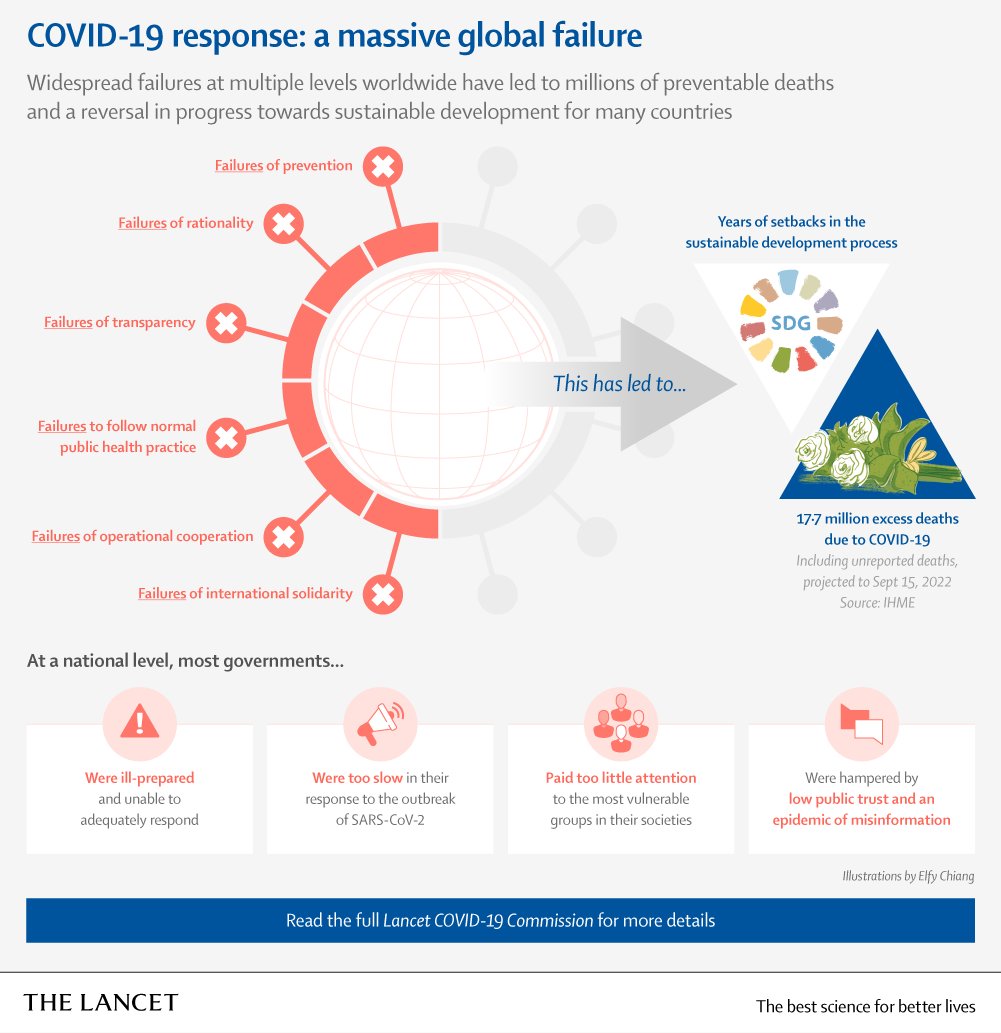
New Lancet Commission details "massive global failures" of the #COVID19 response & issues recommendations to help:
1️⃣ End the pandemic emergency
2️⃣ Protect against future health shocks
3️⃣ Achieve sustainable development for all
Access the report: hubs.li/Q01mlD0h0
Glaring deficiencies in pandemic preparedness & response have cost lives, livelihoods, & progress towards the #SDGs.
The Lancet COVID-19 Commission identifies several failures of governance ⤵ hubs.li/Q01mmNZd0
Synthesising evidence from the first 2 years of #COVID19, Commission authors make 11 essential recommendations for a resilient post-pandemic world 👇 hubs.li/Q01mmNZd0
📢 The Lancet Group is pleased to announce an important step towards advancing equity, diversity, & inclusion in our publishing practices:
Authors & reviewers will now be invited to (optionally) self-report their gender, race, & ethnicity via our Editorial Manager sites. 1/4
Understanding the demographics of our authors & reviewers is integral to the work of the Lancet Group for Racial Equity (GRacE) & the Gender & Diversity Taskforce; to identify gaps in representation & propose solutions to address them. 2/4
This approach has already proven successful for gender data collection; we hope to build on this with the introduction of the schema & the addition of race & ethnicity as categories. 3/4