When deep learning meets causal inference: a computational framework for drug repurposing from real-world data - Drug repurposing is an effective strat to iden. new uses for existing drugs
Paper bit.ly/38kndHM
Blog bit.ly/398Zj11
#ai #Bioinformatics
Paper bit.ly/38kndHM
Blog bit.ly/398Zj11
#ai #Bioinformatics
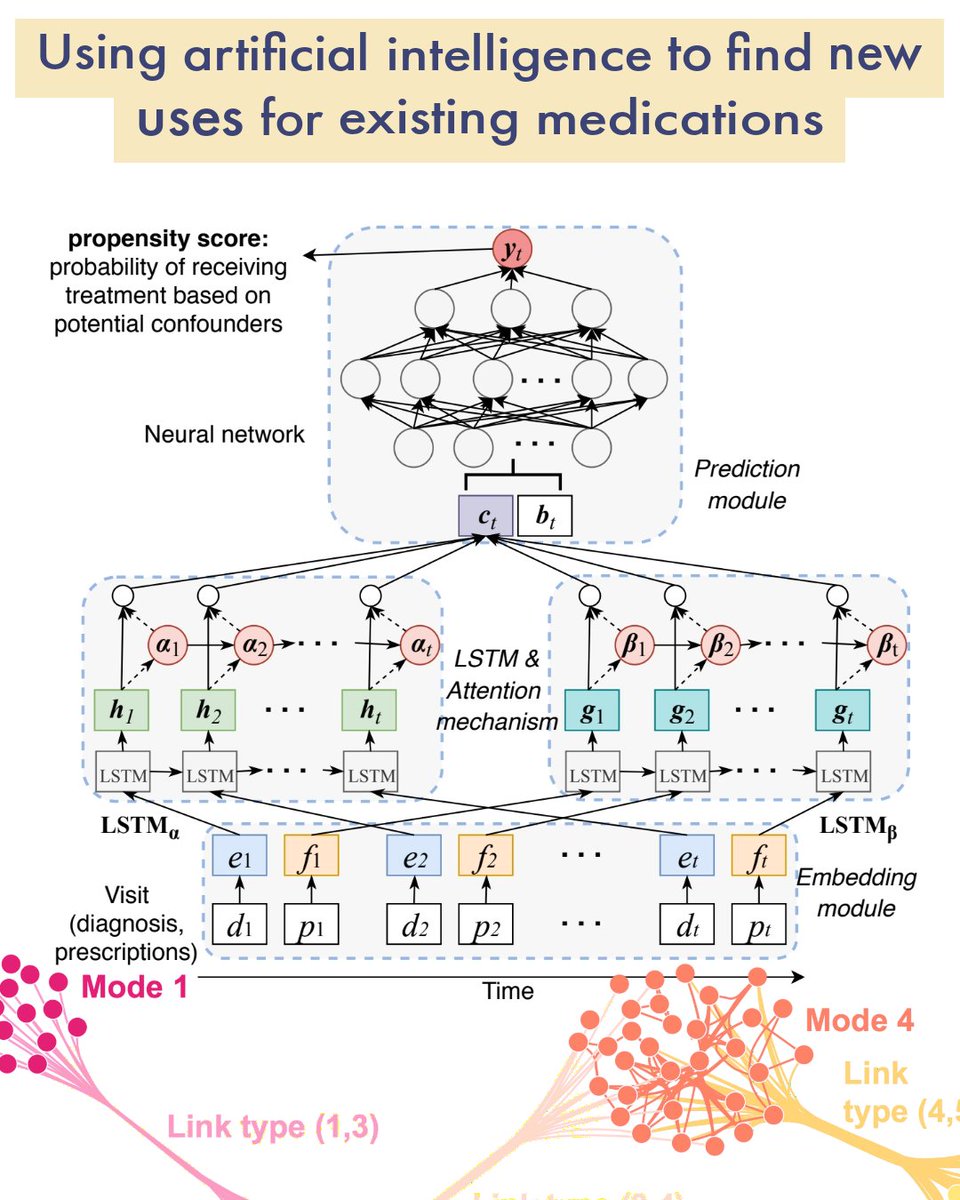
Existing methods for drug repurposing that mainly focus on pre-clinical information may exist translational issues when applied to human beings.
Real world data (RWD), such as electronic health records and insurance claims, provide information on large cohorts of users for many drugs.
Here they present an efficient and easily-customized framework for generating and testing multiple candidates for drug repurposing using a retrospective analysis of RWDs.
Building upon well-established causal inference and deep learning methods, their framework emulates randomized clinical trials for drugs present in a large-scale medical claims database.
Using this framework in a case study of coronary artery disease (CAD) by evaluating the effect of 55 repurposing drug candidates on various disease outcomes
They achieve 6 drug candidates that significantly improve the CAD outcomes but not have been indicated for treating CAD, paving the way for drug repurposing
• • •
Missing some Tweet in this thread? You can try to
force a refresh