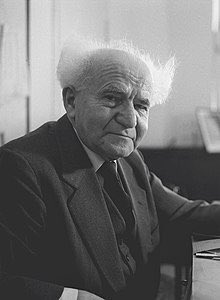
Ernst Mayr - Wikipedia
At the International Zoological Congress at Budapest in 1927, Mayr was introduced by Stresemann to banker and naturalist Walter Rothschild, who asked him to undertake an expedition to New Guinea on behalf of himself and the American en.wikipedia.org/wiki/Ernst_Mayr
At the International Zoological Congress at Budapest in 1927, Mayr was introduced by Stresemann to banker and naturalist Walter Rothschild, who asked him to undertake an expedition to New Guinea on behalf of himself and the American en.wikipedia.org/wiki/Ernst_Mayr
Museum of Natural History in New York. Mayr moved to the United States in 1931 to take up a curatorial position at the American Museum of Natural History, where he played the important role of brokering and acquiring the Walter Rothschild collection of bird skins, which was
being sold in order to pay off a blackmailer. During his time at the museum he produced numerous publications on bird taxonomy, and in 1942 his first book Systematics and the Origin of Species, which completed the evolutionary synthesis started by Darwin.
Mayr joined the faculty of Harvard University in 1953, where he also served as director of the Museum of Comparative Zoology from 1961 to 1970. Based on Weidenreich's work and on his suggestion that Pithecanthropus erectus and Sinanthropus pekinensis were connected through a
series of interbreeding populations, German biologist Ernst Mayr reclassified them both as being part of the same species: Homo erectus. [41] Mayr presented his conclusion at the Cold Spring Harbor Symposium in 1950,[42] and this resulted in Dubois's erectus species being
reclassified under the genus Homo. As part of the reclassification, Mayr included not only Sinanthropus and Pithecanthropus, but also Plesianthropus, Paranthropus, Javanthropus, and several other genera as synonyms, arguing that all human ancestors were part of a single genus
(Homo), and that "never one more than one species of man existed on the earth at any one time".
he program began as an initiative of Eugene G. Blackford and Franklin Hooper, director of the Brooklyn Institute of Arts and Sciences, the founding institution of The Brooklyn Museum.[22] In 1904, the Carnegie Institution of Washington established the Station for Experimental
Evolution at Cold Spring Harbor on an adjacent parcel. In 1921, the station was reorganized as the Carnegie Institution Department of Genetics.
Apart from direct collaborations, the main legacy of the phage group resulted from the yearly summer phage course taught at Cold Sprin
Apart from direct collaborations, the main legacy of the phage group resulted from the yearly summer phage course taught at Cold Sprin
g Harbor Laboratory and taught sporadically at Caltech. Beginning in 1945, Delbrück and others taught young biologists the fundamentals of phage biology and experimentation, instilling the phage group's distinctive math- and physics-oriented approach to biology. Many of the
leaders of the emerging field of molecular biology were alumni of the phage course, which continued to be taught through the 1950s and 1960s.
In 1934, Caltech was elected to the Association of American Universities, and the antecedents of NASA's Jet Propulsion Laboratory, which Caltech continues to manage and operate, were established between 1936 and 1943 under Theodore von Kármán.
The new funds were designated for physics research, and ultimately led to the establishment of the Norman Bridge Laboratory, which attracted experimental physicist Robert Andrews Millikan from the University of Chicago in 1917.[19] During the course of the war, Hale, Noyes and
Millikan worked together in Washington on the NRC. Subsequently, they continued their partnership in developing Caltech. 

Another point made in Vista by J. Robert Oppenheimer, Vannevar Bush and James Bryant Conant was that they recommended NATO, including the United States to diversify their atomic arsenal, by focusing more on low yield tactical Nuclear weapons rather than high yield bombs like the
hydrogen bomb.[5] Project Vista instead, recommended that NATO should focus on new technology, tactical use of atomic weapons against Soviet troops, which would even the odds in a conventional ground war.
Vista's weapon strategy focused on flexibility in the use of the different weapons, so that NATO could be prepared for any kind of warfare.
Another specific recommendation made in the report was the increase in tactical aircraft, a Tactical Atomic Air Force (TAAF) was proposed
Another specific recommendation made in the report was the increase in tactical aircraft, a Tactical Atomic Air Force (TAAF) was proposed
for development in Europe, to lessen the dependence on the United States Air Force.[26] Project Vista also urged joint training exercises between NATO members and allies, in order to effectively be able to execute commands and tactics in battle. Recommendations were also made
regarding improvements to ordnance, Chemical weapons, intelligence operations, psychological warfare, and techniques in communication and electronics used in warfare. However, the report was clear about its limitations regarding technology and implementation, stating that the
NATO air force would have to mostly rely on conventional arms and tactics until 1960.[22] Throughout the report a lot of emphasis is put on the use of atomic weapons against tactical targets, as the United States was superior in the making of nuclear warheads at the time.
The report did not specifically challenge the Strategic Air Command's procedures, as the people behind the report did not have access to those files, but the report did make suggestions as to how evolving technology and arsenal should be used in order to offset the differences
in military strength between Europe and the Soviet Union.[

• • •
Missing some Tweet in this thread? You can try to
force a refresh