Peter Apps Profile picture
15 Feb, 14 tweets, 4 min read
Right, short afternoon break coming up at the inquiry so a quick summary of some interesting bits of evidence this afternoon:

Arconic told sales people in France to push more fire safe product from 2016 onwards, but continued to sell deadly product in England Image

So this afternoon, we've been hearing from Vince Meakins who took over as Arconic's UK sales manager in late 2014. He had little involvement in Grenfell Tower, but has been asked about the company's approach to the market and fire safety questions.
He said that he was told to focus more on winning sales for the 'FR' (a more fire resistant version with less of the petrol-like polyethylene), at a sales meeting which he says was early in his time at Arconic
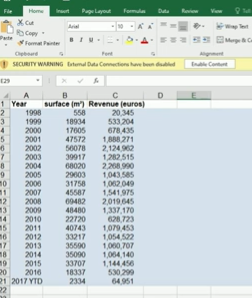
But we see from this table, that sales of 'PE' (the more dangerous) continued right into 2017. Mr Meakins said some of this was for CID - which I think refers to interiors (incidentally, also shows 650,000 sqm of the dangerous stuff sold to the UK market) Image
Then we saw this email, sent to sales people in France in May 2016 (translated, hence highlighting). It tells them, in bold, to confirm in writing that FR should be used in all projects 'regardless of the nature and size' as it is 'by far the safest'. Image
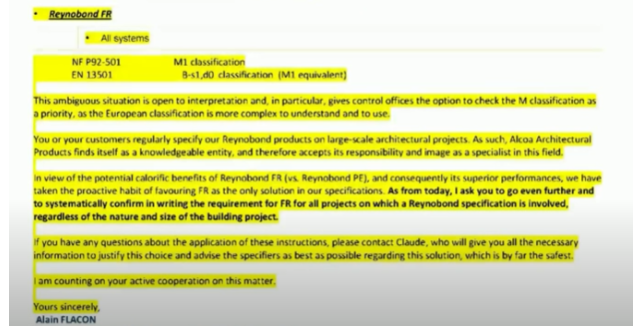
Bare in mind, this is a year before Grenfell. Meakins asked if same instruction was ever given to him. Says nothing was ever said on these lines, until the product was withdrawn after the fire.
We then saw that in late 2016, Arconic developed an even safer A2 cladding panel (this is basically non-combustible). It then published a guidance document (quite infamous since the fire) very firmly warning against using PE on tall buildings. Image
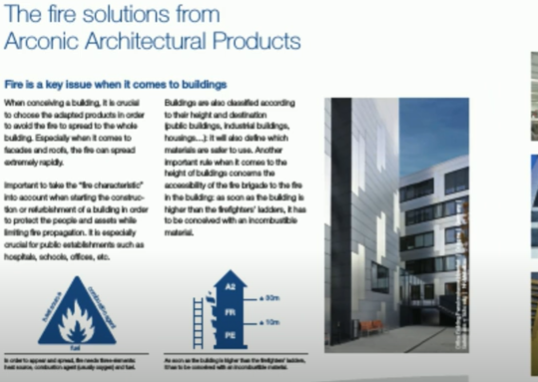
Meakins says he hasn't seen this brochure, despite apparently citing it as an exhibit in his witness statement. Says he thinks the one he saw was a different version without the clear warning. But fact that it's in English suggests it was designed for English audience.
A couple more interesting bits: we saw the witness statement of senior Arconic technical guy Claude Wehrle, which says he came to the UK in May 2017 to look at cladding on the Chalcots estate in Camden, which had an issue with splitting.
He was by this time aware of the risks associated with PE and the testing showing it was dangerous. He says he expressed surprise at its use on high rises, and was told by Rydon representatives 'UK regulations allow the use of ACM PE'. Meakins doesn't recall this conversation. Image
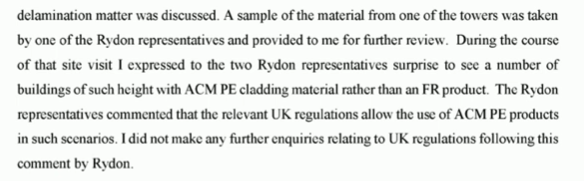
About eight weeks later of course, Grenfell would have burned and the Chalcots estate would be the first in the country to be evacuated due to fire safety concerns. Rydon witnesses not asked about this meeting and Wehrle refusing to give evidence.
Finally, we saw a report into more delamination issues, this time at a tower in Media City, Salford in August 2015. This specified that the cladding on the residential high rise was PE, bent into a cassette form and was seen - apparently - by Mr Wehrle Image
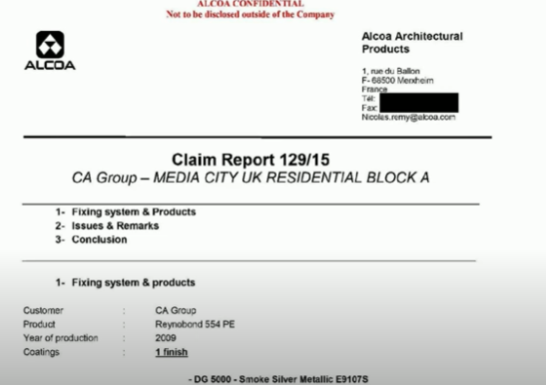
Wehrle was aware by this stage of the horrific performance of this product in fire tests and had warned about it internally. Meakins was asked if Wehrle had raised any concerns about the product being used on the building. He says he did not.
That's (almost) it for Meakins, and then we will hear from Claude Schmidt, a senior figure in Arconic's French organisation and the only witness from there who has agreed to attend.

• • •

Missing some Tweet in this thread? You can try to force a refresh
 

Keep Current with Peter Apps

Peter Apps Profile picture

Stay in touch and get notified when new unrolls are available from this author!

Read all threads

This Thread may be Removed Anytime!

PDF

Twitter may remove this content at anytime! Save it as PDF for later use!

Try unrolling a thread yourself!

how to unroll video
  1. Follow @ThreadReaderApp to mention us!

  2. From a Twitter thread mention us with a keyword "unroll"
@threadreaderapp unroll

Practice here first or read more on our help page!

More from @PeteApps

18 Feb
Lunchtime update from the Grenfell Tower Inquiry:

President of Arconic's French arm accepts customers were 'deliberately and dishonestly misled' over fire classification of cladding panels, as he is asked about email saying failed fire test must be kept 'VERY CONFIDENTIAL' Image
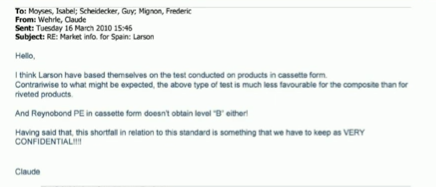
The most interesting point of this morning's evidence came right at the end of the session when Claude Schmidt was grilled about an email his colleague Claude Wehrle sent regarding the serious failure of polyethylene-cored ACM panels when bent into a cassette form in March 2010
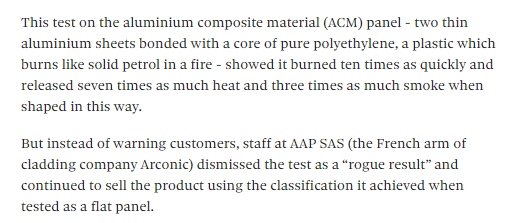
Remember: Arconic in 2004/5 tested its ACM PE panel when bent into cassette and when bolted to a wall with rivets. The cassette version failed spectacularly, burning 10 times as fast. But Arconic dismissed this as a 'rogue result' and drew no distinction in its marketing...
Read 13 tweets
17 Feb
Lunchtime update from the Grenfell Tower Inquiry:

President of French company which sold cladding for Grenfell accepts company told a "misleading half truth" by concealing serious fire test failure from certifiers Image
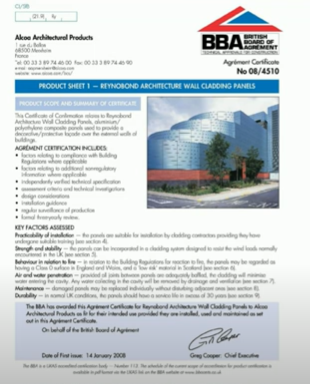
Claude Schmidt has been grilled this morning mostly about the means by which Arconic obtained a certificate from the British Board of Agrèment regarding the fire performance of the panels used on Grenfell Tower: Image
(A note: BBA certs are widely used and very well respected in the construction sector as the authoritative statement on how products perform. Most building professionals + inspectors will simply take them on their word)
Read 13 tweets
16 Feb
Report from today at the Grenfell Tower Inquiry:

President of the firm which sold the highly combustible used on Grenfell denies that a 2005 test in which it failed “spectacularly” was the firm’s “deadly secret”

insidehousing.co.uk/news/grenfell-…
There is a lot in today's evidence which is crucial in understanding why Grenfell happened. Essentially, we heard the details of a test in 2005 which showed the cladding was exceptionally combustible when bent into a 'cassette' shape Image
This is the configuration used on Grenfell Tower. Arconic did not warn the market about this risk and instead sold the cladding with a certificate suggesting it met a much higher standard.
Read 6 tweets
16 Feb
This is pretty extraordinary. Test reports shows Grenfell cladding burned 10 times more quickly, released seven times as much heat and three times as much smoke when bent into cassette shapes as opposed to a flat panel.

Arconic's certificate drew no distinction between them.
Worth emphasising here that while the refurbishment team did not know this, the only reason cassette shaped panels was used on Grenfell was aesthetics. They were actually more expensive.
For those interested, riveted panels had a fire growth rate 105.5 watts, cassette had 1009. Riveted had a heat realease of 7.8 megajoules, cassette had 59. Riveted had smoke growth index rating of 5.7, cassette was 16.6.
Read 5 tweets
16 Feb
Lunchtime update from the Grenfell Tower Inquiry:

- President of Arconic accepts "false statement" in certificate describing the fire classification of cladding used on tower
- Says 'regulatory differences' reason why highly combustible panels were so popular in UK Image
This morning we've been hearing from Claude Schmidt, current president of AAP SAS, the French arm of Arconic which made and sold the 'Reynobond PE' cladding panels used on Grenfell. They have already been identified as the 'primary cause' of the rapid fire spread at the tower.
Inquiry counsel Richard Millett began by asking him (via a translator) whether or not he agreed with several factual statements. Among other things, he asked whether he agreed that the PE panels, when bent into the cassette shape in which they were used on Grenfell...
Read 18 tweets
10 Feb
A final thought on Jenrick's announcement today. The route of the government's problem is a failure to distinguish the varying levels of risk in buildings and until that nettle is grasped this problem will never go away.
We've got to remember why all this is necessary. It's to stop a repeat of the absolutely appalling tragedy which took place less than four years ago. Fire deaths in high rises might be low, but that doesn't change the fact that the conditions for a repeat disaster still exist.
Any part of achieving this aim should be proactively assessing blocks of flats with a view to working out which are potential Grenfells, which are potential Lakanals and which are not perfect but are not that bad.
Read 11 tweets

Did Thread Reader help you today?

Support us! We are indie developers!


This site is made by just two indie developers on a laptop doing marketing, support and development! Read more about the story.

Become a Premium Member ($3/month or $30/year) and get exclusive features!

Become Premium

Too expensive? Make a small donation by buying us coffee ($5) or help with server cost ($10)

Donate via Paypal Become our Patreon

Thank you for your support!

Follow Us on Twitter!