

Root-Tilden-Kern Scholarship - Wikipedia
Founded in 1951, the purpose of the program was to “train promising young men so as to help attain again for the American bar the high position which it once held as the reservoir of altruistic and competent en.wikipedia.org/wiki/Root-Tild…
Founded in 1951, the purpose of the program was to “train promising young men so as to help attain again for the American bar the high position which it once held as the reservoir of altruistic and competent en.wikipedia.org/wiki/Root-Tild…
public leadership.”
The program was named for two alumni, Elihu Root and Samuel Tilden, who exemplified Vanderbilt's ideal – lawyers dedicated to public leadership.
The program was named for two alumni, Elihu Root and Samuel Tilden, who exemplified Vanderbilt's ideal – lawyers dedicated to public leadership.
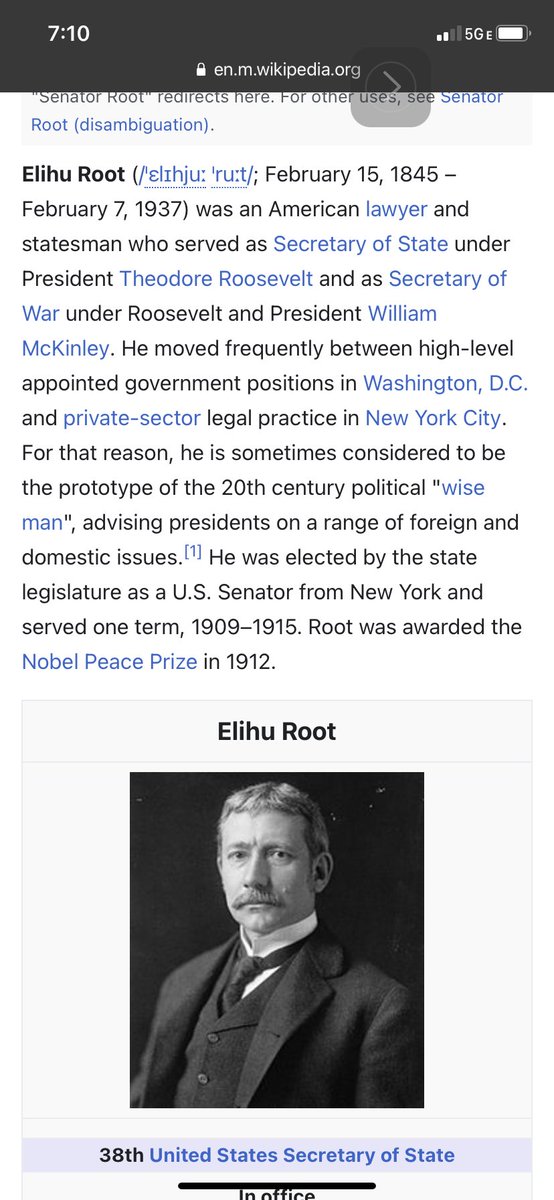
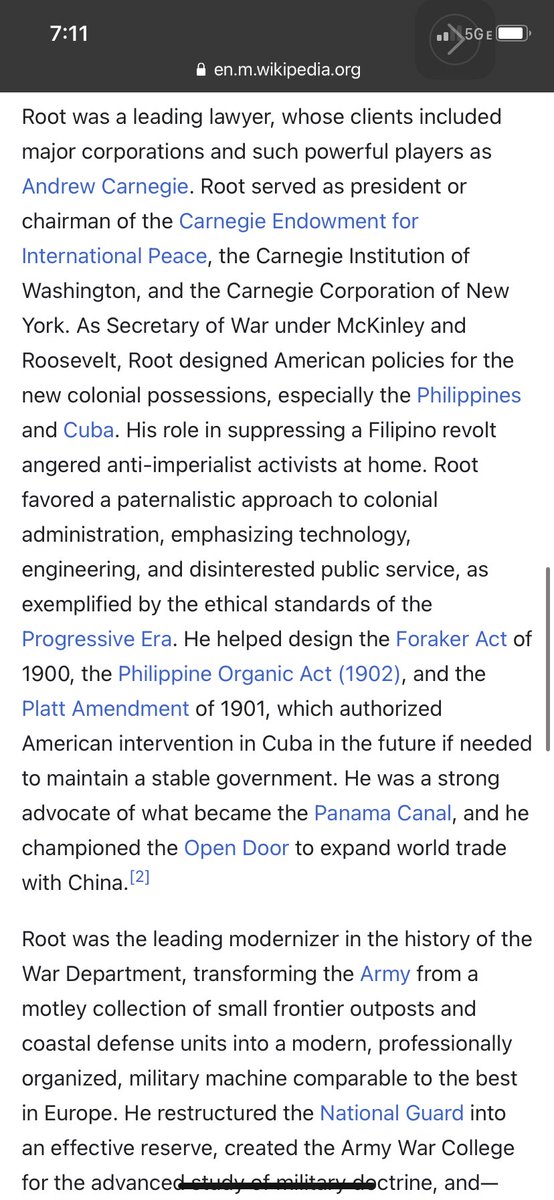
Among Root's prominent and wealthy private clients were Jay Gould, Chester A. Arthur, Charles Anderson Dana, William C. Whitney, Thomas Fortune Ryan, and E. H. Harriman. Root was among the friends who were present when Arthur was informed that James A. Garfield had died, and
that Arthur had succeeded to the presidency.[10] He served as the United States Attorney for the Southern District of New York from March 12, 1883 to July 6, 1885.[11]
Root's law practice, which he began in 1868, evolved into the law firm Winthrop, Stimson, Putnam & Roberts, a
Root's law practice, which he began in 1868, evolved into the law firm Winthrop, Stimson, Putnam & Roberts, a
predecessor of today's Pillsbury Winthrop Shaw Pittman.
Pillsbury is the result of several law firm mergers. In 1990, Pillsbury, Madison & Sutro merged with Los Angeles-based Lillick & McHose, and then in 1996 with Washington, D.C.-based Cushman Darby & Cushman. In 2001, the
Pillsbury is the result of several law firm mergers. In 1990, Pillsbury, Madison & Sutro merged with Los Angeles-based Lillick & McHose, and then in 1996 with Washington, D.C.-based Cushman Darby & Cushman. In 2001, the
firm merged with Winthrop, Stimson, Putnam & Roberts of New York City (Winthrop Stimson's predecessor was founded in 1868 by future Secretary of State and Nobel Peace laureate Elihu Root; another past partner was statesman Henry L. Stimson). The firm changed its name to.
Pillsbury Winthrop.
Pillsbury, Madison & Sutro opened in San Francisco in 1874, making Pillsbury the oldest "powerhouse" law firm in California. In 1900, Pillsbury incorporated Standard Oil of California—the company would later become Chevron.
Represented Japanese information
Pillsbury, Madison & Sutro opened in San Francisco in 1874, making Pillsbury the oldest "powerhouse" law firm in California. In 1900, Pillsbury incorporated Standard Oil of California—the company would later become Chevron.
Represented Japanese information
and health technology giant Hoya Corp. in its investment in a consortium led by Boston’s Bain Capital to purchase Toshiba’s flash memory chip business.
Under Barr's advice, President George H. W. Bush in 1992 pardoned six officials involved in the Iran–Contra affair.
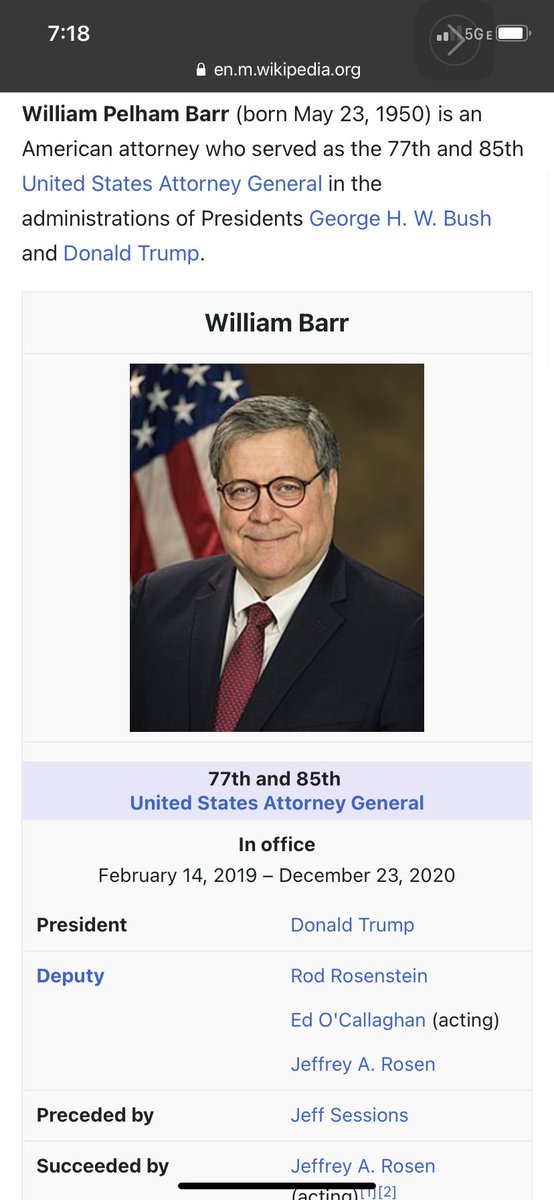
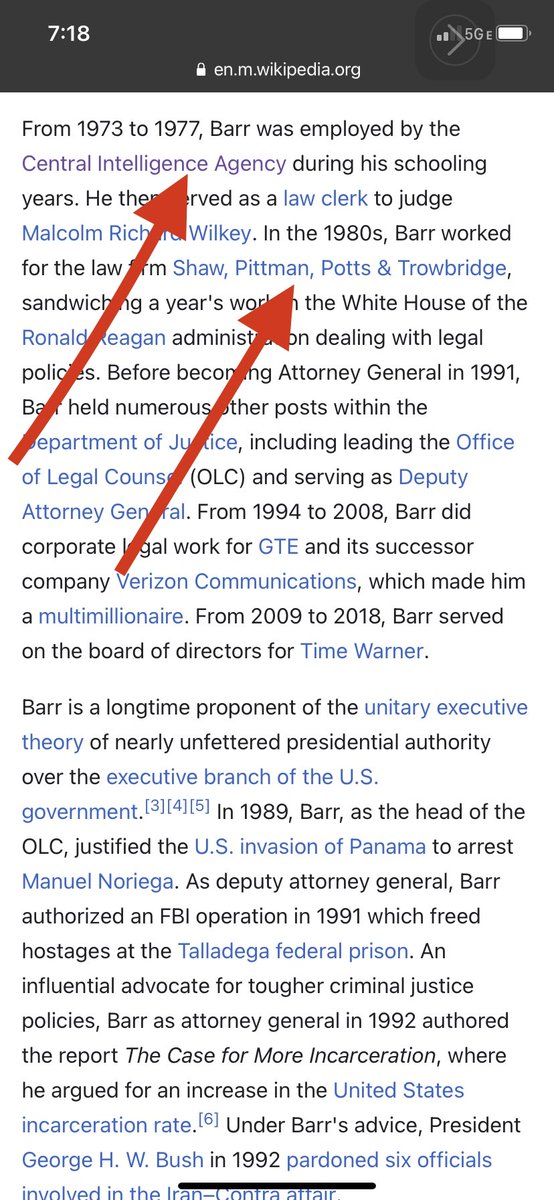
Barr became attorney general for the second time in 2019. During his term, he received criticism from some for his handling of several challenges, including his mischaracterized summary and selective redaction of the Mueller report, interventions in the guilty convictions and
sentences of former advisors to President Trump, Roger Stone and Michael Flynn. Barr's father was Jewish and raised in Judaism but later converted to Christianity and joined the Catholic Church. His mother is of Irish ancestry. Barr was raised as a Catholic.
Phrenic, anæsthetic, anti-spasmodic and hypnotic. Unlike opium, it does not constipate the bowels, lessen the appetite, create nausea, produce dryness of the tongue, check pulmonary secretions or produce headache. Used with success in hysteria, chorea, gout, neuralgia, acute
and sub-acute rheumatism, tetanus, hydrophobia and the like.
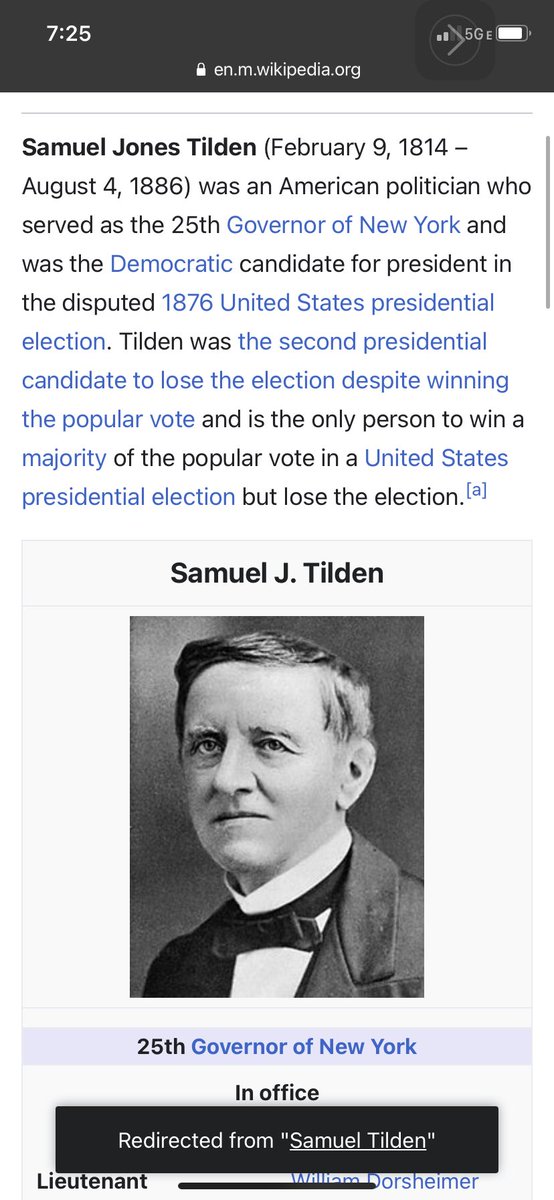
The Tilden Company was the family business of New York Governor and 1876 Democratic nominee for President Samuel J. Tilden.[1]
The American author Fitz Hugh Ludlow used Tilden's Extract recreationally, and wrote the
The Tilden Company was the family business of New York Governor and 1876 Democratic nominee for President Samuel J. Tilden.[1]
The American author Fitz Hugh Ludlow used Tilden's Extract recreationally, and wrote the

book The Hasheesh Eater (1857) about his experiences. Unlike opium, it does not constipate the bowels, lessen the appetite, create nausea, produce dryness of the tongue, check pulmonary secretions or produce headache.
As governor, he continued to focus on rooting out corruption. He helped to break up the "Canal Ring," a bipartisan group of state and local officials who had enriched themselves by overcharging for the maintenance of the New York State Canal System.[37] Tilden gained a national
reputation as a reform governor, a valuable asset given the number of scandals that had come into public view during the presidency of Ulysses S. Grant.
Tilden was the second individual, after Andrew Jackson in 1824, to lose a presidential election despite winning at least a
Tilden was the second individual, after Andrew Jackson in 1824, to lose a presidential election despite winning at least a
plurality of the popular vote. Grover Cleveland (1888), Al Gore (2000), and Hillary Clinton (2016) subsequently won pluralities while losing the electoral vote.
beginning in May 1878, the Potter Committee subpoenaed all telegrams sent by political operatives during the election dispute. 29,275 telegrams had been sent, but all save 641 had been routinely destroyed by Western Union. The remaining telegrams were in cipher, as was common
In 1895, the Tilden Trust was combined with the Astor and Lenox libraries to found the New York Public Library, and the building bears his name on its front.
The Samuel J. Tilden House at 15 Gramercy Park South, which he owned from 1860 until his death, is now used by the
The Samuel J. Tilden House at 15 Gramercy Park South, which he owned from 1860 until his death, is now used by the
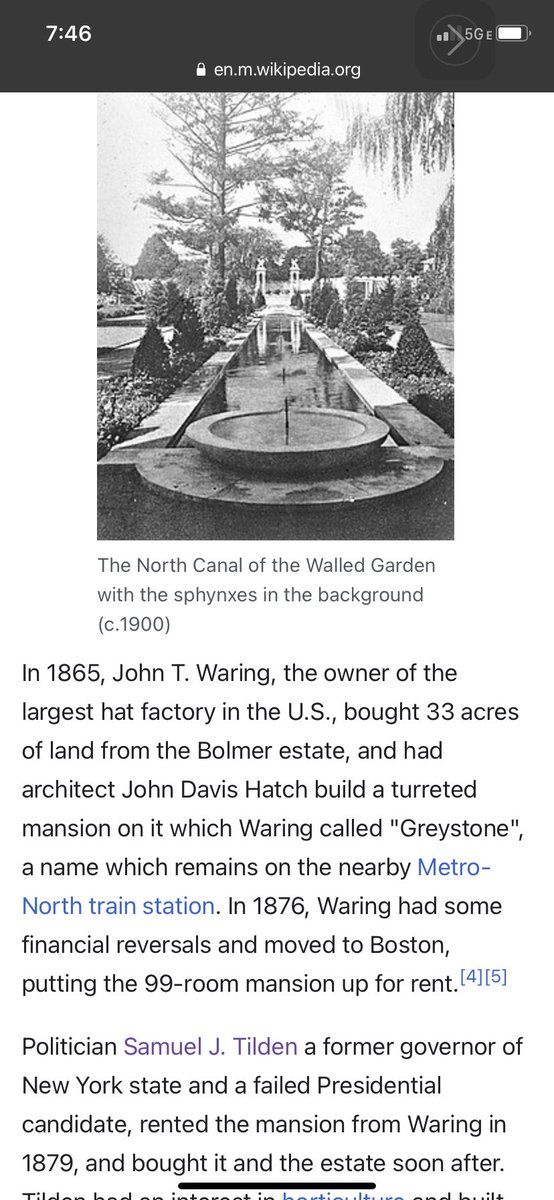
National Arts Club.[109] Tilden's Graystone property is now known as Untermyer Park; it was added to the National Register of Historic Places in 1974.
Following his admission to the bar, Untermyer started practicing in New York City. His younger brother, Maurice Untermyer, was
Following his admission to the bar, Untermyer started practicing in New York City. His younger brother, Maurice Untermyer, was
later admitted, while he also recruited Columbia classmate Louis Marshall to join the firm in 1895. They, with Randolph Guggenheimer and his descendants, practiced as Guggenheimer, Untermyer & Marshall for 45 years
Untermyer gained fame as a lawyer focusing on corporate law. An exponent of the Progressive Era, he became an advocate of stock market regulations, government ownership of railroads and various legal reforms. However, he was also the first attorney to earn a million dollars on a
single case.
•
•After this he conducted a number of similar exposures. In 1911 he delivered "Is There a Money Trust?", an address that prompted an investigation by the Committee on Banking and Currency of the U.S. House of Representatives, then headed by Arsène Pujo.
•
•After this he conducted a number of similar exposures. In 1911 he delivered "Is There a Money Trust?", an address that prompted an investigation by the Committee on Banking and Currency of the U.S. House of Representatives, then headed by Arsène Pujo.
Untermyer was counsel-investigator to the Pujo Committee, famously cross-examining J. P. Morgan and other New York bankers. The Committee's work resulted in the passage of remedial legislation, including the establishment of the Federal Reserve System.
In 1903, he undertook the first judicial exposure of "high finance" in connection with the failure of U.S. Shipbuilding, organized only a year before as a consolidation of the larger shipbuilding companies in America, including the entity subsequently known as Bethlehem Steel.
In 1915, he acted as a counsel for the federal government in the suit brought against the Secretary of the Treasury and the Comptroller of the Currency by the Riggs National Bank of Washington, D.C., which charged there was a conspiracy to wreck it; the defendants were cleared.
•He took an active part in preparing the Federal Reserve Act, the Clayton Antitrust Act of 1914, the Federal Trade Commission Act of 1914 and other legislation curbing trusts.
•He was a delegate to the Democratic National Convention in 1904, 1908 and 1912; and delegate-
•He was a delegate to the Democratic National Convention in 1904, 1908 and 1912; and delegate-
at-large for the state of New York in 1916. Accordingly, he was a strong supporter of Woodrow Wilson's administration.
After America entered World War I, he was an advisor to the U.S. Treasury Department regarding the interpretation of the income tax and excess profits tax laws.
After America entered World War I, he was an advisor to the U.S. Treasury Department regarding the interpretation of the income tax and excess profits tax laws.
He was appointed by President Wilson to serve on the U.S. section of the 1916 International High Commission, which convened in Buenos Aires for the purpose of framing uniform laws in the Americas.
In 1920, he was counsel for a joint committee of the New York state legislature (popularly known as the Lockwood Committee) appointed to investigate an alleged conspiracy among the building trades of New York City. It was charged that labor leaders were using their power by
extorting bribes for the prevention of strikes, by preventing independent bids and by forcing building awards to favorites.
As special counsel until 1933 in the New York City transit suits, he helped maintain the five-cent subway fare.
Untermyer also identified as a Zionist and served as president of the Keren Hayesod, the agency through which the movement was then and still is conducted in America.[
Untermyer also identified as a Zionist and served as president of the Keren Hayesod, the agency through which the movement was then and still is conducted in America.[
1]
In 1933, he helped found the Non-Sectarian Anti-Nazi League to promote an economic boycott of Nazi Germany.[6] He made a speech then published by the New York Times explaining the process of german boycott in August 1993.
In 1933, he helped found the Non-Sectarian Anti-Nazi League to promote an economic boycott of Nazi Germany.[6] He made a speech then published by the New York Times explaining the process of german boycott in August 1993.
Journalist Maury Terry (best known for his work on potential links between alleged ritualistic sacrifices at Untermyer Park and the Son of Sam murders) reported that Untermyer belonged to the New York City temple of the Hermetic Order of the Golden Dawn, although the provenance
of corroborating evidence remains nebulous.[15]
Untermyer died on March 16, 1940 in Palm Springs, California.[16] His body was interred (with an accompanying sculpture by Gertrude Vanderbilt Whitney) at a family plot that he established in Woodlawn Cemetery
Untermyer died on March 16, 1940 in Palm Springs, California.[16] His body was interred (with an accompanying sculpture by Gertrude Vanderbilt Whitney) at a family plot that he established in Woodlawn Cemetery
Keren Hayesod was established at the World Zionist Congress in London on July 7–24, 1920, to provide the Zionist movement with resources needed for the Jews to establish a Jewish state in Palestine. It came in response to the Balfour Declaration of 1917, which stated that
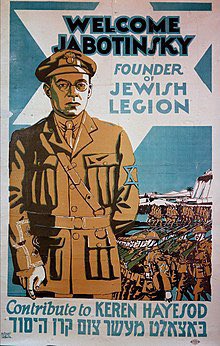
“his Majesty's government views with favour the establishment in Palestine of a national home for the Jewish people” - turning the ages-old dream of the return to Zion into a politically feasible goal.
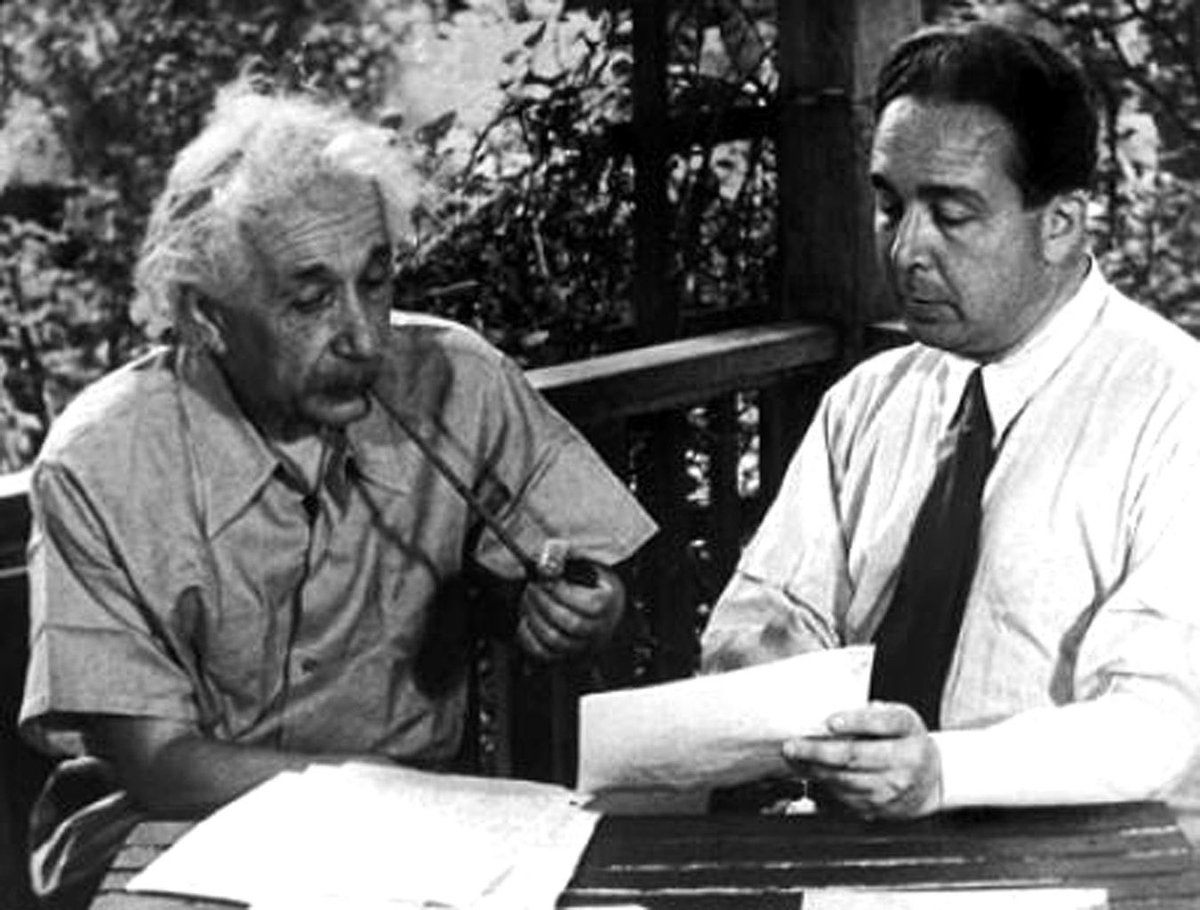
Keren Hayesod established fundraising organizations around the world. Early leaders included Chaim Weizmann, Albert Einstein and Ze’ev Jabotinsky.
During the 1920s, Keren Hayesod began to lay the groundwork for the state-on-the-way and helped raise funds to establish the Hebrew
During the 1920s, Keren Hayesod began to lay the groundwork for the state-on-the-way and helped raise funds to establish the Hebrew
University of Jerusalem, Bank Hapoalim and various physical projects. In 1926, Keren Hayesod relocated its headquarters from London to Jerusalem.

During and after World War II Keren Hayesod launched emergency campaigns, sometimes in partnership with other organizations. Funds were used to help the Allied war effort, and after the liberation of the concentration camps, to smuggle massive numbers of survivors into the Land
of Israel, in defiance of British immigration restrictions.
Many of Keren Hayesod’s leaders perished in the Holocaust. KH's leading role in the Zionist enterprise made it a target for terrorism. In March 1948, a car bomb was detonated
Many of Keren Hayesod’s leaders perished in the Holocaust. KH's leading role in the Zionist enterprise made it a target for terrorism. In March 1948, a car bomb was detonated
The first full decade that followed the birth of the State of Israel was marked by huge waves of immigration, primarily from North Africa, Yemen, Kurdistan and Iraq.
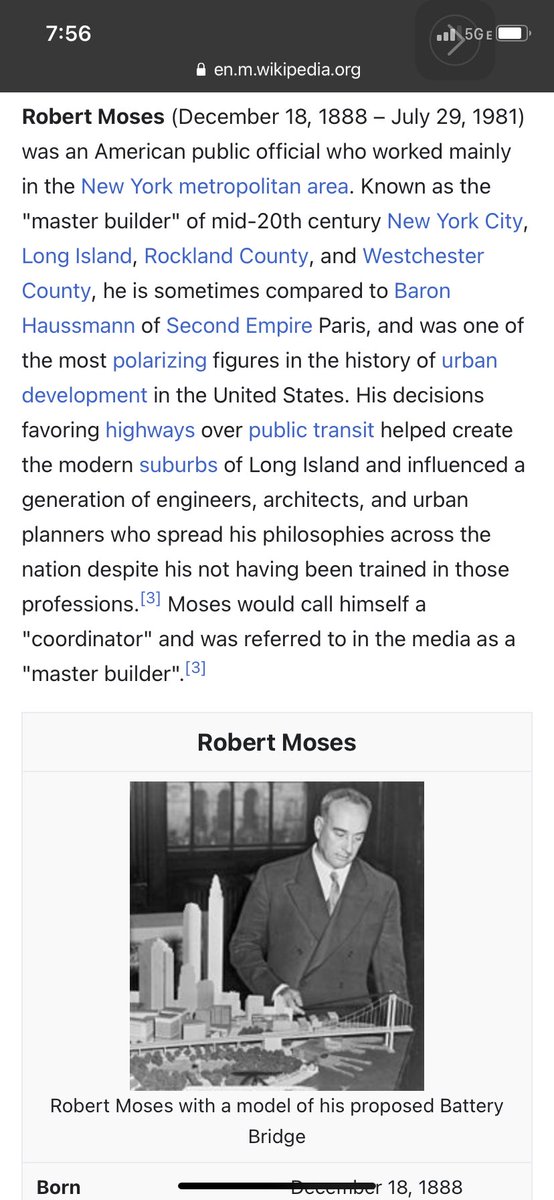
Keren Hayesod-supported Operation Moses brought 5,000 new immigrants from Ethiopia to Israel in a dramatic
Keren Hayesod-supported Operation Moses brought 5,000 new immigrants from Ethiopia to Israel in a dramatic
airlift (1984), and the organization immediately mobilized to raise funds to address the new immigrants’ special needs. Israel was still in the throes of the First Intifada (1987-1993) when the Soviet Union imploded.
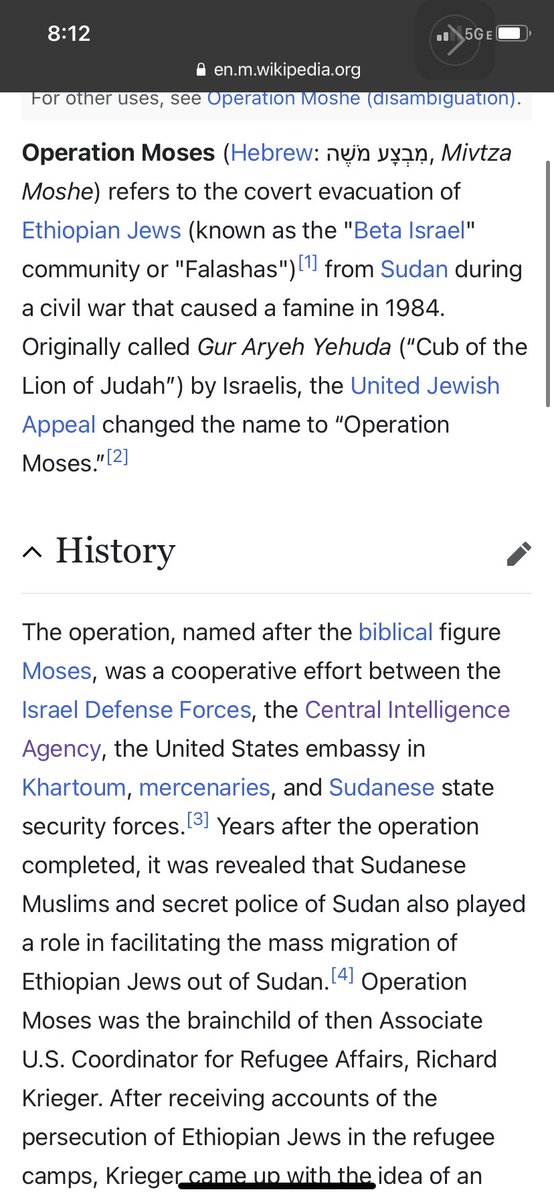
The operation, named after the biblical figure Moses, was a cooperative effort between the Israel Defense Forces, the Central Intelligence Agency, the United States embassy in Khartoum, mercenaries, and Sudanese state security forces.
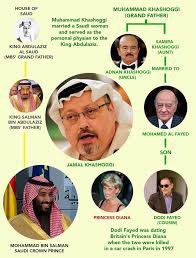
The club was operated by Saudi arms dealer Adnan Khashoggi—also a friend of Adham's.
The original charter establishes that an operations centre would be built by 1 September 1976 in Cairo.[8] The group made its headquarters there, and its organization included a secretariat,
The original charter establishes that an operations centre would be built by 1 September 1976 in Cairo.[8] The group made its headquarters there, and its organization included a secretariat,
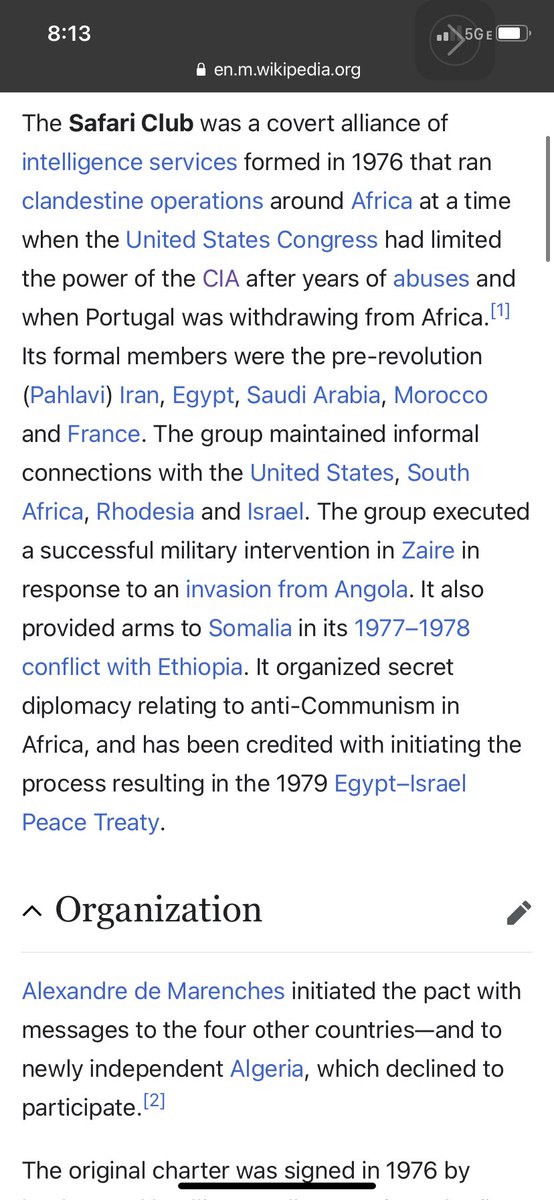
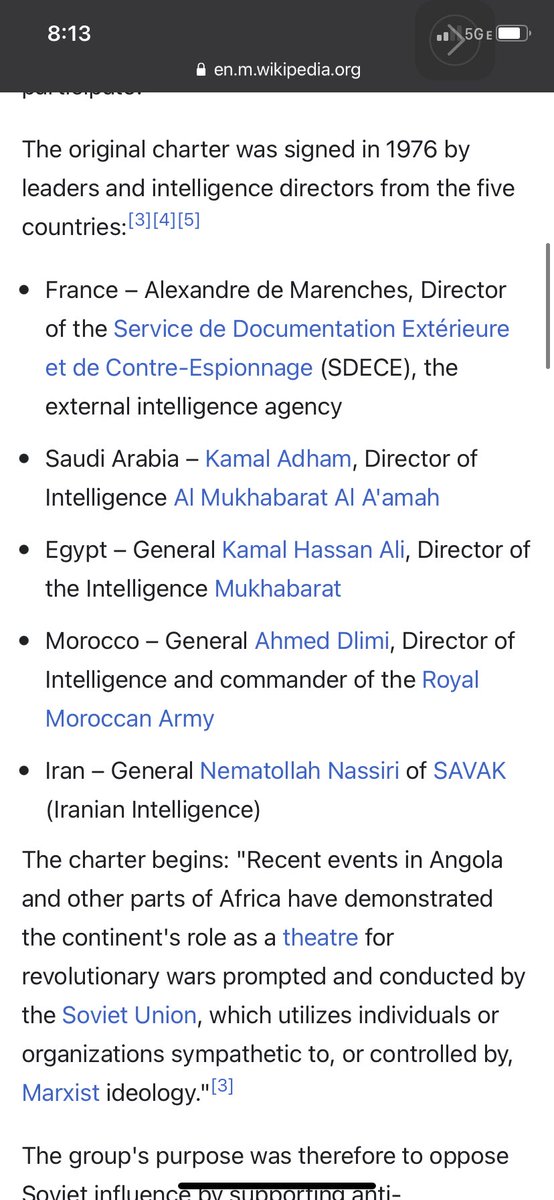
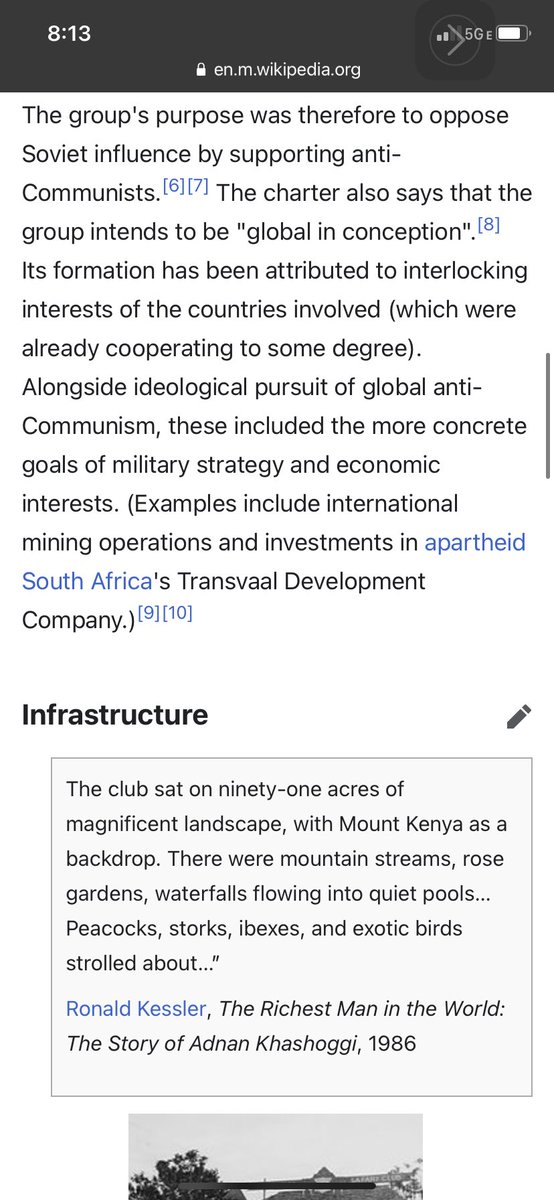
a planning wing, and an operations wing. Meetings were also held in Saudi Arabia and in Egypt. The group made large purchases of real estate and secure communications equipment.
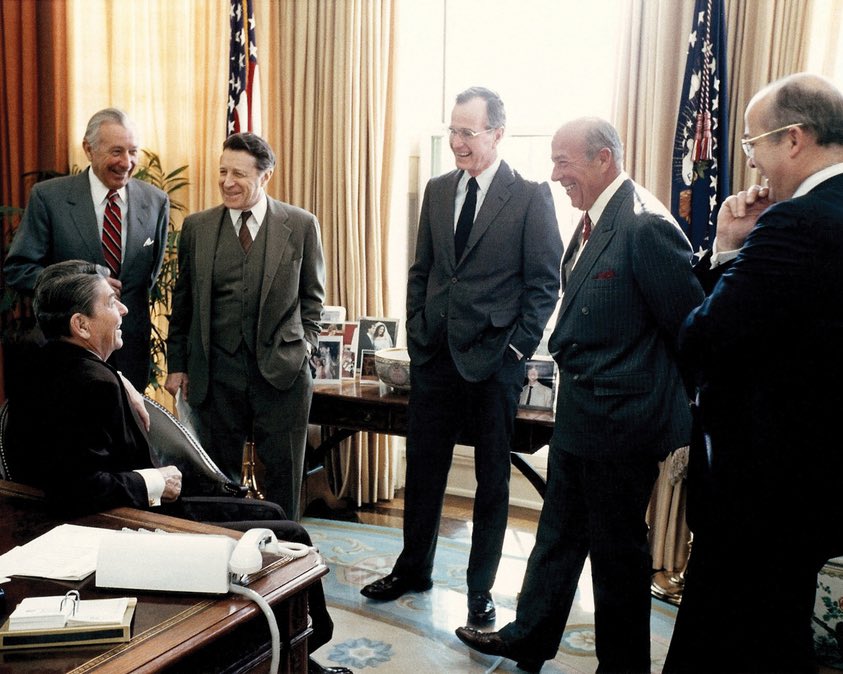
The creation of the Safari Club coincided with the consolidation of the Bank of Credit and Commerce International (BCCI). The BCCI served to launder money, particularly for Saudi Arabia and the United States—whose CIA director in 1976, George H. W. Bush, had a personal
account. "The Safari Club needed a network of banks to finance its intelligence operations. With the official blessing of George Bush as the head of the CIA, Adham transformed a small Pakistani merchant bank, the Bank of Credit and Commerce International (BCCI), into a worldwide
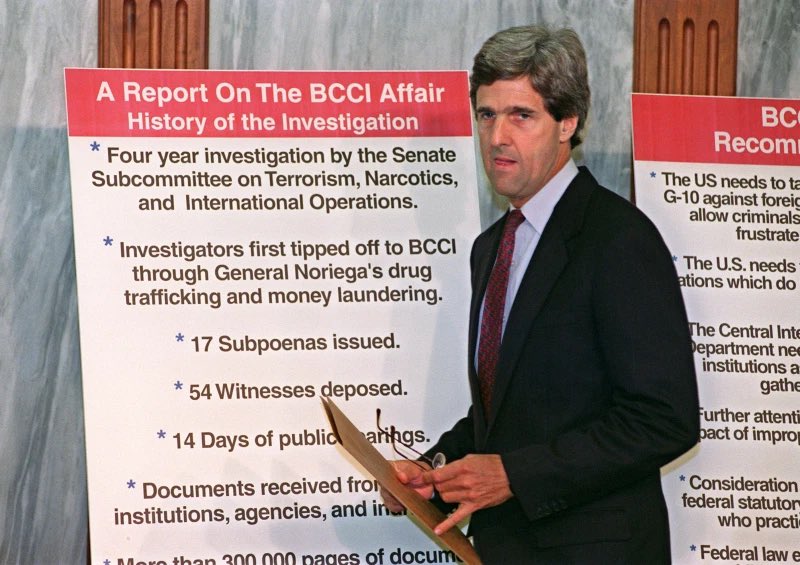

money-laundering machine, buying banks around the world in order to create the biggest clandestine money network in history."
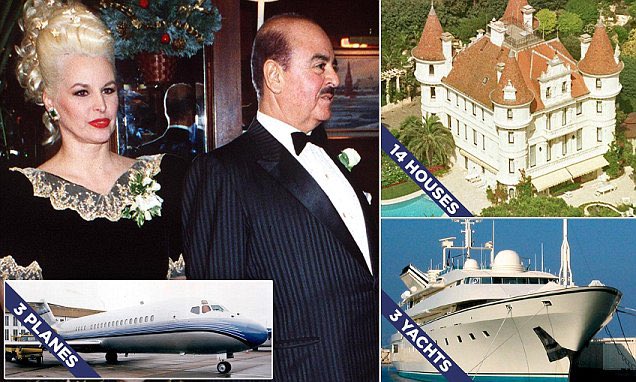
Adnan Khashoggi: the 'whoremonger' whose arms deals funded a playboy life of decadence and 'pleasure wives'
Despite a fortune amassed through involvement in the some of the biggest arms deals of the 20th Century, Adnan Khashoggi died peacefully at the age of nearly 82
Despite a fortune amassed through involvement in the some of the biggest arms deals of the 20th Century, Adnan Khashoggi died peacefully at the age of nearly 82

Special counsel Robert Mueller is probing the New York meeting that included Ahmed al-Assiri, Michael Flynn and Joel Zamel, the report said. As the meeting took place in January 2017, prior to Donald Trump taking office, the meeting could fall under Mueller’s probe into foreign
governments’ efforts to influence the then-incoming administration.
Also involved in the talks of potential regime change in Iran were Steve Bannon and Lebanese-American businessman George Nader, a representative of the United Arab Emirates.
Also involved in the talks of potential regime change in Iran were Steve Bannon and Lebanese-American businessman George Nader, a representative of the United Arab Emirates.
The FTI Consulting company concluded in November 2019 with "medium to high confidence" that the phone of Jeff Bezos was hacked by a file sent from the WhatsApp account of the crown prince of Saudi Arabia, Mohammed bin Salman.[1][2] The Saudi Arabian embassy to the United States
has denied the allegations.[3] Billionaire Jeff Bezos, the owner of The Washington Post newspaper and the founder of the company Amazon, engaged FTI Consulting in February 2019 after the National Enquirer in January 2019 reported details of Bezos's affair.[4] FTI Consulting did
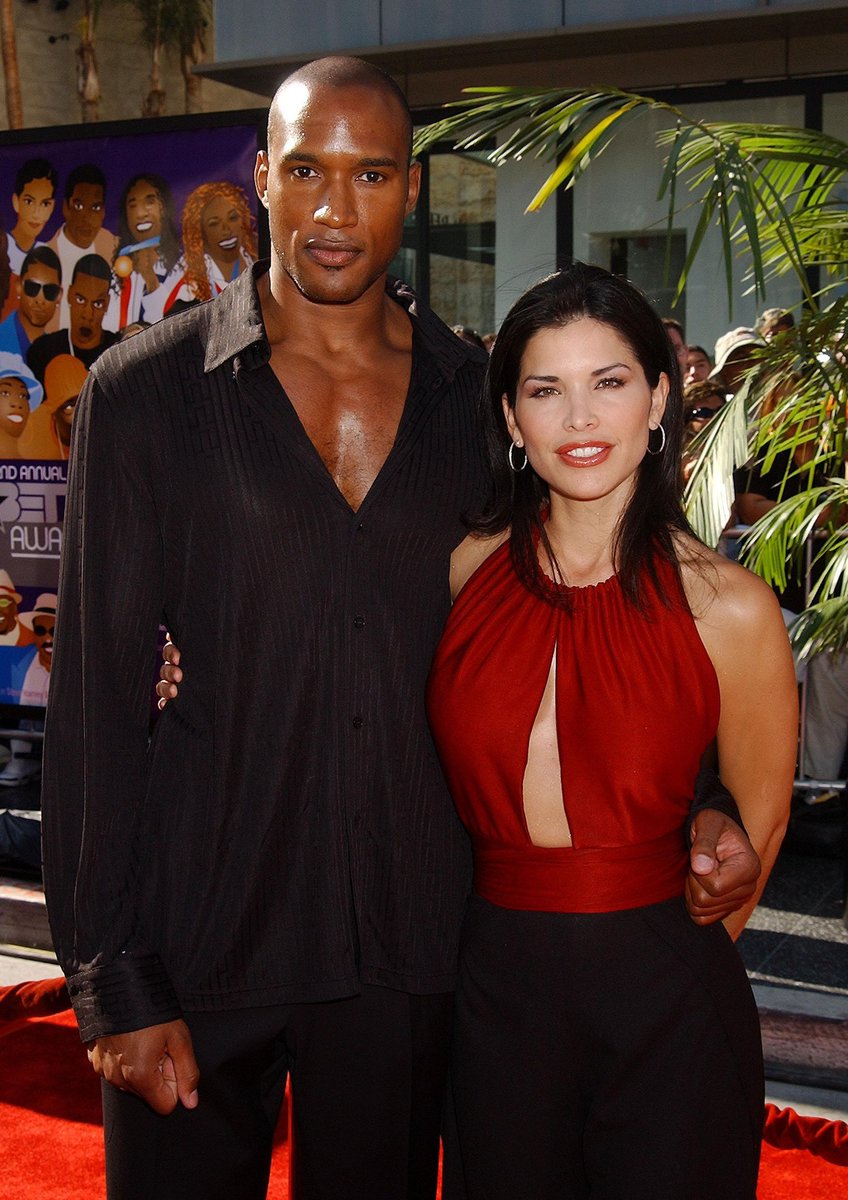
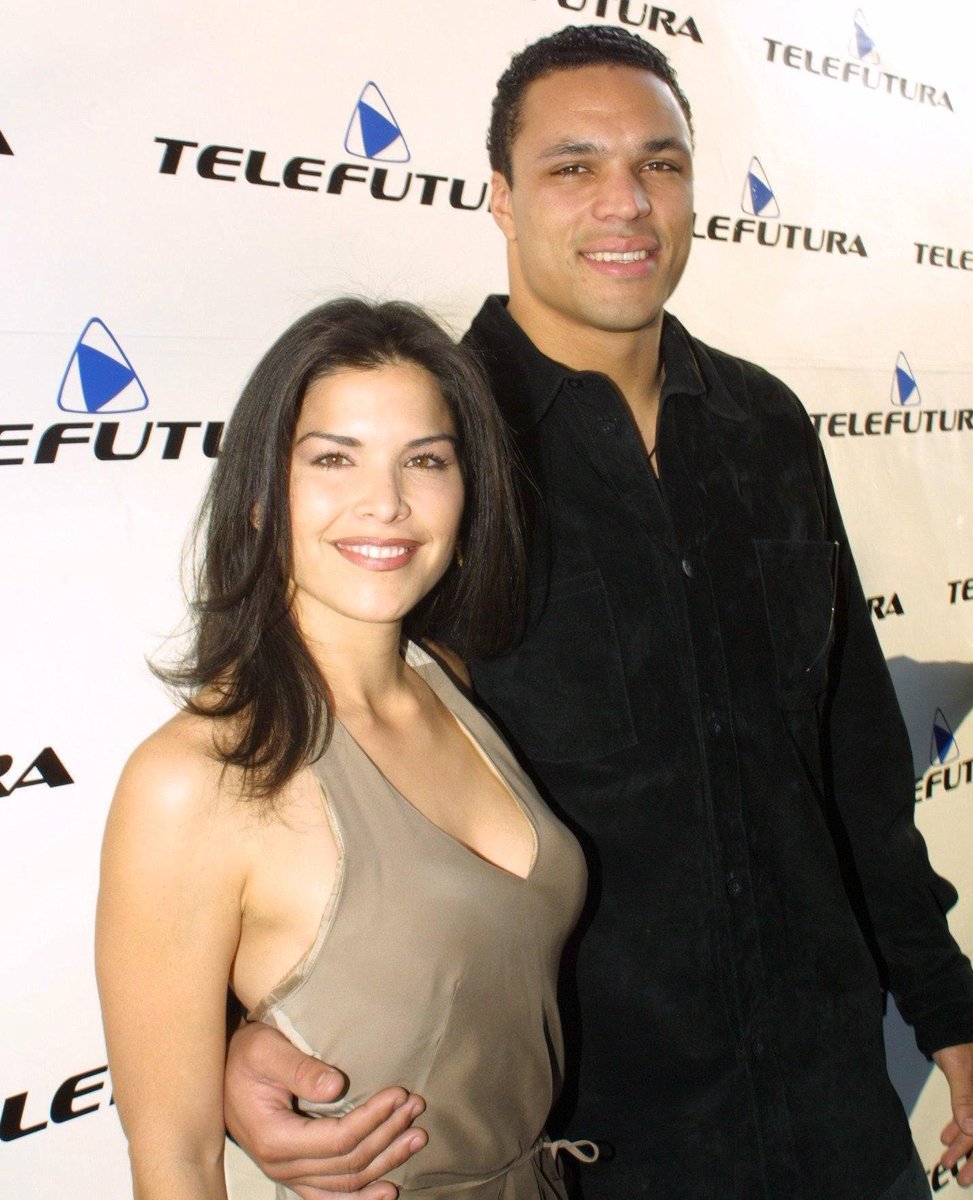
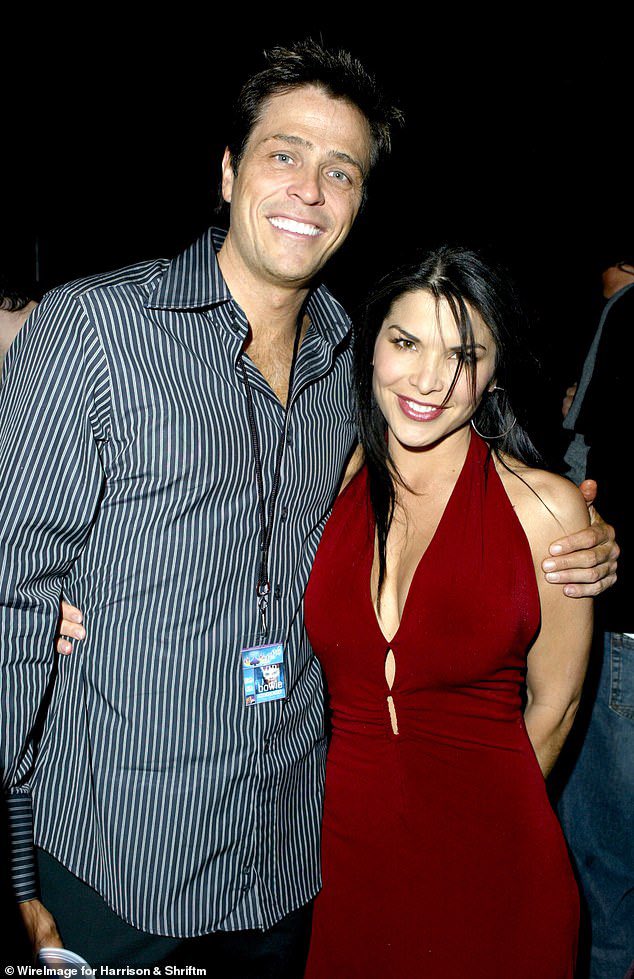
not link the National Enquirer to the hack.
• • •
Missing some Tweet in this thread? You can try to
force a refresh


