1/ Interesting to see @USTreasury explicitly spell out role of Russian Intel Services, front orgs, outlets in global influence operations. And for those of us tracking this space, it’s helpful to map these to CIB disruptions we’ve done over the yrs, a 🧵 home.treasury.gov/news/press-rel…
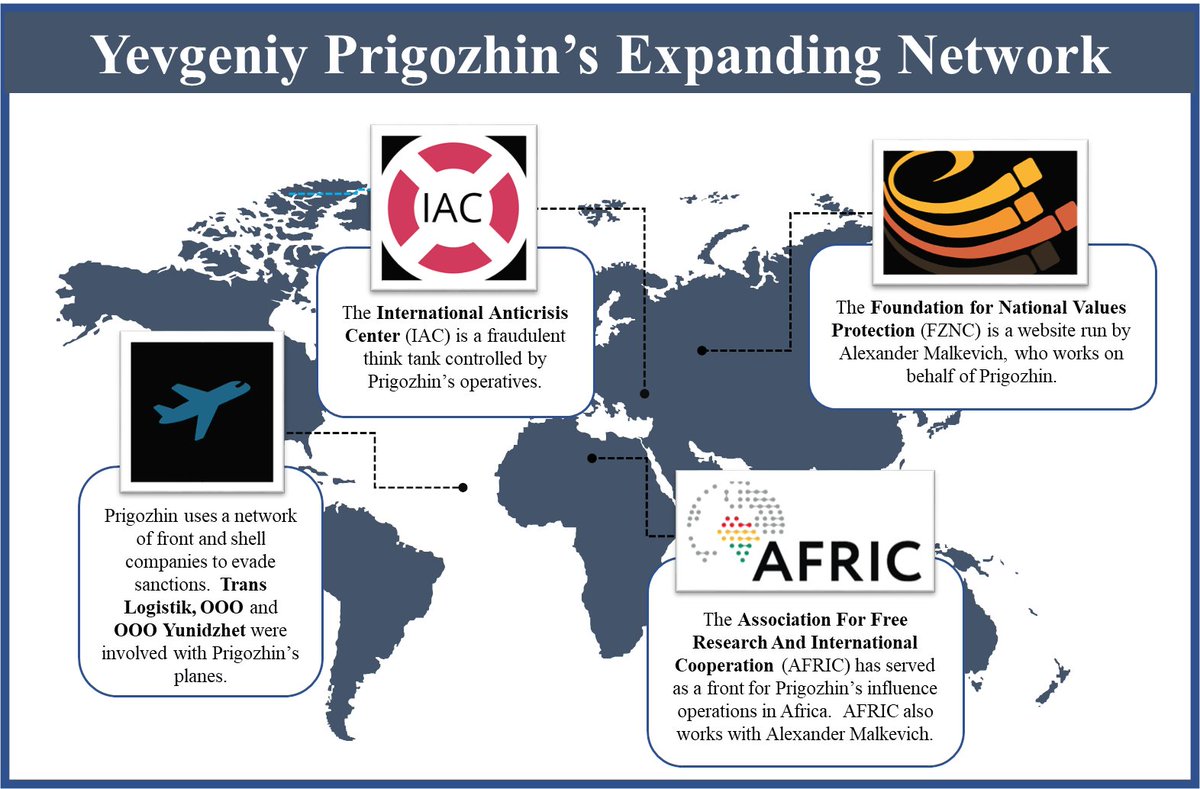
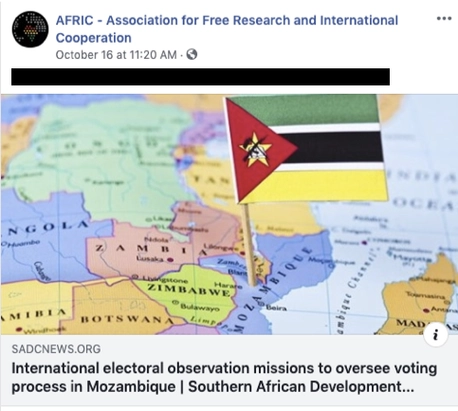
@USTreasury 2/ So let’s break this down. In this graphic, @USTreasury links RU intel services (FSB, GRU, SVR) to websites/outlets InfoRos, Newsfront/SouthFront, Strategic Culture Foundation. Respectively, our teams have disrupted networks linked to these in Aug '18, April ’20, Sept '20
@USTreasury 3/ In Aug 2018, our IO team took down a network attributed to "Russian military intelligence services" -- InfoRos was linked to that network about.fb.com/news/2018/08/m…
@USTreasury@noUpside@shelbygrossman@stanfordio 7/ Mapping all of these investigations/enforcements to @USTreasury sanctions and more broadly, executive actions on Russian influence activities is pretty cool. And really speaks to the whole of society approach to deterrence in this space.
8/ More on the importance of whole-of-society, cross-sectoral deterrence of influence operations in this thread from @DavidAgranovich
In week 7 of “Lies & Disinformation” @Georgetown, we focused on role of media, state media/overt propaganda in the info ecosystem & toolbox of influence ops. What role can journalism play in inadvertently amplifying IO campaigns or conversely finding them?
@Georgetown One of my favorite pieces of all time on this subject is “Oxygen of Amplification" from @wphillips49@datasociety which looks at how the coverage choices of editors and reporters play a role in the amount of oxygen supplied to falsehoods and manipulations datasociety.net/wp-content/upl…
After a few months of a hiatus, reviving this tweet thread to cover the remaining material from weeks 6-14. Thanks to everyone for your patience waiting while work and other priorities got in the way.
In week 6 of “Lies & Disinformation” @Georgetown, we focused on Myanmar and the Philippines as case studies into (a) domestically aimed influence operations; and (b) how digital harassment, the silencing of activist voices can play a role in influence activities.
Happy 4th of July, class! Appropriately, week 4 of “Lies & Disinformation” @Georgetown was about modern Russian influence operations. You’ll notice that we spent 2 wks on Russia this semester. That’s b/c Russia is one of the most prolific IO actors, from Soviet period to this day
@Georgetown The propaganda poster I chose for the week was this one from the 1984 elections in the USSR, which basically reads “Let’s choose the most worthy,” to go along with some of the electoral interference themes we cover in this lesson.
@Georgetown To kick off the week’s readings, I had students listen to Episode 2 of the @bellingcat MH17 podcast “A Pack of Lies,” which details Russia’s “carefully staged media event” and theories thrown out to distract from the evidence, confuse the info environment: bellingcat.com/resources/podc…
Okay class. In week 2 of “Lies & Disinformation” @Georgetown, we took a look at the evolution of propaganda & influence from analog to digital, how advancements in technology, democratization of info from the Gutenberg Press, to radio and television, the internet changed the game
The first recommended reading was an audio clip @NPR on how new technology (printing press) helped Martin Luther change Christianity (h/t to @markondefense for that idea) npr.org/transcripts/50…. @ICFJ also has a great overview on the history of info ops: icfj.org/news/short-gui…
In class, we covered how Gutenberg’s invention led to Luther’s 95 theses going “viral," but also to some extreme regulation like the death penalty in France for the use of the printing press in 1535 to “prevent the spread of misinformation and false news.”
I’ve been meaning to do this for some time: starting this week, I will be sharing my syllabus and recommended readings from the “Lies, Damned Lies, and Disinformation” course I taught in the spring semester @Georgetown SSP. I’ll be sharing some highlights from each week’s lesson.
I’ve had some requests for the course syllabus from friends and colleagues and thought this might be a fun way to share it, along with some commentary. I’d love feedback, advice as I plan out next yr’s course. (H/T @LorenRaeDeJ whose sharing throughout the semester inspired me).
First off, here’s a snapshot of the course outline. Each week, for the next 14 weeks, I’ll be share readings from each lesson, and provide some commentary on the discussions we had in class, and more.
1/ A word of caution from me. In addition to wise words from @katestarbird@JaneLytv for individuals in protests movements, journalists covering them, all of us, I wanted to add this: be careful ascribing legitimate domestic societal grievances to foreign actors without proof.
2/ We’re in an emotionally charged place right now, no matter who we are, what we believe. It’s an easy time to confirm our biases, jump to conclusions. Not everything you disagree with is a troll, a bot, a foreign actor. If a research report claims that, vet it. #trustbutverify
3/ And then there’s stuff you do agree with. Foreign actors historically have taken advantage of domestic grievances in the US. They may do it again; they may not. No matter what, don’t let that invalidate the grievances themselves. And don’t assume they’re doing it now w/o proof