1/ This week we launched Chapter 2 of “Inheritance,” a project about American history, Black life, and the resilience of memory. theatlantic.com/inheritance/
2/ The theme for Chapter 2 is “Where Memories Live.” For the Black community, memory and history—two of the most important pillars in this project—are intrinsically tied to spaces. theatlantic.com/inheritance/
3/ When we tell the story of Black America, returning to a place—whether physical or metaphorical—can be a crucial element of understanding an event and its impact. theatlantic.com/inheritance/
4/ This chapter launched with a piece from @agordonreed in which she challenges the one-dimensional origin stories of Black America by telling the story of Estebanico, one of the first people of African descent to enter the historical record in America. theatlantic.com/magazine/archi…
5/ Next, @william_sturkey brings our attention to Hattiesburg, Mississippi by uncovering the story that can be found in one photograph, and the new tools allowing historians of Black America to trace many such stories. theatlantic.com/ideas/archive/…
6/ @luke_winkie explores the lost Black history of a corner of cyberspace: esports. “Black kids never stopped excelling at esports, but they’ve been offered a seat at the table in only a select few leagues,” he writes. theatlantic.com/technology/arc…
7/ Sasha Banks writes about why she doesn’t identify as a patriot and why she calls herself an American confessor instead. theatlantic.com/ideas/archive/…
8/ Stay tuned. More stories from Chapter 2 of “Inheritance” will be released in the coming days. theatlantic.com/inheritance/
• • •
Missing some Tweet in this thread? You can try to
force a refresh

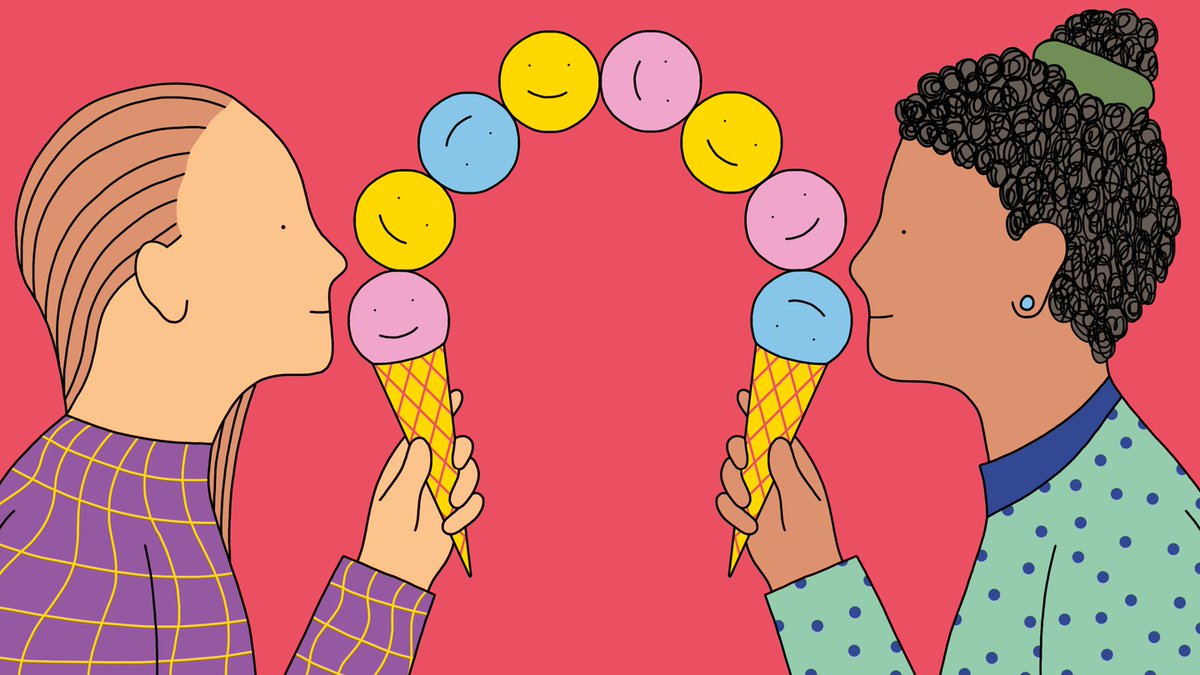
1/9 The coming months could become a push and pull between the introverts and the extroverts in your social circle.
2/9 Our staff writers @KatherineJWu and @amandamull, who consider themselves to be on opposite sides of that divide, discuss what they’re looking forward to in post-pandemic life—and what they’re dreading. theatlantic.com/family/archive…
3/9 When you think about the activities that will be possible again, how do you feel about ...
1/ The indignities and embarrassments of puberty have proved strangely comforting in uncertain times. @megangarber on why grown-ups keep watching shows about middle school. theatlantic.com/magazine/archi…
2/ “PEN15,” @megangarber writes, “offers its young characters the elemental dignity of seeing them as they are. It understands how possible it is, at their age or any other, for the surreal to be profoundly true.” theatlantic.com/magazine/archi…
3/ In “Big Mouth” surreality is a way of seeing, @megangarber writes. “So is the series’ bawdiness: Animation offers the freedom to go gonzo.” theatlantic.com/magazine/archi…
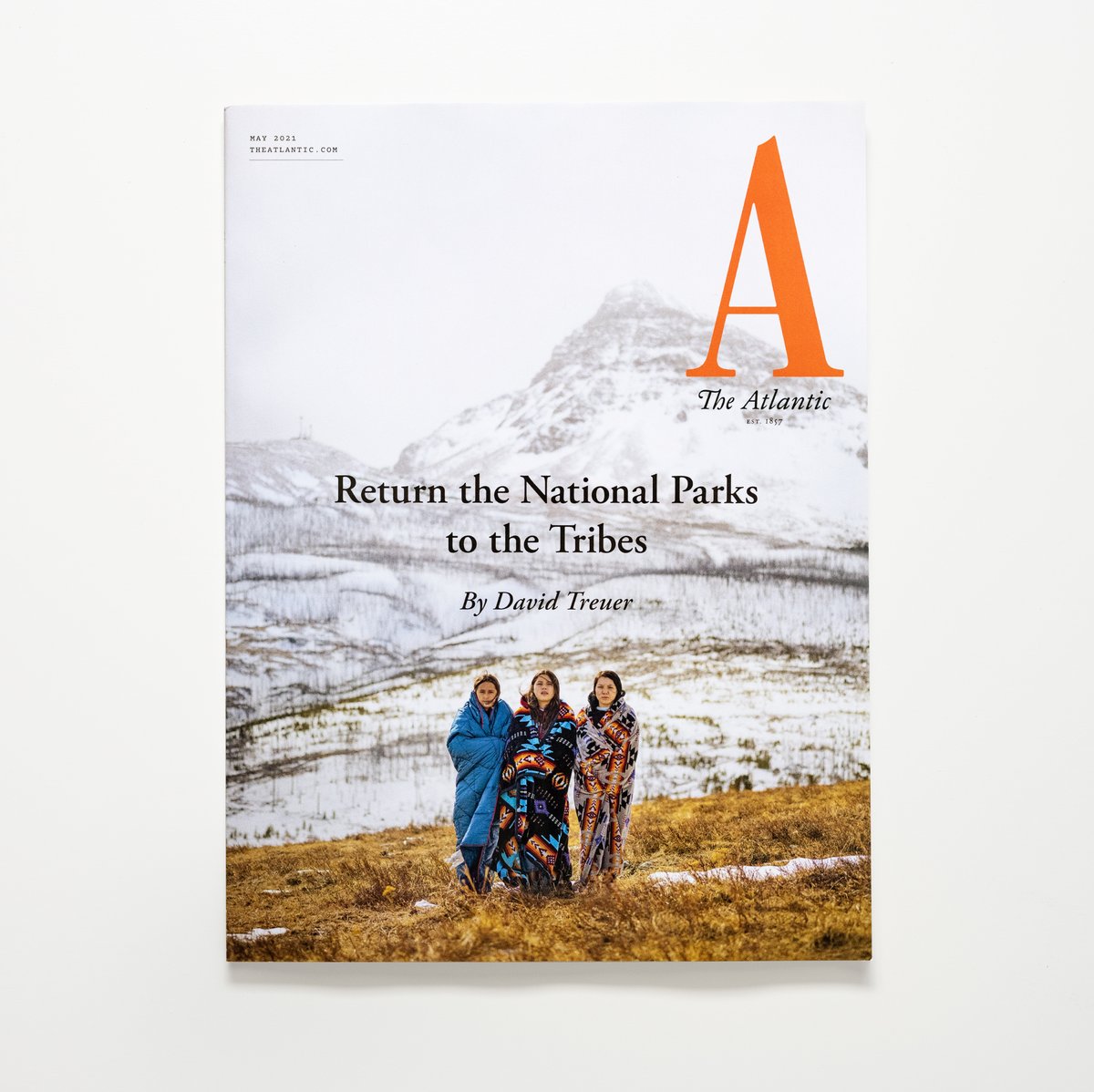
Today we are introducing a new series, “Who Owns America’s Wilderness?” Read the introduction from @andersen: on.theatln.tc/udLqrql
This series launches with our May cover story, “Return the National Parks to the Tribes,” by @DavidTreuer. It will give readers a full view of the parks’ past, and a compelling vision of their potential future. on.theatln.tc/lwNpFZi
Another essay, by @nijhuism, confronts John Muir’s legacy, but without presenting a false choice between deification and cancellation. on.theatln.tc/f8SXkFn
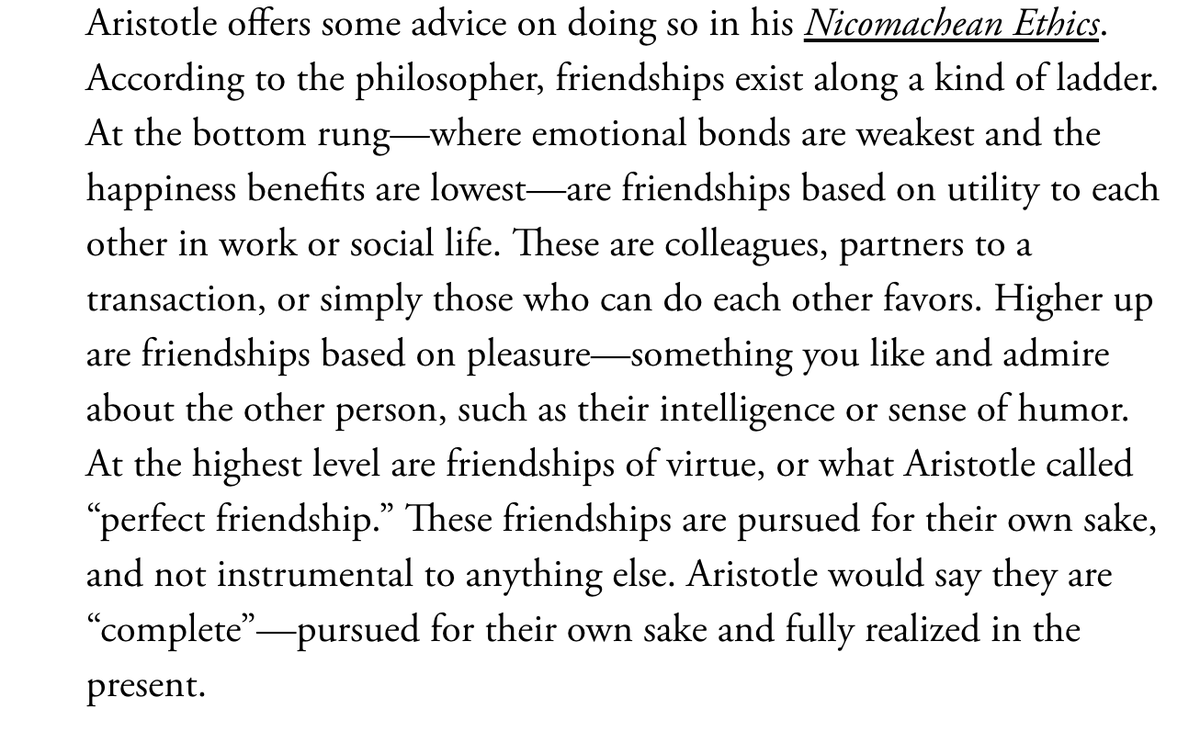
1/ The average American adult has 16 friends, recent polling showed. Only eight are people they would actually hang out with one-on-one. Just three are “friends for life.”
2/ First, think about what function your friendships perform. Who are your work friends? Who are the people you hang out with because you just enjoy their company? Is there anyone you spend time with for no reason at all?
3/ If it feels like no one really knows you well, you can take a few steps, @arthurbrooks writes. Have deeper conversations with your existing friends. Show up at places unrelated to your worldly ambitions. Strike up a friendship with someone who can do nothing for you.
2/8 “The inescapable truth is that money guides all sorts of decisions at these schools,” @caitlinpacific writes. Private-school parents are “consumers of a luxury product.” theatlantic.com/magazine/archi…
3/8 Surely there should be something to show for a $50,000-a-year education: “Parents want teachers, coaches, and counselors entirely focused on helping them create a transcript that Harvard can’t resist.” theatlantic.com/magazine/archi…
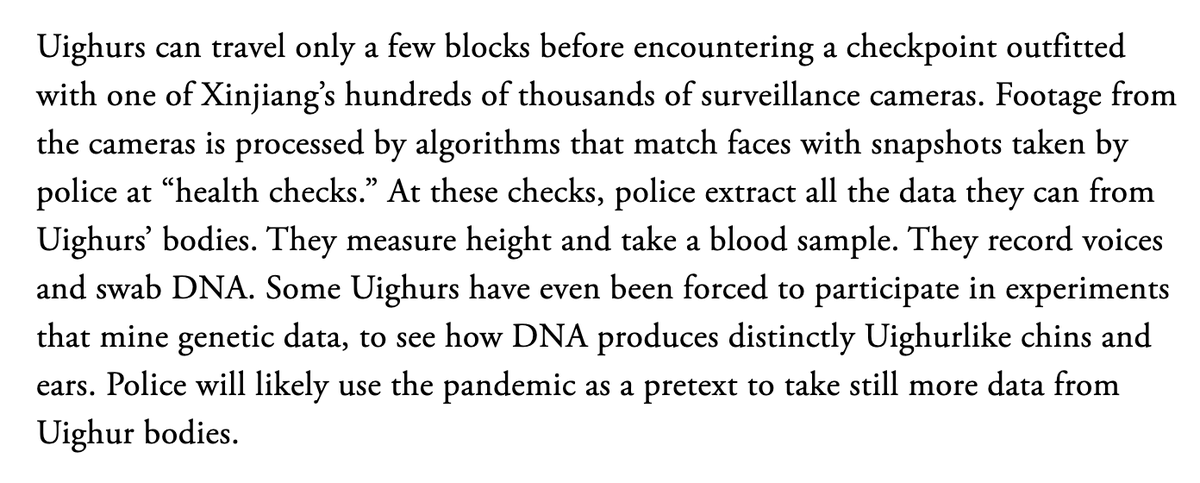
1/ With AI, China’s government could soon achieve an unprecedented political stronghold on more than 1 billion people, @andersen reports. (From 2020) theatlantic.com/magazine/archi…
2/ The emergence of an AI-powered authoritarian bloc led by China could warp the geopolitics of this century. It could prevent billions of people, across large swaths of the globe, from ever securing any measure of political freedom. theatlantic.com/magazine/archi…
3/ The Uighur population has already been denied such freedom.
In 2014, more than 1 million Uighurs were forced into concentration camps. Those who were spared the camps now make up the most intensely surveilled population on Earth.