I may be biased, but personally I think the fight a bereaved Grenfell Tower family are taking to the Home Office to ensure inquiry recommendations covering disabled people are implemented deserves to be news outside the pages of a niche trade magazine...
The nutshell is this: after hearing the evidence of the night of the fire in which many vulnerable people were unable to escape, inquiry chair Sir Martin Moore-Bick said all vulnerable residents of high rises should be offered personal evacuation plans.
But the govt did not offer this. Instead, they said they would be prepared only for buildings where there is known to be dangerous cladding. This was a very clear watering down of the inquiry recommendation and triggered a legal challenge from a bereaved family
That challenge resulted in the Home Office agreeing to reopen the consultation on this specific point, but they have also fought against various bits of guidance which support the view that it's ok not to produce plans for vulnerable residents
And honestly, this gets to a crucial point within the current fire safety debate which has been inexplicably overlooked: getting people out of burning buildings.
It's been obvious since Lakanal that we need a plan for what to do if and when buildings fails and fire starts spreading. To my mind, this was the fundamental philosophy of the Phase 1 Recommendations: stop treating stay put as an 'article of faith' and get a Plan B
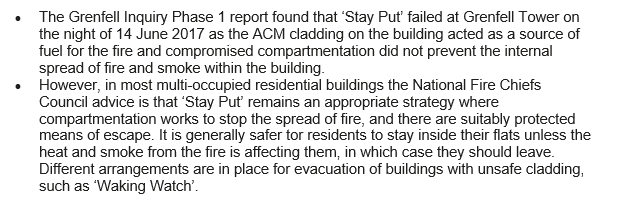
But the government seems to be reinterpretting the Grenfell Inquiry as saying, essentially, that stay put is ok unless there is dangerous cladding on a building. Here's the latest Home Office line:
So while we're making a botched effort to get all combustible materials off buildings, we're doing very little to answer the fundamental life safety question of: if it does all go wrong again, how are you getting everyone out?
I stress: this is a question that is very much about disability and vulnerability. The deaths at Grenfell were disproportionately among disabled and vulnerable groups who couldn't flee the building in the early stages and were then trapped.
Vulnerability in this context is not just disability: five of the six deaths at Lakanal House were mothers and their very young children for whom escape through smoke filled corridors is that much more difficult. What if a PEEP offered a young mother a smoke hood for a baby?
Even go right the way back to Garnock Court in 1999 and the only death was a disabled, older resident William Linton in the flat where the fire broke out.
If and when the next big fatal fire happens, it is more likely than not to be those who can't escape who die
This is not an easy problem to address: we have built single staircase buildings with no staff present. But it can't and shouldn't be simply brushed to one side. It rings of a bad attitude which puts a lower value on the lives of the disabled.
You hear the same attitude at work with COVID when people talk of deaths of 'people with an underlying health condition' as if that somehow makes them an acceptable collateral that we shouldn't try to save
Anyway, my overall point is that a bereaved family and their lawyers are taking this fight relentlessly to the Home Office and I think that's a story which deserves some attention.
• • •
Missing some Tweet in this thread? You can try to
force a refresh

Fire risk assessor reassured TMO that Grenfell cladding "complied with the building regulations" less than two months before the fire
Carl Stokes, who did risk assessments for Grenfell Tower and other buildings in Kensington from 2010 to 2017, was asked to comment on a letter sent by the London Fire Brigade in April 2017 following concerns about a fire in Shepherd's Bush
That fire spread up the building via spandrel panels made of timber of polystyrene and prompted the LFB to "strongly urge" considering the issue of external fire spread in future risk assessments. The email went to RBKC, who forwarded it to the TMO, who forward it to Stokes.
The guidance, 'Fire safety in purpose built blocks of flats', was published by the Local Government Association with the backing of govt and had been key in the social housing sector's approach to fire safety. But the LGA took it down earlier this year.
It has become controversial because it plays down the need for evacuation plans for disabled residents and encourages reliance on 'stay put'. The Grenfell Tower Inquiry has already recommended the development of plans to evacuate buildings.
Former council leader dismisses Grenfell resident concerns about social cleansing as 'ludicrous' and insists all residents were guaranteed to return to regenerated estates, before being shown his own council's policy contradicting this
Nicholas Paget Brown was asked about a meeting he held with Eddie Daffarn and other Grenfell Tower residents in September 2013. Mr Daffarn had raised several concerns - including about power surges and fears of 'social cleansing' on refurbished estates.
Mr Daffarn's concern over the latter was rooted in what he called the council's "fascist decant policy", which he said did not guarantee residents of estates demolished for regeneration would return (such regen was at that point loosely considered for Grenfell)
Rock Feilding-Mellen did not ask key questions in fire brigade guidance for councillors, despite specific warning that they should not "assume" that matters are being dealt with appropriately
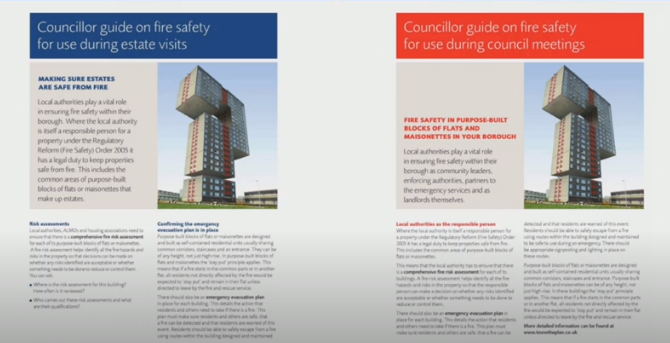
Second day of evidence for Rock Feilding-Mellon, former deputy leader and cabinet member for housing at RBKC. Among several topics covered this morning he was asked about these policy documents, which he was sent in July 2014:
They are guides for councillors about fire safety, produced by the London Fire Brigade following the Lakanal House fire in 2009. Feilding-Mellen says he "thinks he had heard" of Lakanal, but had not read the coroner's report. He was emailed these guides by the director of housing
Update from this morning at the Grenfell Tower Inquiry:
RBKC officer asked about lack of scrutiny over fire door self-closers and evacuation plans for company that managed Grenfell Tower
This morning we've been hearing from Amanda Johnson, former head of housing commissioning at RBKC. One of her main jobs was to scrutinise the performance of KCTMO, the council-owned company which managed the housing in the borough.
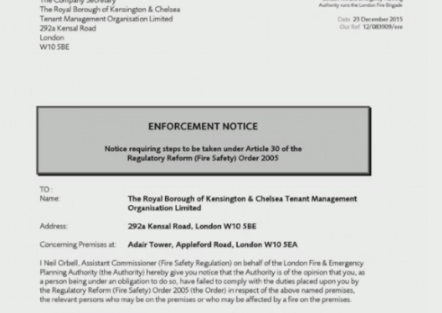
Asked about the programme of fire risk assessments in the borough, she was shown an enforcement notice issued to Adair Tower after a fire in 2015, which noted (among other things) missing self closers on front doors. Was she surprised by this?
In October, Scottish Tories did not vote on extending free school meals because it was English legislation.
But they made an exception last month to help the govt vote down an amendment to protect English leaseholders from paying cladding costs: insidehousing.co.uk/news/campaigne…
English Votes for English laws rule has been suspended for pandemic. But Scottish Conservatives said they would respect it anyway after being criticised for not voting for free school meals in October
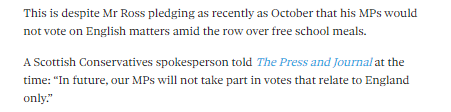
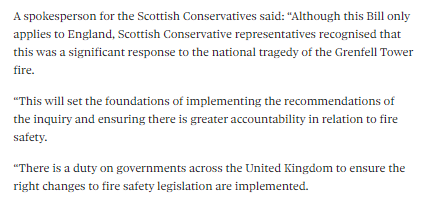
But in March all six Scottish Conservatives including leader Douglas Ross helped vote down an amendment to the Fire Safety Bill which had sought to protect leaseholders from paying for cladding remediation. This legislation only applies to England. Here's their explanation: