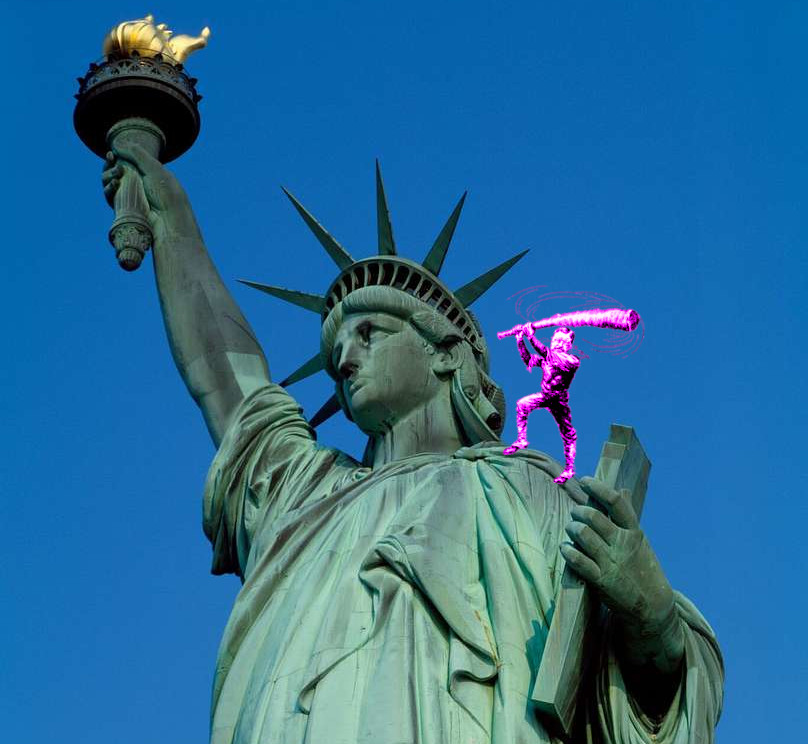
"Rabbits" is the secret name for a mysterious game (AKA "The Game") that is shrouded in secrecy and is played by deciphering impossible clues, like extra tracks appearing on a beloved vinyl record or hidden levels on floppies of old games with references to modern events.
2/
K's sidehustle is teaching curious people about the game and the handful of "winners" - known only by aliases that appear in impossible leaderboards, like glitched out reports from the Tokyo Stock Exchange - after hours at a Seattle retro video arcade.
3/
Broadband policy isn't the most important policy question we face, but it is in many ways the most FOUNDATIONAL one. The lockdown showed us that good broadband is key to civics, politics, education, health, family life, romance, and employment.
1/
Unfortunately for America, governments have treated broadband as a glorified video-on-demand service (at best) and a pornography distribution system (at worst).
2/
American lawmakers sat idly by as cable and phone companies divided up the nation into non-competing territories, leaving Americans with some of the slowest broadband at the highest prices in the country.
3/
Back in Feb, I published a @washingtonpost op-ed about the disgraceful legal threats and smears ES&S - the voting machine monopolist - had thrown at SMART, NY activists who lobby for election security and against unaccountable voting machines.
For years, orgs like SMART argued that the defect-riddled machines from the likes of ES&S were a threat to US election integrity, not just because they were hackable, but because this made it easy for push a bad-faith narrative of a stolen election.
Of course, this is exactly what happened, with Trump and his cult taking up a baseless narrative that Dominion Systems' (terrible) voting machines had been used to steal the election. Far from being chastened by this democracy-destabilizing moment, ES&S seized upon it.
3/
The New York legislature is about to take up #SB933, an historically significant antitrust bill that is poised to reverse decades of monopolism by repudiating the destructive, corporate-power enhancing, deceptively named "consumer welfare" principle.
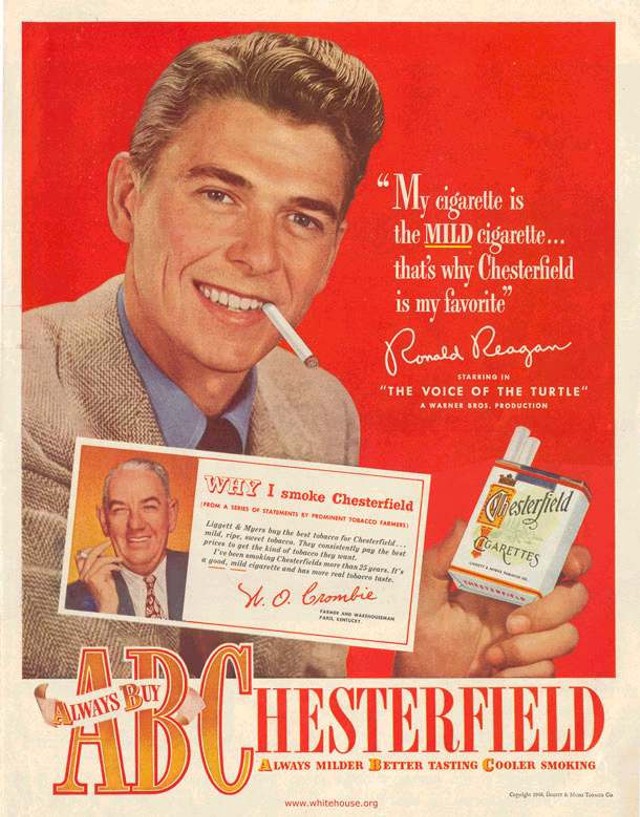
40 years ago, Ronald Reagan adopted the "consumer welfare" standard, a fringe idea pushed by Nixon's crooked solicitor general Robert Bork in an influential book called "The Antitrust Paradox" (Reagan's successors, Republican and Democrat, have ALL bolstered Borkism).
2/
Prior to "consumer welfare," the US government prosecuted monopolies because they created unaccountable concentrations of power, allowing a few ultra-wealthy executives to decide how we worked and lived, corrupting politicians and breaking laws with impunity.
3/
This week on my podcast, I read "I Quit," a column I wrote for @Medium that connects the dots between smoking cessation, tobacco denial, climate inaction, and anti-maskers.
Specifically, it's about how the cancer denial playbook has been iterated and sharpened by successive generation of corporate murderers and their enablers in the Paltrow-Industrial Complex.
2/
The goal of science deniers isn't necessarily to convince you that covid isn't real, or that vaccines are bad for you, or that privacy is overrated, or that there isn't a climate emergency - their goal is to convince you that these things just CAN'T BE KNOWN for sure.
3/