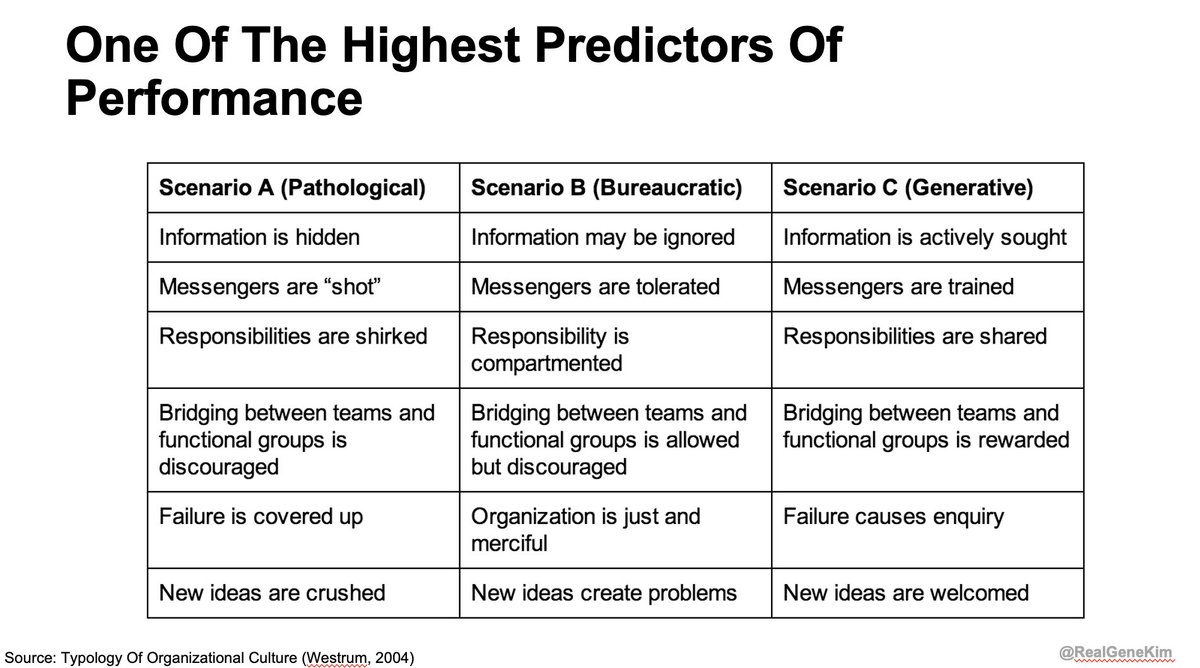
In this episode, Dr @StevenJSpear and I learn about how human creativity was unleashed to enable vaccinating 8K people/day, up from 2K/day in Jan, through relentless improvement.
And we explore how the lessons learned may inform how we can improve the overall healthcare system!
And we explore how the lessons learned may inform how we can improve the overall healthcare system!
https://twitter.com/ITRevBooks/status/1402958478847643649
@StevenJSpear The things I learned from Trent Green, visiting the mass vaccination site here in Portland, or this interview were…
…some of the most hopeful & inspiring I’ve heard in years.
He describes how we can win this race to vaccinate everyone on planet, in shortest possible time.
…some of the most hopeful & inspiring I’ve heard in years.
He describes how we can win this race to vaccinate everyone on planet, in shortest possible time.
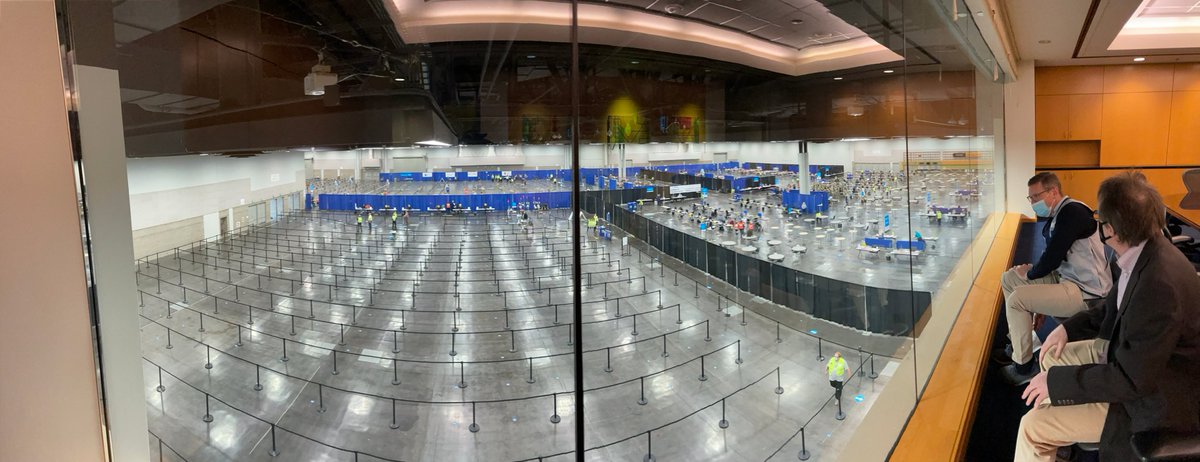
@StevenJSpear Some pics from my amazing 3 hr visit to Portland Convention Center, run by our 4 regional health systems:
More pics to come, after I learn which I can post w/o violating patient HIPAA rules.
Imagine this vast 116K sq ft area where 1300+ people are vaccinated per hour, every day
More pics to come, after I learn which I can post w/o violating patient HIPAA rules.
Imagine this vast 116K sq ft area where 1300+ people are vaccinated per hour, every day

@StevenJSpear That’s Trent Green in the middle, COO, SVP, at @OurLegacyHealth. On right is Chris Strear, MD, an emergency doctor, now Chief Medical Officer at Columbia Memorial.
Dr Strear spent decades improving flow in healthcare systems, and wrote this great book:
amazon.com/Smash-Bottlene…
Dr Strear spent decades improving flow in healthcare systems, and wrote this great book:
amazon.com/Smash-Bottlene…
@StevenJSpear @OurLegacyHealth I describe what our 3 hour visit to the mass vaccination center was like midway thru the interview, and what we learned on how they created such a fast learning ramp.
On behalf of a very grateful populace, thank you to everyone who makes this happen, every day, since late Jan!
On behalf of a very grateful populace, thank you to everyone who makes this happen, every day, since late Jan!
Here's a link to the wonderful @WillametteWeek article that described Oregon Convention Center mass vaccination as a "medical Disneyland", "like the best airport in the world," and "like a Swiss watch."
And they observe how everyone is smiling and happy.
wweek.com/news/2021/04/2…
And they observe how everyone is smiling and happy.
wweek.com/news/2021/04/2…
• • •
Missing some Tweet in this thread? You can try to
force a refresh