Eroom's Law:
Since 1950s, for every $1B spent on pharmaceutical R&D, the # of drugs that make it market halving every 9 yrs! (The opposite of Moore's Law)
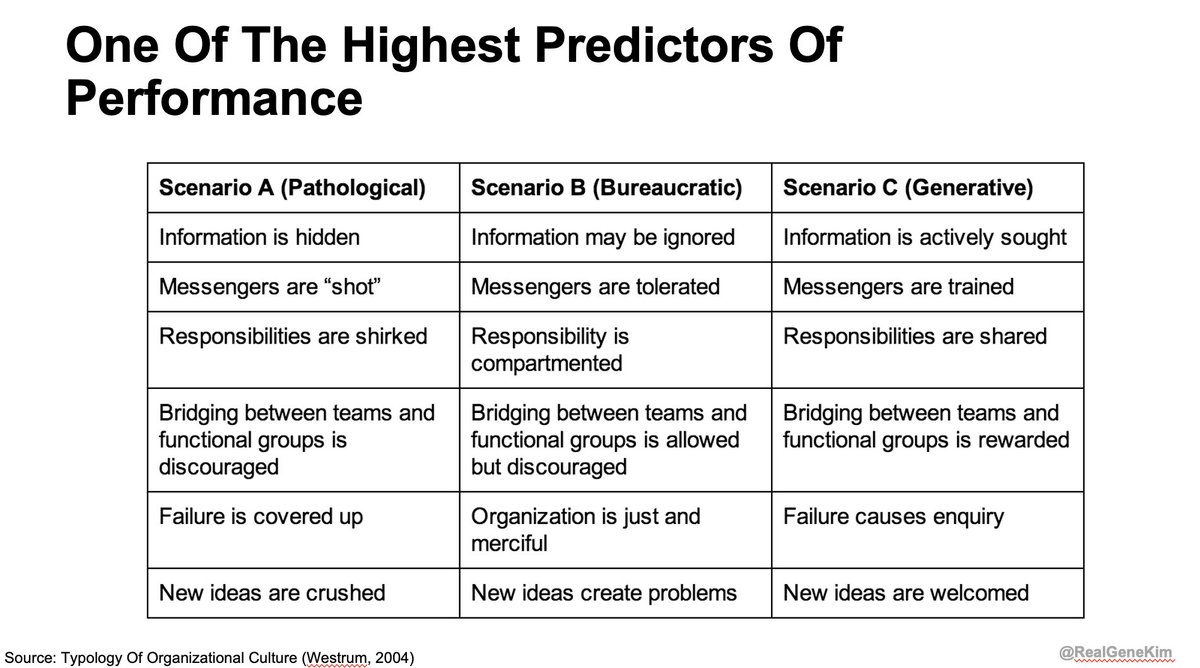
@StevenJSpear & I speculate that major cause is the # of disciplines of which integrated problem solving must occur!
Since 1950s, for every $1B spent on pharmaceutical R&D, the # of drugs that make it market halving every 9 yrs! (The opposite of Moore's Law)
@StevenJSpear & I speculate that major cause is the # of disciplines of which integrated problem solving must occur!
https://twitter.com/spfeiffr/status/1403398884504870917

We speculate this aspect of Eroom's Law is what causes:
- the before vs. after state in Team of Teams
- waterfall -> DevOps
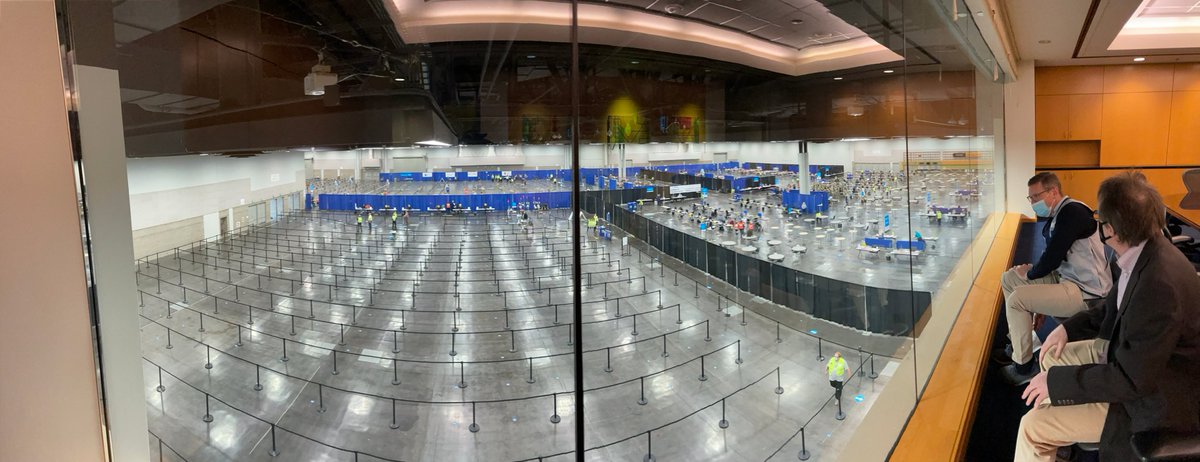
I think we even saw this happen in the COVID vaccinations (those that get 100% into people's arms vs 30%)
...and so many more domains!
- the before vs. after state in Team of Teams
- waterfall -> DevOps
I think we even saw this happen in the COVID vaccinations (those that get 100% into people's arms vs 30%)
...and so many more domains!
Here are examples of where we think integrated problems solving was done superbly, resulting in amazing outcomes, vs those that were done poorly, resulting in disastrous outcomes.
cc @MatthewEGunter @StevenJSpear
cc @MatthewEGunter @StevenJSpear

cc @randyshoup Thanks for all those amazing links, by the way!!!
Here's some amazing links on why/how COVID vaccines were released so quickly:
nature.com/articles/d4158…
- leveraged previous research
- parallelized all testing phases (!!)
- faster regulatory approval process
nature.com/articles/d4158…
- leveraged previous research
- parallelized all testing phases (!!)
- faster regulatory approval process
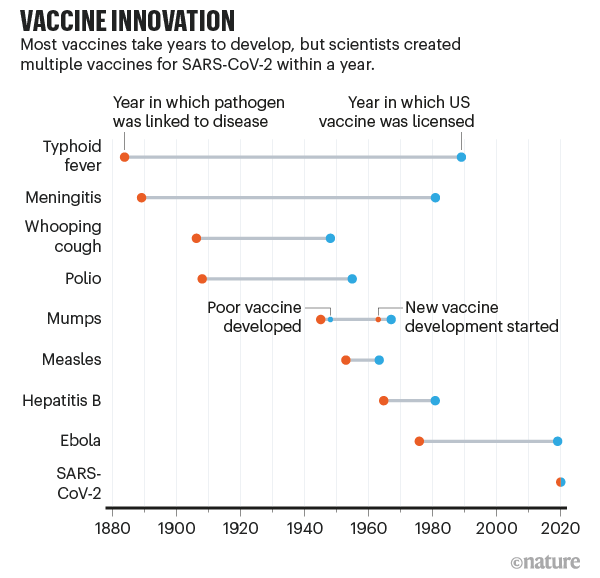
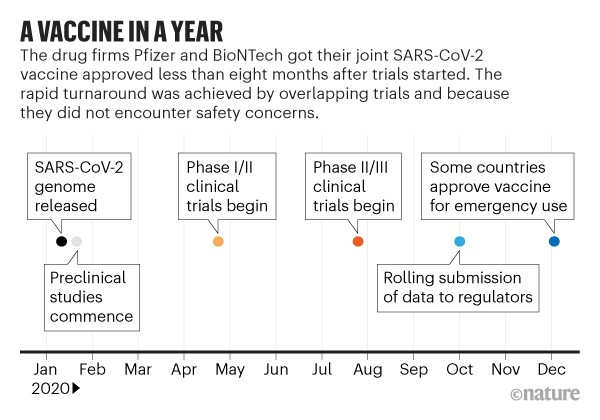
Amazing graphs from that Nature article —
- mid-Jan: COVID genome released
- late-Jan: preclinical studies begin (!!!)
- Apr/May: Phase I/II clinical trials begin
- mid-Jan: COVID genome released
- late-Jan: preclinical studies begin (!!!)
- Apr/May: Phase I/II clinical trials begin
uab.edu/news/youcanuse…
- 30 years of mRNA research
- Moderna and Biontech specialization in mRNA
- Flu and HIV virus sequencing
- NIH vaccine evaluation infrastructure investments
- US government guarantees purchases
- Human study volunteers
h/t @randyshoup
- 30 years of mRNA research
- Moderna and Biontech specialization in mRNA
- Flu and HIV virus sequencing
- NIH vaccine evaluation infrastructure investments
- US government guarantees purchases
- Human study volunteers
h/t @randyshoup
Holy cow. "From genetic sequence of a pathogen, researchers can quickly pull out a potential antigen-encoding segment... then synthesize the corresponding RNA. Moderna managed this within 4 days of receiving the SARS-CoV-2 genome sequence."
nature.com/articles/d4158…
nature.com/articles/d4158…
businessinsider.com/moderna-design…
Moderna vaccine candidate took 2 days to create.
“No virus had to be cultivated in labs. That’s why the companies were able to progress in record time… By Feb 24, Moderna had shipped its first vaccine batches to NIH scientists in Bethesda"
..
Moderna vaccine candidate took 2 days to create.
“No virus had to be cultivated in labs. That’s why the companies were able to progress in record time… By Feb 24, Moderna had shipped its first vaccine batches to NIH scientists in Bethesda"
..
"....and researchers administered the first dose on March 16 in Seattle, Washington. That launched the first clinical trial of any coronavirus vaccine.”
Wow!!!
Wow!!!
• • •
Missing some Tweet in this thread? You can try to
force a refresh