1/14
Zhou Chengjun, the PBoCs head of research, points out the inevitable conflict that major reserve-currency status brings (what I call "the exorbitant burden": "On one hand," he says, "are the goals of domestic monetary policy, on the other are...
caixinglobal.com/2021-06-24/opi…
Zhou Chengjun, the PBoCs head of research, points out the inevitable conflict that major reserve-currency status brings (what I call "the exorbitant burden": "On one hand," he says, "are the goals of domestic monetary policy, on the other are...
caixinglobal.com/2021-06-24/opi…
2/14
the responsibilities and obligations as issuer of the global reserve currency. It is nearly impossible for the monetary authority to consider domestic goals and international roles at the same time."
the responsibilities and obligations as issuer of the global reserve currency. It is nearly impossible for the monetary authority to consider domestic goals and international roles at the same time."
3/14
Zhou is right, of course, but he then argues that this dilemma is why USD's role must decline in favor of RMB. He doesn't seem to recognize that in fact China faces a much more damaging form of this very same dilemma, which is why for all the talk in the past 15 years...
Zhou is right, of course, but he then argues that this dilemma is why USD's role must decline in favor of RMB. He doesn't seem to recognize that in fact China faces a much more damaging form of this very same dilemma, which is why for all the talk in the past 15 years...
4/14
about the rise of the RMB, it's role has barely changed, even as the Chinese shares of global GDP and global trade have risen sharply.
The fact is that given the huge imbalances in the Chinese economy, its heavy reliance on debt to generate growth in economic...
about the rise of the RMB, it's role has barely changed, even as the Chinese shares of global GDP and global trade have risen sharply.
The fact is that given the huge imbalances in the Chinese economy, its heavy reliance on debt to generate growth in economic...
5/14
activity, and the insolvency of much of its financial system, China has far less room to sacrifice domestic financial control in order to expand the RMB's international role. It hasn't done so in the past and it is already worried...
activity, and the insolvency of much of its financial system, China has far less room to sacrifice domestic financial control in order to expand the RMB's international role. It hasn't done so in the past and it is already worried...
6/14
about the consequence of further opening up, even though foreign participation in Chinese financial markets is still a fraction of what it would have to be before the RMB mattered.
By the way I do expect that the role of the US dollar eventually to decline, and for...
about the consequence of further opening up, even though foreign participation in Chinese financial markets is still a fraction of what it would have to be before the RMB mattered.
By the way I do expect that the role of the US dollar eventually to decline, and for...
7/14
the reasons Zhou suggests, but only as it becomes increasingly evident to US policymakers and voters that the cost to the US economy of the current conditions is excessive. When that happens, I don't expect the USD decline to be matched by the rise of a rival currency.
the reasons Zhou suggests, but only as it becomes increasingly evident to US policymakers and voters that the cost to the US economy of the current conditions is excessive. When that happens, I don't expect the USD decline to be matched by the rise of a rival currency.
8/14
Much more likely, I think, is a sharp reduction in global imbalances and global financial flows, and perhaps the partial rise of a synthetic currency like the SDR. For all the talk in China and Europe (and, not so long ago, in Japan) no one else will be willing to pay...
Much more likely, I think, is a sharp reduction in global imbalances and global financial flows, and perhaps the partial rise of a synthetic currency like the SDR. For all the talk in China and Europe (and, not so long ago, in Japan) no one else will be willing to pay...
9/14
the exorbitant cost of absorbing global excess savings.
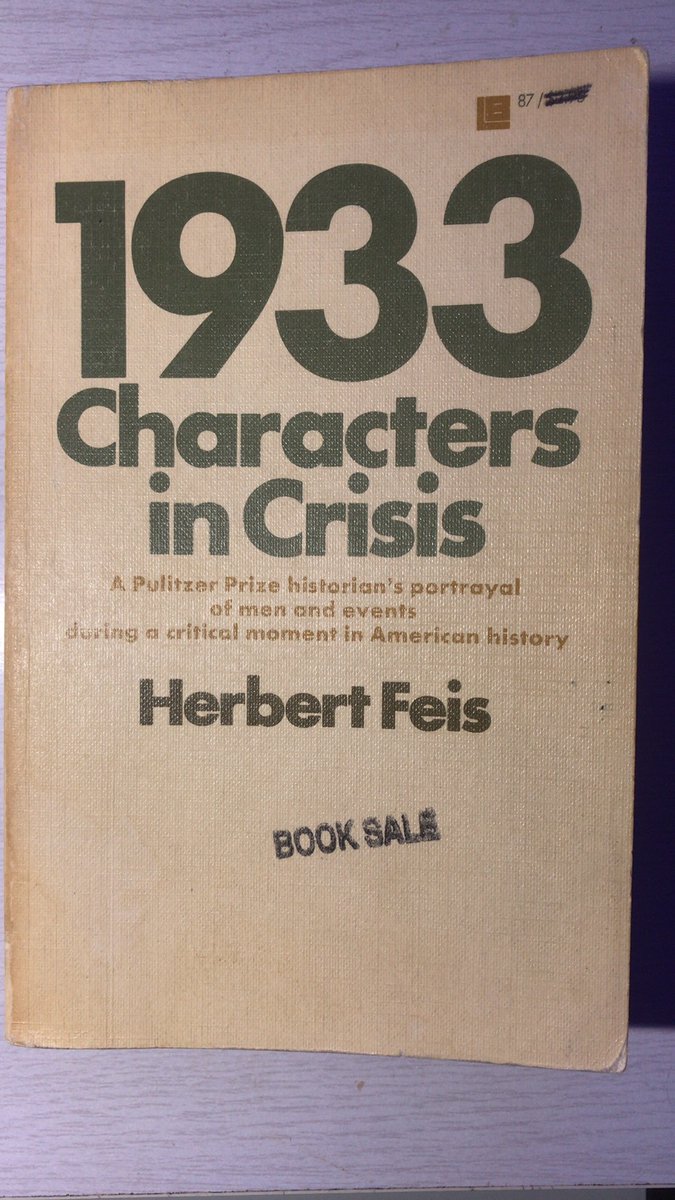
As an aside, I am re-reading the memoirs of Herbert Feis (one of the few senior financial advisors in both the Hoover and the Roosevelt administrations) about 1933, including the London Conference, and it...
the exorbitant cost of absorbing global excess savings.
As an aside, I am re-reading the memoirs of Herbert Feis (one of the few senior financial advisors in both the Hoover and the Roosevelt administrations) about 1933, including the London Conference, and it...
10/14
really struck me that no matter how much FDR insisted on refusing to tie the US dollar to gold until the dollar's purchasing power had been restored, the financial experts representing the US at the conference were simply incapable of understanding him.
really struck me that no matter how much FDR insisted on refusing to tie the US dollar to gold until the dollar's purchasing power had been restored, the financial experts representing the US at the conference were simply incapable of understanding him.
11/13
They were unable even to imagine a world in which currencies were not pegged to gold, and so they kept misrepresenting FDR's position. That's why the famous "bombshell" announcement by FDR was such a bombshell.
They were unable even to imagine a world in which currencies were not pegged to gold, and so they kept misrepresenting FDR's position. That's why the famous "bombshell" announcement by FDR was such a bombshell.
12/14
This may have a bearing on the future role of USD. I think Wall Street bankers and financiers (not to mention the defense and foreign affairs establishments) are genuinely convinced that what is best for them (the global primacy of USD) is also best for the US.
This may have a bearing on the future role of USD. I think Wall Street bankers and financiers (not to mention the defense and foreign affairs establishments) are genuinely convinced that what is best for them (the global primacy of USD) is also best for the US.
13/14
That is why without someone like FDR, who was not at all impressed by the expertise of financiers, which he always considered highly self-interested, it will prove very difficult to convince Washington that in fact the global primacy of USD is bad...
That is why without someone like FDR, who was not at all impressed by the expertise of financiers, which he always considered highly self-interested, it will prove very difficult to convince Washington that in fact the global primacy of USD is bad...
14/14
for American workers, farmers and small and medium businesses. We have been, and will continue to be, stuck with the exorbitant burden far longer than we need.
for American workers, farmers and small and medium businesses. We have been, and will continue to be, stuck with the exorbitant burden far longer than we need.
Caixin has now published the second part of this speech. It is worth reading to see just how much (unresolved) conflict there is between the desire to maintain control of the financial system and the recognition that internationalizing the RMB means giving up that control.
• • •
Missing some Tweet in this thread? You can try to
force a refresh