

Gonna up the ratio a bit while educating the populace about actual context. (this wumao is not educatable, so)
🧵
The referenced "Penghu Patrol Outpost" was indeed established on that archipelago by the Mongol Yuan (Ön) government. It apparently oversaw the Han settlers there. 1/
🧵
The referenced "Penghu Patrol Outpost" was indeed established on that archipelago by the Mongol Yuan (Ön) government. It apparently oversaw the Han settlers there. 1/
https://twitter.com/Harry19570537/status/1424714000768540677
Here's the catch with that.
This is a map of Taiwan and Penghu.
Notice a little tiny disparity?
If you do, you may move onto the next tweet. If not, I'll give you all the time in the world to think about it.
2/
This is a map of Taiwan and Penghu.
Notice a little tiny disparity?
If you do, you may move onto the next tweet. If not, I'll give you all the time in the world to think about it.
2/
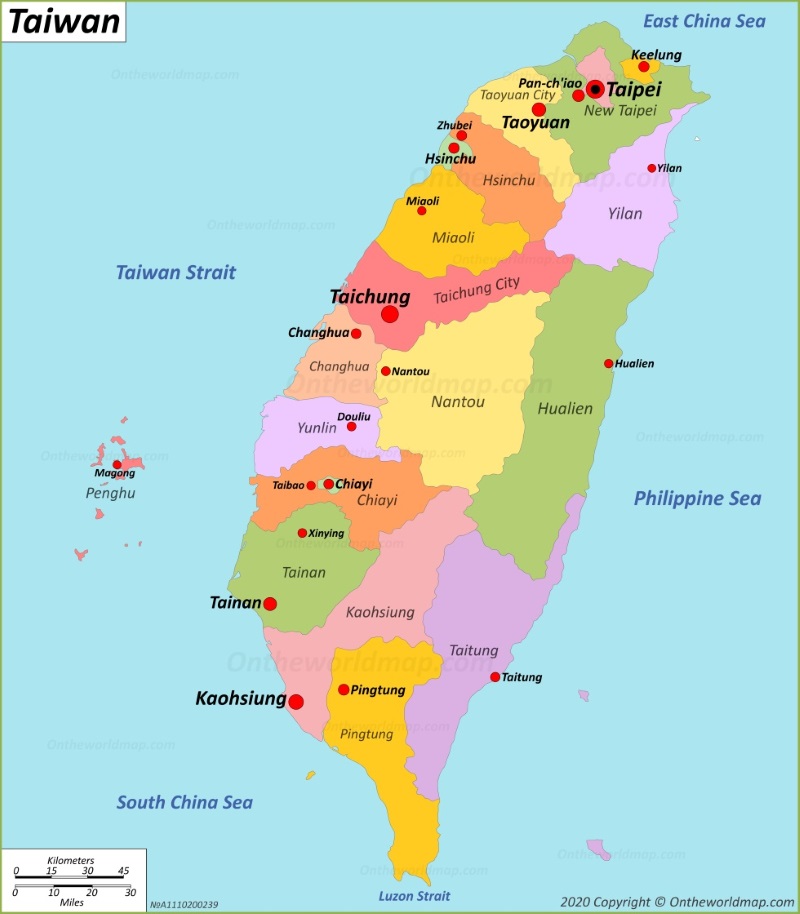
You probably figured out how Penghu compares to mainland Taiwan by now.
But look, there's another catch.
Here's a map of Taiwan (+ outlying islands) and the people groups that inhabited it before colonization.
Notice something there? Or not there, for that matter?
3/
But look, there's another catch.
Here's a map of Taiwan (+ outlying islands) and the people groups that inhabited it before colonization.
Notice something there? Or not there, for that matter?
3/
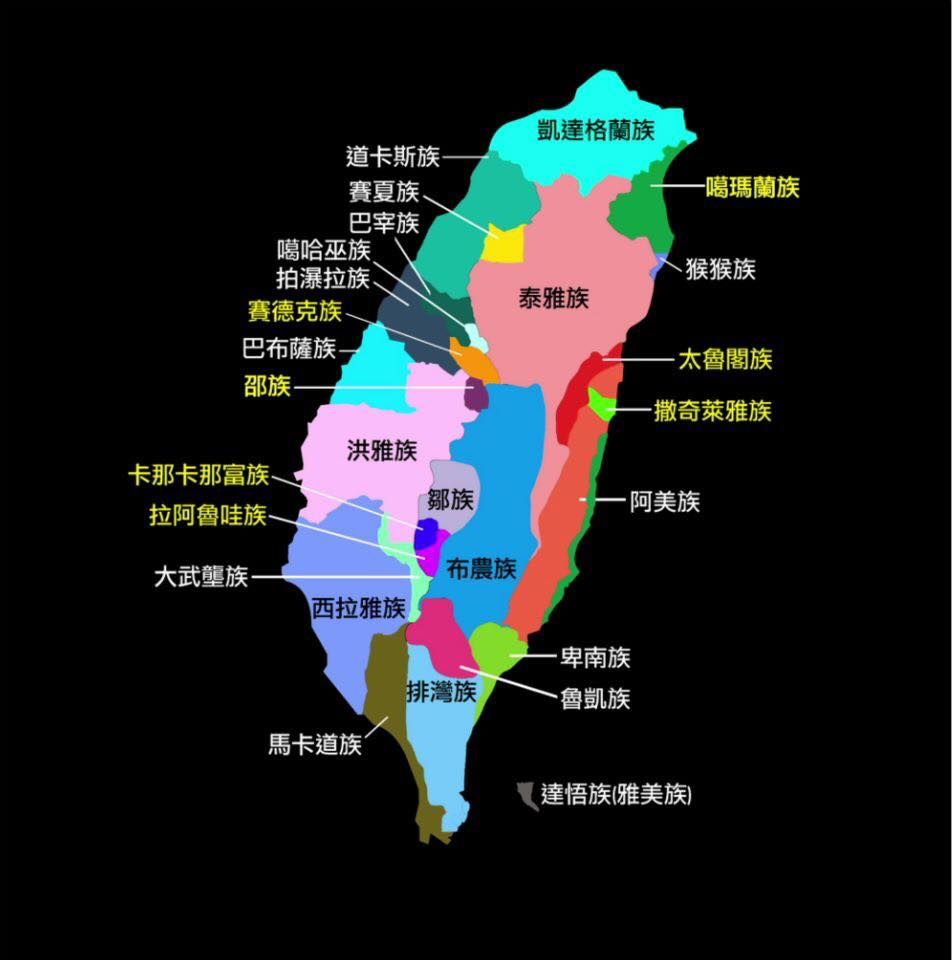
If you had the deduction ability above that of a wumao/pinko, then kmbiyax, you figured out that Penghu, which is tiny compared to the rest of Taiwan, is not claimed by any existing Taiwanese Indigenous nation. Not even by the closest, the Arikun-Lloa ("Hoanya").
4/
4/
That's because prior to Han settlement, Penghu was UNINHABITED.
In the distant past, it may have been inhabited by pre-Austronesian paleolithic people, but they were long gone. Any Austonesian presence was transient—it wasn't compatible with our ancestors' way of life. 5/
In the distant past, it may have been inhabited by pre-Austronesian paleolithic people, but they were long gone. Any Austonesian presence was transient—it wasn't compatible with our ancestors' way of life. 5/
Han (Hokkien) settlement of Penghu is said to trace back to the 9th century CE, beyond the reach of the Tang Empire at the time. I am unclear whether it was claimed by the briefly independent Min Kingdom, but the subsequent Song Empire did not seem to claim it either. 6/
As everyone knows, the Song was driven from the north by the Jin (Jurchen), and both were finally conquered by the Mongols who formed the Yuan.
They established a patrol outpost on Penghu among the Hokkien inhabitants.
This is where the modern Chinese claim to Taiwan begins. 7/
They established a patrol outpost on Penghu among the Hokkien inhabitants.
This is where the modern Chinese claim to Taiwan begins. 7/
Those of you with non-wumao deduction abilities can figure out what's wrong here.
How can one little outpost on an outlying island make the claim for the already-inhabited mainland?
It doesn't, and both the Mongols and the Ming Chinese knew this full well. 8/
How can one little outpost on an outlying island make the claim for the already-inhabited mainland?
It doesn't, and both the Mongols and the Ming Chinese knew this full well. 8/
Chinese explorers in the pre-modern era already knew that Taiwan was populated by indigenous inhabitants. So did the Japanese.
The most complete pre-colonial Chinese account of Taiwan was the 1603 Dongfanji 東番記 (Eastern Savage Account). 9/
zh.m.wikipedia.org/wiki/%E6%9D%B1…
The most complete pre-colonial Chinese account of Taiwan was the 1603 Dongfanji 東番記 (Eastern Savage Account). 9/
zh.m.wikipedia.org/wiki/%E6%9D%B1…
This isn't well-known, but the Ming ordered a withdrawal of private settlement in outlying lands during its isolationist period, including Penghu. It was later withdrawn, and Penghu was later resettled.
They had no power to vacate Taiwan, for very obvious reasons. 10/
They had no power to vacate Taiwan, for very obvious reasons. 10/
The Ming established a military presence in Penghu in 1597. Again, nothing in Taiwan. All we had was a fairly large number of Hokkien (and Japanese) migrant traders, and it's hard to say whether they were expats or long-term immigrants. 11/
A generation after, the Dutch retreated to Penghu after war with the Portuguese in 1622, then built a fort there. The Ming told the Dutch to get off and go to Taiwan instead.
Why would Chinese threaten outsiders to get out of one part of China and go to another part instead?🤔12/
Why would Chinese threaten outsiders to get out of one part of China and go to another part instead?🤔12/
From Penghu, the Dutch conducted raids on the Chinese coast until the Ming expelled them two years later, in 1624.
To where? You guessed it: Taiwan!
If Taiwan was a part of China, then why would the Ming have stopped short right there? 13/
To where? You guessed it: Taiwan!
If Taiwan was a part of China, then why would the Ming have stopped short right there? 13/
When Koxinga conquered Dutch Formosa and created his family fiefdom in its place in 1661, he nominally governed SW Taiwan and Penghu together. The Tungning Kingdom did not include all of TW, as the Kingdom of Middag (on which they committed genocide) was still extant. 14/
The conquest of Western Taiwan by the Qing in 1683 formalized the union between Taiwan and Penghu, and they have been a unit ever since, albeit carefully distinguished in legal discourse (e.g. Formosa AND the Pescadores).
But they clearly weren't always so. 15/
But they clearly weren't always so. 15/
Back to the nonsensical claim in OP.
We are supposed to believe that a remote outpost by a foreign occupying government on an offshore archipelago is supposed to be the basis of control of an entire island that was already inhabited and governed separately. 16/
We are supposed to believe that a remote outpost by a foreign occupying government on an offshore archipelago is supposed to be the basis of control of an entire island that was already inhabited and governed separately. 16/
Then, through successor state magic, this is how the modern nation-state of China has possessed Taiwan Since Ancient Times™.
This level of mental gymnastics combines pommel horse, rings, bars, AND rhythmic, except more dangerous and not as entertaining to watch. 17/
This level of mental gymnastics combines pommel horse, rings, bars, AND rhythmic, except more dangerous and not as entertaining to watch. 17/
But this shows the absurd extents of historical revisionism that imperialist irredentists will go to justify their lusts for conquest. If we don't educate ourselves on history, we become prey to those who aim to "educate" us along their agenda. 18/End
Tag: @catielila @kerslake_andrew @laorenchanna @michaelturton @donovan_smith @ArthropodFrog @tanchunkiet @TimMaddog @92Athina
• • •
Missing some Tweet in this thread? You can try to
force a refresh



