Why I Enjoyed Seqalu and You Probably Should Too🧵
Through means I am not at liberty to disclose, I was able to view the premiere of #Seqalu: Formosa 1867. (Thou knowest who thou'rt.)
This was after being HYPED up for months, especially in the last few weeks, when PTS 1/
Through means I am not at liberty to disclose, I was able to view the premiere of #Seqalu: Formosa 1867. (Thou knowest who thou'rt.)
This was after being HYPED up for months, especially in the last few weeks, when PTS 1/
released multiple trailers highlighting the different characters, actors, and historical backgrounds.
Don't get me wrong. I was aware of the problems it could present since they announced the original title. But as time passed, those fears were assuaged as the series promised 2/
Don't get me wrong. I was aware of the problems it could present since they announced the original title. But as time passed, those fears were assuaged as the series promised 2/
to show a full picture of interethnic relations in 19th century Longkiau (now Hengchun), with all its ups and downs.
Looking at the comments section in teasers alone, I could see many people of different backgrounds praise the show's ability to immerse the audience within the 3/
Looking at the comments section in teasers alone, I could see many people of different backgrounds praise the show's ability to immerse the audience within the 3/
period and environment, right down to the accents.
Give or take a few nitpicks WRT dialect and vocab.
The trailers even managed to impress the pro-China crowd, even if they placed the show within the context of Chinese nationalism. (Always a post-facto justification, huh.) 4/
Give or take a few nitpicks WRT dialect and vocab.
The trailers even managed to impress the pro-China crowd, even if they placed the show within the context of Chinese nationalism. (Always a post-facto justification, huh.) 4/
But I saw a running theme throughout the comments:
"I was never taught this history."
That's why Seqalu is so important. I will return to this later, but the important thing to remember is that Taiwanese people of all stripes and backgrounds loved the drama. 5/
"I was never taught this history."
That's why Seqalu is so important. I will return to this later, but the important thing to remember is that Taiwanese people of all stripes and backgrounds loved the drama. 5/
This is why I was surprised and bemused to see people in English-speaking Taiwan-based circles pan the premiere for its plot and acting. Of note is this review by @brianhioe, to which this thread is partially a response. 6/
https://twitter.com/newbloommag/status/1427657065904828420?s=20
First, I'd like to pick apart elements of his review in the same way Southern Siyen Hakka picked apart the protagonist's use of Northern-isms.
1. The Out-of-Taiwan Hypothesis is mainstream scholarship. I'm not sure how this is relevant. 7/
1. The Out-of-Taiwan Hypothesis is mainstream scholarship. I'm not sure how this is relevant. 7/
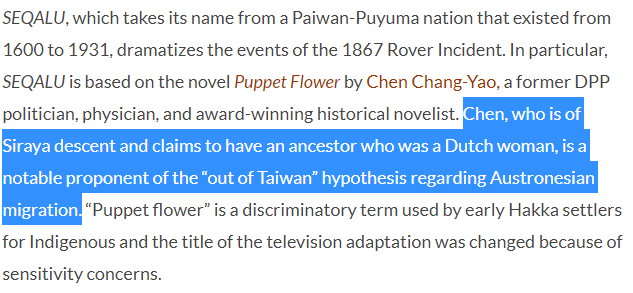
2. "Puppet Flower" is a calque of 傀儡花 and was never intended to be the translation of the novel's title. That would be "Lady the Butterfly".
More importantly, this is not an accurate statement at all. First, the "flower" refers only to the protagonist Tiap-Moe. 8/
More importantly, this is not an accurate statement at all. First, the "flower" refers only to the protagonist Tiap-Moe. 8/
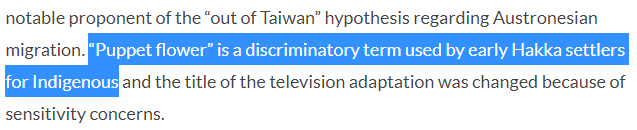
But what of "Puppet"? There's a complicated history behind the word that ultimately became a slur that had to be changed.
Saying 傀儡 according to its Hokkien (not Hakka) pronunciation will give you the first clue: ka-lé.
There is a word in Paiwan that means "friend": qali. 9/
Saying 傀儡 according to its Hokkien (not Hakka) pronunciation will give you the first clue: ka-lé.
There is a word in Paiwan that means "friend": qali. 9/
Qing authorities going as far back as the 18th century took that word and applied it to Paiwan and Rukai peoples, possibly taking a note from Makatao in the foothills (who called them kaliya), but used the derogatory "puppet" rendering. 10/
Apparently, the rendering of 傀儡 was also in vogue with Han settlers, many of whom already harbored enmity and fear for the Paiwan.
Innocuous words have a tendency to transform into slurs in the wrong hands. This can be seen across different cultures. (See also: "amigo") 11/
Innocuous words have a tendency to transform into slurs in the wrong hands. This can be seen across different cultures. (See also: "amigo") 11/
Curiously, Ka-lé remained popular with the Makatao, even after knowing its newly-acquired connotations. Many Makatao places and people bore the name 加里 or 假禮 well into the 20th century.
Digression over. Moving on. 12/
Digression over. Moving on. 12/
3. This is interesting, considering I was able to pick out factions easily along linguistic lines. No, this doesn't go into detail about intertribal relationships within the Seqalu Nation. But I was able to spot the basic dynamic between Hoklo, Hakka, Seqalu, and Sialiao. 13/
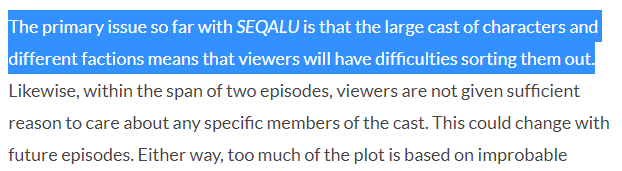
I can understand how the interplay of Taiwanese ethnic relations can escape outsiders. But that just reinforces the notion that this was meant for a Taiwanese audience, many of whom "got it" right away.
But now I get off the realm of nitpicking and fly right off the handle… 14/
But now I get off the realm of nitpicking and fly right off the handle… 14/
4. Now wait just a minute here!
Why are we talking politics all of a sudden?
And what "virtues" are you referring to? Period-accurate clothing and setting? Wu Kang-ren's method acting? Andrew Chau's accents? If not the plot and dialogue, then what? 15/
Why are we talking politics all of a sudden?
And what "virtues" are you referring to? Period-accurate clothing and setting? Wu Kang-ren's method acting? Andrew Chau's accents? If not the plot and dialogue, then what? 15/
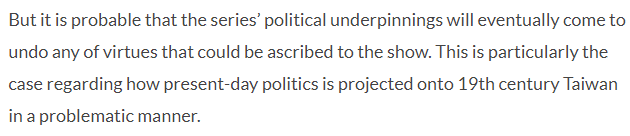
It's easy for us in the current day to project our worldviews on the events of the past. It happens all the time. But to say that this was the drama's goal from the outset is a pretty big stretch. 16/
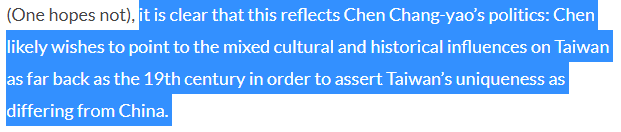
Unless we are to follow the adage that studying Taiwanese history is inherently political. If you're a disciple of Su Beng facing down Sinocentric views of history that are ubiquitous in the mainstream, you already know this. 17/
By making a Hengchun-centered history where the Qing Empire is an outside player, Chen and PTS already made a political move. Pro-(RO)China lovers of the drama can make haphazard post-facto justifications, but the Taiwan-centric POV is already clear from its very nature. 18/
5. This is where I really have to tear things down. Setting aside the fact that Pan is NOT a member of the Tsai admin, what makes you think that it was ideology and not local pride that made him promote Seqalu?
Plus, you ARE aware of his and Tsai's ethnic backgrounds, right? 19/
Plus, you ARE aware of his and Tsai's ethnic backgrounds, right? 19/
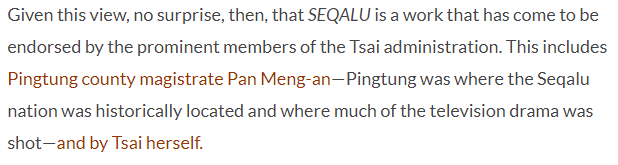
Like Sui-a (and me), Mag. Pan is a Makatao, and our role in Pingtung's history is indispensable. And like Tiap-moe, @iingwen is of mixed Pingtung Hakka-Paiwan heritage. What makes you so sure that the idea of a distinct Taiwan was what brought them to praise the show? 20/
6. "Romanticizing"? Where was the romanticism? In the inter-ethnic warfare depicted right on screen? In the poverty of Taiwan-fu (Tainan)? Nitpicks of historical events aside, the drama made a fair depiction of colonial Taiwan: A bloody fight for survival of all against all. 21/
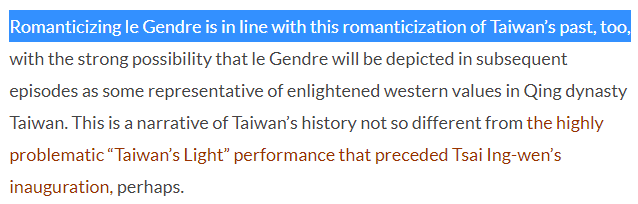
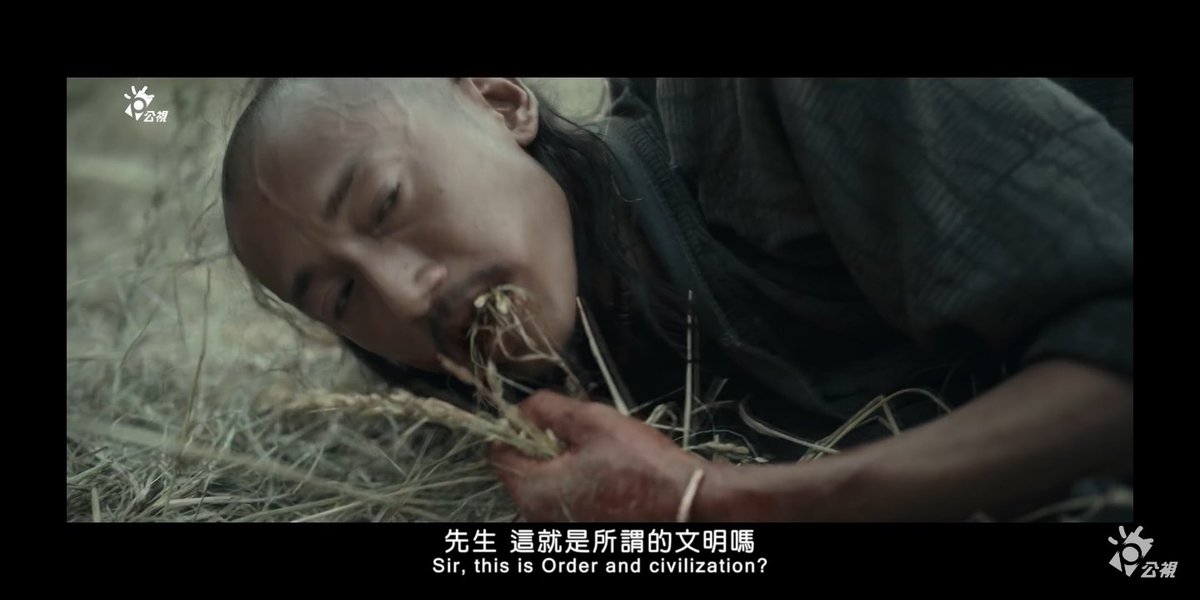
7. Did you not watch any trailers? Maybe my reaction pic will say it for you. Le Gendre's constant harping of "civilization" is obviously eventually exposed as a farce in the wake of mass violence. Colonialism is colonialism, and the creators are well-aware of that. 22/
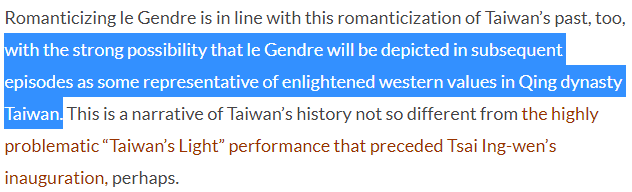
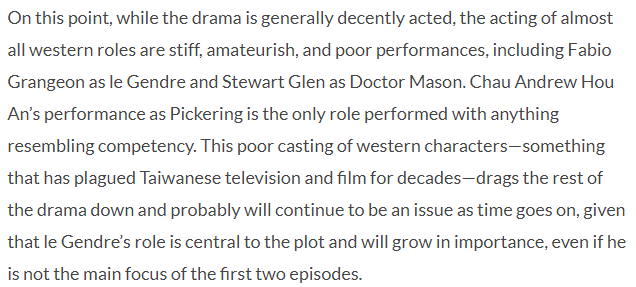
8. I will concede on this point, except I feel the need to point out that Taiwanese people are accustomed to hammy and melodramatic acting. To see a westerner do likewise wouldn't be out of the ordinary.
But don't tell me you didn't enjoy the angry Scotsman! 23/
But don't tell me you didn't enjoy the angry Scotsman! 23/
OK, with all that complaining out of the way, in the next part I should be more positive, putting more focus on historical significance and Taiwanese response.
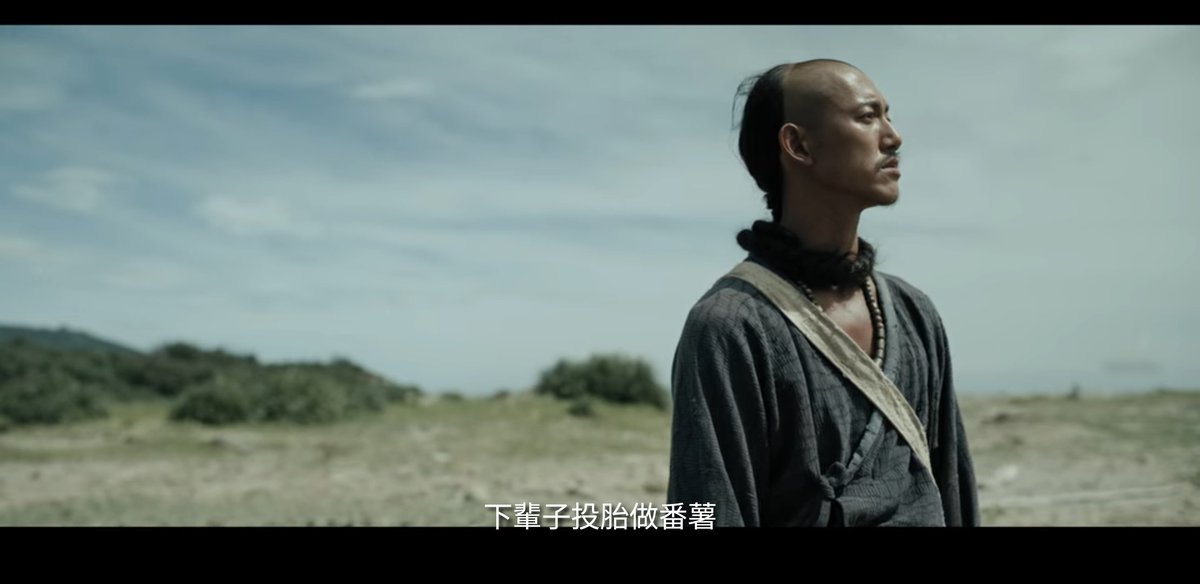
With a special emphasis on this guy. 24/cont'd
With a special emphasis on this guy. 24/cont'd
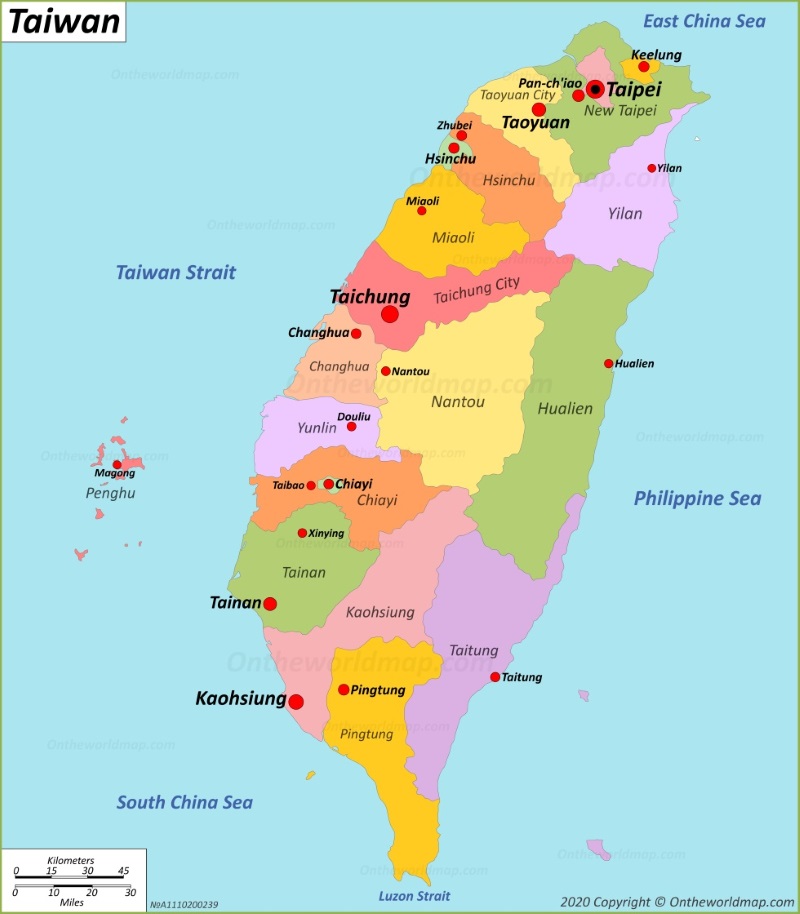
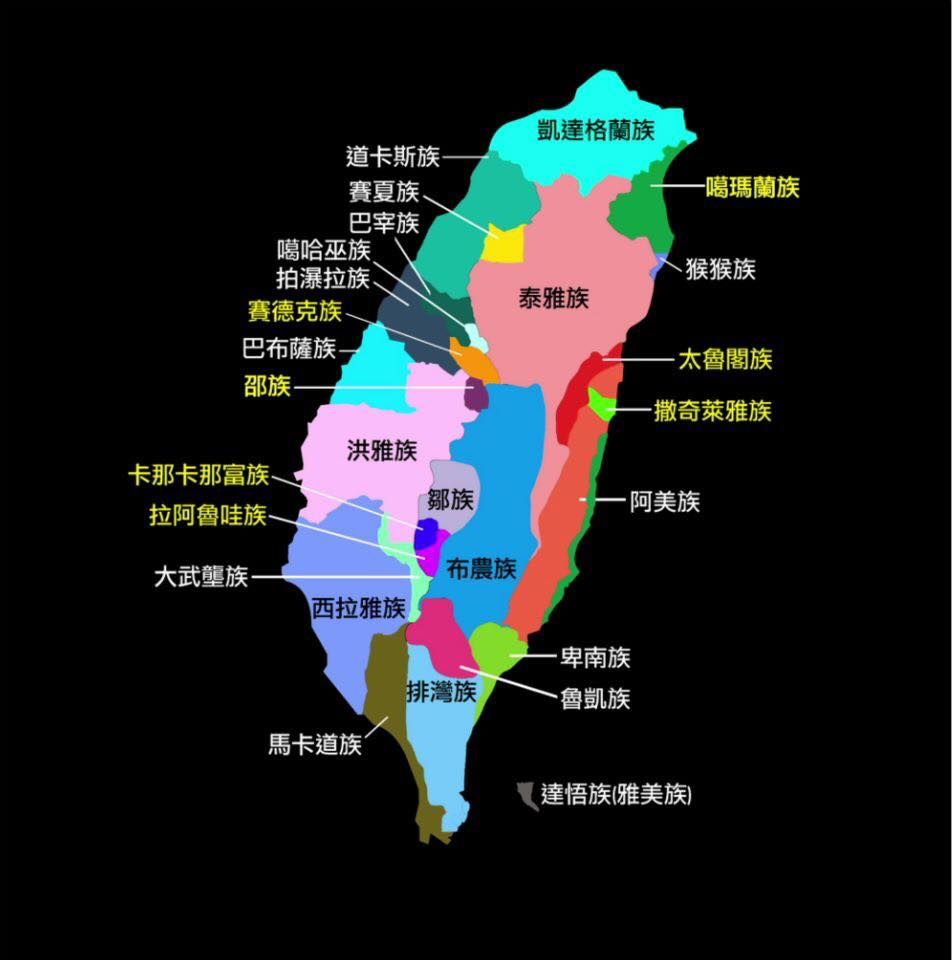
Seqalu takes place in 1867 Longkiau, now known as Hengchun. It was a mixing bowl of different peoples, including Amis (though the show does not mention them), Hoklo, Hakka, and Makatao under Paiwan hegemony. 25/
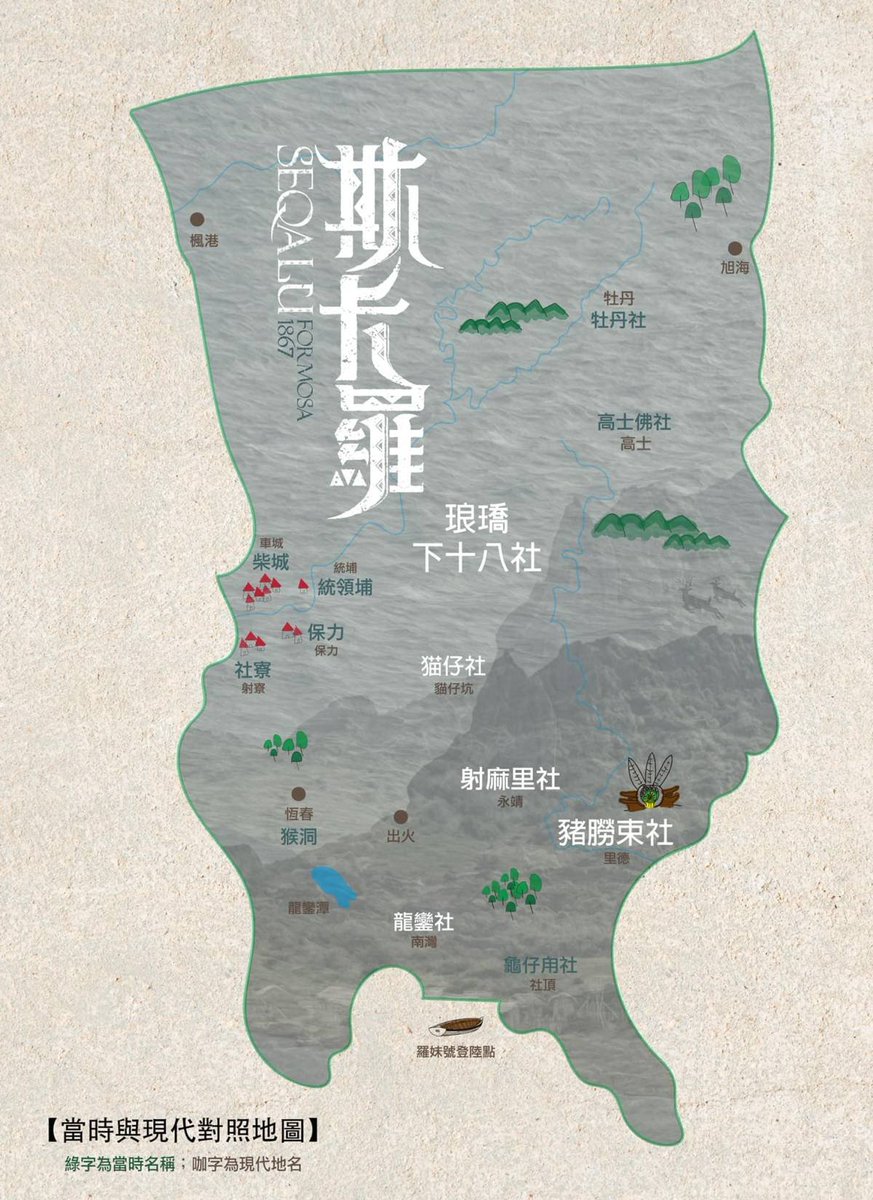
Though the show depicts people communicating across languages, more likely was that Southern Paiwan was the lingua franca alongside Hokkien (later to be known as Taiwanese), which would ultimately come to replace it as the cross-ethnic tongue. 26/
The titular Seqalu nation of Paiwan-ized Katatripulr Pinuyumayan was the preeminent power in the region, having made the natives submit to them under a confederacy of 18 tribes since the Dutch colonial era. It lasted until being conquered by Japan in the 1930s. 27/
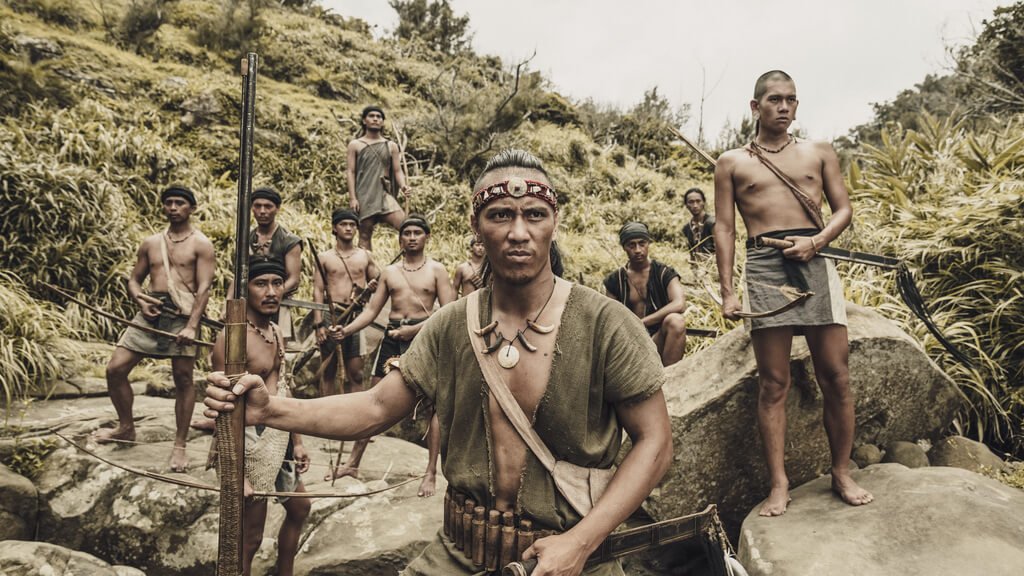
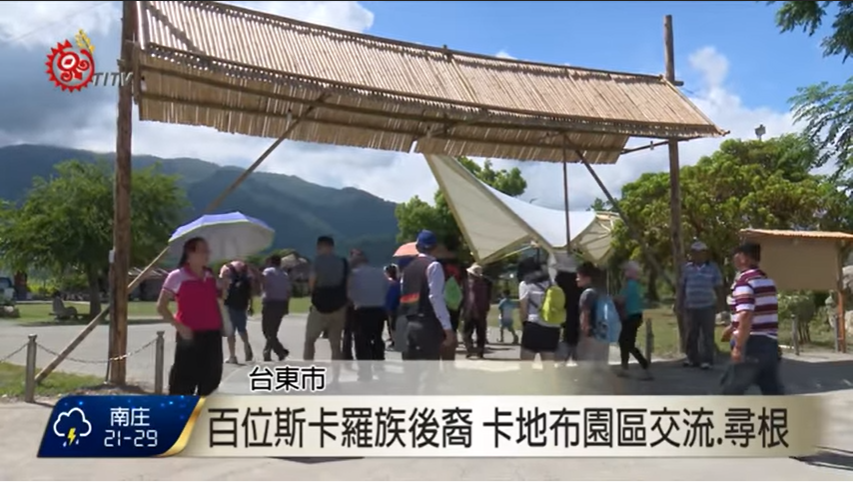
Today, their descendants are either recognized as Paiwan or not recognized as indigenous at all. This is attributed to the confusion of the enrollment process in the 1950s, but it has more to do with KMT policy erasing the status of Hokkien-speaking "assimilated" Indigenous. 28/
Back to the drama's era. The premiere showcases a battle between Sixian Hakka and (presumably Quanzhou) Hoklo, which were rather common during the Qing era. This particular skirmish stemmed from an irrigation dispute. 29/
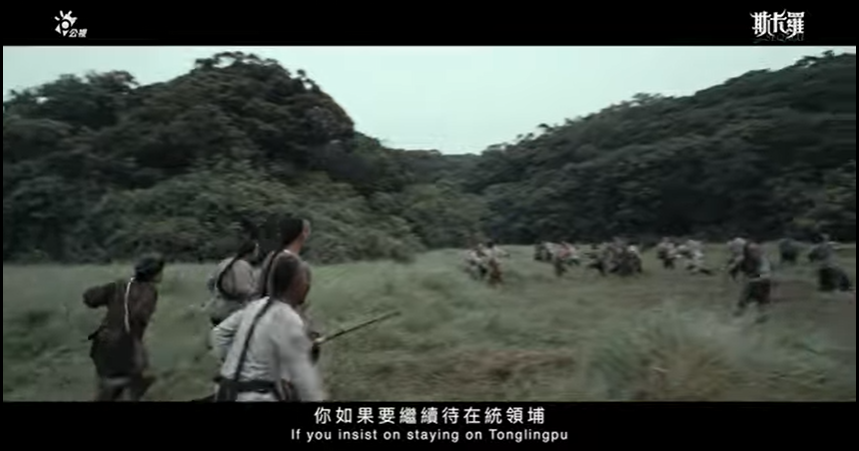
The battle took place on leased Seqalu territory, and a Seqalu patrol happened upon the chaos and forced them to stop.
The settlers' leaders then took went to Sialiao to settle the dispute on neutral territory with a neutral party.
Enter Sui-a (水仔). 30/
The settlers' leaders then took went to Sialiao to settle the dispute on neutral territory with a neutral party.
Enter Sui-a (水仔). 30/
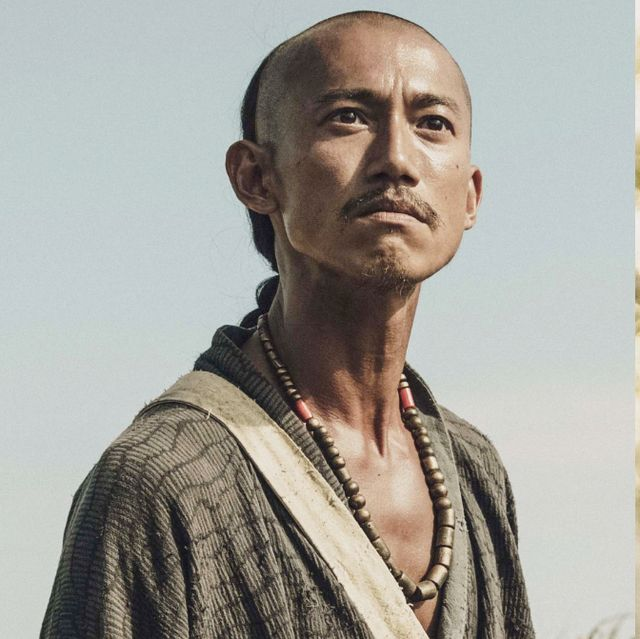
Sialiao (社寮, today 射寮) was a trading post on the western coast. Its name can be roughly translated to "Tribeville", as it was mainly occupied by Makatao people.
Sui-a, a composite character not in the original work, is its leader, and he is of mixed heritage. 31/
Sui-a, a composite character not in the original work, is its leader, and he is of mixed heritage. 31/
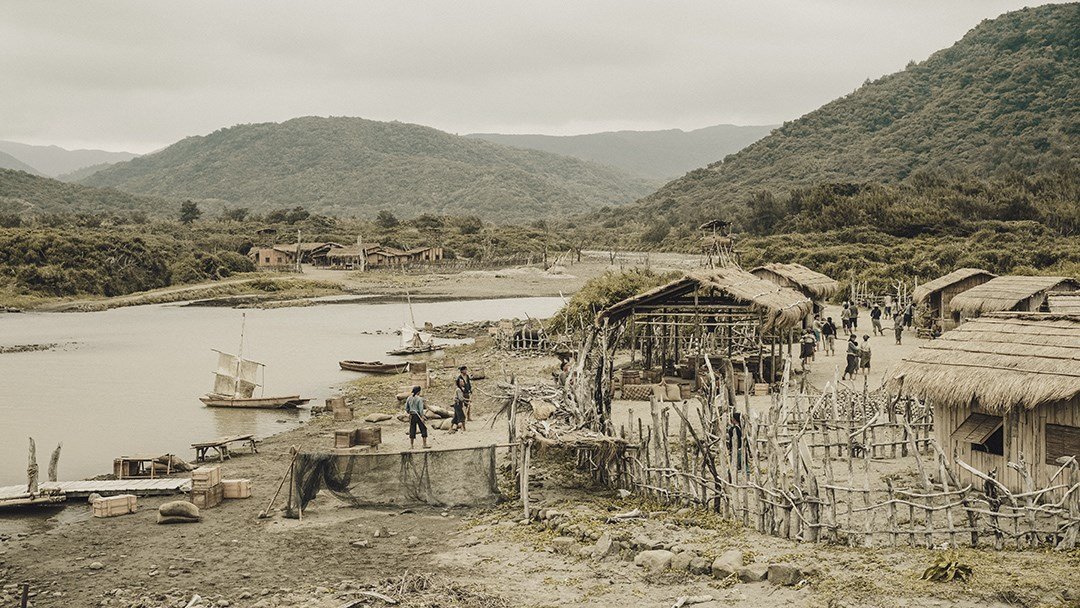
This is where I have a bone to pick with the series producers. It's telling when a work has to rely on supplementary outside material to deliver key information, and we don't know that Sui-a is of Makatao heritage from the show alone. 32/
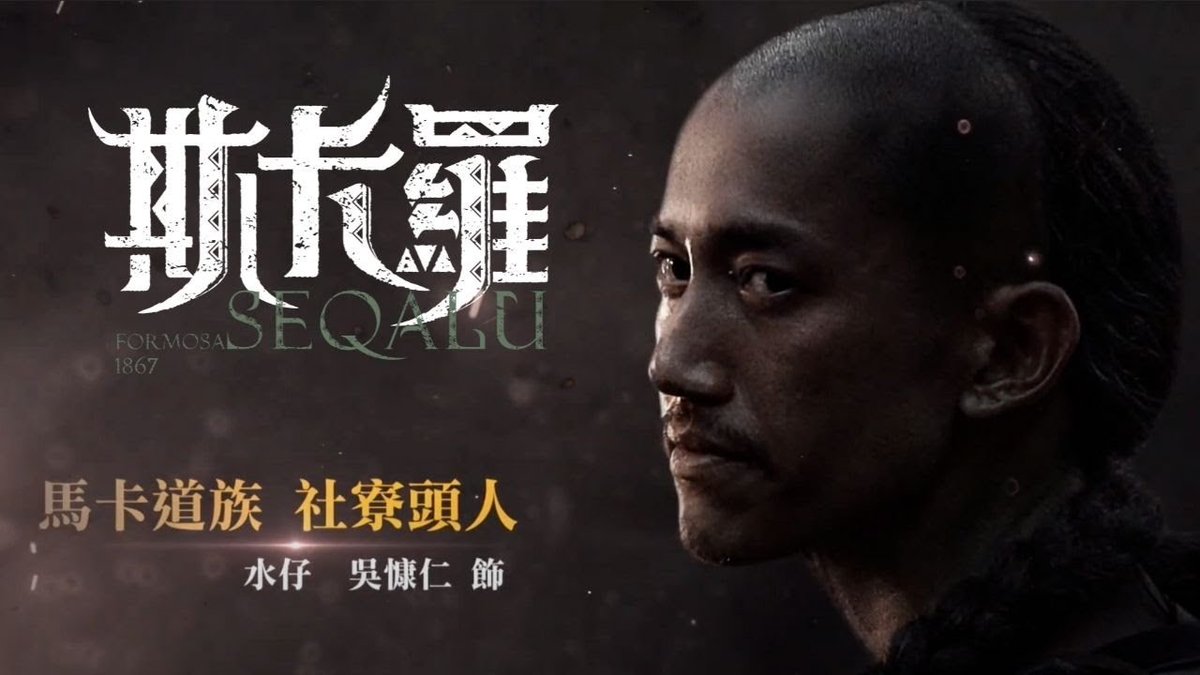
He described himself in trailers as a "half-savage half-Han local-born" (Han being anachronistic here), where "local-born" (土生仔) indicates "mixed". But so far there has been no mention of 熟番 or 平埔仔 which would show his Makatao parentage.
That's a shame, because… 33/
That's a shame, because… 33/
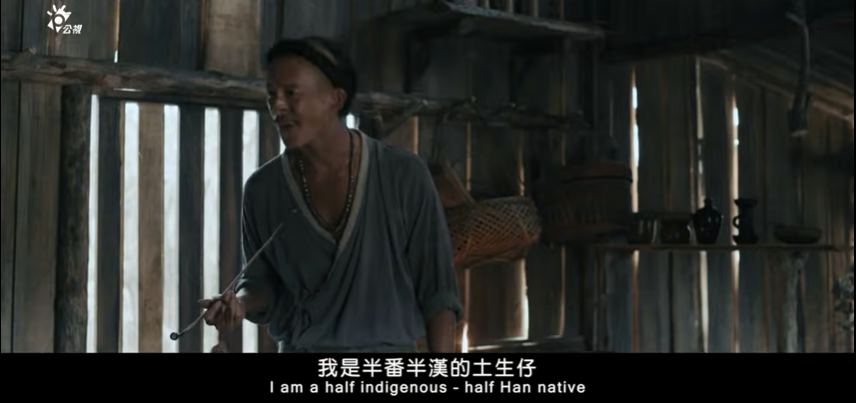
Like Sui-a in Sialiao, taxpaying Plains Indigenous historically often acted as intermediaries between settlers and Mountain Indigenous.
Likewise, they were discriminated against by settlers for being savages while maligned by Mountain Indigenous for being collaborators. 34/
Likewise, they were discriminated against by settlers for being savages while maligned by Mountain Indigenous for being collaborators. 34/
In-between yet never belonging. In this way, Sui-a embodies the role of his ethnic group well. It's a shame it's not mentioned outright.
Sui-a is fluent in Hokkien, Hakka, and S. Paiwan, and actor Wu Kang-ren deftly switches between the three languages at the drop of a hat. 35/
Sui-a is fluent in Hokkien, Hakka, and S. Paiwan, and actor Wu Kang-ren deftly switches between the three languages at the drop of a hat. 35/
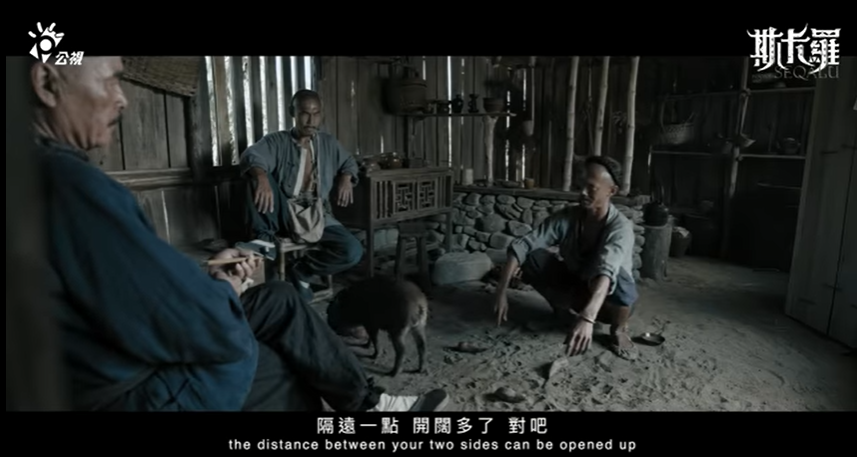
I must praise Wu's excellent portrayal here. Sui-a is sly and flamboyant, enforcing his village's neutrality, but is self-interested just like everyone else. The lengths that Wu went through to portray him—losing weight, tanning, and not bathing for weeks—are mind-blowing. 36/
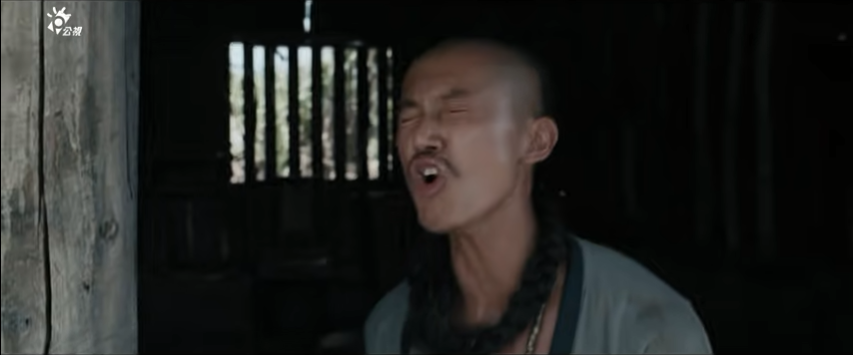
Enjoy this clip where Wu's Sui-a demonstrates his linguistic skills, despite the actor being unfamiliar with Hakka and Paiwan (not in this clip, but found in others). 37/
As I have made obvious here, the character of Sui-a is one of the major reasons I have come to enjoy the show. It's not just that he's Makatao or that he's a polyglot—it's both and more, playing his role in the complex and precarious ethnic situation in 19th century Taiwan. 38/
This is portrayed all the more so by Tiap-moe and her brother A-kiet (apparently based on the historical chief Bungekaic), with the former adding English to the mix. Add Mandarin by Gen. Liu (who served under THAT Gen. Tso) for a dash of familiarity for Mandarin monolinguals. 39/
Now to address the elephant in the room: identity. The multiplicative identities of the cast does lead to confusion, but I'd argue that's by design. Tiap-moe and Le Gendre's internal struggles are reflective of the struggles of an emergent Taiwanese identity to come. 40/
Tiap-moe's admonition of her brother not to speak their native languages in Taiwan-fu—twice, on separate occasions—should resonate very deeply with most Taiwanese above a certain age. 41/
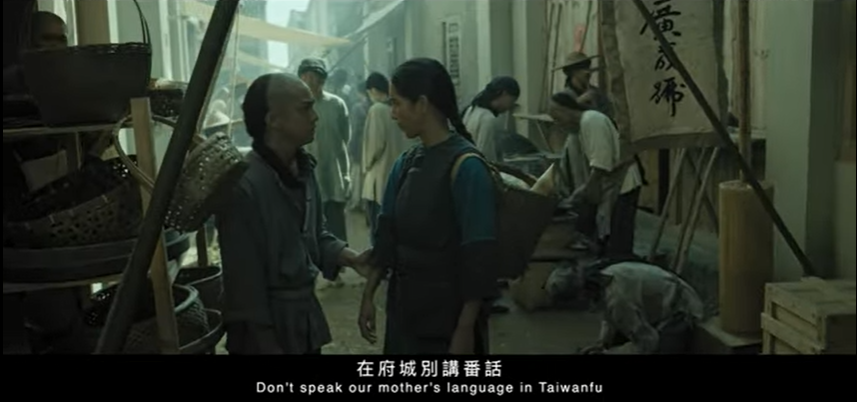
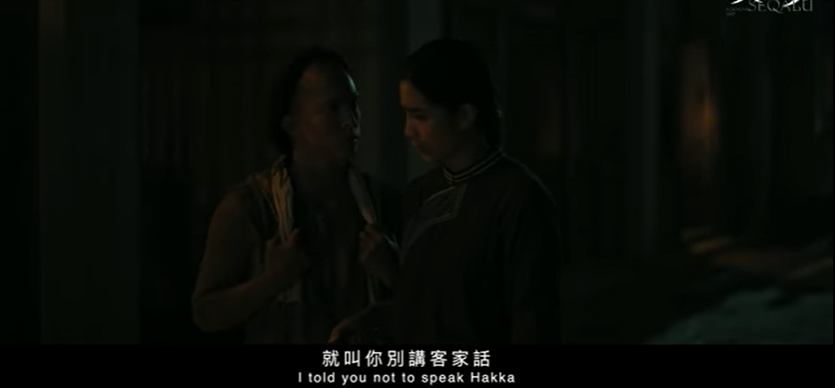
From a smattering of warring factions on the colonial frontier to today's postmodern democratic nation, Taiwanese people throughout the ages have asked themselves: "Who am I?" Even with recent developments, that question is still being asked without a solid answer. 42/
Seqalu may not answer that question outright, but without speculating on the intent of the producers, the implication is clear: Look into the past with all of its chaotic complexities, and come to a conclusion for yourself. 43/
That makes Seqalu an excellent prelude to the upcoming "prequel" movies, the Taiwan Trilogy, by the acclaimed director of Seediq Bale and KANO, Wei Te-sheng. It showcases the perspectives of Dutch colonists, Hoklo migrants, and native Siraya in the 17th century. 44/
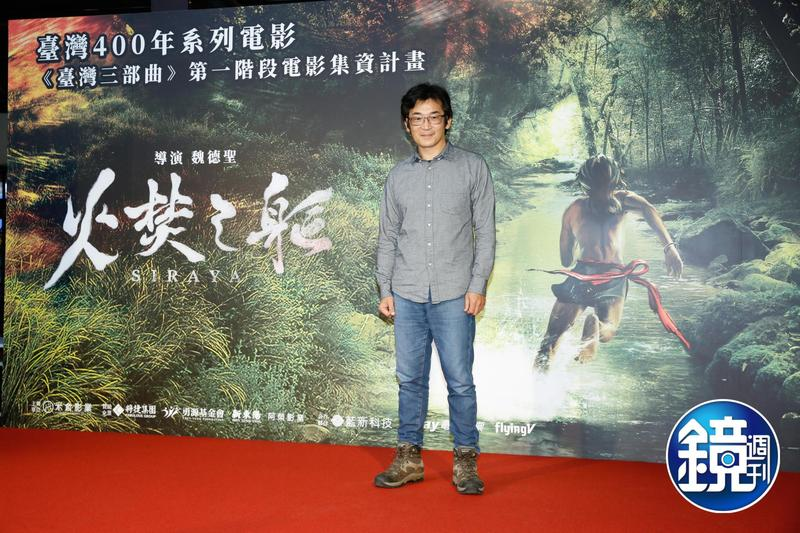
The running themes of identity and reclaiming suppressed history are what make Seqalu a hit with Taiwanese.
Acting, plot, and even dialectal accuracy seem trivial in light of this.
45/end
Acting, plot, and even dialectal accuracy seem trivial in light of this.
45/end
Tag: @michaelturton @donovan_smith @laorenchanna @AnimalExtender @kerslake_andrew @TimMaddog @catielila @dearclarissa @joshiunn @Ljius1 @_shikaiyu_ @WasiqSilan @ArthropodFrog @xiao_collective @92Athina
@michaelturton @donovan_smith @laorenchanna @AnimalExtender @kerslake_andrew @TimMaddog @catielila @dearclarissa @joshiunn @Ljius1 @_shikaiyu_ @WasiqSilan @ArthropodFrog @xiao_collective @92Athina @kerim
• • •
Missing some Tweet in this thread? You can try to
force a refresh