I've been fascinated at the Kenya Daily Nation's reporting on John Okello, the 'Field Marshall' who overthrew the Sultan's gov't in Jan. 1964.
Here's Okello & colleagues with the flag of the newly-founded People's Republic of Zanzibar, 19 Jan. 1964.
Thread 1/
Here's Okello & colleagues with the flag of the newly-founded People's Republic of Zanzibar, 19 Jan. 1964.
Thread 1/
2/
Okello came to power when he & 200 men stormed a police station, armed with bows & arrows. After they captured the armory they gained the upper hand over the Sultan's police.
The Kenyan papers were fascinated with Okello: early reports held him to be a Kenya citizen.
Okello came to power when he & 200 men stormed a police station, armed with bows & arrows. After they captured the armory they gained the upper hand over the Sultan's police.
The Kenyan papers were fascinated with Okello: early reports held him to be a Kenya citizen.

3/
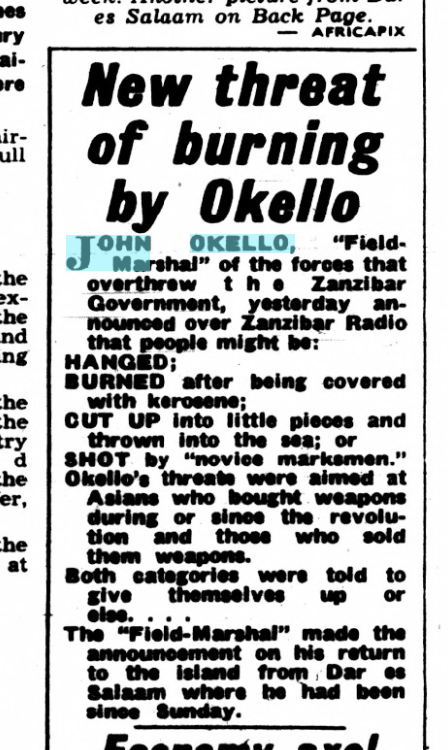
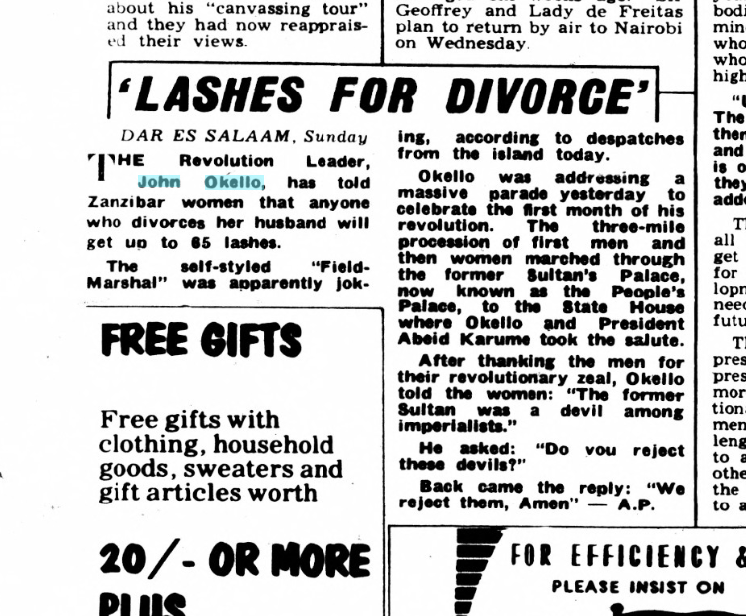
In January and Feb 1964 Okello--at the head of his heavily-armed supporters--made a series of incendiary speeches: those who opposed the revolution wld be 'cut into little pieces and thrown into the sea'.
In January and Feb 1964 Okello--at the head of his heavily-armed supporters--made a series of incendiary speeches: those who opposed the revolution wld be 'cut into little pieces and thrown into the sea'.
4/
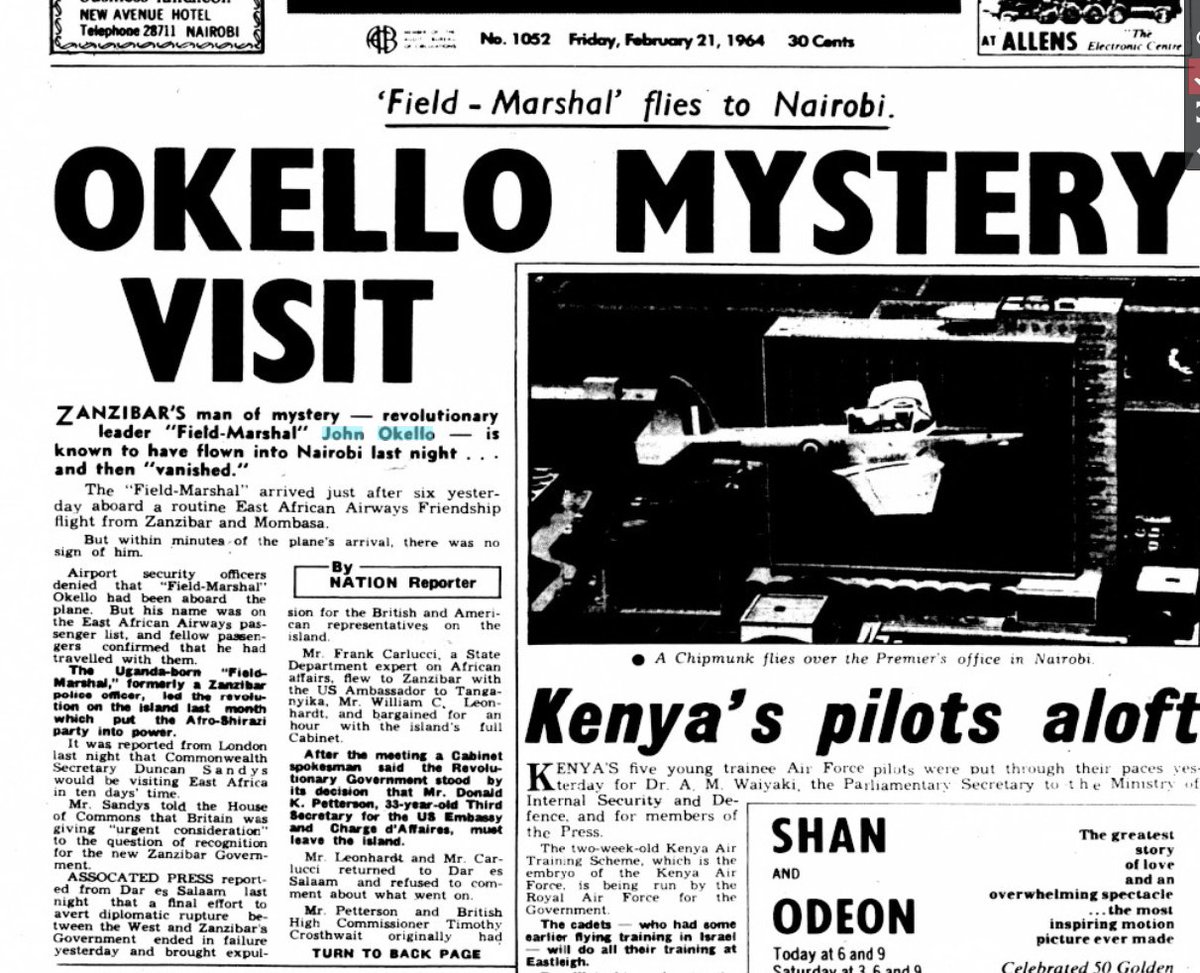
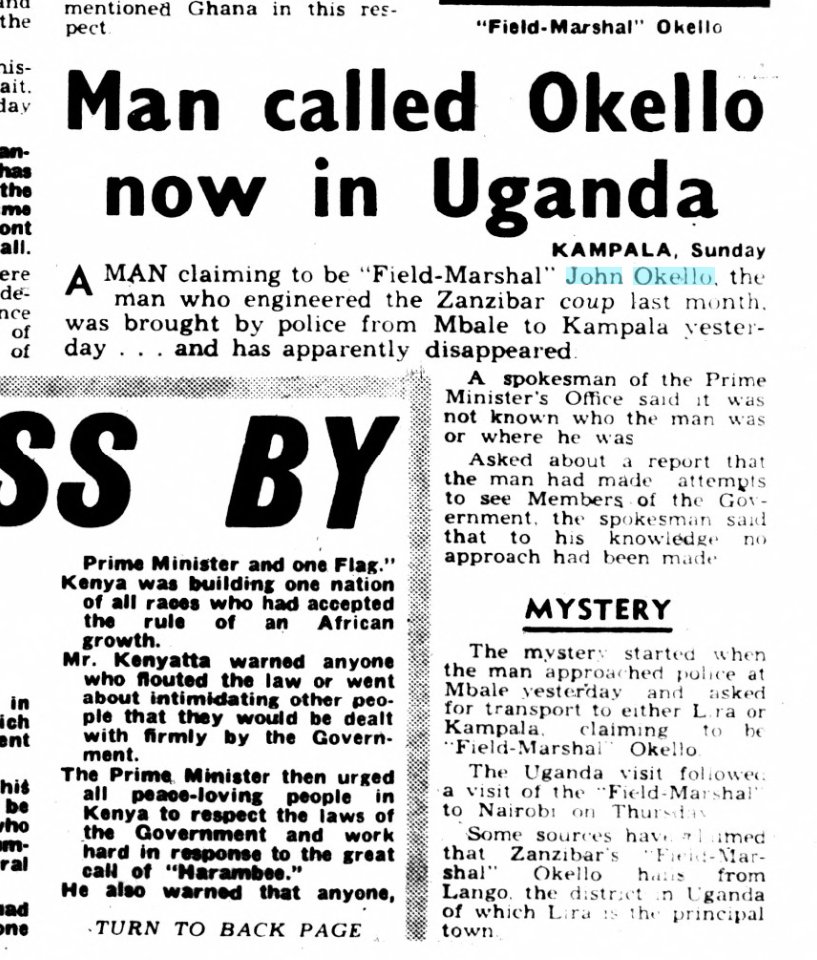
On 20 Feb Okello made an unannounced trip to Kenya, arriving on a commercial flight to Mombasa. Within a few days he was said to be in Uganda.
On 20 Feb Okello made an unannounced trip to Kenya, arriving on a commercial flight to Mombasa. Within a few days he was said to be in Uganda.
5/
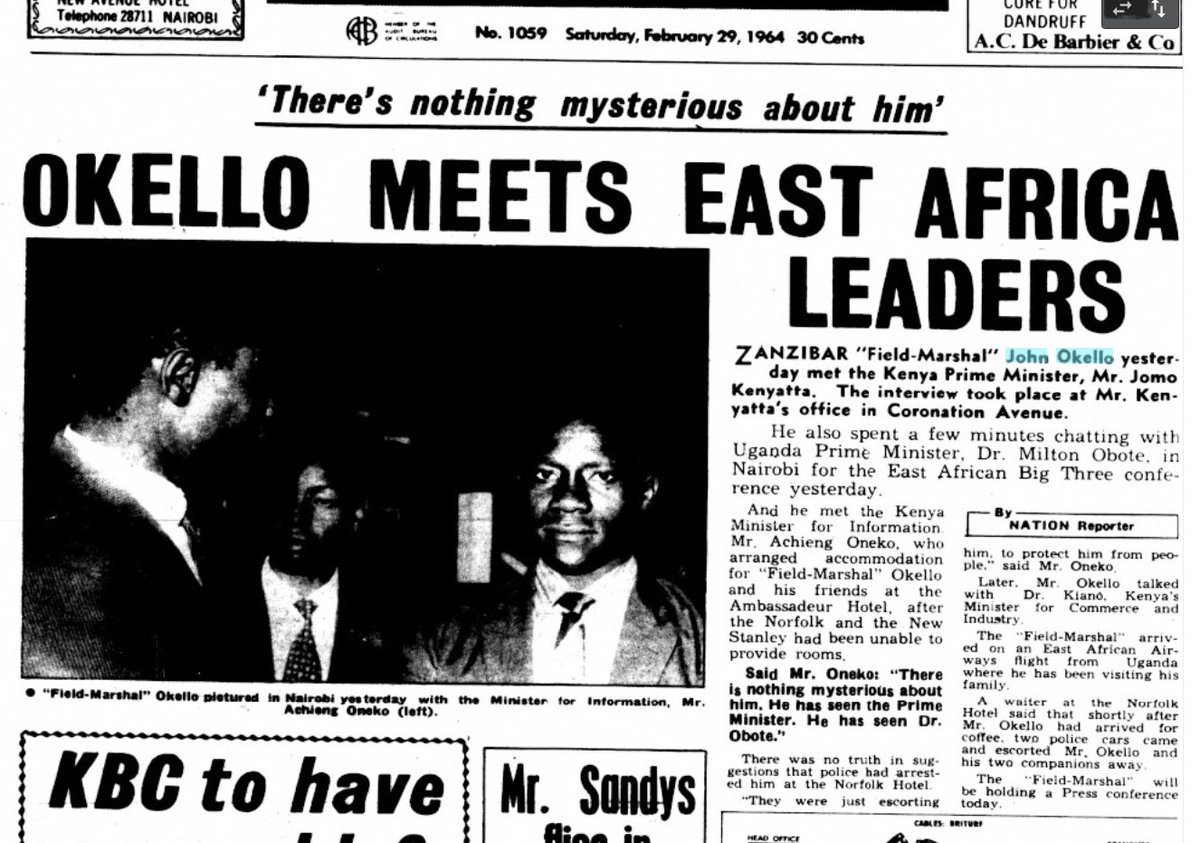
On 28 Feb. he visited Jomo Kenyatta in Nairobi; he is said also to have met with Obote. 'There is nothing mysterious about him', said Achieng Oneko.
On 28 Feb. he visited Jomo Kenyatta in Nairobi; he is said also to have met with Obote. 'There is nothing mysterious about him', said Achieng Oneko.
6/
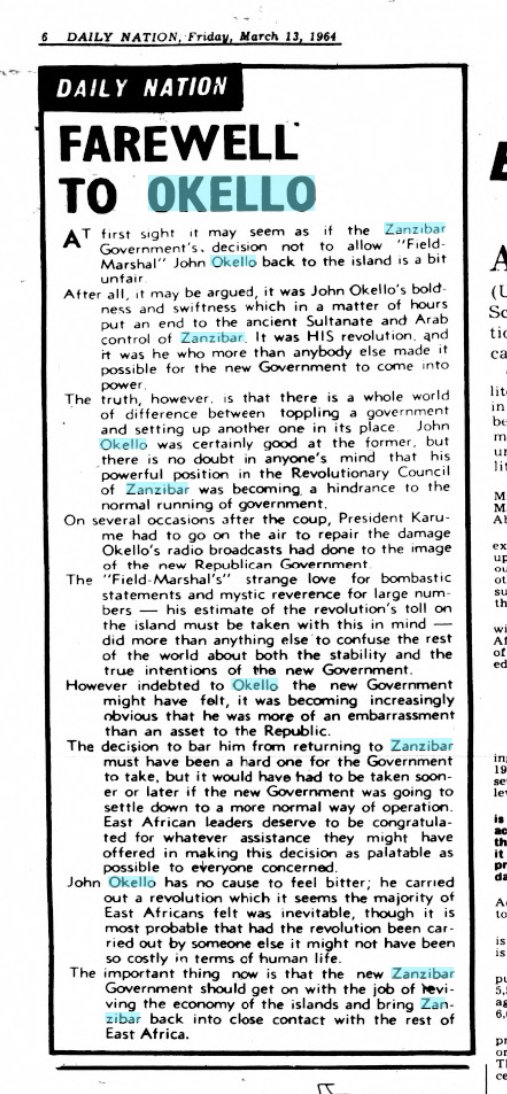
On 11 March he gave a press conference in Nairobi. By that time he had been banned from returning to Zanzibar--he was not even allowed to collect his personal possessions.
The Nation heralded his ouster, calling him an embarrassment to the Zanzibar government.
On 11 March he gave a press conference in Nairobi. By that time he had been banned from returning to Zanzibar--he was not even allowed to collect his personal possessions.
The Nation heralded his ouster, calling him an embarrassment to the Zanzibar government.

7/
Here's a (silent) video clip of Okello's press conference in Nairobi.
Here's a (silent) video clip of Okello's press conference in Nairobi.
8/
By 16 March he was in Kampala, staying in a top hotel and driving a brand-new Peugeot--evidently given to him by an Ethiopian supporter.
By 16 March he was in Kampala, staying in a top hotel and driving a brand-new Peugeot--evidently given to him by an Ethiopian supporter.

9/
In the time that followed his triumphant arrival in Kampala Okello's fortunes were steadily diminished. Within a few weeks he had wrecked his Peugeot in a car crash. In October he was arrested in Tanzania.
In the time that followed his triumphant arrival in Kampala Okello's fortunes were steadily diminished. Within a few weeks he had wrecked his Peugeot in a car crash. In October he was arrested in Tanzania.

10/
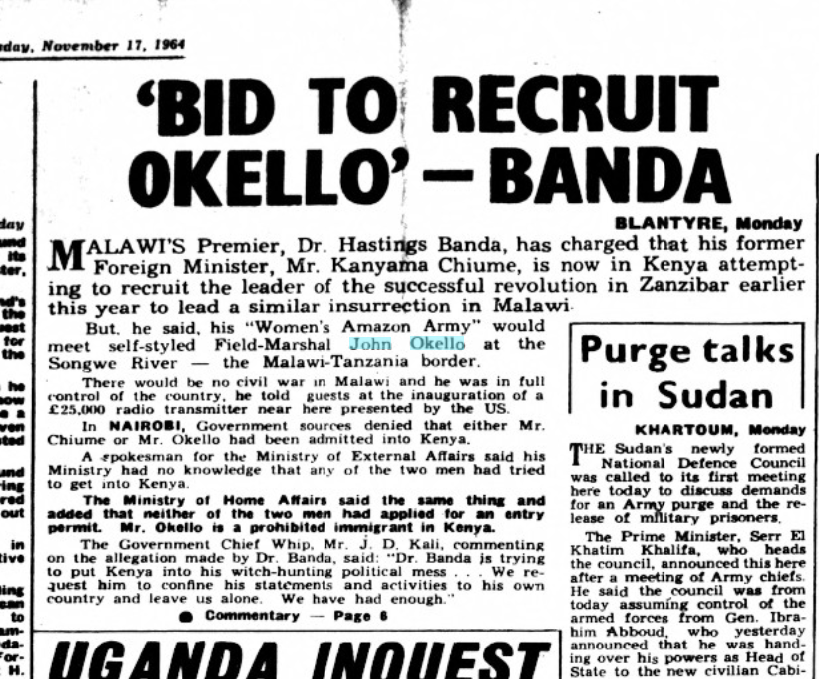
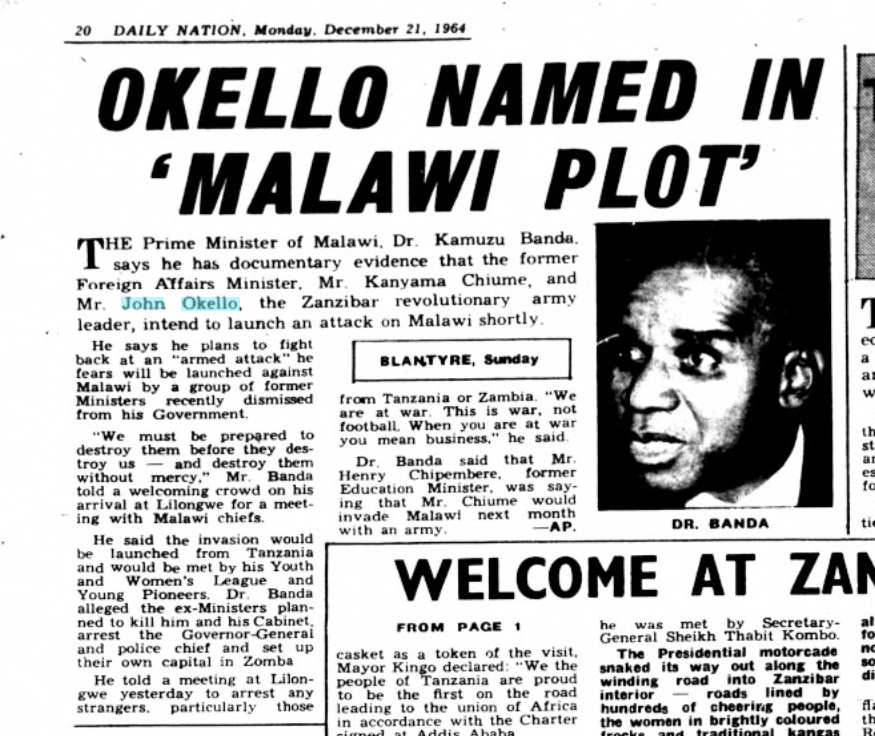
He spent the rest of his life in and out of prison, accused by the governments of Kenya, Uganda & Tanzania of conspiring against them.
In November 1964, for example, Hastings Banda accused him of planning to overthrow Malawi's government.
He spent the rest of his life in and out of prison, accused by the governments of Kenya, Uganda & Tanzania of conspiring against them.
In November 1964, for example, Hastings Banda accused him of planning to overthrow Malawi's government.
11/
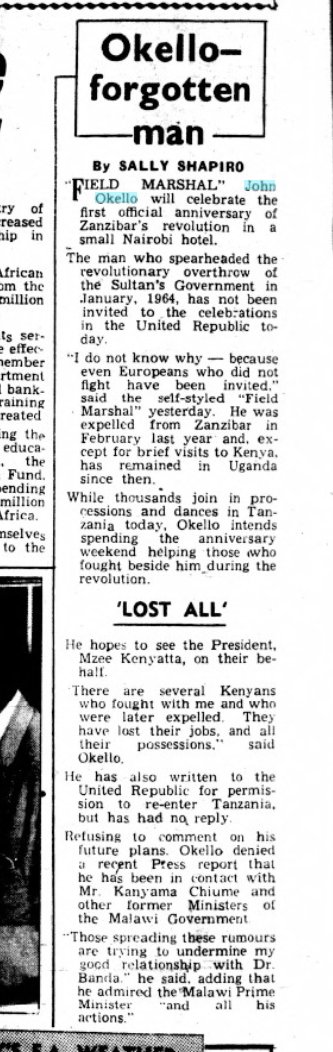
He spent the first anniversary of the Zanzibar Revolution at a small hotel in Nairobi, hoping to get a meeting with Jomo Kenyatta.
He spent the first anniversary of the Zanzibar Revolution at a small hotel in Nairobi, hoping to get a meeting with Jomo Kenyatta.
12/
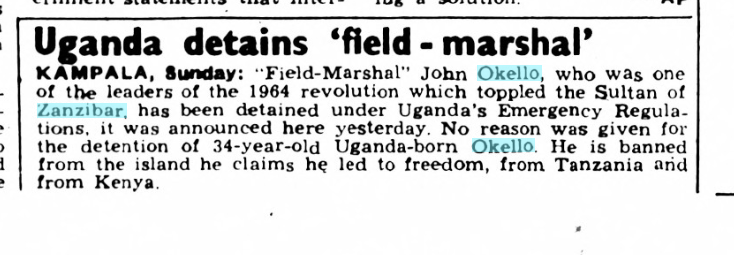
He was imprisoned by Obote in 1967; shortly after his release he was imprisoned in Kenya & held for several years.
He was imprisoned by Obote in 1967; shortly after his release he was imprisoned in Kenya & held for several years.

13/
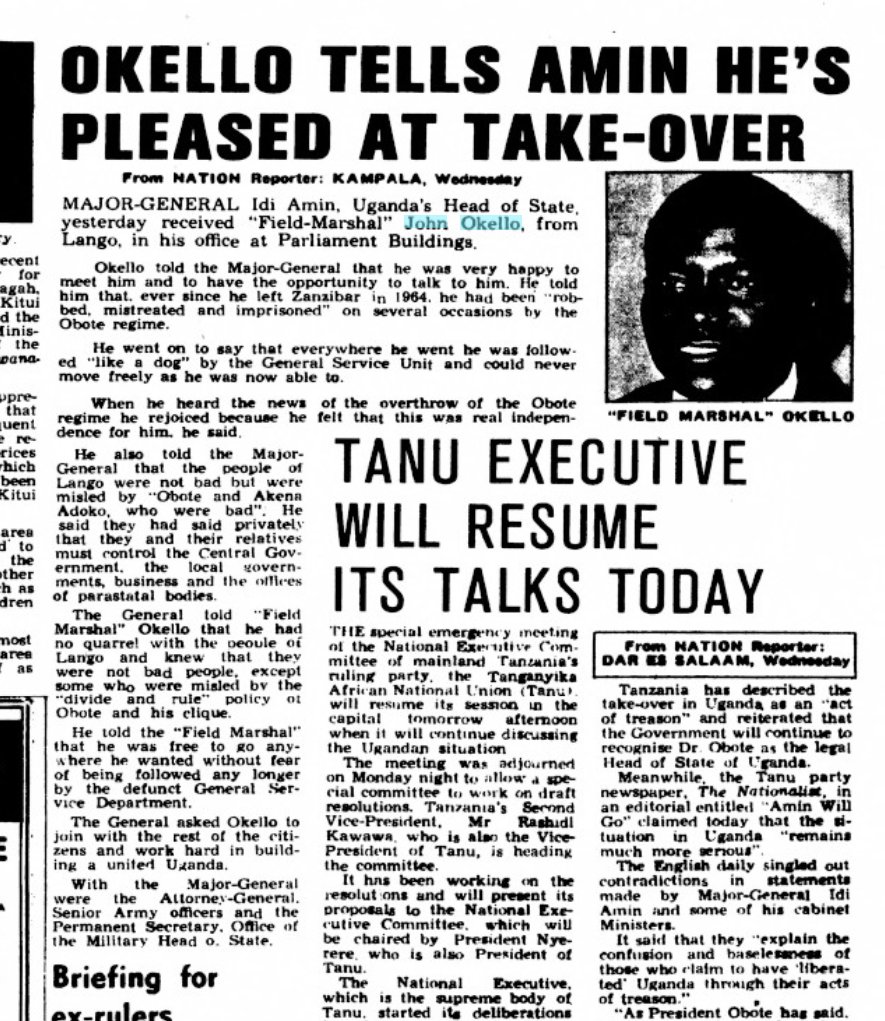
John Okello had a cordial meeting with Idi Amin early in 1971. Amin guaranteed Okello's freedom of movement.
Later that year Okello was killed--apparently by Amin's men.
John Okello had a cordial meeting with Idi Amin early in 1971. Amin guaranteed Okello's freedom of movement.
Later that year Okello was killed--apparently by Amin's men.
14/
John Okello was a key figure in eastern Africa's political history: a threat to the cloistered power of Nyerere, Kenyatta, Banda & Obote.
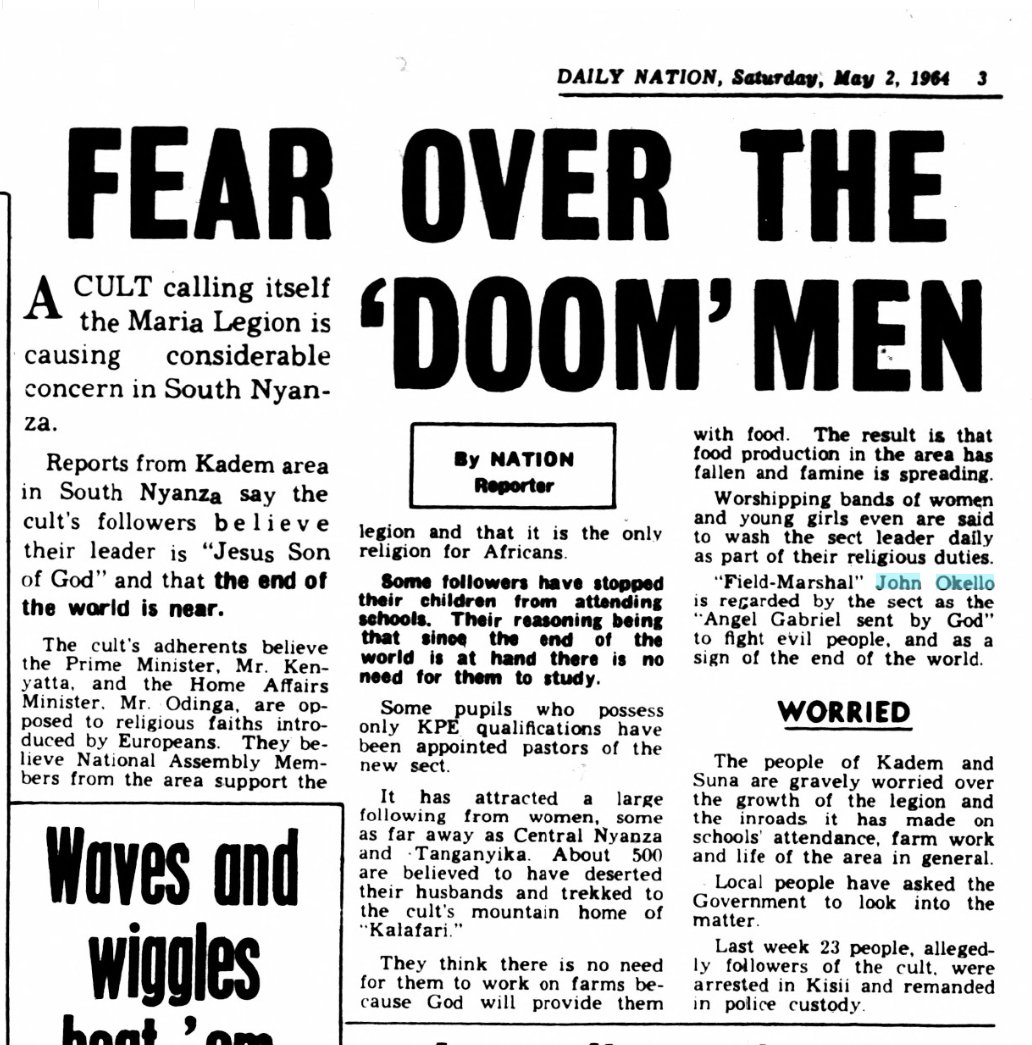
He was also a charismatic figure in religious life: the Legio Maria regarded him as the Angel Gabriel, sent to end evil in the world.
John Okello was a key figure in eastern Africa's political history: a threat to the cloistered power of Nyerere, Kenyatta, Banda & Obote.
He was also a charismatic figure in religious life: the Legio Maria regarded him as the Angel Gabriel, sent to end evil in the world.
• • •
Missing some Tweet in this thread? You can try to
force a refresh