I'm very pleased that--today--I've been made the Ali Mazrui Professor of History & African Studies here @umichLSA.
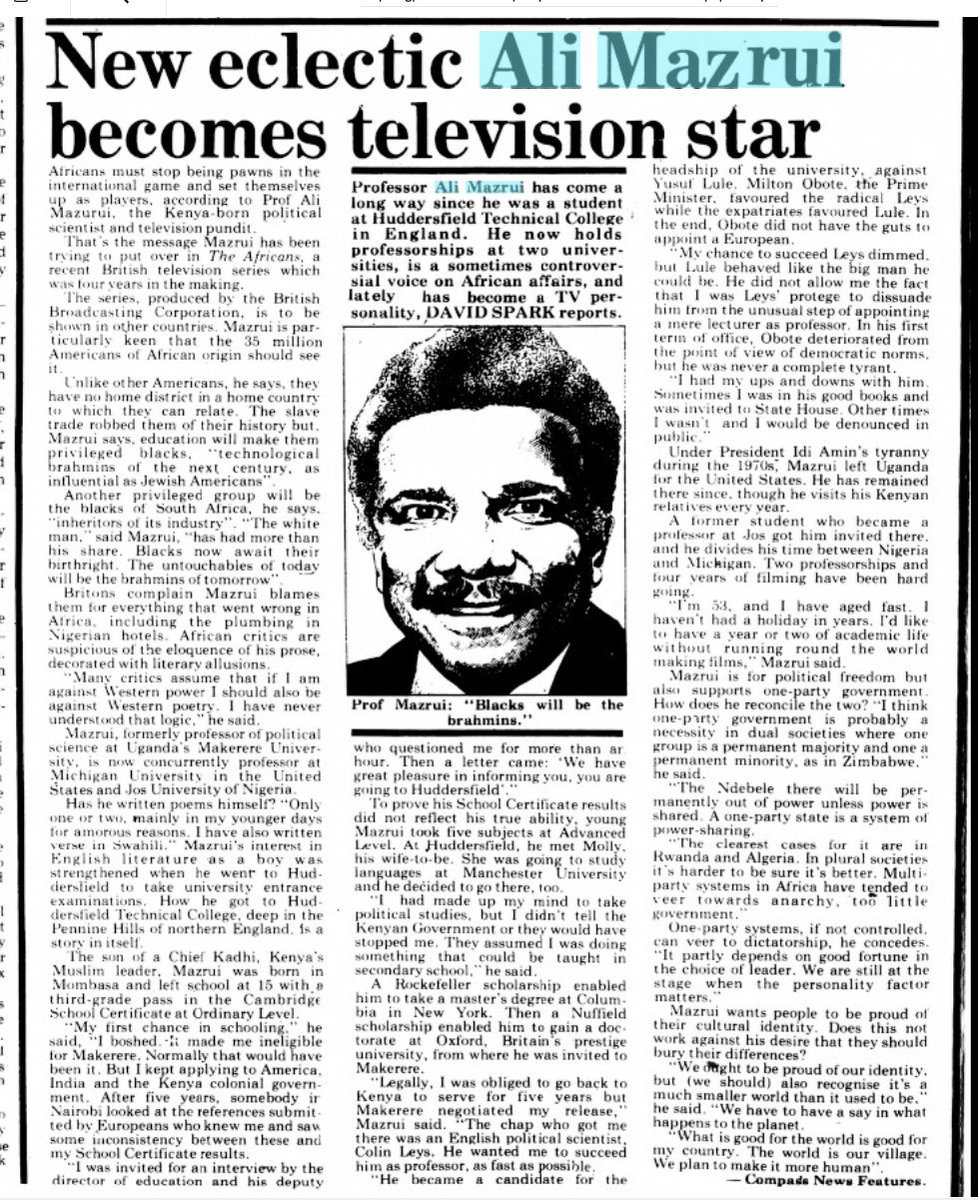
The chair is named in honour of Ali Mazrui, whose extraordinary career began @Makerere, where he taught political science & played a vital role in public life. 1/
@umichLSA@Makerere 2/
In 1974 Prof. Mazrui left Makerere for @UMich. He objected, he said, to 'restrictions on academic freedom & the insecurity of faculty & students'.
Here in Michigan he was much engaged--as an administrator & teacher--in building up African & African-American studies .
@umichLSA@Makerere@UMich 3/
He was a public-facing intellectual in the best sense of the word, always trying out new media and new forms of writing.
His @BBCNews program 'The Africans: A Triple Heritage' introduced a whole generation of viewers to Africa's history, culture & politics.
But--with the permission & support of his family--I do intend to honor his legacy. As Ali Mazrui Professor @umich I'll (try to) compose scholarship that matters both in & outside the university.

• • •
Missing some Tweet in this thread? You can try to
force a refresh

Here's a clip showing Uganda's most controversial politician of the mid-20th century: "Jolly Joe" Kiwanuka.
In this clip (Jan. 1958) he'd just been released on bail. He was imprisoned by the Buganda gov't, accused of plotting to assassinate Kabaka Muteesa.
Short thread. 1/
2/ Kiwanuka was a sometime antagonist of the Mengo establishment & founder of the Uganda National Congress.
As elected member for Busiiro, he made fiery speeches accusing leading ministers in the Buganda gov't of corruption. His 1958 imprisonment was their retaliation.
3/ In Nov. 1958 Kiwanuka went to Accra to attend the All African People's Conference, where he heard Nkrumah's famous speech.
On return to Uganda, Kiwanuka told the police that he was about to 'lead the fight against Colonialism and Imperialism. Africa must be liberated now.'
Labor unionist & politician Tom Mboya was assassinated outside a chemist's shop in Nairobi on 5 July 1969.
Here's a short thread with some newly-digitised @AP footage. First: the scene at Chaani's Pharmacy & at Nairobi Hospital on that dreadful day.
@AP 2/
Here's the Nation's report describing the scene at the mortuary and at Mboya's Lavington residence, where thousands of people gathered to mourn.
@AP 3/
Mboya's requiem was said at Holy Family cathedral on 8 July. There were thousands of people assembled. When Kenyatta's motorcade arrived the presidential car was pelted with stones & shoes.
There was so much teargas that Kenyatta himself was in tears. 80 people were injured.
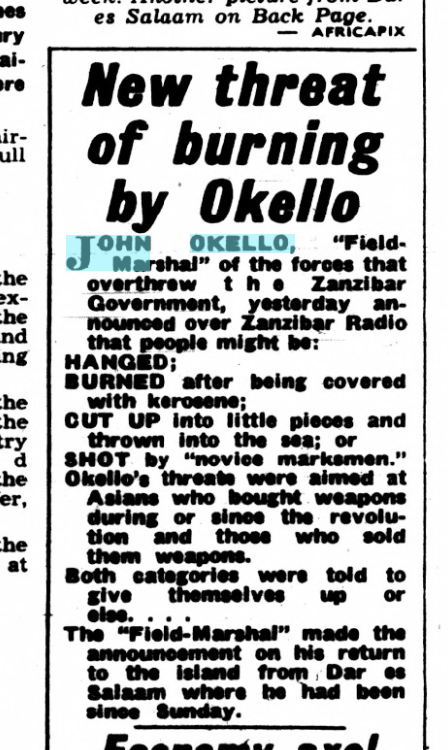
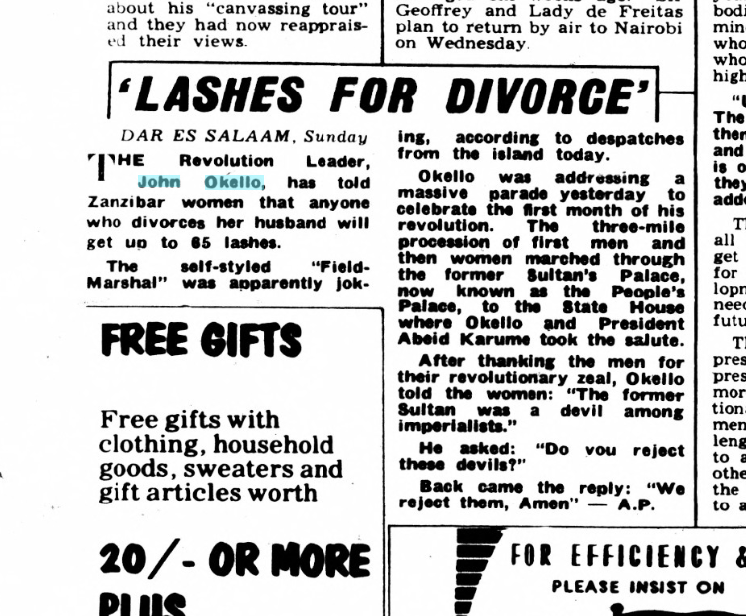
I've been fascinated at the Kenya Daily Nation's reporting on John Okello, the 'Field Marshall' who overthrew the Sultan's gov't in Jan. 1964.
Here's Okello & colleagues with the flag of the newly-founded People's Republic of Zanzibar, 19 Jan. 1964.
Thread 1/
2/ Okello came to power when he & 200 men stormed a police station, armed with bows & arrows. After they captured the armory they gained the upper hand over the Sultan's police.
The Kenyan papers were fascinated with Okello: early reports held him to be a Kenya citizen.
3/ In January and Feb 1964 Okello--at the head of his heavily-armed supporters--made a series of incendiary speeches: those who opposed the revolution wld be 'cut into little pieces and thrown into the sea'.
The Tanzania govt's campaign against the opposition brings to mind an earlier episode: the Treason Trial of 1970-71.
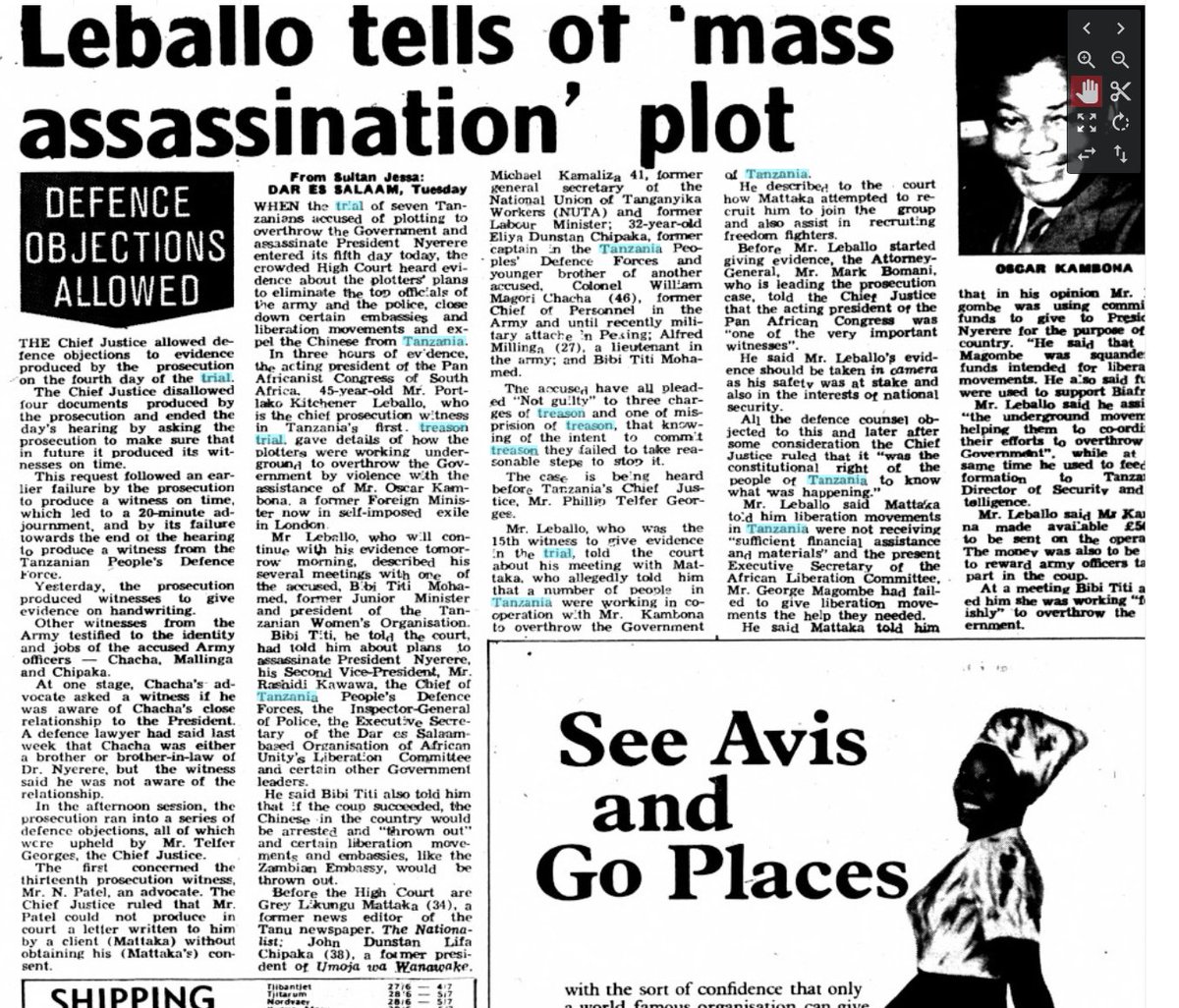
Prosecutors claimed that Oscar Kambona--shown here in London--masterminded a plot to assassinate Nyerere & others. A key co-defendant: Bibi Titi Mohammed. Thread.
2/ Purportedly Kambona sent Bibi Titi funds to pay an assassin, who would work with men in the military to bring down Nyerere's govt.
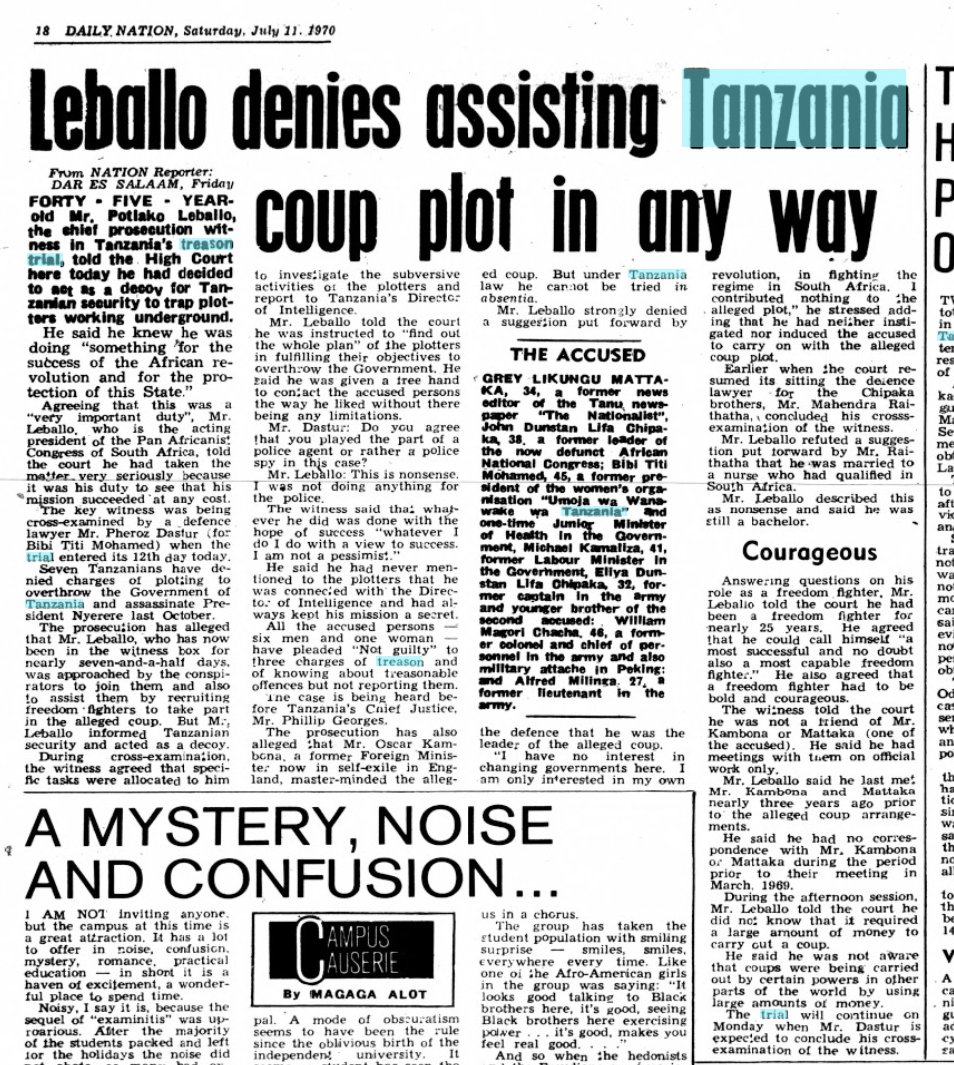
The trial opened in Dar in May 1970. The Kenya Daily Nation had a reporter in the courtroom for the whole trial, which lasted more than a year.
3/ A key witness for the prosecution was Potlako Leballo, sometime leader of the Pan-African Congress, a South Africa-based anti-apartheid organization headquartered in Dar.
Leballo acted as a spy for TZ intelligence, as these reports show.
Swazi king Mswati III today fled the country in the face of popular anger.
Here's a thread on the history of protest in eSwatini. In 1963 striking miners & sugar workers demanded better wages & an open political system. The strike was put down by British troops flown frm Kenya.
2/ The strike leaders were identified by hooded 'screeners'--a technique borrowed from the British campaign against Mau Mau in Kenya.
Below: British troops round up striking workers at an asbestos mine in eSwatini, June 1963. They were demanding one man-one vote.
3/ In 1964 voters went to the polls for the first time in 61 years of British colonial control. The king--Sobhuza II--launched a political party to contest the election. He intended to take Swaziland into apartheid South Africa--a means of reinforcing his royal power.
Today @RuhakanaR--Uganda's PM--handed over his office.
Dr. Rugunda has been a constant presence in public life. He first appears in the archival record in 1969, when--as VP of the Nat Union of Students @Makerere--he visited the US ambassador.
Here's the diplomat's report. 1/
2/ Rugunda was a high school student, about to enter university. The subjects of their discussion: the US's dismal treatment of black Americans & the ongoing war in Vietnam.
Two weeks later Rugunda was back at the US embassy with further criticism of the US war in Vietnam.
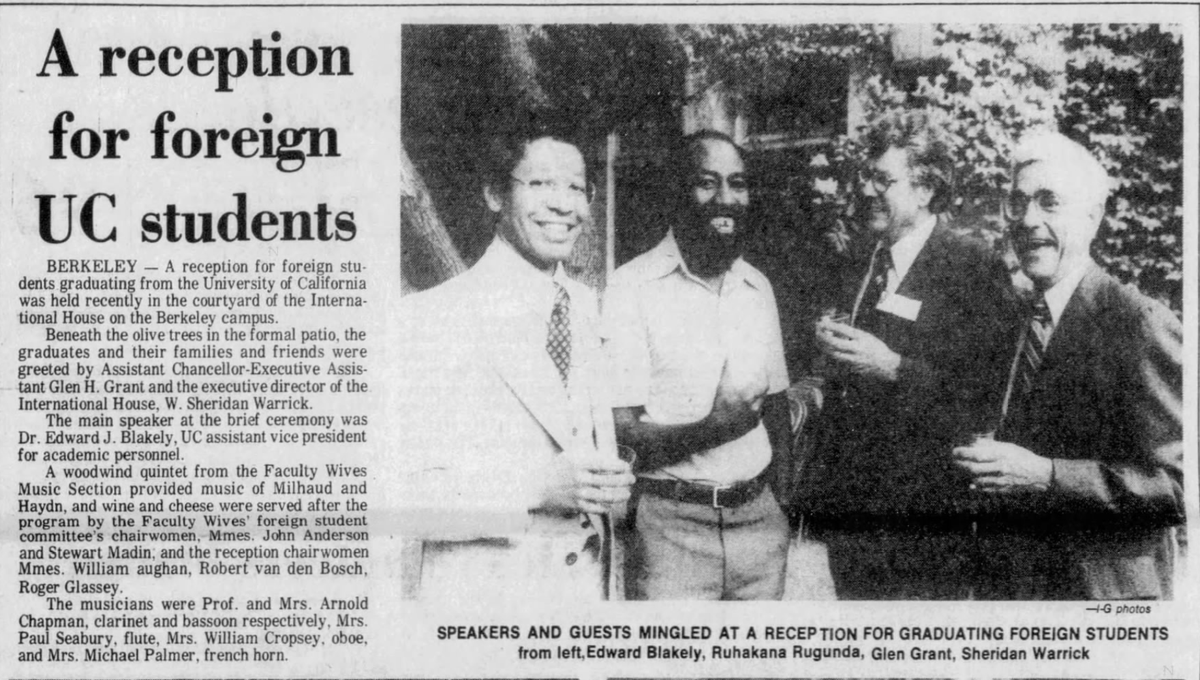
3/ After Idi Amin came to power many NUSU leaders went into exile. Rugunda went to @UCBerkeley, where he did an MA in Public Health. Photo below from 1978.