On Jan 22, 2021 2 miners found a block simultaneously causing a temporary chain split
Mainstream media reported that a “double spend” occurred & bitcoin had a fatal bug. A company called NexTech sold their BTC, missing out on ~$2.3MM in upside
Educate yourself & avoid FUD!
👇
Mainstream media reported that a “double spend” occurred & bitcoin had a fatal bug. A company called NexTech sold their BTC, missing out on ~$2.3MM in upside
Educate yourself & avoid FUD!
👇
https://twitter.com/zackvoell/status/1352667719481618432
1/ Checkout our latest blog post
Summary:
+Temporary forks occur when miners find blocks simultaneously. This is rare but expected
+Bitcoin is decentralized & designed to align to a single version of the blockchain
+Nodes keep track of bitcoin’s ledger
braiins.com/blog/bitcoin-c…
Summary:
+Temporary forks occur when miners find blocks simultaneously. This is rare but expected
+Bitcoin is decentralized & designed to align to a single version of the blockchain
+Nodes keep track of bitcoin’s ledger
braiins.com/blog/bitcoin-c…
2/ NexTech sold on the FUD and made a nice $200,000 profit. But if they had held the coins until today, they would have a $2.5 million profit instead.
3/ Double spend FUD spread when two miners found a block simultaneously. This was falsely reported to be a critical bug in bitcoin, causing NexTech to panic sell.
Thankfully it wasn’t a bug at all.
Thankfully it wasn’t a bug at all.
https://twitter.com/BitMEXResearch/status/1351855414103715842
4/ Since bitcoin is decentralized, miners are racing against each other to mine blocks and sometimes two miners find a winning hash at the same time.
This temporarily creates two versions of the blockchain (A & B).
This temporarily creates two versions of the blockchain (A & B).
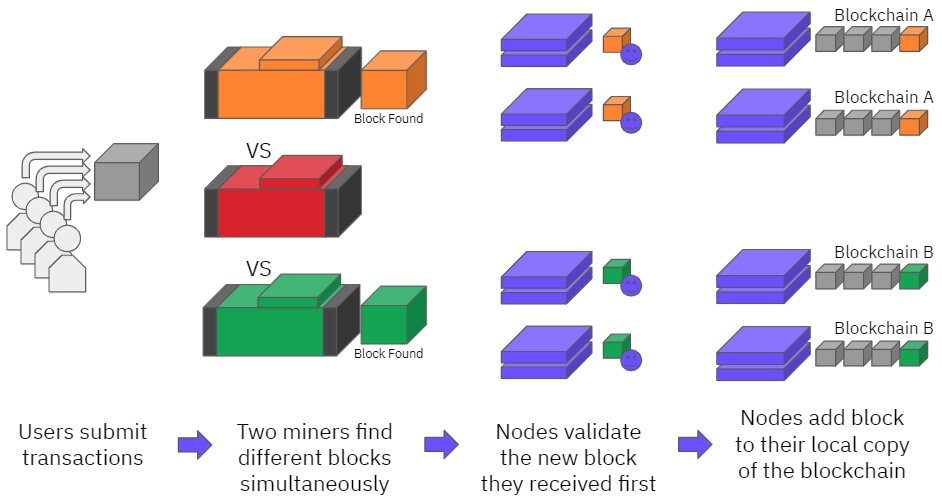
5/ Fortunately, bitcoin’s protocol, based on proof of work, can resolve these forks naturally.
The network comes back to consensus on a single state of the transaction ledger in short order.
The network comes back to consensus on a single state of the transaction ledger in short order.
6/ Bitcoin nodes will always add the 1st valid block they receive from miners to their blockchain.
More importantly, nodes will always consider the longest blockchain as truth.
Temporary forks are resolved when one blockchain exceeds the length of the other.
More importantly, nodes will always consider the longest blockchain as truth.
Temporary forks are resolved when one blockchain exceeds the length of the other.
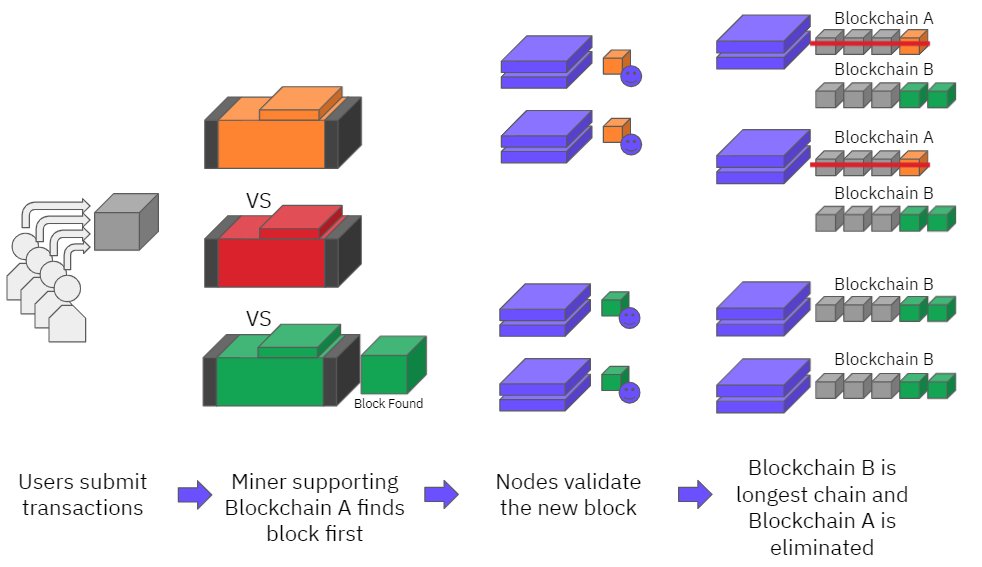
7/ If a node learns from its peers that blockchain B is longer than blockchain A, it then considers B as the valid ledger.
8/ This is how bitcoin maintains a single version of the ledger without any central authorities. It appears confusing at first, but understanding how everything works could prevent you from overreacting to FUD spread by the media.
/END
• • •
Missing some Tweet in this thread? You can try to
force a refresh