@FSlazer@NASAWatch When I was with NASA, our overhead burden (unscalable costs) were 46% on top of the scalable costs. So workers doing scalable productivity account for 1/1.57 = 64% of the cost. If the current program could support a launch rate 6X higher, then... 1/n
@FSlazer@NASAWatch 2/n ... the scalable part of the workforce would need to increase by a factor of 6, so the overall costs would increase by 6x64% + 36% = 418%, so the program would be another 4 times more expensive, or 12x Apollo. OTOH, if the workforce can already support a 6x launch rate...
@FSlazer@NASAWatch 3/ ... then that part of the workforce should have been reduced by a factor of 6. I mean, this is not an unplanned stand down, maintaining skills until it is over. The program is planning only 1 or 2 launches a year. So why would the workforce be scaled for 6x as many?
@FSlazer@NASAWatch 4/ If the scalable part of the workforce were reduced 6X, then the costs would be (1/6)*64% + 36% = 47%. This would cut the cost of the program by half, making it only 1.5X the cost of Apollo. I believe that is roughly the actual situation. The workforce is bloated vs. Apollo.
@FSlazer@NASAWatch 5/ The reason it is bloated is because that "64%" that represents the scalable productivity is wasted by about 60% by all the inefficiencies the government pushes down the org. We took data on this about 15 years ago and literally 60% of our workday was wasteful mandated stuff.
@FSlazer@NASAWatch 6/ Just one example: somewhere around 2012, our Safety office discovered that OSHA classifies hot water as a hazardous chemical. Our safety office shut down all work in our labs until we wrote a bunch of CYA paperwork to document the handling of hot water. Lol, but true.
@FSlazer@NASAWatch 7/ I think the ultimate problem with the government-led space program is that there is no clear vision at the top, no fire to make the world better through space. We do see that fire in commercial companies like SpaceX (among others), and their productivity/efficiency shows.
@FSlazer@NASAWatch 8/8 To be clear, by "at the top" I mean the politicians. As I'm sure you agree, most workers in NASA and at the contractors have a super strong vision for space and work as hard as they can within the structure they are given to bring it to reality. But something is broken :(
• • •
Missing some Tweet in this thread? You can try to
force a refresh

Indigo Aerospace turned my 2D plot into 3D. This is ejecta blown completely off the Moon by the rocket exhaust of a 40 ton lunar lander. Gravity wraps it around the Moon, it cross-crosses on the back side of the Moon, then it flies off into orbit around the Sun.
2/ The dashed ellipse is the Near Rectilinear Halo Orbit of the planned Lunar Orbital Gateway. The damage the ejecta will cause to GW is only slight since the particles are very tiny and traveling “relatively” slow at that height above the Moon. Impact velocity will be ~400 m/s.
3/ However, the damage to spacecraft in Low Lunar Orbit can be unacceptably large. The impact velocity at that height may exceed 4000 m/s (relative speed of the ejecta and the orbiting spacecraft), so these will be hypervelocity impacts.
Jk. It is the crystal clear insight that planets are the engines of complexity in the cosmos, such a tiny fraction of the cosmos’ mass yet responsible for the great flourishing of complexity up to & including life. Regardless what or how they currently orbit.
@XgoMonstrous 2/ That is the essence of the insight Galileo had when he saw mountains on the Moon and realized that all planets are “other Earths” possessing features of complexity like Earth, unlike the “fixed stars” (which we now simply call stars). From Galileo’s insight, all the …
@XgoMonstrous 3/ … early scientists who embraced Copernicanism immediately left to the idea that planets throughout the cosmos are likely the homes of civilizations like Earth. Since then we have realized not all planets have life, but we have continued to embrace that they are unique as…
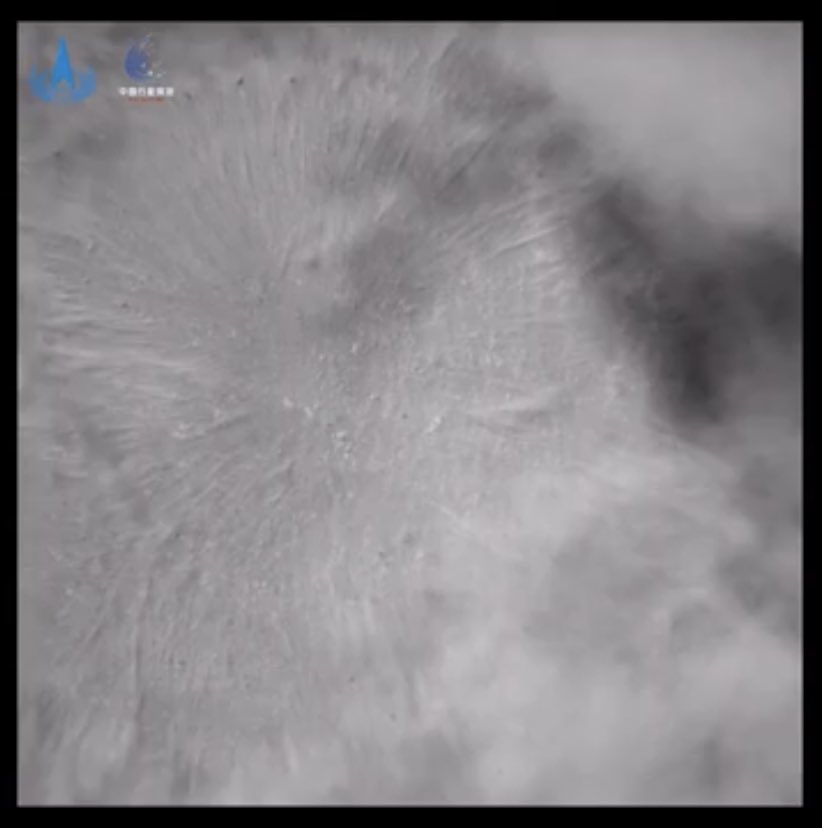
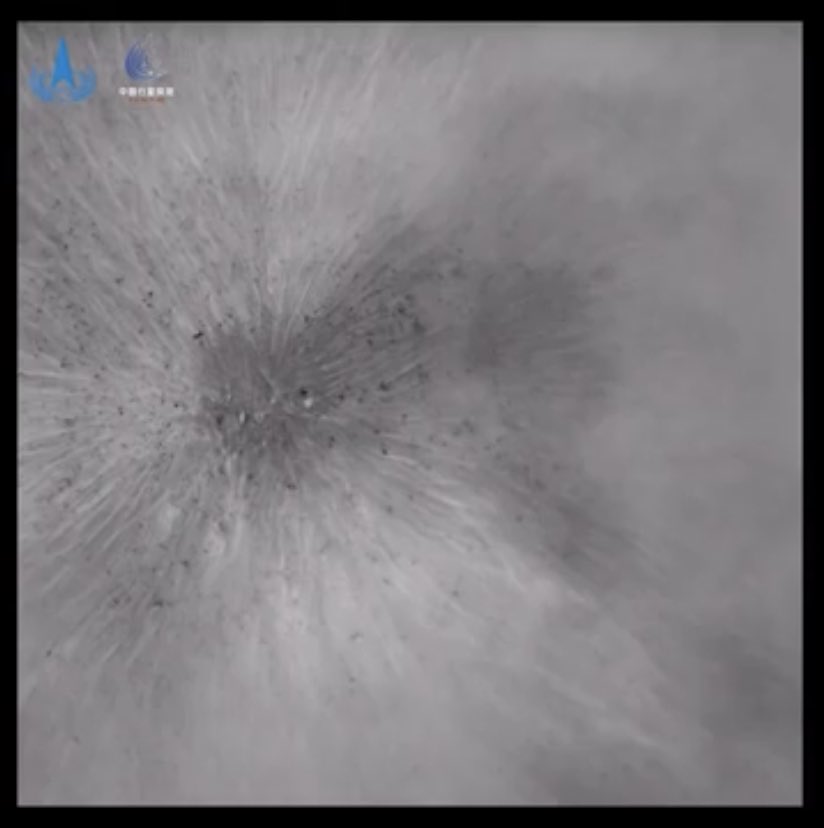
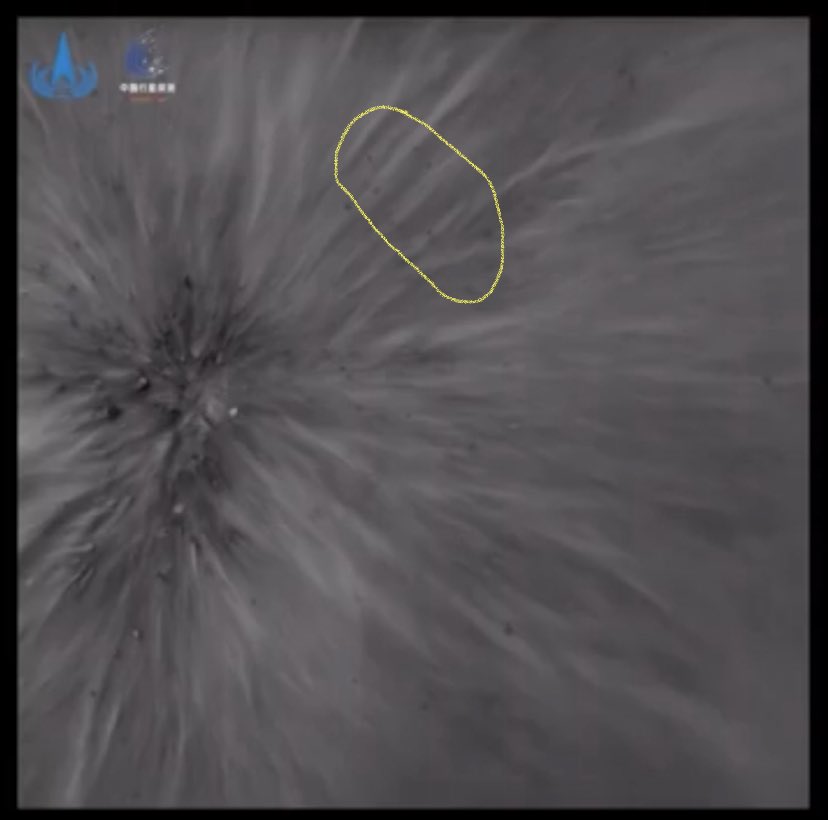
Interesting video by @DJSnM on the Chinese Mars rover mission. He mentions the landing scar and offers an interesting theory on the two lightened plumes and how that could happen on a single engine lander.
2/ While watching this video I was reminded of some recent, new thinking about the fluid flow physics you can see in this picture. See the many radial dust streaks? We have always said they are caused by enhanced erosion around rocks and in craters. However,...
3/ ...the latest thinking says there is something else going on in the physics to create these streaks. One problem with the “rocks and craters” theory is that the streaks are too regularly spaced. Why is the spacing between streaks usually about the same?
@interplanetary I worry about the disproportionate political power of the wealthy, but AFAICT the idea we can fund social problems from their wealth makes no sense. (And I do support social programs that are pragmatic — I’m not arguing against that. I’m politically 100% moderate.) 1/n
@interplanetary 2/ The main problem with the idea that taxing the wealthy will fix things is that most of their “wealth” is not liquid but is the valuation of companies they (co-)own, which cannot be converted into food, medical services, or housing w/o dismantling the companies. And...
@interplanetary 3/ ...mist of the value of the companies is the intangible organization of materials, skills, knowledge, customer channels, and processes that make them productive. By disassembling the companies to get something else instead you destroy not convert that value, by definition.
(2) An example from 2013, former NASA Admin Bolden explaining that NASA cannot afford to do Mars missions because it can only afford to build SLS and Orion. It cannot afford transfer vehicles, landers, Mars habitat & power systems, ascent vehicle, etc. spacenews.com/37808bolden-ca…
(3) The Agency finally realized and admitted in the mid 2010s that it needed to develop a new economic strategy if it wanted to ever get to Mars. It did, & called the strategy “Sustainable Exploration.” It had about 10 bullet points, including the following ideas...
I agree with the piece on this: there are risks as we enter space. We must solve them! But IMO the piece is not a real ethics argument since it weighs only risks, not benefits, & the arguments fall short of justifying th claim that forcing ppl to stay on Earth is pragmatic & good
I would argue it this way instead: we can't pragmatically keep the cat in the box (considering global realpolitik) even if it were good to do so. But it isn't good to do so, becoz the benefits vastly outweigh the risks & becoz the risks are inherently solvable. Therefore,...
...the best way forward--indeed the only pragmatic way forward--is for nations that value ethics (as imperfect as we are) to do the *best we can* in leading ethically and proactively, so we are operating from the best possible position to create a good outcome. But that means...