The rump of philosophy, the part that didn’t become science or something, is still mainly rehashing Aristotle (and Plato). This has been recognized as a terrible mistake for centuries, but they just won’t give it up and move on.
People in distress turn to Philosophy as an alternative to religion. Philosophy tells them the main thing is to figure out what it means to have “a good life.” The standard citation for this is Aristotle’s Nichomachaean Ethics.
This is a disastrous idea that makes you miserable.
You’d think after 2500 years of not figuring out what “a good life” is, philosophers might question Aristotle’s offhand idea that this is a meaningful problem.
“A life” is a malign metaphysical abstraction. It isn’t a thing. You don’t have one. You do stuff and things happen.
So this year an unusually good philosopher writes that you “should be very, very sad” that “your life” doesn’t have a point.
“It” doesn’t have a point because it isn’t a thing. Unless you take Aristotle’s advice to make it one.
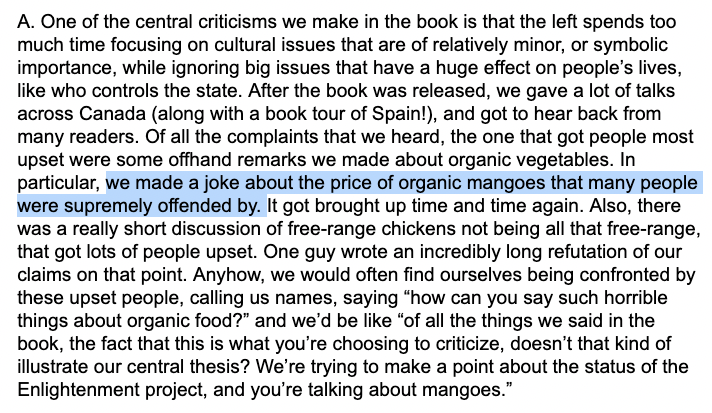
_The Rebel Sell_, a critical analysis of counterculturalism and subculturalism, reviewed by @cshalizi . Much insight in the book; I drew on it when writing _How Meaning Fell Apart_.
@cshalizi Here’s the retrospective on _The Rebel Sell_ that @cshalizi linked. How have cultural politics changed since 2004, they ask? Subculturalism imploded (“authenticity” is no longer a thing). Social media sent us into the culturally-atomized era… induecourse.ca/the-rebel-sell…
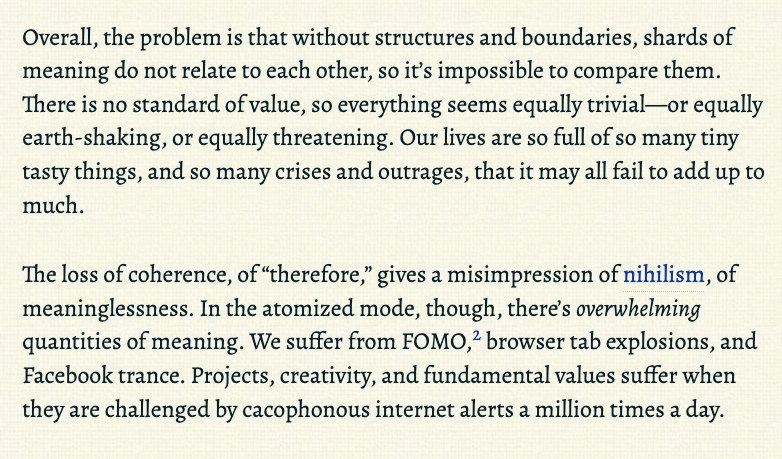
@cshalizi I wrote about the atomization of meaning five years ago… I meant write much more… now perhaps everything I would have said is too obvious to bother with. meaningness.com/atomized-mode
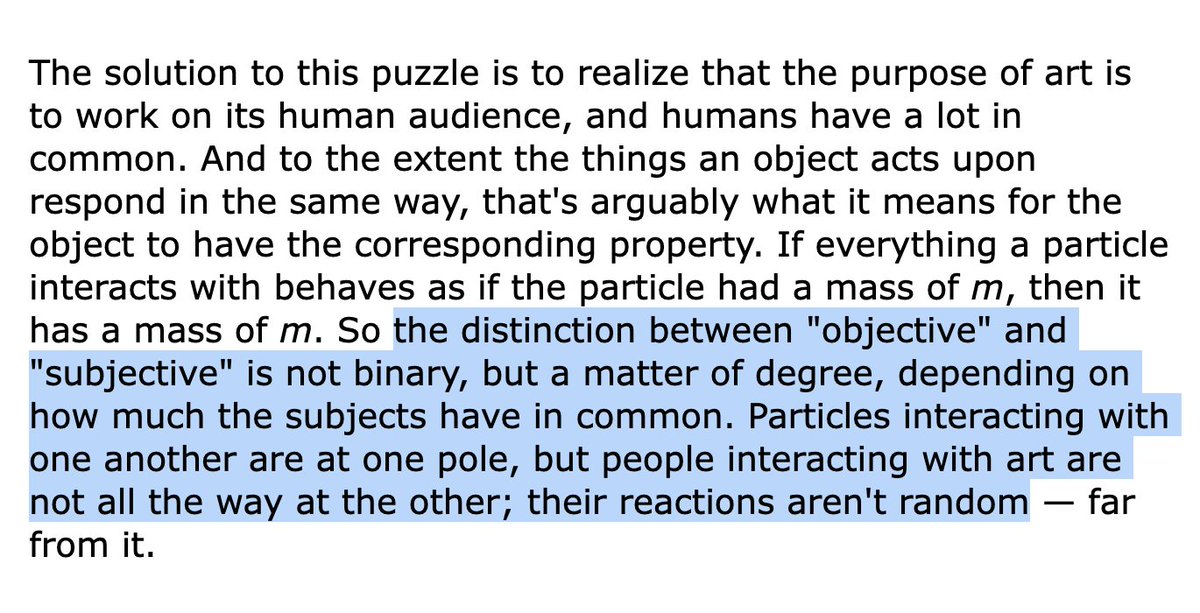
@paulg My introduction to this topic is here… I promised more explanation, which is now on my short list. “Meaning isn’t objective, so it’s not real, just made up” is a common nihilist complaint, and it needs a serious reply.
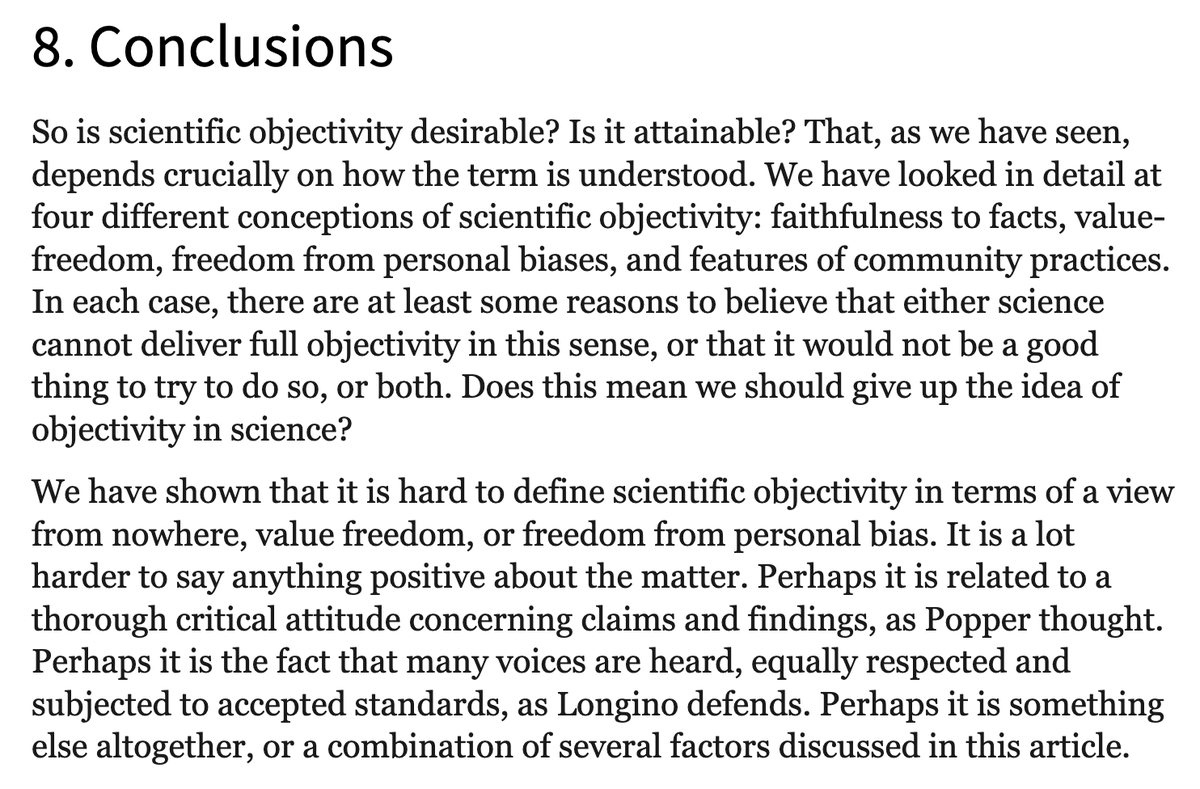
@paulg “Objective meaning” is hard work to untangle, because everyone assumes, without thinking about it, that they know what “objective” means, but it’s a completely incoherent idea.
Further PSA: even if your state is not openly defying corrupt authority on the basis that high quality evidence shows boosters are incredibly effective and safe, if you just show up and get in the booster line, you’ll probably get one without questions.
I would never do such a thing, of course, but I have, uh, high quality evidence that this has happened recently in my vicinity.
Kinda weird… either you can defy the corrupt authorities by not believing them when they say the vaccine is safe and effective, or you can defy THE SAME ONES by illegally getting the same safe, effective vaccine they won’t allow you to have.
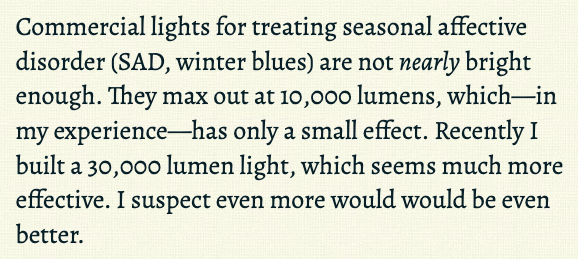
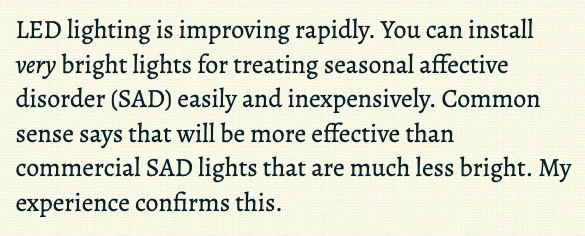
🌞 Seasonal affective disorder is caused by not enough sunlight. “Light boxes” using fluorescent bulbs were invented as a moderately effective treatment. They didn’t work well enough for me, and for years I used banks of halogen bulbs to produce brighter light.
🌞 In 2015 I realized LEDs used for commercial outdoor illumination had gotten powerful and cheap enough to replace halogens. Much better! Brighter! Whiter! Cooler! Cheaper! Longer-lasting!
🌞 Every year since then, LED lighting has improved, and I’ve experimented with better approximations to full sunlight. This was the 2016 edition: meaningness.com/sad-light-led-…
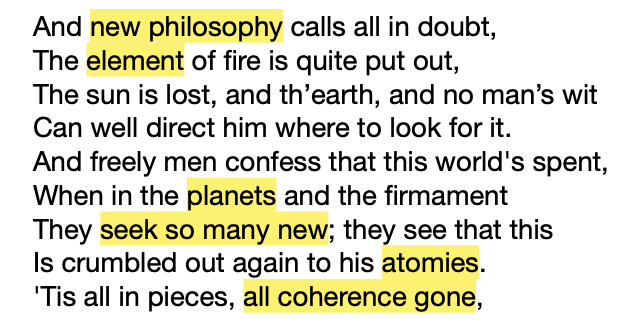
Anyone know what John Dunne's "Anatomy of the World," 1611, is on about here? Sounds like complaints about scientistic disenchantment, but the first new planet (Uranus) was 1781, and Gassendi's revival of atomism was mid-1600s. (So many new *what*?)
The text is a typical long incoherent repetitive depressed nihilistic rumination, so alluding to scientistic disenchantment would make sense, but science hadn't happened yet. Precognition? Time travel?
(Supposedly also one of the greatest English poems. Could have fooled me.)
This seems to be the answer—thanks Jake! Giordano Bruno was definitely a time-traveling alien, confirming my hypothesis.
Why has "wokeness" been so successful? This @everytstudies essay contains much wisdom. Notionally a review of a book, _Cynical Theories_. (I haven't read that, and suspect I like this essay more than I'd like the book.)
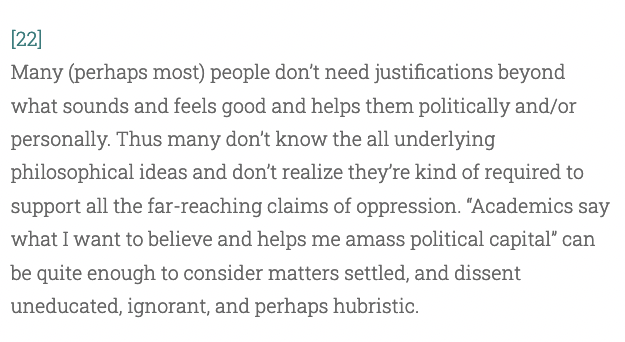
Red herring: Analysis of pop-wokeness in terms of its origin in pomo theory—apparently the main topic of the book—is fascinating for intellectual history geeks like us, but as @everytstudies points out, it's irrelevant to the mass movement, who don't know/care/understand that.
Self-interest, and group interest, drive politics, not ideology—that's just an excuse. Understanding the rise of wokeism requires analyzing its distinctive payoffs for the several different groups who benefit from it.