Some thoughts on the housing bits of the levelling up announcements:
TL:DR - Decent homes standard in private sector - good, but how will it be enforced?
The rest... not much to get excited about
insidehousing.co.uk/insight/levell…
TL:DR - Decent homes standard in private sector - good, but how will it be enforced?
The rest... not much to get excited about
insidehousing.co.uk/insight/levell…
First the private rented sector bits. I think the most interesting announcement is that all PRS homes will have to meet the decent homes standard. According to the most recent data, that's where the highest number of non-decent homes are 
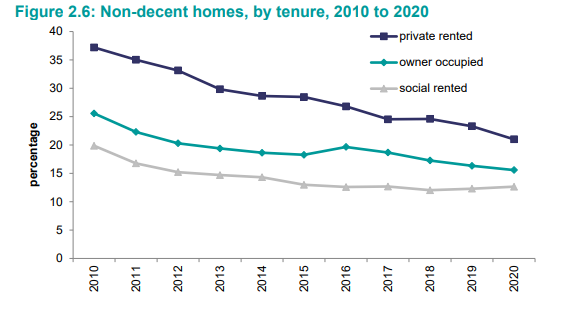
The estimate is around 20%, which is some 880,000 homes. Given the unregulated nature of the PRS, it's a safe bet that the true number is higher.
The big question (unanswered) is how the govt plans to enforce this. Cash strapped councils will struggle, to say the least
The big question (unanswered) is how the govt plans to enforce this. Cash strapped councils will struggle, to say the least
Also - this is a policy which has its biggest impact in London which has by some degree the most PRS homes. Which gets to a flaw in the whole thinking on levelling up and housing which I'll come back to.
The govt has also promised to end no fault evictions, which is nice, but also something it has been politically committed to doing since April 2019. The best you can say about this is it's a relief that it hasn't u-turned yet. But it would be nice if it got on with it.
Overall though, this is a tougher line on the private rented sector than we've seen in the past. Given the reliance on it by so many families with no other option that's a good thing. But without some sort of regulatory enforcement, I don't see how it works.
On housing funding, the government has promised to drop an '80/20' rule which diverts most housing funding to areas of greatest affordability pressure, which tends to mean London and the south east.
What this means is more brownfield funding in low demand areas. But is this going to work? Because it won't be viable for the private sector to build in many of these areas because of, well, the low demand.
Really what low demand areas need is a different kind of housing funding which prioritises improvement, regeneration and social housing.
Also...
Also...
... the whole premise of levelling up kind of falls apart when it comes to housing. Because the idea that 'everything is great in London and rubbish everywhere else' just doesn't hold when London has such a devastating housing crisis
There are more children in temporary housing in Newham alone than the whole of the north of England. We can't start diverting funding from these areas and call it progress.
What we actually need is more funding for both places, and funding which addresses London-style problems in London and problems in low demand areas where they exist (NOT just the north)
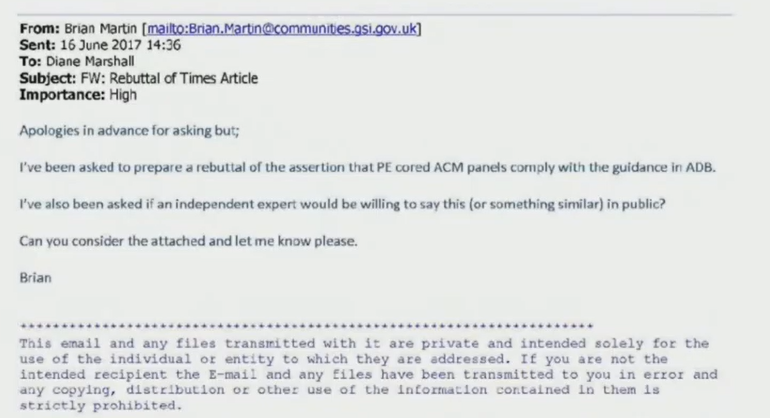
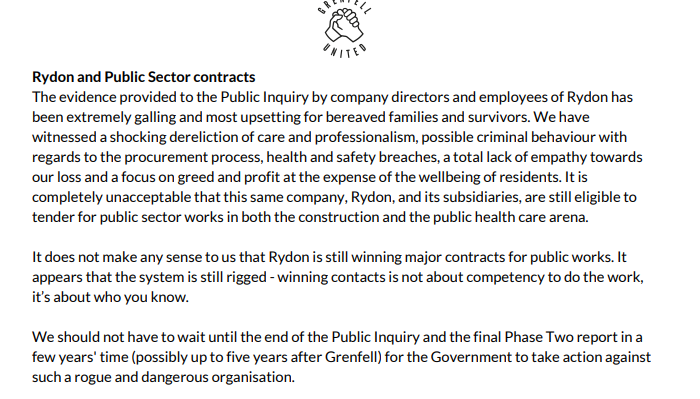
Also - and because you can't talk about housing without mentioning this - the govt are not going to be taken seriously in this area until they offer a workable solution to the building safety crisis. Nothing in here on that and I wouldn't expect it.
Really this mostly feels to me like a series of pretty bland housing policies that would barely make a news in brief column in most papers if it wasn't for the theatre of 'levelling up' surrounding them. Change costs money, and there isn't any of it here.
Finally, there needs to be some rule against this stupid game the government play of putting a headline press release out several hours before the actual policy document. They shouldn't get to cherry pick the news lines in this way. ENDS
• • •
Missing some Tweet in this thread? You can try to
force a refresh