Covid is the most visible pandemic of our lifetime, but it isn’t the deadliest. Heart disease is twice as deadly as Covid at its worst, kills at a younger age, and is preventable. Here’s how. 1/thread on.wsj.com/3DfFTpY
In the US, we too often think of health as strictly the result of individual choices. Individuals can do a lot to stay healthy, of course. But the bigger issue is what we do *as a society* to make healthy choices easier. 2/ on.wsj.com/3DfFTpY
Since Covid emerged, there’s understandably been a lot of focus on it. I’ve tweeted extensively about how we must work together to protect ourselves & others. But the virus emerged on top of other major health challenges, chief among them heart disease. 3/ on.wsj.com/3DfFTpY
In the first two years of the pandemic, Covid killed about 1 million people in the US—a stunning number. In the same period, heart attacks and strokes killed 1.6 million. 4/ on.wsj.com/3DfFTpY
What’s more, Covid and its impacts have made the situation even worse. Death rates tied to heart disease have risen. People don’t have to die from Covid, and they don’t have to die from heart attack or stroke. 5/ bit.ly/3qwM03Z
I’m worried that most people accept heart disease as an unavoidable fact of life … but it’s not. We know how to prevent most heart attacks and strokes. We don’t lack essential knowledge; we’re failing to take essential actions. 6/ on.wsj.com/3DfFTpY
Three leading drivers account for around two thirds of heart attacks and strokes globally: tobacco use, hypertension, and air pollution. All three are preventable. And we don’t have to make radical changes—simple measures can make a HUGE difference. 7/ on.wsj.com/3DfFTpY
The first priority is to end the epidemic of tobacco use. Although tobacco use has dropped to record lows in the US, 35 million people in the US still smoke, each day 1,600 kids try their first cigarette, and tobacco kills nearly 500K Americans a year. 8/ on.wsj.com/3DfFTpY
Increasing taxes on tobacco increases quit rates. We can also dedicate more funding to hard-hitting anti-tobacco ads, which make a big difference. How many smokers, if, decades earlier, they had magically seen their future, would have quit? 9/
https://twitter.com/CDCTobaccoFree/status/1503385470461485056
One simple regulation—de-linking nicotine from tobacco products—could end the tobacco epidemic. Many people may be surprised to find out that Congress granted the FDA the authority to do this in 2009. The FDA hasn't yet done so. 10/ on.wsj.com/3DfFTpY
High blood pressure is another leading driver of cardiovascular disease, but can be prevented, mostly by reducing dietary sodium. Nearly all adults consume far more than the recommended upper limit of 5 grams (a teaspoon!) of salt a day. 11/ on.wsj.com/3DfFTpY
Our food is bathed in salt—it’s very difficult for us to cut down on our own. New voluntary FDA sodium-reduction guidelines for industry are a good step. We can also promote low-sodium salt and adopt front-of-package labels that warn about unhealthy levels of sodium. 12/
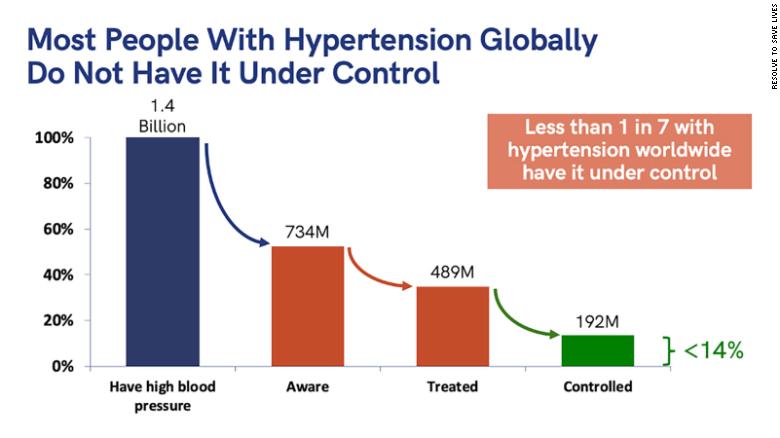
High blood pressure can be controlled safely with low-cost meds, but less than half of Americans and only 1 of 7 people with hypertension globally have it controlled. @ResolveTSL works alongside partners in 41 countries to scale up effective diagnosis, treatment, and control. 13/ 
We have to make sure the right incentives are in place. Health insurers should save money by preventing heart attacks and strokes rather than profiting off of ill health. 14/
https://twitter.com/DrTomFrieden/status/1501681833171423247
The third leading driver of cardiovascular disease is air pollution, which is estimated to kill about 60,000 Americans a year, despite progress since the Clean Air Act introduced emissions controls and vehicle fuel standards. 15/ on.wsj.com/3DfFTpY
If you live in a polluted place, you can’t do much to avoid harmful air other than move or hold your breath. But as a society, we can improve air quality through increased use of clean energy, better crop & forest-burning practices, better urban & industrial design, and more. 16/
Progress requires action. Controlling the main drivers of the heart disease pandemic could save millions of lives. By structuring environments to support health, we'll save lives, boost productivity and make our health systems more efficient. 17/ on.wsj.com/3DfFTpY
There’s a risk we become disillusioned because of our failures to control Covid. We can’t let that happen. Every 2 seconds, someone is killed by a heart attack or stroke. How many preventable deaths are we willing to accept? 18/ on.wsj.com/3DfFTpY
• • •
Missing some Tweet in this thread? You can try to
force a refresh