

🧵 1. This is one of the biggest problems I consistently see when vetting new #UX #design pros' case studies.
I want to know that you can work with both quantitative and qualitative data to gain actionable insights.
I want to know that you can work with both quantitative and qualitative data to gain actionable insights.
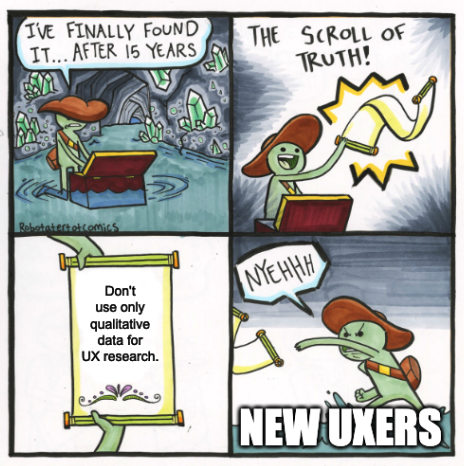
2. Additionally, I see a lot of focus on attitudinal data - which is usually easier to gather from qualitative data - that guides the case study process for new UX pros.
While attitudinal data is helpful, behavioral data is crucial to understanding what users are really doing.
While attitudinal data is helpful, behavioral data is crucial to understanding what users are really doing.
3. This is because human memory is flawed. It's influenced by the passage of time, our biases, both conscious and subconscious, and the way our brains work to fill in the bits of information it's missing to create seemingly real memories of events or general impressions.
4. Why is there a focus on qualitative behavioral data? Because those the easiest pieces to gather from user interviews and surveys, which are the most common tools new UX design pros use in their case studies.
5. There's a thought process that getting access to quantitative data - particularly for new products - is difficult or expensive, but it doesn't have to be. Survey questions, ethnographic observations, and competitive research are all quick, viable options for new UXers.
6. Something that's also usually missing from new UX pros' case studies: the process that went into synthesizing the research findings into actionable insights.
7. More often than not, I see a little on research methodology used (usually with no supporting reason why those methods were chosen) and the key insights from those research pieces - but almost never anything that bridges the gap between the two.
8. For my money, this is the key point in the UX design process. This is what separates those candidates with huge potential: Can you take the raw data, transpose it into actionable insights, and take those insights to inform a useable design?
9. This is a skill that sets apart mid/senior level designers - and one that takes time to hone. I get that not every junior level UXer will be able to do this successfully, and I don't expect that. What I'd like to see is some thought and rigor put towards that process.
10. Any new UX pro that could put together a case study showing me how they gathered, synthesized, and applied both qualitative, quantitative, behavioral, and attitudinal data would immediately stand out for me.
11. If you want to learn more about the basic UX Research process and considerations, pick up a copy of my recent book, "The UX Design Field Book," and turn to Chapter 2: UX Research. amazon.com/Design-Field-B…
12. As always, if you can't afford a copy - or if your situations otherwise prevents you from picking one up - drop me a DM and I'll send you a digital copy, 100% free of charge. /thread
• • •
Missing some Tweet in this thread? You can try to
force a refresh



