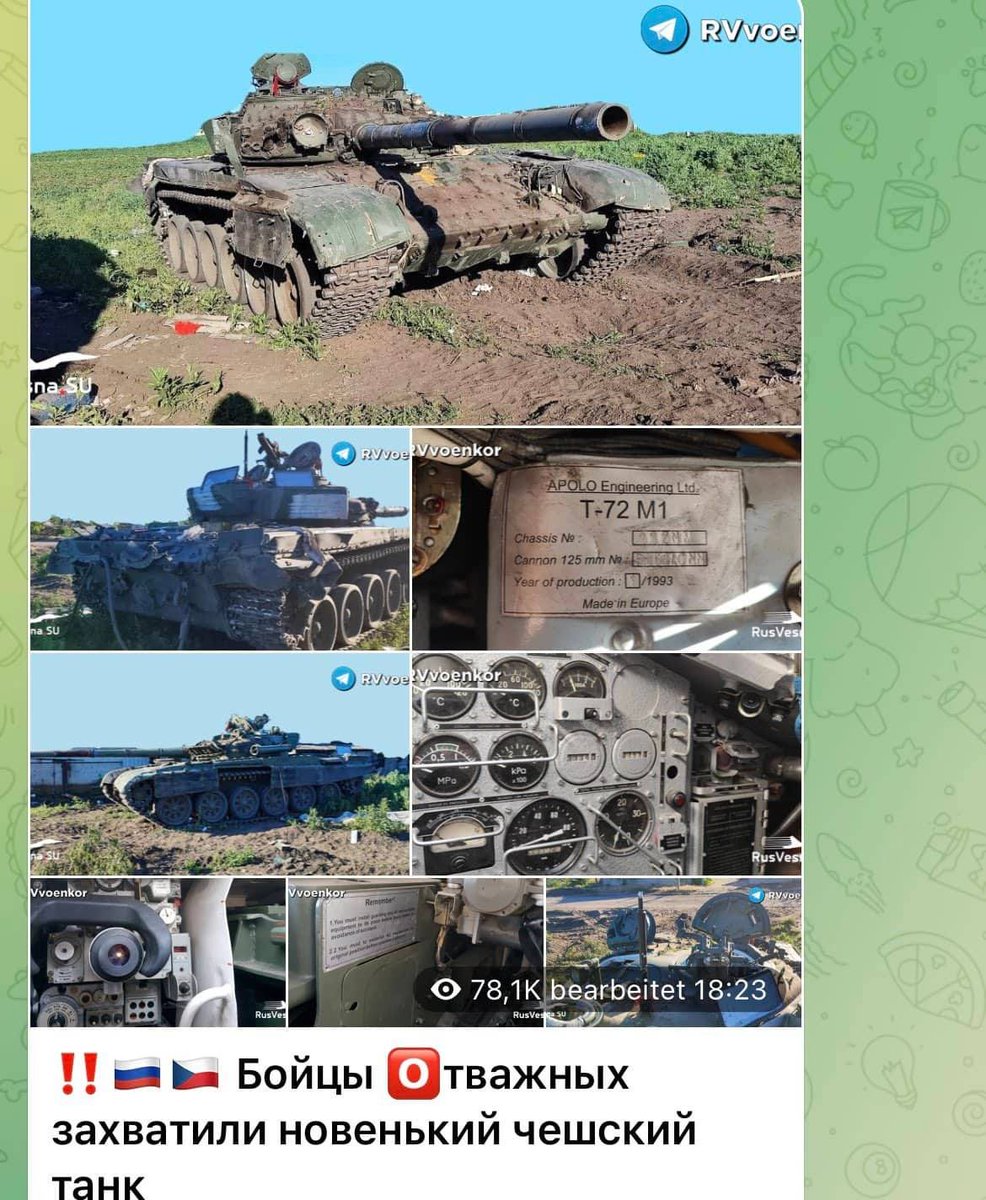
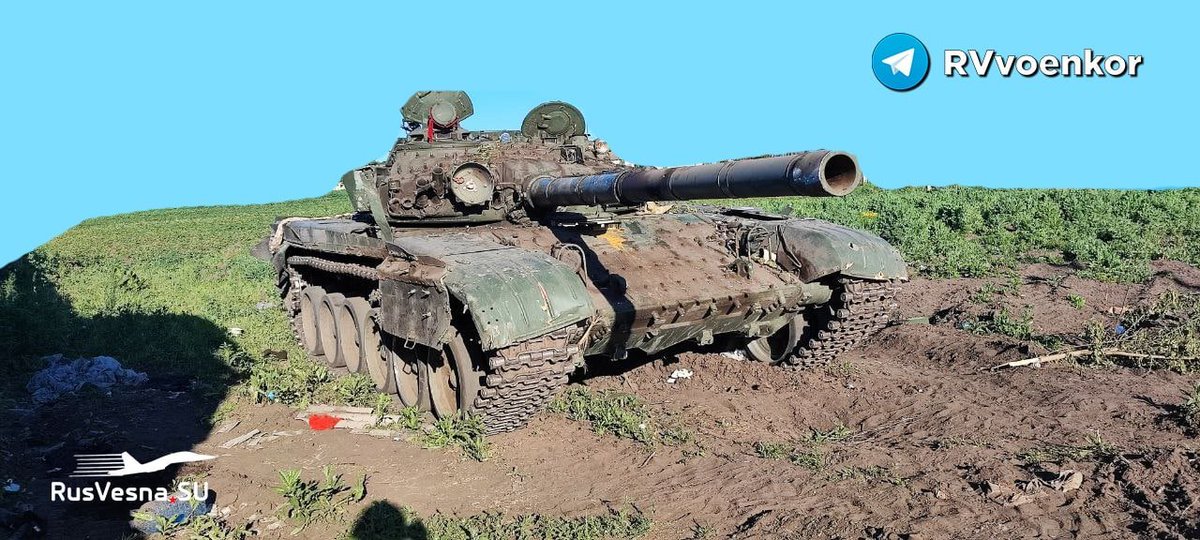
🇷🇺 propaganda is boasting of the "🇨🇿 tank captured". Probably wrong.
I am covering CZ supplies extensively, so let me explain the reasons why I don't think this one was supplied by @ArmadaCR. 🧵 Thread👇
@UAWeapons @DefMon3 @oryxspioenkop
#UkraineRussiaWar #Czechia #Tanks
I am covering CZ supplies extensively, so let me explain the reasons why I don't think this one was supplied by @ArmadaCR. 🧵 Thread👇
@UAWeapons @DefMon3 @oryxspioenkop
#UkraineRussiaWar #Czechia #Tanks
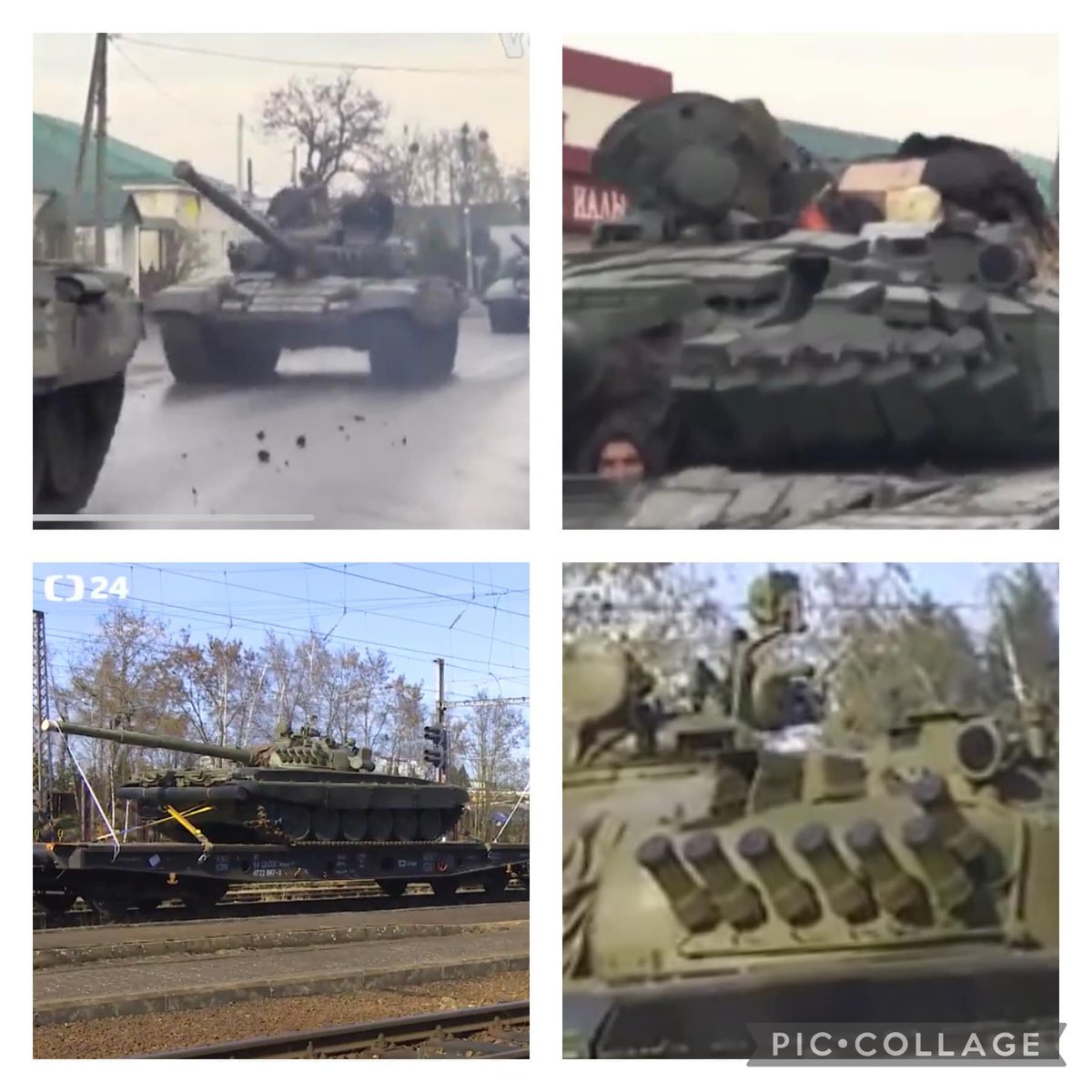
1/ In early April we managed to take pictures of one of the first batches of T-72s clearly supplied from CZ miliary stocks. We delayed the info due to OPSEC, but the rumor spread fast. Within a month, the first of those was seen somewhere in Donbas, with old Kontakt-1 ERA added.
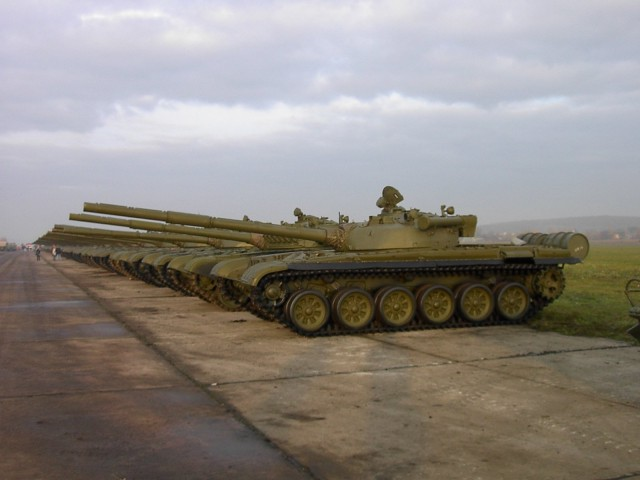
2/ 🇨🇿 was a pretty big operator of T-72s. While the Soviets retained other types themselves, ČSLA (People's army of Czechoslovakia ) invested massively in T-72s with a production line set up in Dubnica, now in 🇸🇰.
In 1991, there were 815 T-72s on the roster.
In 1991, there were 815 T-72s on the roster.
3/ ČSLA was a brutally oversized army, for a 15-million nation. In the 1970s it had 4500 tanks, mostly seeming useless after the end of the Cold war.
This T-54AM2 "Hammer" was sold recently on @aukro for like 70k USD. "100 % in working condition," stated the seller.
This T-54AM2 "Hammer" was sold recently on @aukro for like 70k USD. "100 % in working condition," stated the seller.
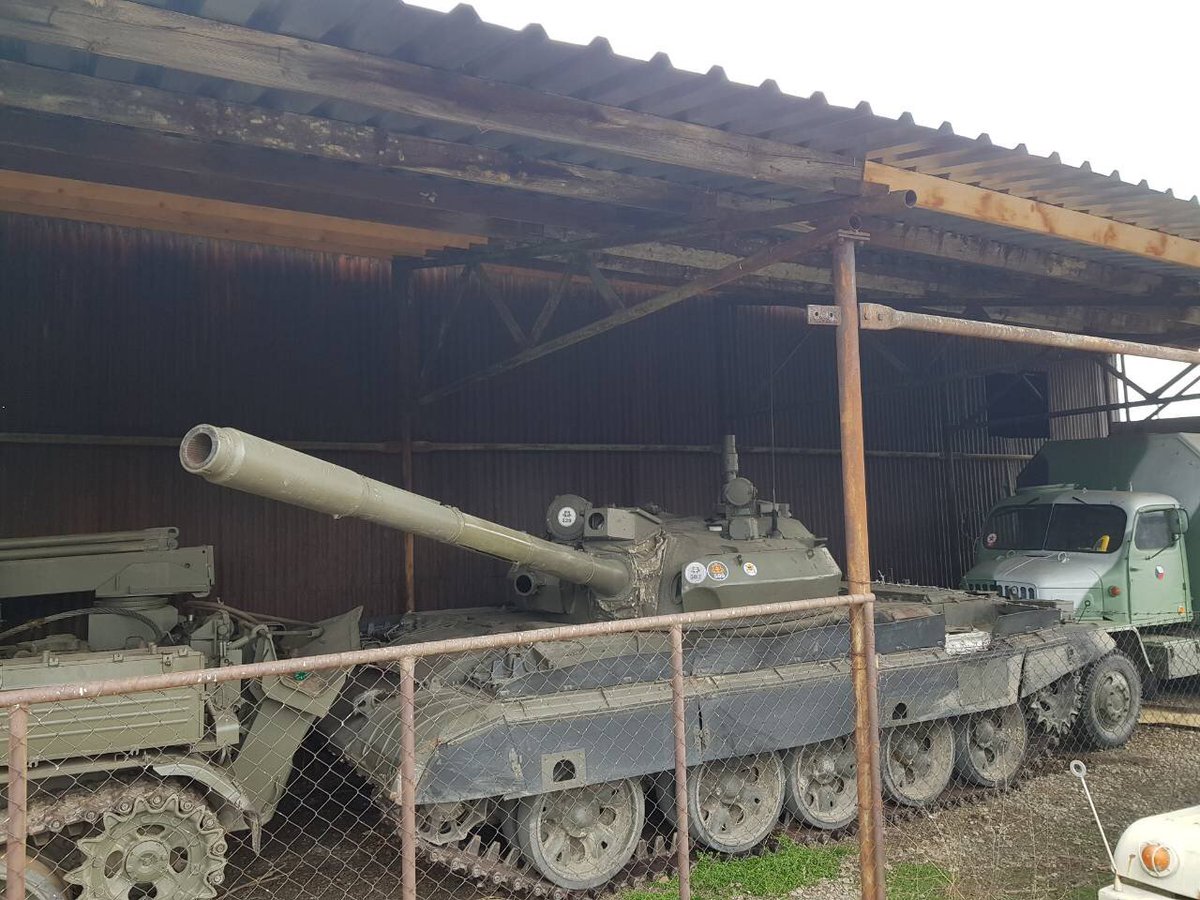
4/ There was also T-72M1 production ongoing in Slovakia, only ceasing in 1993. 🇨🇿 and 🇸🇰 army had already no use for them, they were intended for exports.
So lets go into this particular one: manufacturing stencil matches, produced in 1993 and refurbished in 🇧🇬.
So lets go into this particular one: manufacturing stencil matches, produced in 1993 and refurbished in 🇧🇬.
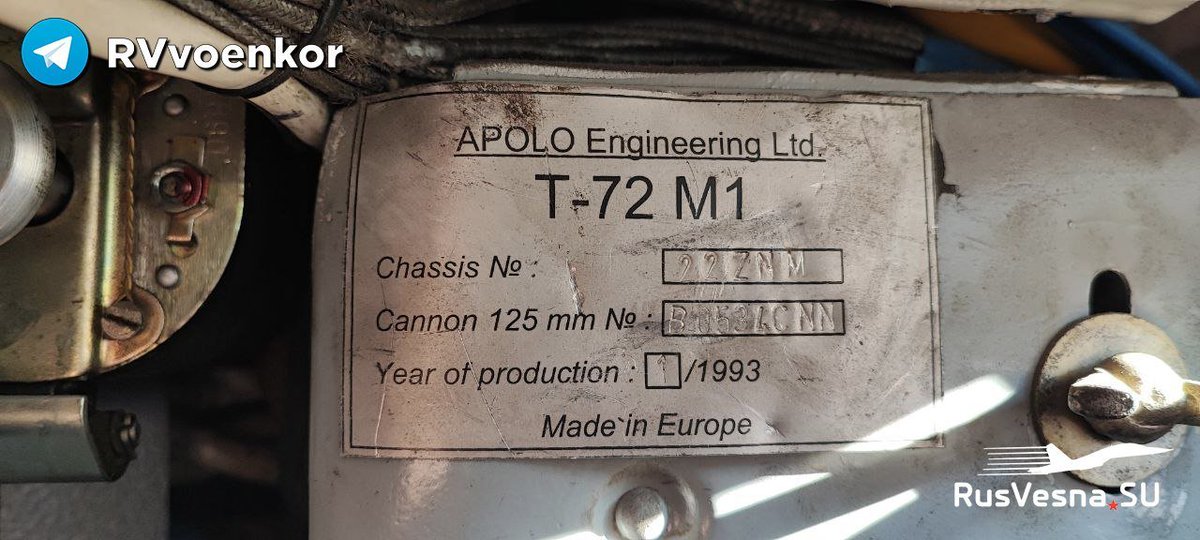
5/ Valka.cz lists among the exported ones 252 pieces of T-72M1, all newly built, delivered between 1991 and 1993 to #Syria.
In 2021 @ArmadaCR claimed its 86 remaining T-72M1s as being built between 1986-1990. So the last ones were clearly built for exports.
In 2021 @ArmadaCR claimed its 86 remaining T-72M1s as being built between 1986-1990. So the last ones were clearly built for exports.
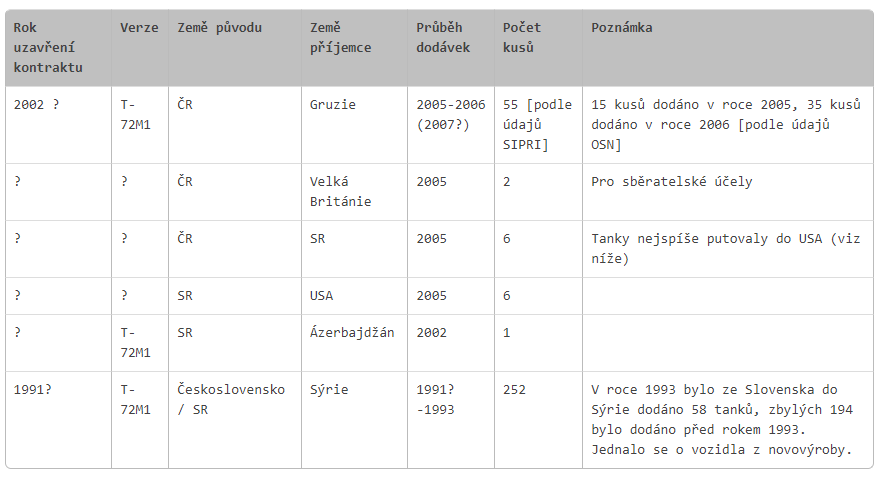
6/ Look at those stencils. They are in English and they have all the aesthetics that I remember from the late 1980s/early 1990s 🇨🇿 industry.
I can't imagine riveting it like that in the 2000s. This tank was built for exports anywhere in the world where they could pay some cash.
I can't imagine riveting it like that in the 2000s. This tank was built for exports anywhere in the world where they could pay some cash.
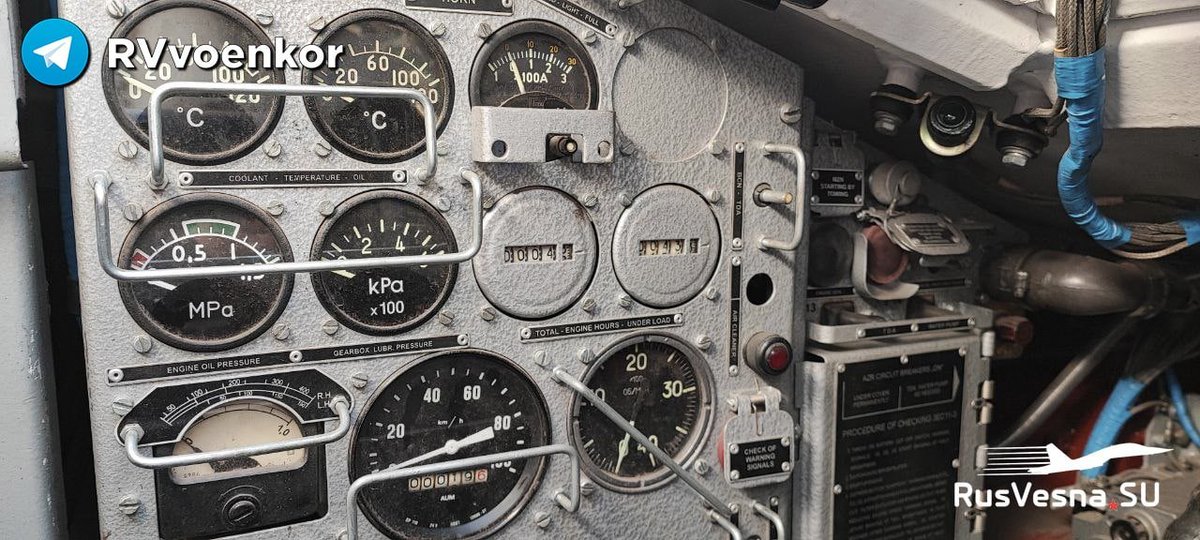
7/ So how did it end up in 🇺🇦? Clearly this was no aid, but the pretty lucrative deal for the Bulgarian arms dealer.
How did it get to 🇧🇬, we might only guess. It could be stored since the 1990s as well as imported back, probably from Syria in the 2000s. End of 🧵
How did it get to 🇧🇬, we might only guess. It could be stored since the 1990s as well as imported back, probably from Syria in the 2000s. End of 🧵
• • •
Missing some Tweet in this thread? You can try to
force a refresh