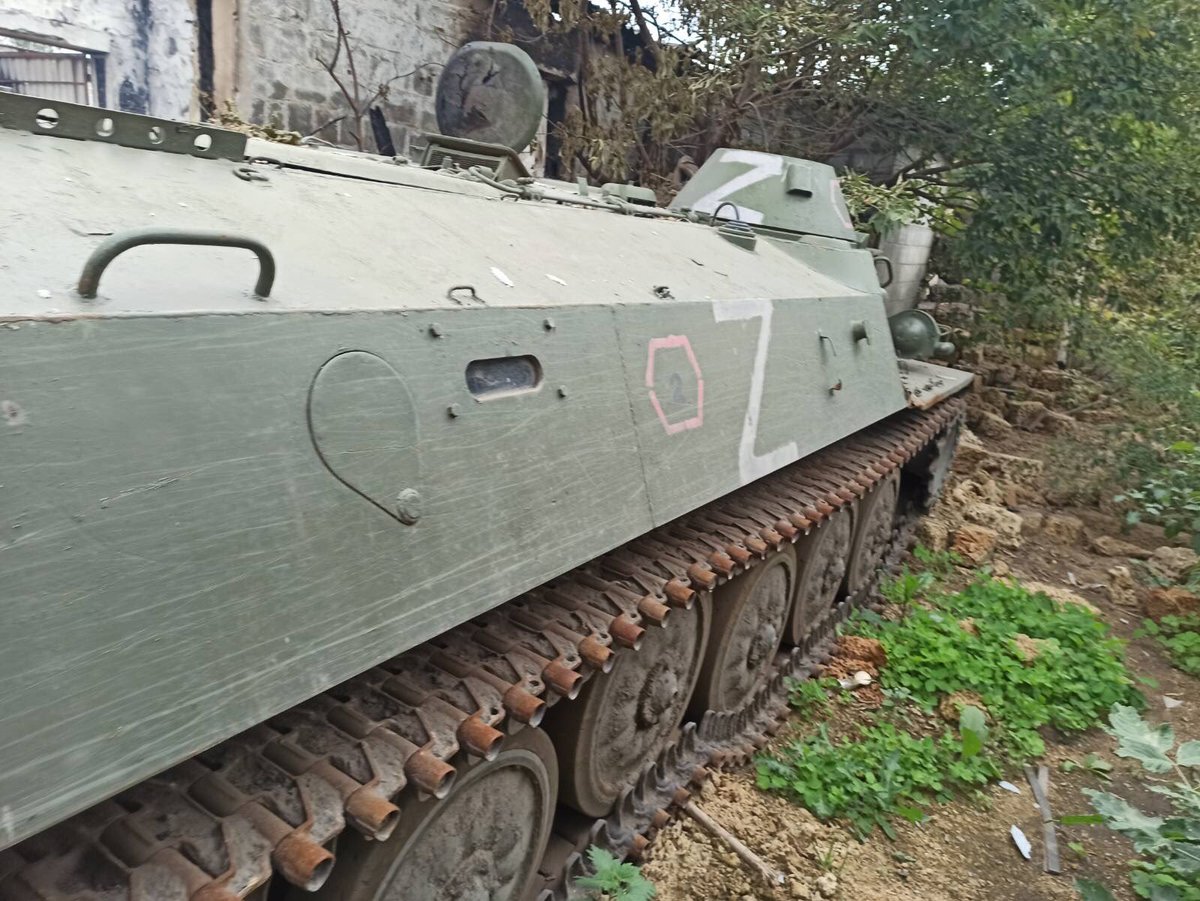
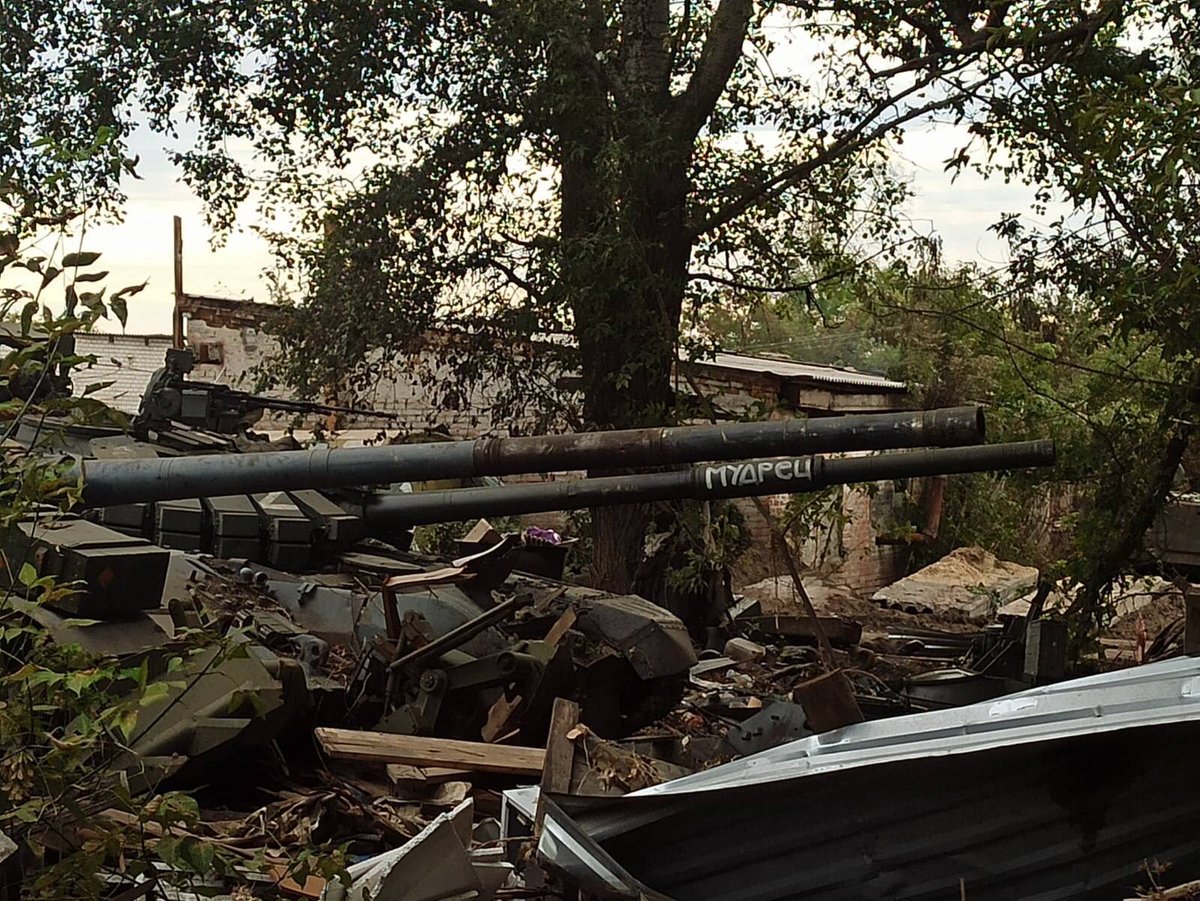
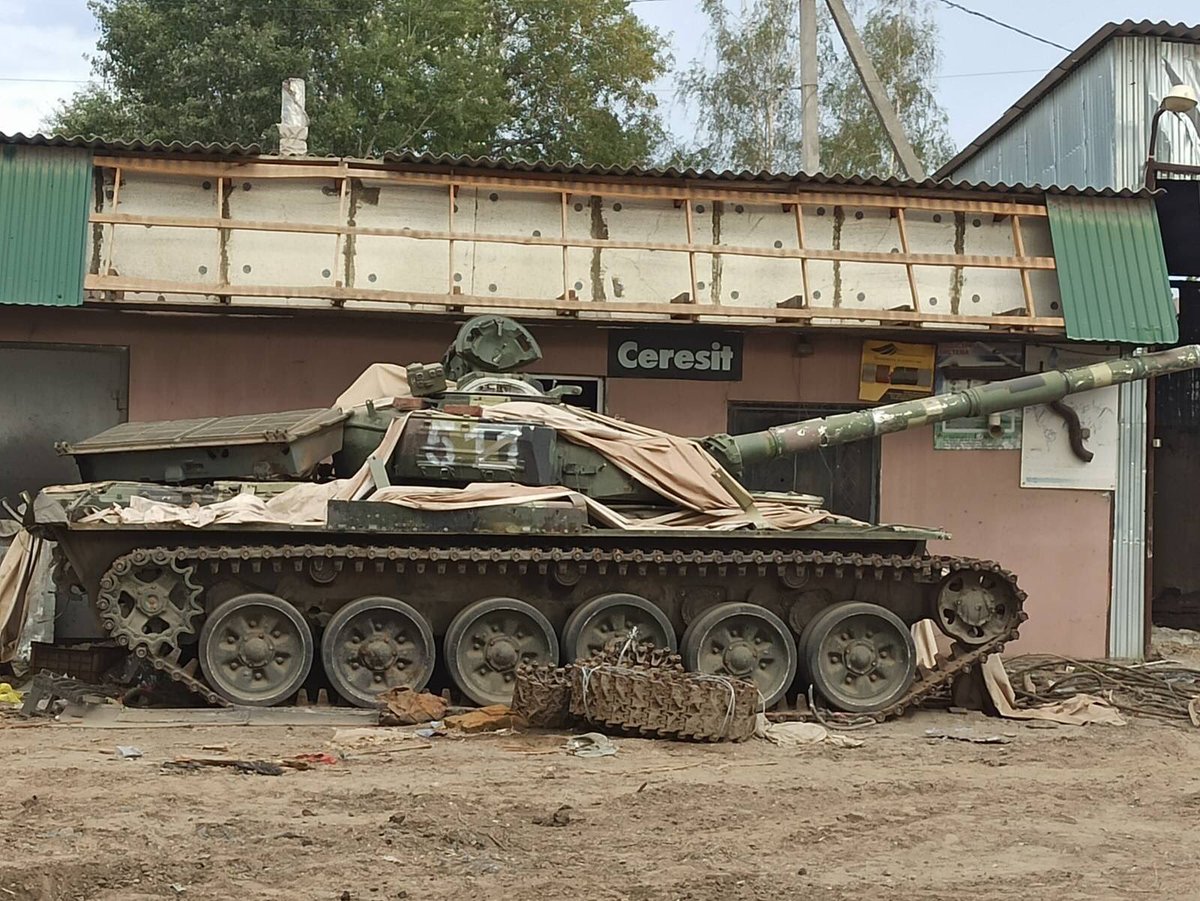
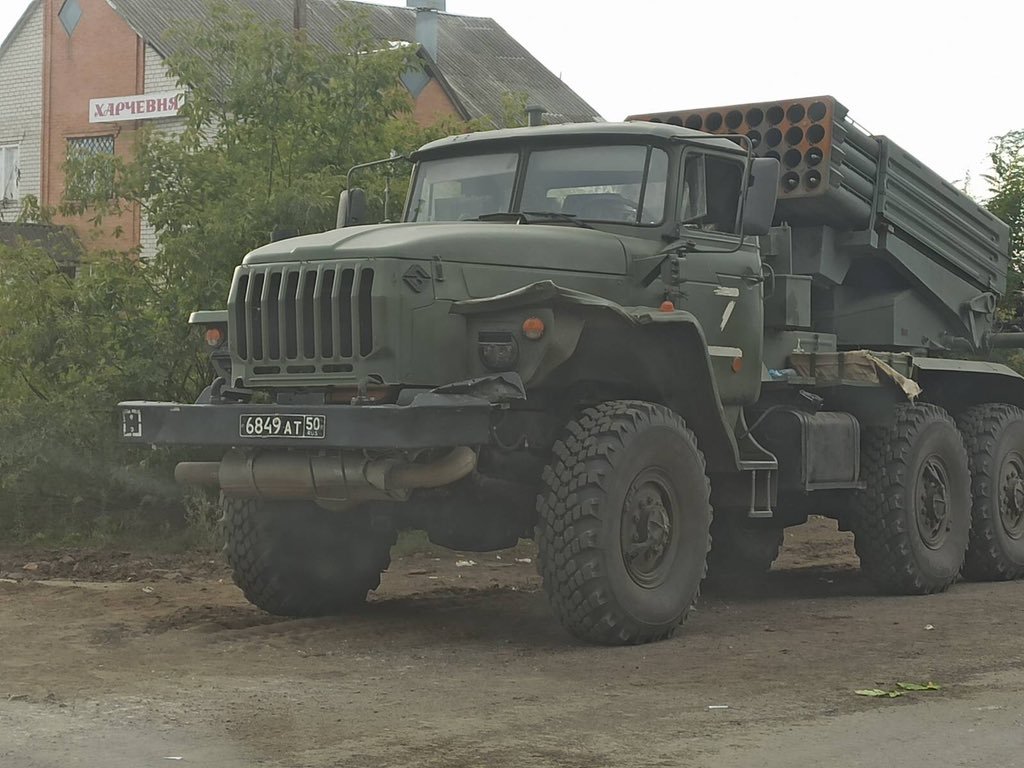
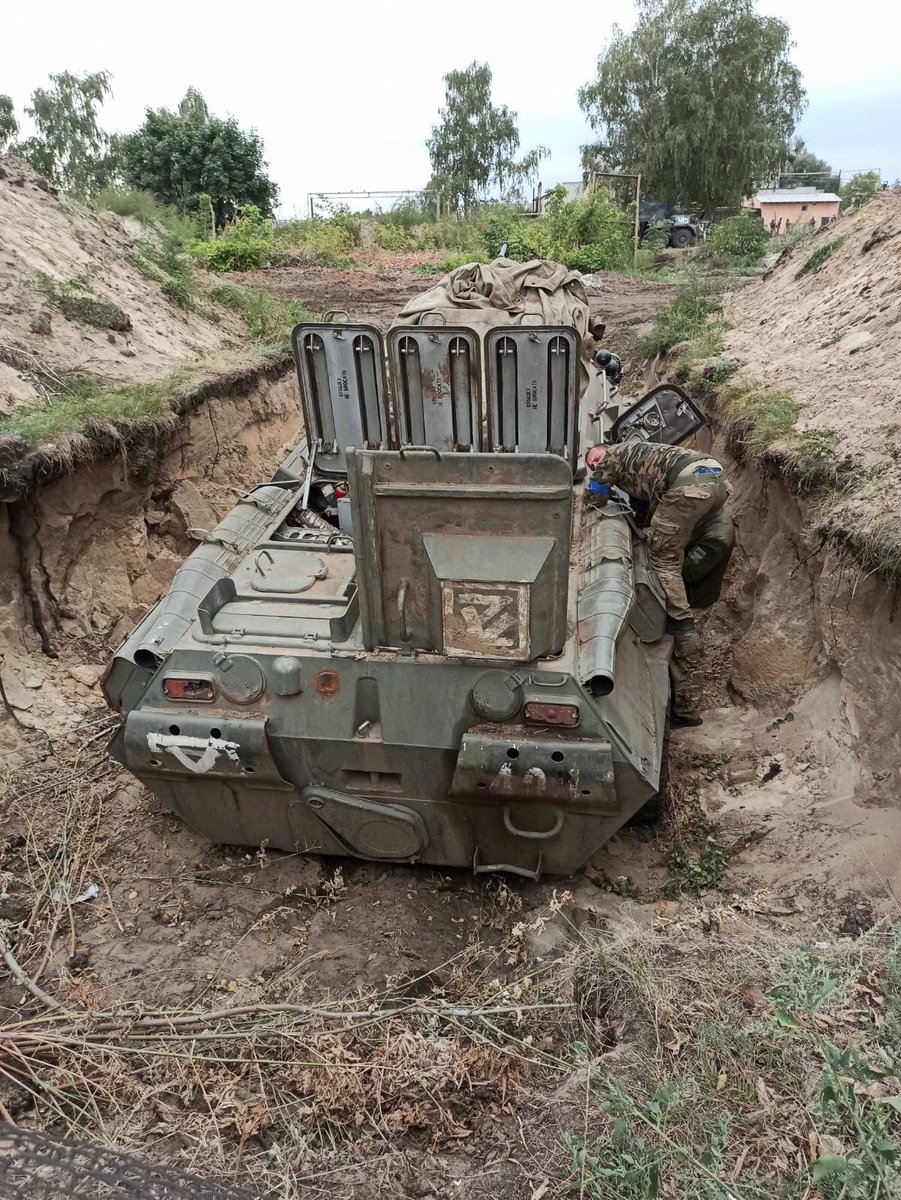
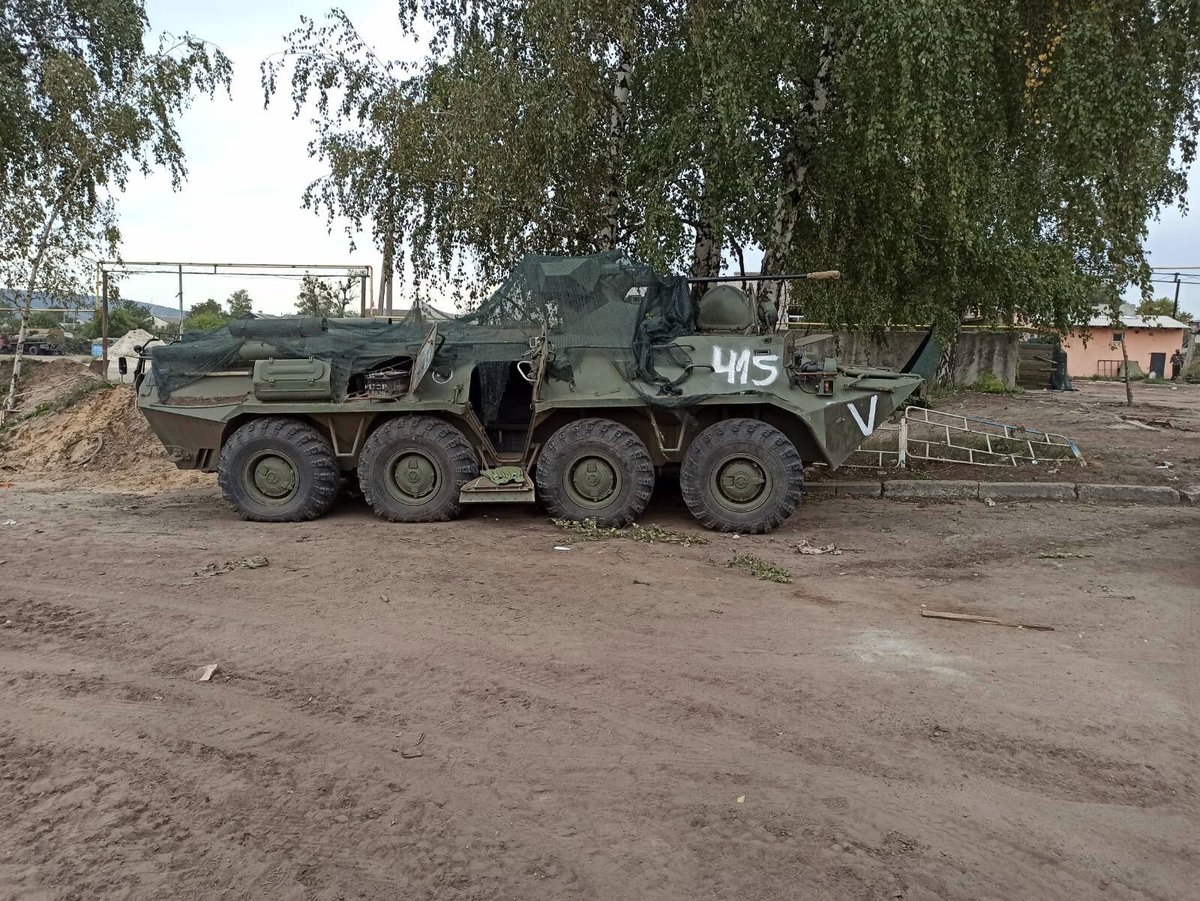
#Ukraine: Yet more massive quantities of armour and vehicle left behind by Russian forces in #Kharkiv. These images are thanks to @OSINTua, and are quite remarkable.
First, MT-LB, MT-LBVM with other MT-LB based vehicle, MT-LB with DShKM HMG, BMP-2 IFV.
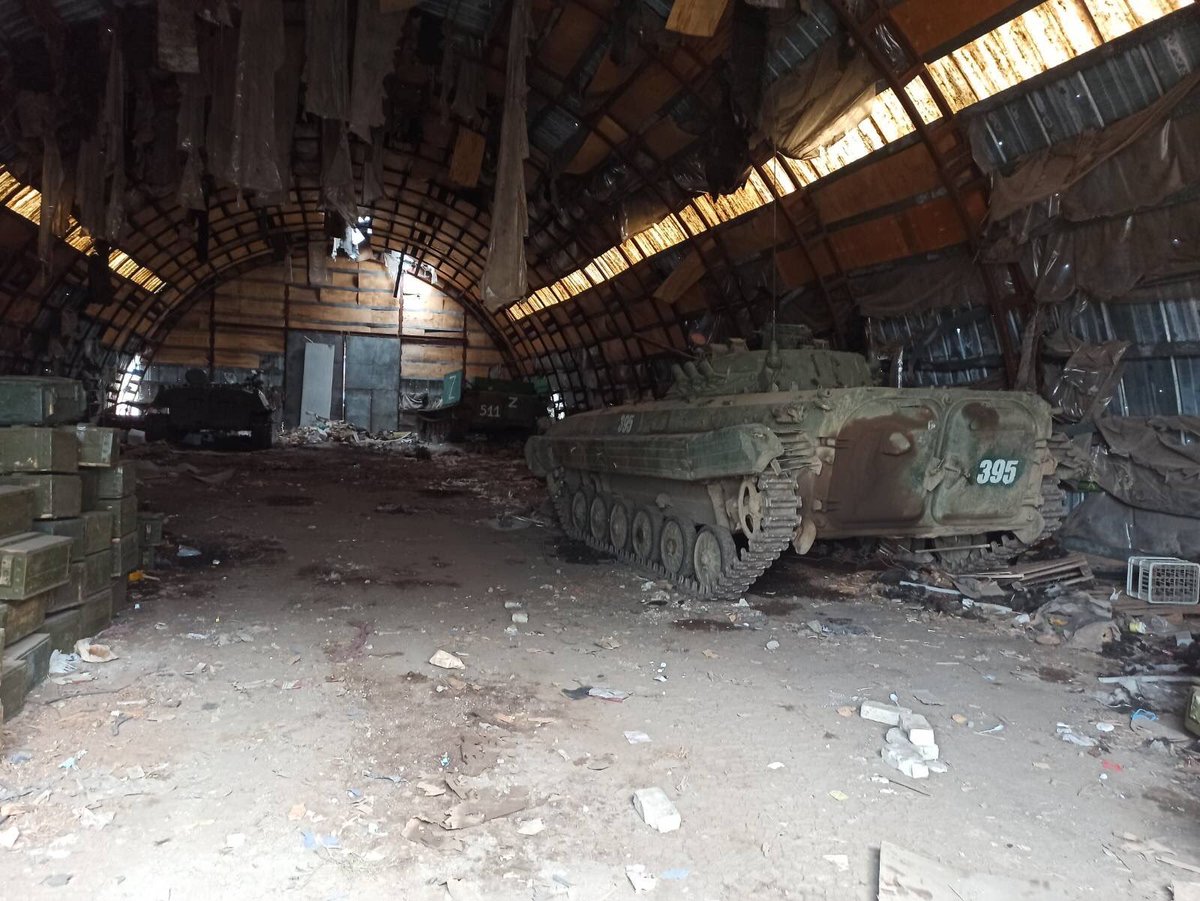
Next: Two MT-LB, a BMP-2, and a 2S6M/M1 combat vehicle from the 2K22M/M1 Tunguska anti-aircraft system that was destroyed earlier.
Three more BMP-2 IFV, and a BTR-82A also left behind.
Some heavy armour: Two T-72B variant tanks in bad condition (One recaptured from the AFU) as well as a T-72B3 Obr 2016.
Yet more: K-53949 Linza armoured field ambulance, 9K51M Tornado-G 122mm MRL, and a Ural supply truck.
This isn't over! At least 5 (Likely 6) BMP-2 IFV neatly parked, Msta-SM2 152mm self-propelled howitzer, and a logistics truck.
...and last of all, at least 4 supply trucks. Simply massive, and we are nowhere close to complete overall.
The scale is almost unprecedented. Again we thanks @OSINTua for the images.
• • •
Missing some Tweet in this thread? You can try to
force a refresh

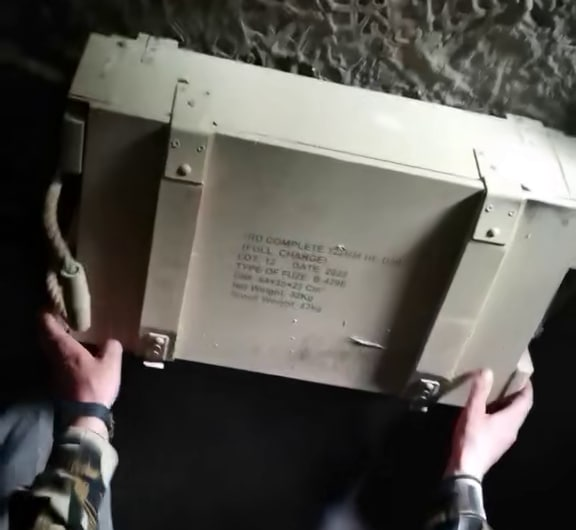
#Ukraine: We obtained another video demonstrating 🇮🇷 Iranian OF-462 122mm projectiles used by Ukrainian artillerymen - this time with much clearer markings, unequivocally identifying them as manufactured in Iran in 2022.
The way the crate is marked is absolutely identical to most Iranian materiel supplied abroad. The ammunition crate itself is also the same as crates coming from Iran. There's no way that's a coincidence.
The markings also state the fuze used - B-429E, which is an Iranian copy of the Soviet V-429E artillery fuze. The same designation is presented only in the Iranian Defense Industries Organization catalogue.
#Ukraine: It appears that the Ukrainian army started to use Iranian-made artillery ammunition - in a video from Ukraine we identified Iranian 🇮🇷 OF-462 122mm projectiles.
Though some Iranian weapons were already observed, this case is worth paying attention and we will tell why:
Though markings are barely seen we can still identify them as Iranian by some parts of the packaging list which is identical to what Iranian ammunition crates have. The crate itself is also very similar to what we usually see coming from Iran - a tan wooden box with black text.
Why is this special, since Iranian mortars were already spotted in Ukraine?
A whole bunch of experts in tanks gathered in the comments, who only today found out that Soviet tanks can be used for indirect fire, but now they confidently claim that we are spreading propaganda, lying, and so on.
We recommend at least reading up on this topic before opening your mouth and speaking so confidently.
Standard firing tables for 3VOF36 HE-FRAG rounds include ranges of up to 12100 meters - an elevation angle of ~22° is required to fire at this distance. And ~14° for 10000 meters.
It is possible to fire even further but the chances of hitting the target are dramatically reduced.
#Ukraine: Modern RPG-32 Nashshab rocket launchers appeared in Ukraine. This is a joint Russian-Jordanian development - launchers are assembled in Jordan since 2013 by JADARA using parts kits coming from Russia (the level of localization is quite low- up to 80% parts are Russian).
To remove the assumption that they could be captured from the Russian army after they were received from a Russian manufacturer (like the Skif ATGMs made for export but given to the Ukrainian army instead), let's take a look at these TBG-32V thermobaric rockets used with RPG-32.
These two units are already in Ukraine and as most of the parts are coming from Russia on the left we can see factory markings in Russian. If these were from domestic stocks, that would be all we see.
However to the right there are also markings in English.
After spending a whole day on this we managed to establish the most likely path of these Japanese mortar bombs to Ukraine: as we said initially, they were in fact provided by a third country - in this case it was the United States of America.
Japan is known for its strict lethal weapons export policy - but it was not always so.
In 1952 Japan was again allowed to manufacture weapons after WW2 and in the same year the US ordered a huge batch of 265,000 60mm mortar bombs from the Takakura Plant (Daido Steel).
These mortars bombs were ordered for the US and allied forces deployed in Korea and it seems after the end of the conflict at least a part of them were brought back to America.