

I was on a study trip in #Greece last week, learning among other things about a human rights success story: how the violent, neo-Nazi Golden Dawn group was toppled.
🧵
🧵

I’d read about Golden Dawn before, so I was aware of how they’d emerged to capitalize on rising hatred in Greece, exacerbated by intolerant political rhetoric and hostile government policies scapegoating unpopular and powerless groups, like migrants.
hrw.org/news/2014/06/0…
hrw.org/news/2014/06/0…
And I knew about their winning seats in parliament and the trial that sunk them in a historic decision in 2020.
hrw.org/news/2020/10/0…
hrw.org/news/2020/10/0…
But to actually sit face-to-face with lawyers involved in the case and listen to the details and legal strategy – well, that was truly an honor.
The study trip was not simply a history lesson, however.
Organized by @SCI_Belfast, the meetings then progressed to discussions among the visitors, activists from 14 different countries around the world.
socialchangeinitiative.com
Organized by @SCI_Belfast, the meetings then progressed to discussions among the visitors, activists from 14 different countries around the world.
socialchangeinitiative.com
Perhaps the most surprising thing was how Greece’s experience and its ongoing struggle with othering, exclusion, and extremism were so relatable to so many different contexts.
From Europe, to Asia, to Africa, to the Americas, the connections were obvious – the participants could easily make connections between the experience in Greece with their situations back home.
Othering – the dehumanization that starts with words but too often ends in atrocities against the “other” – is sadly universal.
Whether it’s a religious group, an ethnic group, or something else, it’s always a group that some people are blaming for society’s problems, usually with politicians at the forefront with the intention of furthering their own power.
The language always takes on the same character.
THOSE people, THEY are not like US.
THEY want to attack US, so WE have to attack THEM first and destroy THEM.
THEY are coming here to take OUR jobs.
THEY want to use OUR bathrooms.
THOSE people, THEY are not like US.
THEY want to attack US, so WE have to attack THEM first and destroy THEM.
THEY are coming here to take OUR jobs.
THEY want to use OUR bathrooms.
It’s the cheapest political trick, but it’s so often effective.
Instill fear in people, and then offer yourself as the savior to end that fear.
WE blame THEM, but your votes and the power all go to ME. 🤔
Instill fear in people, and then offer yourself as the savior to end that fear.
WE blame THEM, but your votes and the power all go to ME. 🤔
Fighting against that trend is a constant challenge for human rights defenders. It’s tough to counter the attraction of blaming someone else for your problems, and a cheap route to more political power.
For Golden Dawn, it was foreigners, refugees and migrants, and back in 2010-2013, when Golden Dawn flourished, Greece saw an epidemic of violence.
hrw.org/news/2012/01/2…
hrw.org/news/2012/01/2…
HRW’s 2012 report, “Hate on the Streets,” led by my expert colleagues @Eva_Cosse and @sunderland_jude, was the first publication of its kind to document it.
hrw.org/report/2012/07…
hrw.org/report/2012/07…
In that report, we detailed dozens of attacks on foreigners, who had been beaten, kicked, and chased down the streets of Athens by gangs of Greeks linked to Golden Dawn.
Victims included migrants and asylum seekers, pregnant women, and children.
Many attacks went unpunished, with police doing little to intervene and courts to hold perpetrators to account.
Many attacks went unpunished, with police doing little to intervene and courts to hold perpetrators to account.
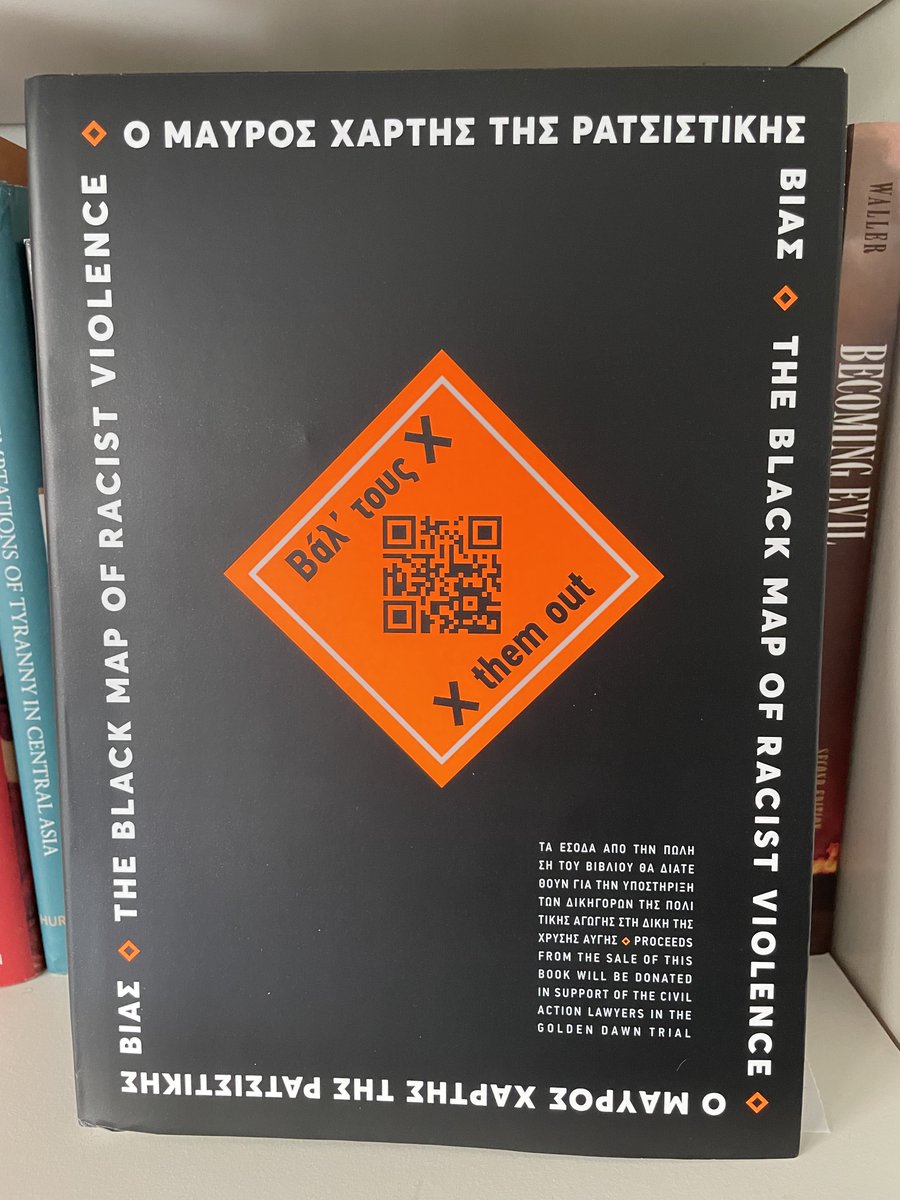
“The Black Map of Racist Violence,” an amazing QR-code-driven project online and book, offers even more horrific examples.
valtousx.gr/en/
valtousx.gr/en/
In confronting Golden Dawn, many focused on their ideology, especially after the group won seats on parliament.
They were neo-Nazis, fascists…
They were neo-Nazis, fascists…
What brought them down, however, was not those labels, but a court judgement about specific violent acts and the organization of those acts.
The court found that, within the political group, there was a criminal, military-style organization operating.
They also found that members of the group orchestrated or colluded in the 2013 murder of 34-year-old antifascist activist and rapper Pavlos Fyssas...
hrw.org/news/2013/09/1…
hrw.org/news/2013/09/1…
...the 2013 murder of 27-year-old Pakistani national Shehzad Luqman, and numerous brutal attacks against migrants, trade unionists, and human rights defenders.
The court’s decision was big news, maybe one of the biggest wins for democracy and human rights in Europe in recent years.
hrw.org/news/2021/01/2…
hrw.org/news/2021/01/2…
Of course, a pending appeal means the story is not over.
theguardian.com/world/2022/jun…
theguardian.com/world/2022/jun…
What’s more, Greece now seems to be heading in an authoritarian direction, almost on the Hungary-Poland path.
This is especially noticeable when it comes to the crackdown on civil society groups: hrw.org/news/2022/06/2…
This is especially noticeable when it comes to the crackdown on civil society groups: hrw.org/news/2022/06/2…
That the EU acquiesces in the Greek government’s violent crimes against migrants on the border – both inflicting harm directly and reinforcing a scapegoatable “other” – bodes ill.
hrw.org/news/2022/10/1…
hrw.org/news/2022/10/1…
While I was glad to have had the incredible opportunity of learning more about Greece from experts last week, unfortunately, I have a feeling I’ll be talking about Greece a lot more in the coming months and years.
(story from my newsletter today: hrw.org/the-day-in-hum…)
(story from my newsletter today: hrw.org/the-day-in-hum…)
• • •
Missing some Tweet in this thread? You can try to
force a refresh






