Read on Twitter
✅Task lists that can complete themselves
🧠Businesses that can start themselves
💻Apps that can code themselves
The undisputed Big Thing™ in AI this week was AutoGPT.
It is mind blowing, for sure. But is it also dangerous? Let's talk about it. 🧵
🧠Businesses that can start themselves
💻Apps that can code themselves
The undisputed Big Thing™ in AI this week was AutoGPT.
It is mind blowing, for sure. But is it also dangerous? Let's talk about it. 🧵

2/x So what are we talking about?
Last week @SigGravitas introduced AutoGPT, which "chains together LLM "thoughts", to autonomously achieve whatever goal you set."
It exploded.
Last week @SigGravitas introduced AutoGPT, which "chains together LLM "thoughts", to autonomously achieve whatever goal you set."
It exploded.
https://twitter.com/SigGravitas/status/1646117442031349761
3/x A few days before that @yoheinakajima shared BabyAGI
Akira Sakamoto described it: "Starting from an initial task, Babyagi utilizes GPT-4 to generate solutions and new tasks, storing the solutions... for further retrieval."
https://twitter.com/yoheinakajima/status/1642881722495954945
Akira Sakamoto described it: "Starting from an initial task, Babyagi utilizes GPT-4 to generate solutions and new tasks, storing the solutions... for further retrieval."
4/x Effectively, both enable people to build AI Agents who can figure out how to accomplish goals.
These systems:
-Can search the internet
-Have short-term and long-term memory
-Can spawn other AIs
I did a primer video about it:
These systems:
-Can search the internet
-Have short-term and long-term memory
-Can spawn other AIs
I did a primer video about it:
5/x Part of what made this week so insane was that it wasn't just some theoretical thing. Immediately people were building on it.
I did another video yesterday about 5 live projects including starting a business, coding apps and more
I did another video yesterday about 5 live projects including starting a business, coding apps and more
6/x Even since I recorded that video YESTERDAY more projects have come online, including one called "GODMODE" that allows anyone to deploy AI agents to complete tasks via a web interface for AutoGPT/BabyAGI
https://twitter.com/_Lonis_/status/1646641412182536196
7/x And ANOTHER that I didn't have a chance to cover - an "Intelligent Alter Ego"
https://twitter.com/rowancheung/status/1646900121659908098
8/x There is SO much to be blown away by with these tools and implementations.
I'd bed there are a fair few folks who are getting their first real glimpse of a world of incredible abundance because of how much mundane work AI can take off our plates.
It's breathtaking.
I'd bed there are a fair few folks who are getting their first real glimpse of a world of incredible abundance because of how much mundane work AI can take off our plates.
It's breathtaking.
9/x But as is so often the great dichotomy of AI, the introduction of BabyAGI and AutoGPT also bring up enormous questions of risk. These are questions that are, in the frenzy of development and the frenzy of breathless coverage -- being (understandably?) left behind.
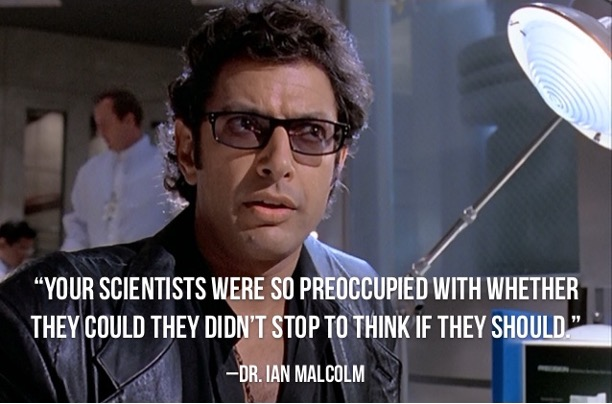
10/x @nonmayorpete suggests that this might be a step too-far, too-fast when it comes to public opinion.
https://twitter.com/nonmayorpete/status/1646194828106137603
@nonmayorpete 11/x @IamSuperMassive argues that we're wading into territory that was previously considered dangerous without really considering it, largely for the sake of showing that we *can*
https://twitter.com/IamSuperMassive/status/1646770585916121088
12/x Now, there WERE some discussions of AI slowdowns. OpenAI's Sam Altman for example said they're not training GPT-5, but are trying to address safety issues in GPT-4.
https://twitter.com/SmokeAwayyy/status/1646670920214536193
13/x Still, some others like @EpsilonTheory think that we're missing the risks that are already right here in front of us.
I haven't seen Ben comment on AutoGTP implementations, but it seems like it would fit with the concerns he expresses in this tweet.
I haven't seen Ben comment on AutoGTP implementations, but it seems like it would fit with the concerns he expresses in this tweet.
https://twitter.com/EpsilonTheory/status/1646865521780961283
14/x This meme that I pulled the opening picture from pretty perfectly captures the vibe. So much remarkable potential. Not even just potential--real things happening right now. But maybe one more step down a path that we just don't know where it leads.
https://twitter.com/AISafetyMemes/status/1646280194385125376
• • •
Missing some Tweet in this thread? You can try to
force a refresh