Read on Twitter
1/ @ph0rt0n compares the financial, network, and ecosystem analyses of 14 Layer-1s (L1) in Q1'23.
Featured L1s include @avax, @BNBCHAIN, @Cardano, @ethereum, @harmonyprotocol, @hedera, @NEARProtocol, @Polkadot, @0xPolygon, @solana, @Stacks, @tezos, @trondao, and @WAX_io. 👇🧵
Featured L1s include @avax, @BNBCHAIN, @Cardano, @ethereum, @harmonyprotocol, @hedera, @NEARProtocol, @Polkadot, @0xPolygon, @solana, @Stacks, @tezos, @trondao, and @WAX_io. 👇🧵

2/ The crypto market rebounded in Q1'23, with the market cap of featured Layer-1 (L1) smart-contract platforms increasing by an average of 83% QoQ, but still down 58% YoY.
@ethereum had the highest market cap, over 2x the other networks combined.
@ethereum had the highest market cap, over 2x the other networks combined.

2/ @ethereum generated the highest revenue in Q1, driven by its high usage and gas fees. Its revenue was $457M, almost 2.8x the combined revenue of all other featured L1s.
@hedera had the most significant revenue growth, with a 489% increase QoQ, driven by its Consensus Service.
@hedera had the most significant revenue growth, with a 489% increase QoQ, driven by its Consensus Service.

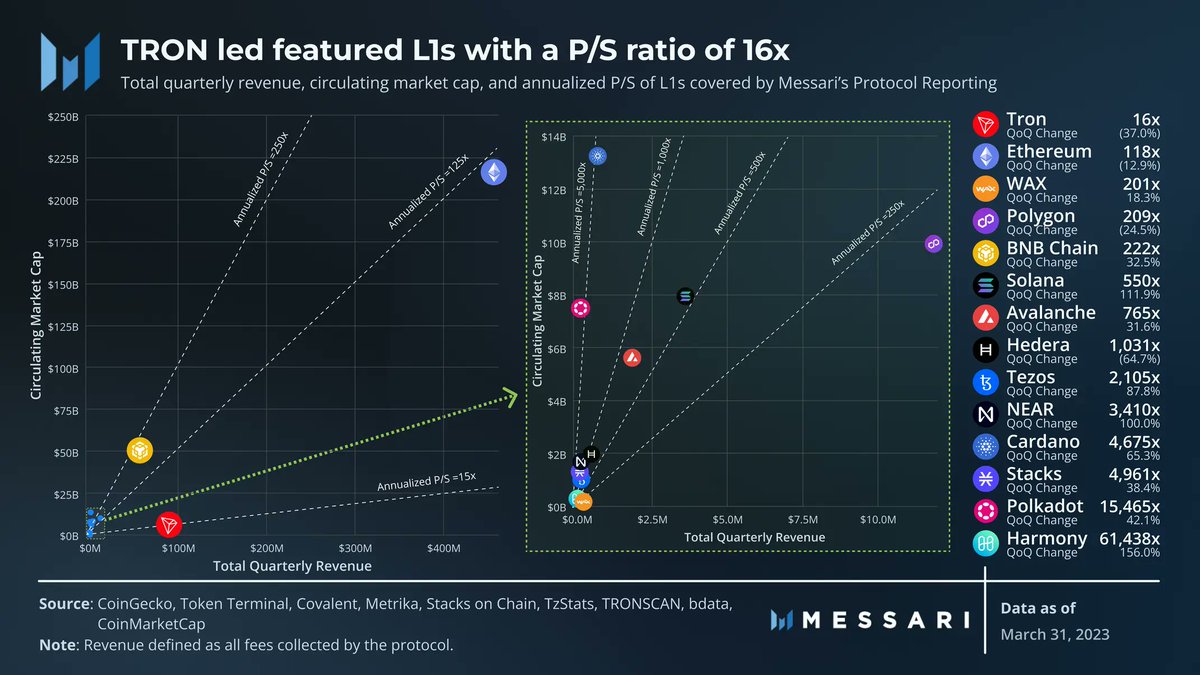
3/ @trondao had the highest P/S ratio at 16x, followed by Ethereum at 188x.
@WAX_io, a network outside the top 20 in market cap, stood out with a high P/S ratio due to revenue generated from a tax on #NFT marketplaces.
@WAX_io, a network outside the top 20 in market cap, stood out with a high P/S ratio due to revenue generated from a tax on #NFT marketplaces.
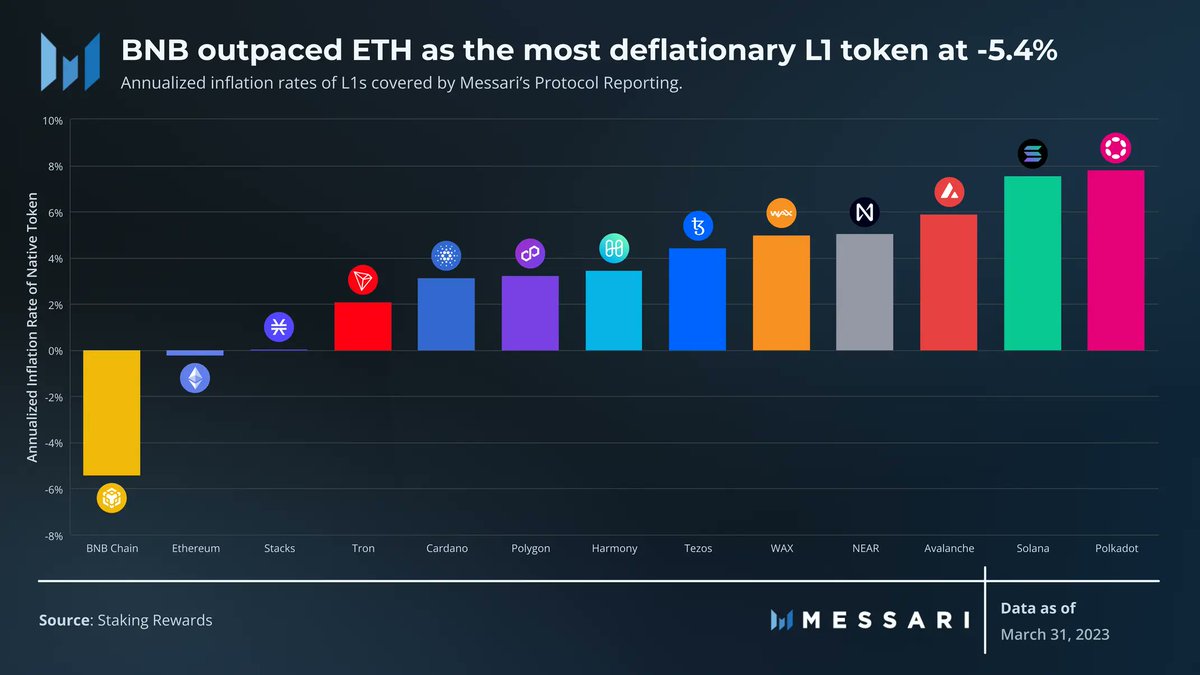
4/ @BNBCHAIN and @ethereum were the only deflationary tokens in Q1'23, with -5.4% and -0.2% inflation rates, respectively, due to burning a portion of their transaction fees.
Other networks had varying inflation rates from PoS reward issuance.
Other networks had varying inflation rates from PoS reward issuance.
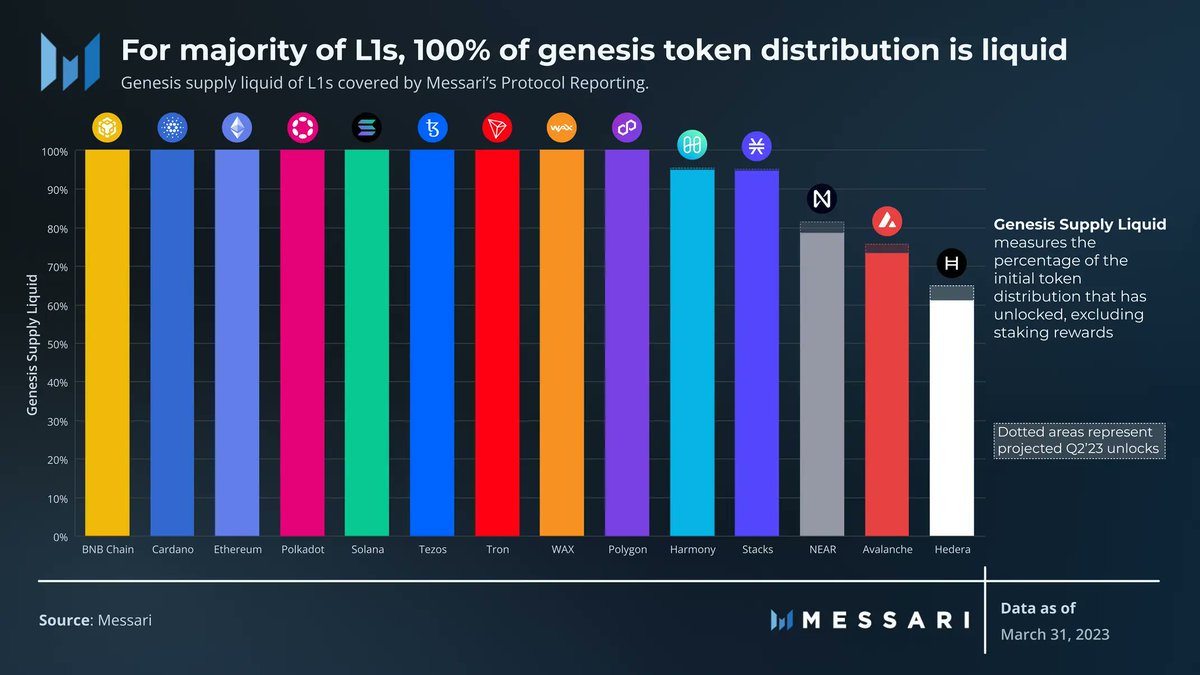
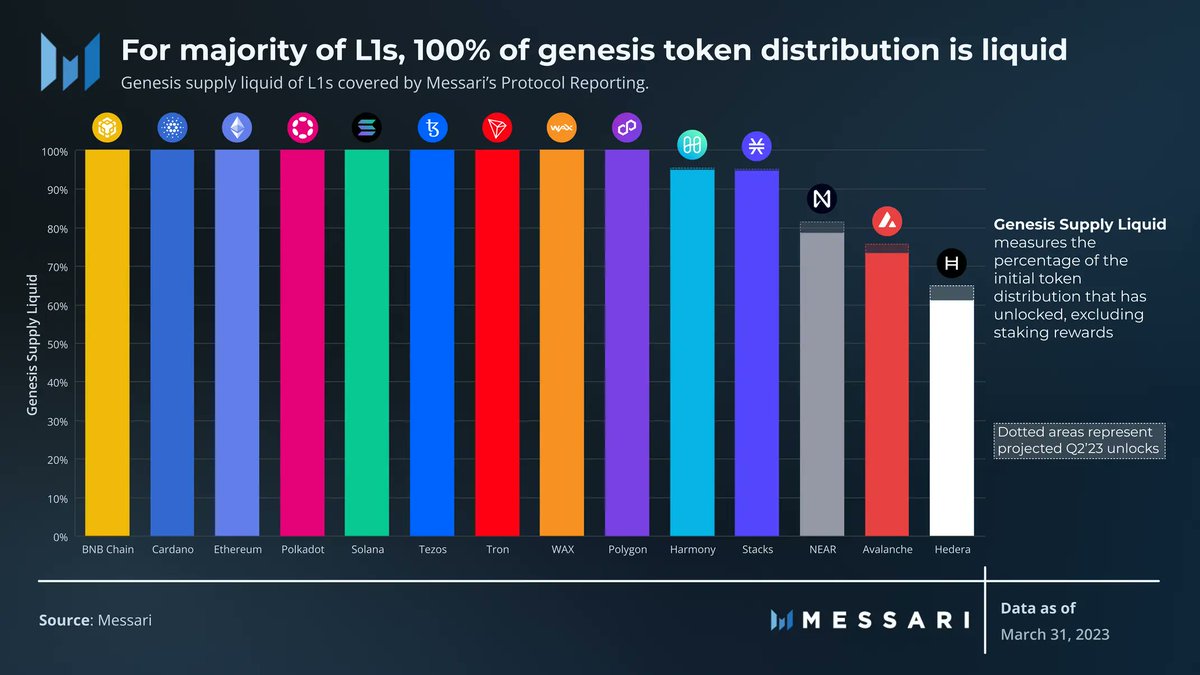
5/ Most featured networks' tokens have fully vested, except for @avax, @hedera, @NEARProtocol, and @harmonyprotocol.
Each network has different percentages of unlocked genesis supply, excluding staking rewards.
Each network has different percentages of unlocked genesis supply, excluding staking rewards.
6/ Transaction activity for featured networks did not grow significantly in Q1'23, with a slight decrease in daily transactions on average.
@Stacks was an exception with a 34% increase.
@avax's C-Chain activity was down due to the launch of subnets.
@Stacks was an exception with a 34% increase.
@avax's C-Chain activity was down due to the launch of subnets.

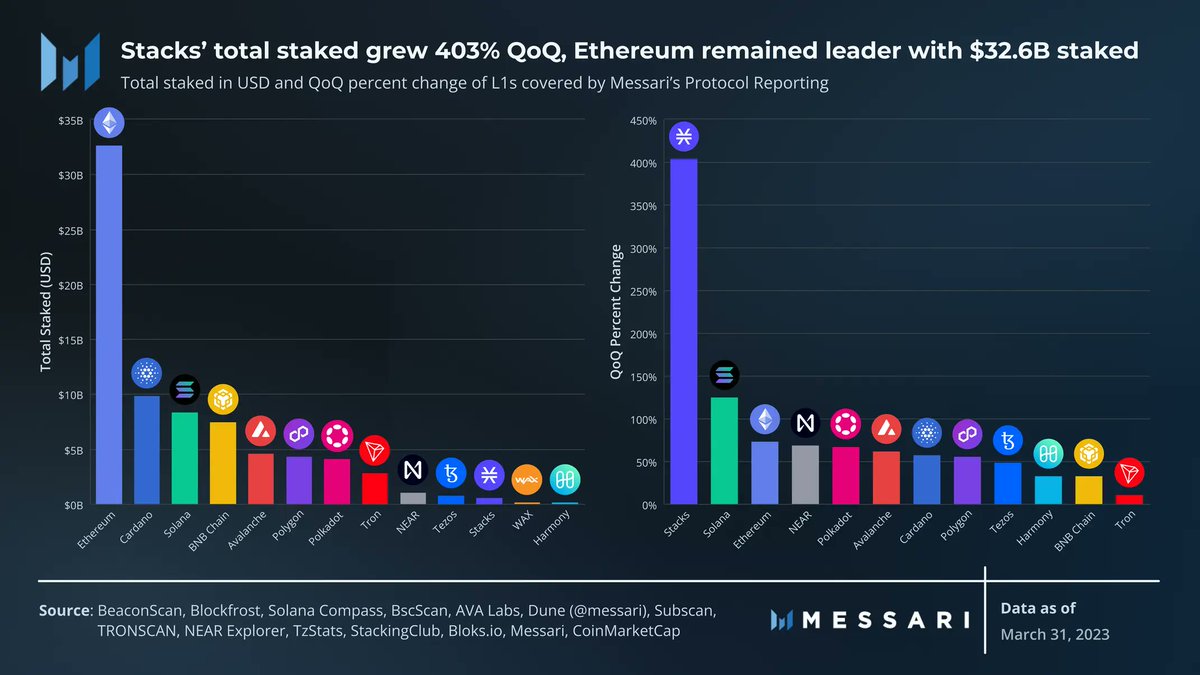
7/ Validator counts and staked tokens increased for all networks in Q1'23.
@ethereum had the largest security budget with $32.6B in ETH staked.
Nakamoto coefficient measures the number of entities that could cause a network halt, and ETH's figure is typically cited as 1 or 2.
@ethereum had the largest security budget with $32.6B in ETH staked.
Nakamoto coefficient measures the number of entities that could cause a network halt, and ETH's figure is typically cited as 1 or 2.
8/ TVL in DeFi increased during the market rebound, with @ethereum, @BNBCHAIN, and @trondao being the dominant players.
@Stacks and @Cardano had significant TVL growth.
@ethereum had a diverse DeFi ecosystem, while other networks had a more concentrated distribution.
@Stacks and @Cardano had significant TVL growth.
@ethereum had a diverse DeFi ecosystem, while other networks had a more concentrated distribution.
9/ Check out @ph0rt0n's full report for additional analysis on various topics, such as gas fees, usage metrics, staking yield, and ecosystem developments across these featured L1s.
messari.io/article/state-…
messari.io/article/state-…
Subscribe to the Unqualified Opinions newsletter for world-class research from the Messari analysts, straight to your inbox!
messari.io/newsletter?utm…
messari.io/newsletter?utm…
• • •
Missing some Tweet in this thread? You can try to
force a refresh