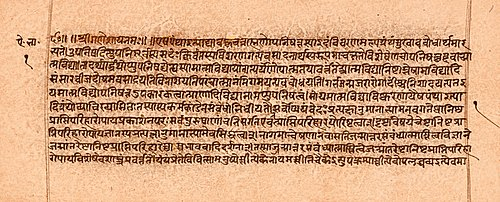
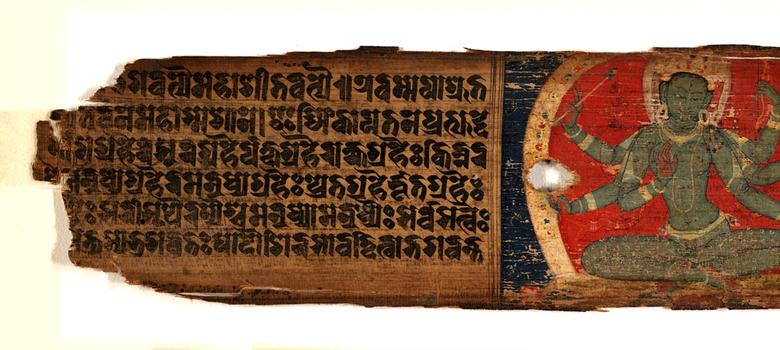
2/ Unearthed in Assam's Golaghat district, the Nagajari-Khanikargaon #Sanskrit inscription is a 5th-century land grant. The document grants land between "Dibrumukkhada" and a Banyan tree - now that's ancient GPS #Archaeology.
@pranabjsarmahg1 3/ Another Assam's oldest epigraphic source: the Umachal rock inscription from the 5th century. Found on the slopes of Nilachal Hills, it commemorates the construction of a cave for Lord Balabhadra by Maharajadhiraja Sri Surendra Varman himself.
4/ Barganga Rock Inscription: 6th Century #Sanskrit carved in Brahmi.
Found on the banks of Barganga rivulet near Dakmaka, Nowgong district #Assam.
5/ The Nidhanpur copperplate inscription, authored by 7th-century Kamarupa king Bhaskaravarman, offers a detailed account of land grants given to Brahmins.
The inscription records land grants made to more than two hundred vaidika brahmanas belonging to 56 gotras
โข CC BY-SA 3.0
โข โข โข
Missing some Tweet in this thread? You can try to
force a refresh

๐งต๐ฐ What kind of fort gets called "minor" at 2,700 feet with multi-tiered defences visible for miles?
The kind that didn't fit colonial narratives. Rayadurgam Fort, Anantapur โ massive, sophisticated, erased.
We're still using their textbooks. The stones outlasted empires. The lie outlasted the stones.
#GemsofASI MNI#20
1/15
๐ Built by ๐๐ฎ๐ง๐ ๐ ๐๐๐ฒ๐๐ค๐ (1520sโ30s), this was a Vijayanagara frontier fort controlling movement between AP & Karnataka. Colonial historians later downgraded it as "minor". Minor? A 2,700-ft citadel controlling two regions. But the empire narrative couldn't accommodate decentralised power. So it became "minor".
2/15
โฐ๏ธ At ~๐,๐๐๐ ๐๐ญ, Rayadurgam was built for surveillance: long-range visibility, multi-tiered access paths, natural cliffs turned to defence. But British-era archaeology catalogued it under 'regional ruins'. Right โ altitude high, curiosity low. Classic imperial scholarship.
1๏ธโฃ The Taj Mahal was built using measurements from 3300 BCE.
Same unit. Same system. 5000 years apart.
Your history textbooks never mentioned this. Why? ๐งต
@narendramodi @PMOIndia @mygovindia @sanjeevsanyal @IndicMeenakshi 2๏ธโฃ The Harappan civilization used the angulaโa finger-width of exactly 1.763 cm.
That same unit designed the Taj Mahal in 1648 CE.
5000 years. Zero breaks. Uninterrupted architectural DNA. ๐๏ธ
3๏ธโฃ Harappan bricks: 28ร14ร7 cm. Perfect 4:2:1 ratio.
Or in their terms: 16ร8ร4 angulas.
This wasn't art. It was engineering. Strength through geometry across every cityโMohenjo-daro, Harappa, Lothal.
Everyone cites these percentages. No one asks ๐ฐ๐ก๐ฒ vehicles contribute 41%. No one asks ๐ฐ๐ก๐ฒ road dust is 21.5%. No one asks ๐ฐ๐ก๐ฒ construction spikes PM by 8%.
The real question isn't WHAT pollutes.
It's WHY Delhi's vehicles pollute 3โ4ร more than vehicles in Mumbai, Bangalore, or Singapore.
WHY does road dust account for 21.5% here but <5% in Tokyo?
WHY does construction create such massive spikes?
The answer: ๐ฌ๐ฒ๐ฌ๐ญ๐๐ฆ๐ฌ ๐๐๐ข๐ฅ๐ฎ๐ซ๐.
This thread dissects the failure pointsโand presents engineered fixes with ROI under 12 months.
Delhi has ๐,๐๐๐ ๐๐ซ๐ข๐ญ๐ข๐๐๐ฅ ๐ข๐ง๐ญ๐๐ซ๐ฌ๐๐๐ญ๐ข๐จ๐ง๐ฌ.
Blocked junctions slash throughput by ๐๐โ๐๐% (CPWD traffic flow model).
Every car stuck at a choked crossing = idling engine.
Idle emissions at intersections = ๐๐โ๐๐% ๐จ๐ ๐ฏ๐๐ก๐ข๐๐ฎ๐ฅ๐๐ซ ๐๐๐.๐.
Intervention:
- AI-enabled camera network with ANPR
- Auto-challan โน2,000 base penalty
- Tow enforcement on 500+ red-flagged intersections
1/9 Welcome to Jalore Fort, Rajasthan: the โGolden Fortโ that literally glows at sunset yet remains invisible to 99.9 % of Indian tourists. Built to laugh at invaders, now dying of Instagram indifference. Classic. ๐๏ธโจ
#SonarKila #GemsofASI
State protected monument number S-RJ-223,224
@UNESCO @narendramodi @PMOIndia @gssjodhpur @ASIGoI @MinOfCultureGoI 2/9
10th-century Paramaras: โLetโs park a fortress on a lone volcanic plug no army can climb.โ
Result: Never fully conquered. Alauddin tried in 1311, lost 40,000 men, still had to bribe the gatekeeper. Peak medieval flex.
3/9 Songara Chauhans take over, rename it Swarnagiri (โHill of Goldโ). Because when your walls shine like Fort Knox, subtlety is overrated. Meanwhile Delhi historians call it โa local disturbanceโ. Sure Jan.