One of the trickiest numbers in quantum computing is “logical qubit count.”
We often hear phrases such as “This algorithm requires 1,000 logical qubits,” but what is this number actually telling us?
We often hear phrases such as “This algorithm requires 1,000 logical qubits,” but what is this number actually telling us?
A logical qubit is not a single physical object, but rather encoded degrees of freedom constructed from many physical qubits working together to protect fragile quantum information from noise.
And importantly, the number of physical qubits required to maintain a logical qubit is not fixed.
Instead, it depends strongly on:
🔹 The physical error rates (gate, measurement, decoherence),
🔹 The structure and correlation of the noise,
🔹 The error-correcting code being used,
🔹 The target logical error rate you need,
🔹 The depth and structure of the algorithm.
🔹 The physical error rates (gate, measurement, decoherence),
🔹 The structure and correlation of the noise,
🔹 The error-correcting code being used,
🔹 The target logical error rate you need,
🔹 The depth and structure of the algorithm.
In surface code architectures, for example, a single logical qubit might require hundreds or thousands of physical qubits...and that's before you even account for routing, magic-state production, or connectivity overhead.
For this reason, quoting “logical qubit count” without context can be misleading.
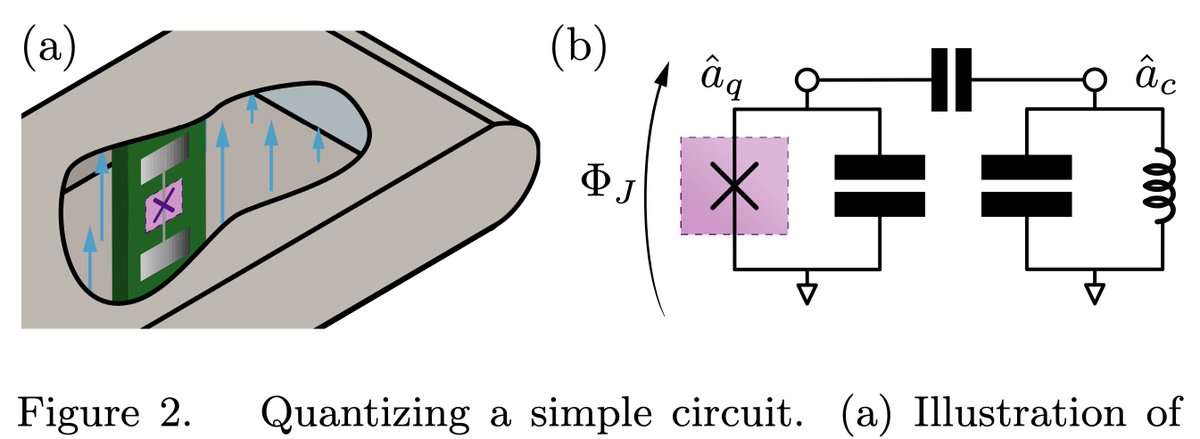
Logical qubits provide more than just a scaling metric, and should instead be thought of as the final output of an entire stack that builds from fundamental physical interaction, to device engineering, to quantum control, error correction, and eventually deployable algorithms.
Given the exponential scaling of logical error rates, even modest improvement across this stack can yield substantial reduction in overhead.
For those building systems: Where do you see the greatest leverage today?
#QuantumComputing #ErrorCorrection #FaultTolerance #Physics
For those building systems: Where do you see the greatest leverage today?
#QuantumComputing #ErrorCorrection #FaultTolerance #Physics
• • •
Missing some Tweet in this thread? You can try to
force a refresh