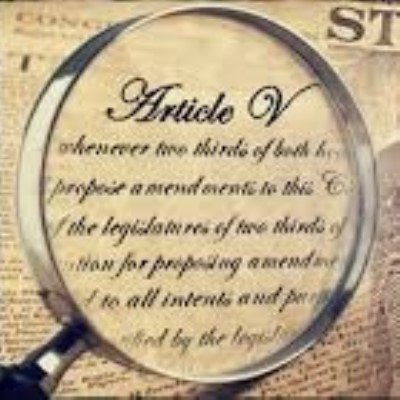
Tracking the federal ERA in Congress, Executive Branch, courts. Judges named by Clinton, Obama, Trump, and Biden have...

 2/5) @RobertKennedyJr: "The Biden administration should respect the Constitution and publish the [Equal Rights] Amendment in the Federal Register. [If elected president] I will direct the archivist to publish.”
 2/7) On 10-13-21, Planned Parenthood and other abortion providers filed a brief at the Pennsylvania Supreme Court, in a lawsuit seeking to invalidate the state law that limits Medicaid funding of abortion to cases of life of the mother, rape, and incest.


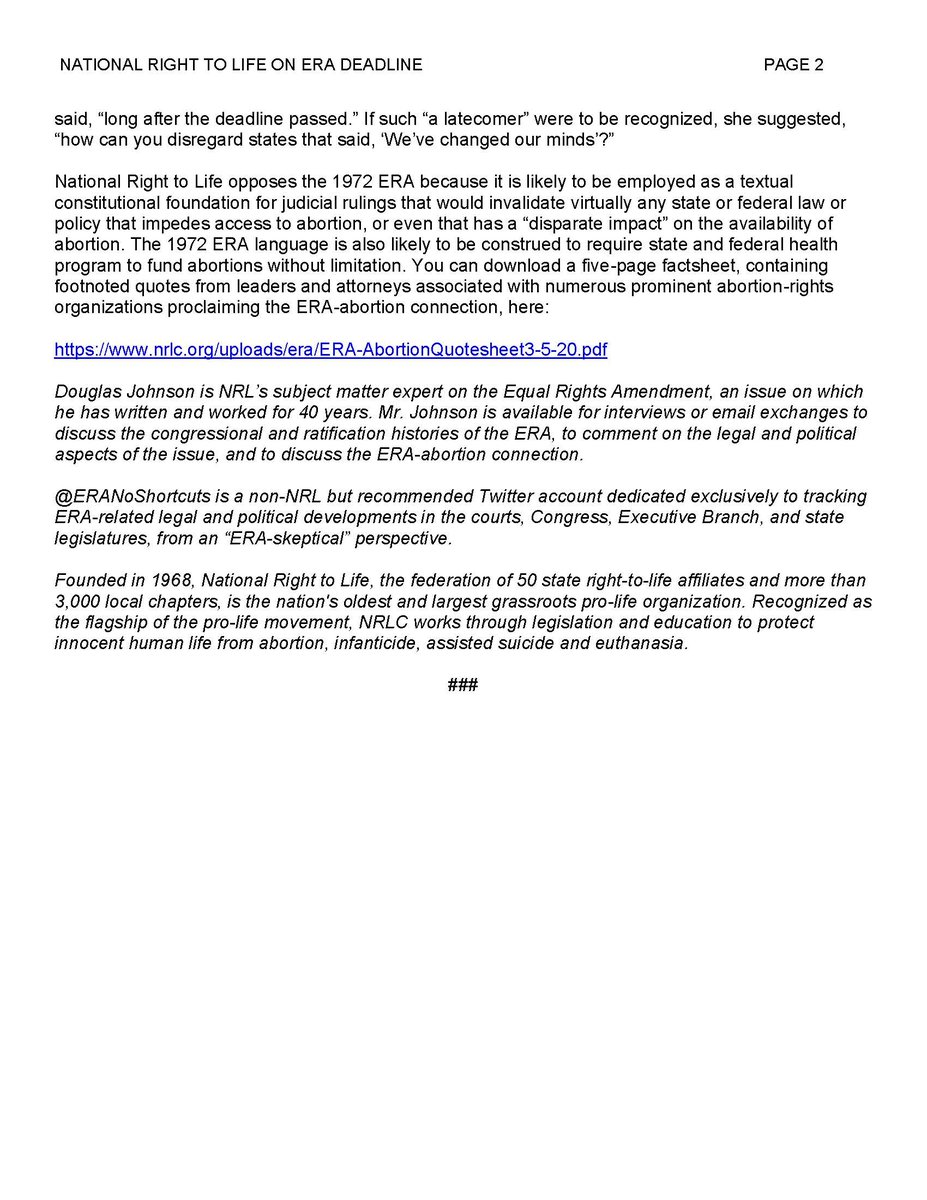

 ERAs have proposed in Congress since 1923. But for many decades, they were unable to surmount the high hurdles found in Article V of the Constitution. Article V succinctly spells out how the Constitution may be amended. To protect the text of the Constitution,


 the language of the 1972 ERA has dropped so precipitously in the "People's House"--the house that is apportioned on the basis of population, and in which every member stands for election every 2 years. In 1971, 94% of House members voted for the ERA Resolution (H.J.Res. 208).
 Here you see the original H.J. Res. 17, as introduced with trumpets Jan. 21, 2021. We invite you to carefully examine the "Resolved" clause-- drafted by congressional staff specialists, initiates in their arcane craft, to properly reflect the Article V requirement for 2/3 votes.


 House rules require that for every bill, the sponsor must submit a statement citing the constitutional authority for the measure. For the House ERA "deadline removal" resolution, H.J. Res. 17, the cited authority is Article V, the article that governs amending the Constitution.

 How could such an "error" occur? Well, it's not really an error--it was drafting by the book. After all, the resolutions purport to be based on Article V, and Article V always requires 2/3 votes. But the ERA-revival scheme requires the pretense that Congress can
 2/16) i.e, become parties themselves. This is the case in which Virginia, Illinois, and Nevada sued the Archivist, arguing that the 1972 ERA has already been ratified, and that the ratification deadline imposed by Congress was unconstitutional.

 In 1972,the 92nd Congress, by the required 2/3 votes, approved the ERA Resolution (H.J. Res. 208). Like every proposed constitutional amendment since the First Congress, it contained a Proposing Clause--which is not a "preamble," but required under Article V of the Constitution.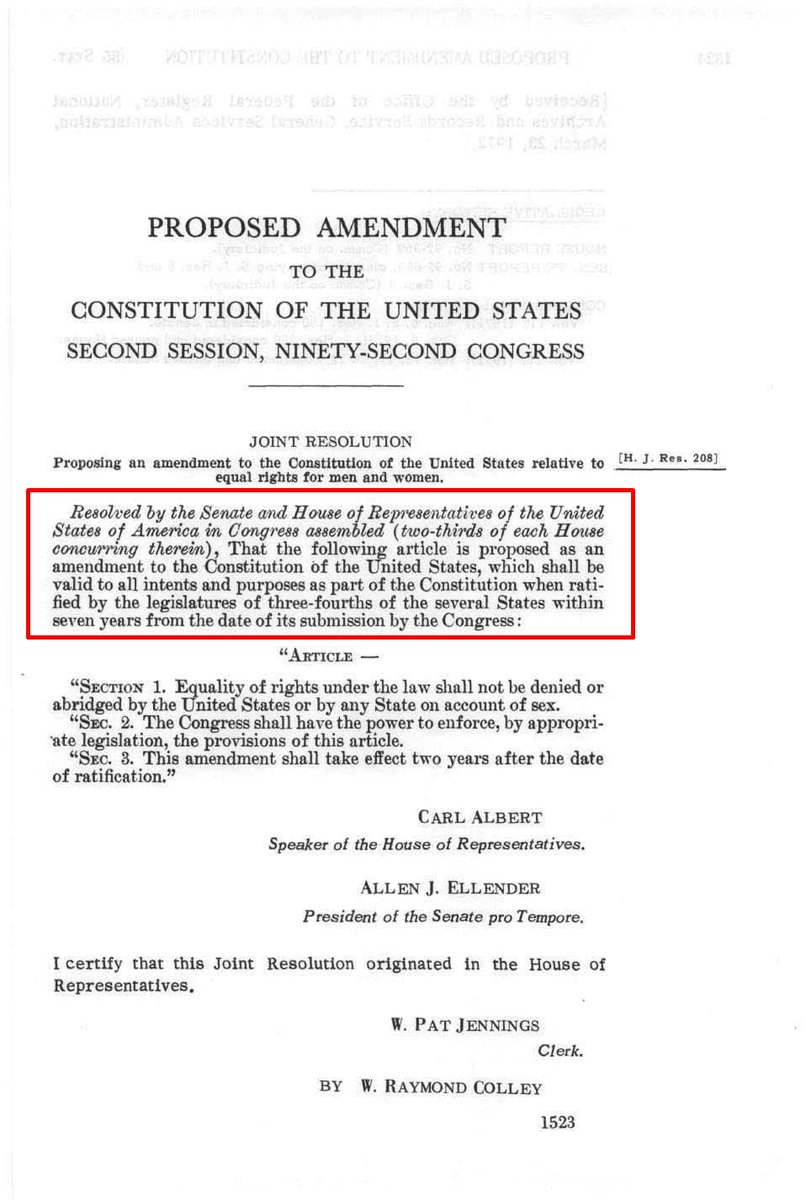


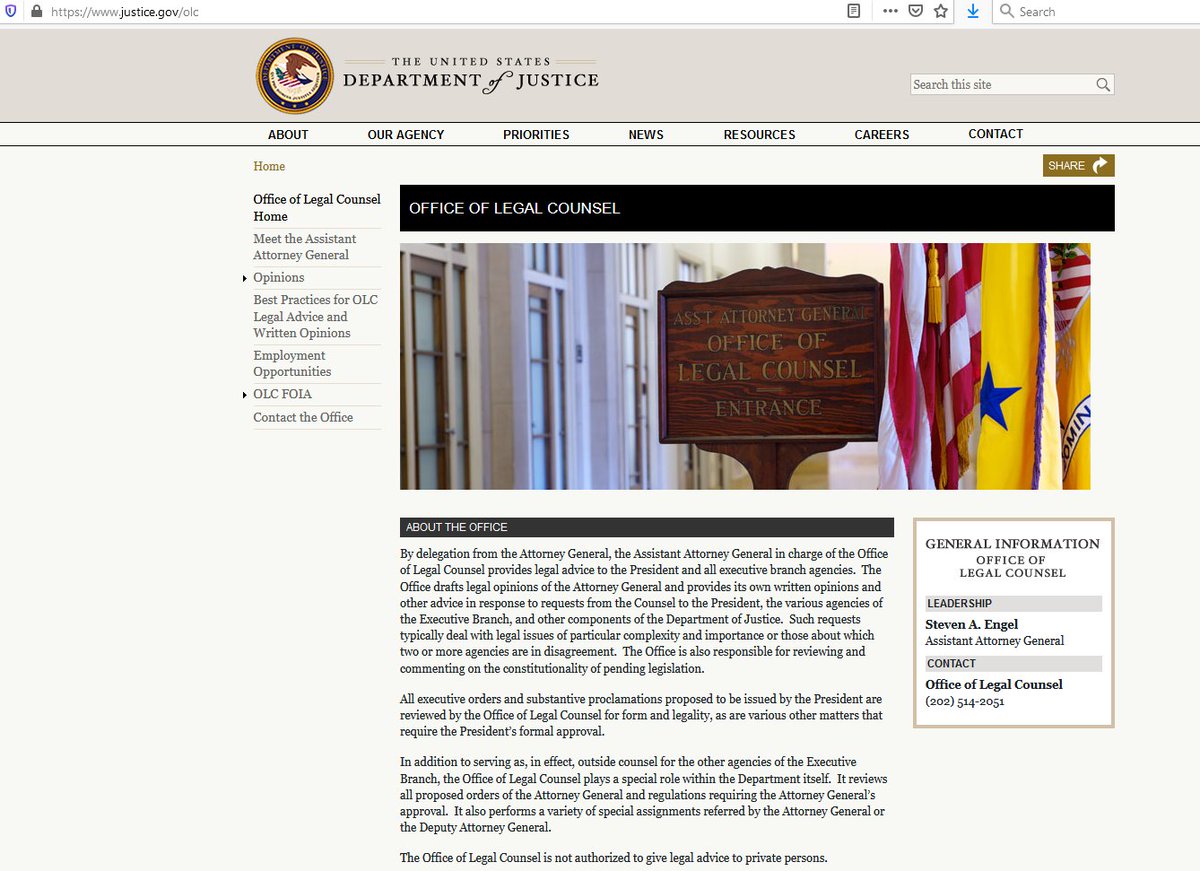 This opinion defines the position of the Executive Branch. It means that the Archivist of the United States may not certify the ERA as part of the Constitution, after Virginia submits "ratification" papers, because there has been no ERA actually before the states since 1979.

 (2/4) by Douglas Johnson, senior policy advisor to National Right to Life. It lists Nevada (2017) and Illinois (2018) as ratifying states-- just like the 35 states that actually ratified the ERA prior to the immutable 1979 deadline. (The NARA list does take note that five of the
