Julie Wade Profile picture
J Auto Trading Strategies, LLC Think It 》Trade It 》Automate It #NTEcosystem Website: https://t.co/i0wvyvxbt8 Risk Disclosure: https://t.co/ZNROC7V3hZ
Nov 27 4 tweets 14 min read
Good Morning Thursday, November 27, 2025 🌟
Thanksgiving Holiday in USA and markets are closed

Futures
Tuesday's E-mini S&P 500 market was higher with the Dec contract up by 60.25 to 6781.50, a one week high. Across all maturities, 1,669,597 contracts changed hands, with 1,656,062.0 traded in the Dec maturity.

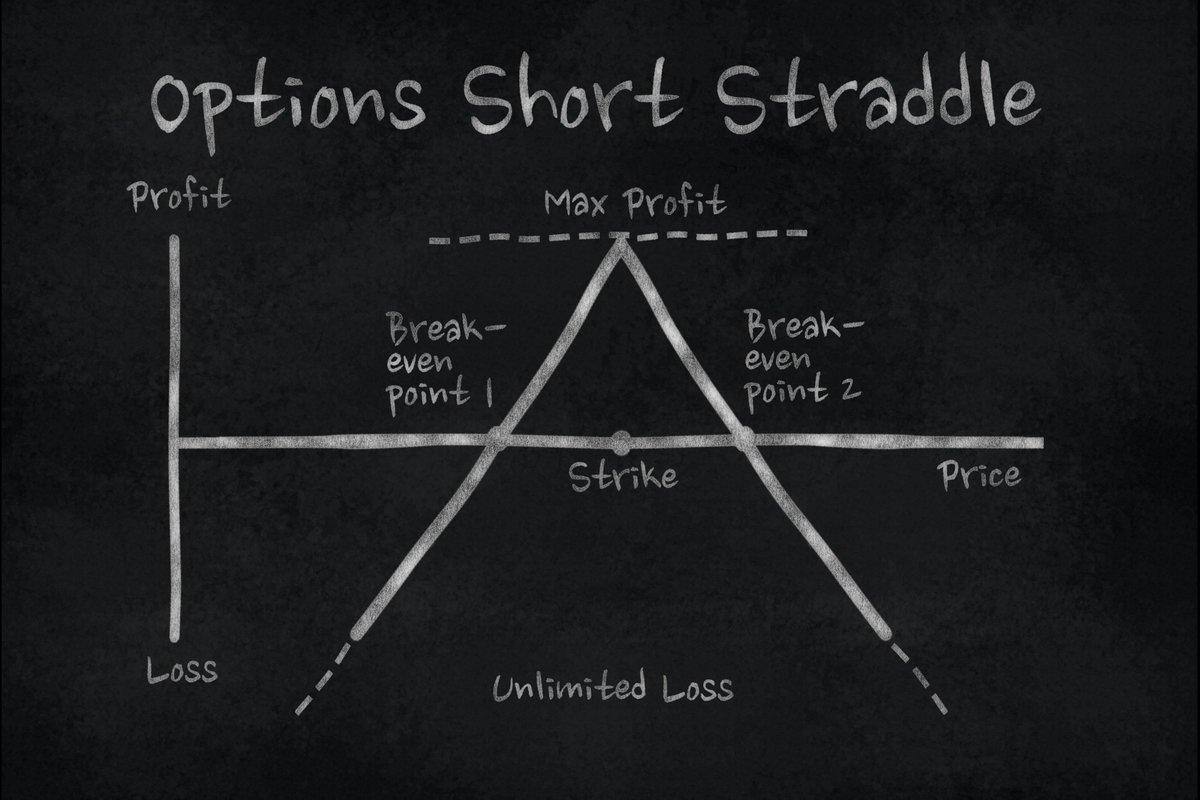
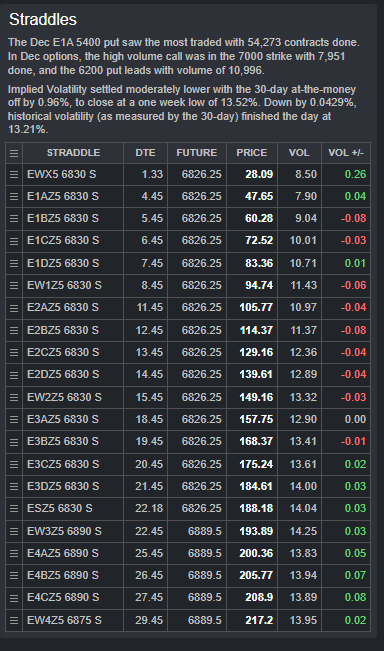
Straddles
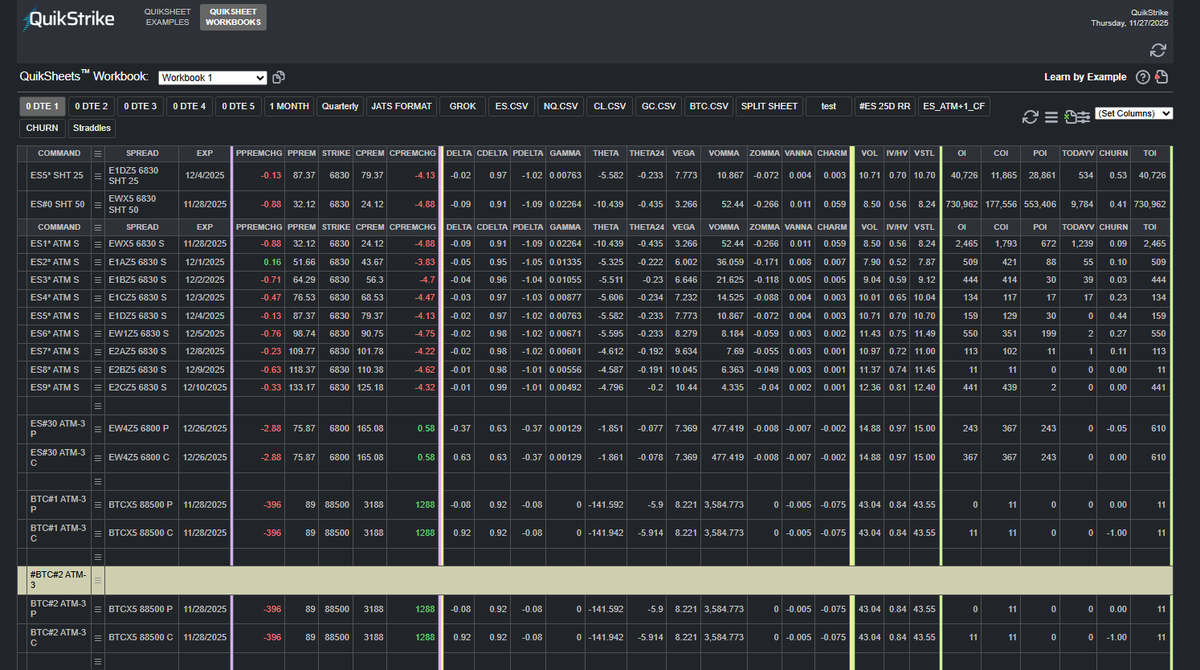
The Dec E1A 5400 put saw the most traded with 54,273 contracts done. In Dec options, the high volume call was in the 7000 strike with 7,951 done, and the 6200 put leads with volume of 10,996.

Implied Volatility settled moderately lower with the 30-day at-the-money off by 0.96%, to close at a one week low of 13.52%. Down by 0.0429%, historical volatility (as measured by the 30-day) finished the day at 13.21%.

Here is your market recap for Thursday, November 27, 2025.

The Big Picture
Global markets are largely in a "risk-on" mood, maintaining the momentum from a strong US rally on Wednesday. While US markets are closed today for the Thanksgiving holiday, the optimism has spilled over into Asia and parts of Europe, driven by solidified expectations that the Federal Reserve will cut interest rates in December.

Market Drivers
🇺🇸 US Thanksgiving Pause: US stock and bond markets are closed today. They will reopen for a shortened session on Friday (closing at 1:00 PM ET), which typically sees thin trading volumes.

📉 Rate Cut Optimism: The major driver right now is the Federal Reserve. Following favorable economic data released Wednesday (including PCE inflation numbers that showed cooling trends and slightly higher jobless claims), markets are now pricing in an ~85% chance of a Fed rate cut in December.

🌏 Asia Rallies: Japanese markets were the standout performers today, with the Nikkei 225 reclaiming the 50,000 level. Investors in the region are cheering the strong lead from Wall Street and the yen stabilising around 156 per USD.

🛒 Retail Strength: Before the holiday, solid earnings from retailers like Dell, Urban Outfitters, and Best Buy gave investors confidence that the US consumer is still spending, despite "sticky" inflation concerns.

Commodities & Currencies
Oil: Prices remain relatively soft, with Brent Crude hovering around $63 per barrel, weighed down by eased geopolitical tensions and ample supply.

Gold: The precious metal continues to shine, pushing up toward $4,170/oz, supported by the lower dollar and rate cut bets.

Crypto: Bitcoin has recovered from its drop earlier in the week, breaking back above $95,000, while Ethereum has reclaimed the $3,600 level.

Straddle Pricing Confirms the 7,000 Target

The most direct signal comes from the straddle price, which defines the market's expectation of a high-probability trading range. For late December, the straddle price is approximately 217 points. This is the total cost to bet on movement—up or down—from the technical anchor of 6,890. Because the required move to hit the 7,000 level is only 110 points, the target is easily contained within the expected 217-point trading range. The options market has essentially priced 7,000 as a highly likely occurrence within the established volatility distribution.

The IV Structure and the Need for Realized Volatility

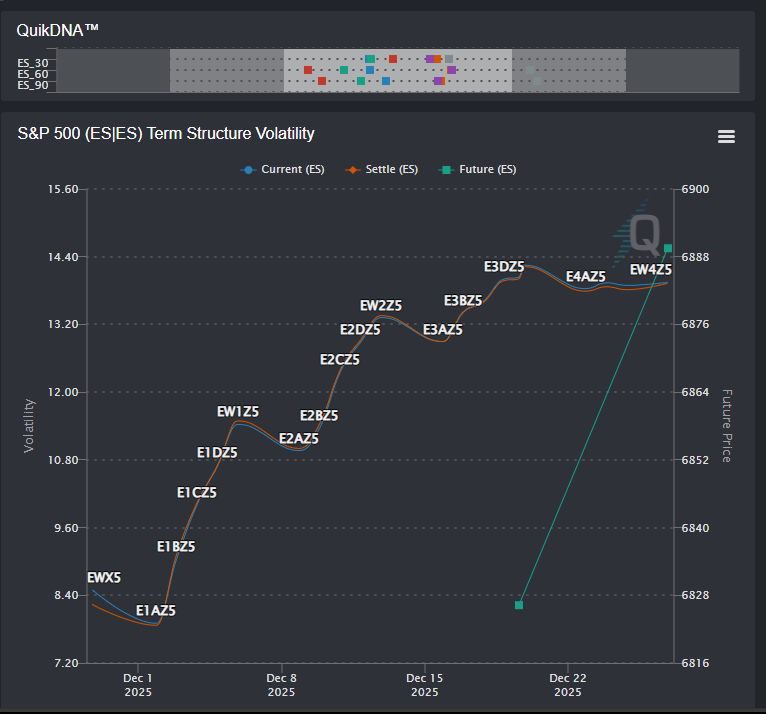
The high straddle price is directly tied to the rising Implied Volatility (IV) Term Structure. The curve moves higher toward year-end, confirming the market’s expectation of increased choppiness and wide swings in the coming weeks.

Rising IV Implication: This rising IV tells us the size of the box the price is expected to trade in, but it doesn't tell us where the bottom of the box is on any given day. To capitalize on the resulting wide swings, traders must differentiate between an expected fluctuation and an oversold dip.

The Role of Realized Volatility: This is why tools that measure historical and realized volatility, like indicators such as JATS PT, are essential. While Implied Volatility (the straddle price) sets the potential target, Realized and Historical Volatility track the actual daily trading range and provide context—for instance, noting when RVOL is trading above or below HVOL to gauge the intensity of current price movement. Comparing the two allows a trader to accurately establish reliable, dynamically adjusted support and resistance levels. These indicators help to pinpoint the precise points where a price correction ends and a high-probability dip-buying opportunity begins, allowing traders to execute trades with confidence before the market snaps back toward the 6,890 anchor or surges toward the 7,000 target.

Capitalize on Volatility: Black Friday Sale

This entire analytical framework—moving from implied volatility to the precise mapping of realized distribution levels—is the foundation of profiting from the current choppy market.

You can get the JATS PT Indicator for NinjaTrader and start mapping these volatility distribution levels on your chart today. As Black Friday weekend begins, visit our website now to take advantage of our special sale on the indicator!

⚙️ J Auto Trading Strategies, LLC (JATS)
Think It 》 Trade It 》 Automate It
Institutional Volatility Intelligence for Active Traders™

🔹 JATS PT™ 🔹 HALO™ 🔹 HALO PZ™ 🔹 V-SNAV™

🔗 NinjaTrader → tinyurl.com/m8srzanj
🔗 NinjaTrader Prop → tinyurl.com/mr264yuj
🔗 QuikStrike → bantix.com
🔗 QuikOptions → tinyurl.com/4vappen8
📊 Indicator → tinyurl.com/4mhux9ch
🔗 Substack → jats.substack.com
🧠 Code Protection → tinyurl.com/uwkmw5a5
⚠️ Risk Disclosure → bit.ly/2qM97a7

🔒 Compliance Notice
Vendor Affiliate of NinjaTrader — may receive compensation for referrals. The JATS V-SNAV + HALO™ Framework is an educational volatility analytics system for interpreting market structure and probability ranges. It does not issue trading signals or investment advice. Examples are for educational purposes only to illustrate volatility concepts within the NinjaTrader® platform.
Past performance does not guarantee future results.
JATS is an independent vendor, not a broker, dealer, or CTA.
© 2025 J Auto Trading Strategies LLC — All Rights Reserved.Image
Image
Image
Image
Navigating Year-End Volatility: S&P 500 (ES) Futures Outlook to 7,000 -- November 27, 2025 -- 22 DTE
Executive Summary:

While the S&P 500 (ES) futures market exhibits a neutral directional bias towards a 6,890 anchor into year-end, the options market is pricing in substantial implied volatility, indicating a high probability of reaching the 7,000 level. This anticipated move will likely be driven by wide price swings rather than sustained directional momentum. Critically, current realized volatility is significantly compressed against historical levels, setting the stage for an imminent volatility expansion. Understanding these volatility dynamics through both implied and realized measures is paramount for identifying actionable entry points.

I. The Implied Range: Straddle Pricing Points to 7,000

The market's expectation for the S&P 500's year-end trajectory is best understood by dissecting the straddle pricing within the futures options complex. A straddle, comprising an at-the-money call and put, effectively quantifies the market's anticipated 1-standard-deviation trading range by its expiration date.

Current Anchor:

The technical futures term structure, particularly after the December contract roll, establishes a central price anchor around 6,890. This reflects the cost-of-carry and a largely neutral directional outlook.

Late-December Straddle:

For late-December expirations (approximately 22 days out), the straddle price is a substantial 217 points. This figure is the market's consensus on the expected movement, up or down, from the 6,890 anchor.

The 7,000 Target:

To reach the 7,000 level from the 6,890 anchor requires a positive move of just 110 points. As this 110-point move is significantly less than the 217-point expected trading range priced by the straddle, the 7,000 level falls comfortably within the upper bound of the market's high-probability distribution for year-end. This suggests that achieving 7,000 is a statistical likelihood driven by volatility, not necessarily a sustained directional rally.

Implied Year-End Range (Approx. 68% Probability):

Upper Bound: 6,890 + 217 = 7,107
Lower Bound: 6,890 - 217 = 6,673

II. Volatility Compression and the Imminent Expansion

The high implied volatility (IV) priced into late-December options, characterized by a rising IV term structure (contango), signals an expectation of increased choppiness and wider daily trading ranges. However, immediate price action reveals a critical divergence:

Current Volatility Dynamics:

High Implied Volatility: The options market expects significant future movement, with IV rising to approximately 14% for year-end.

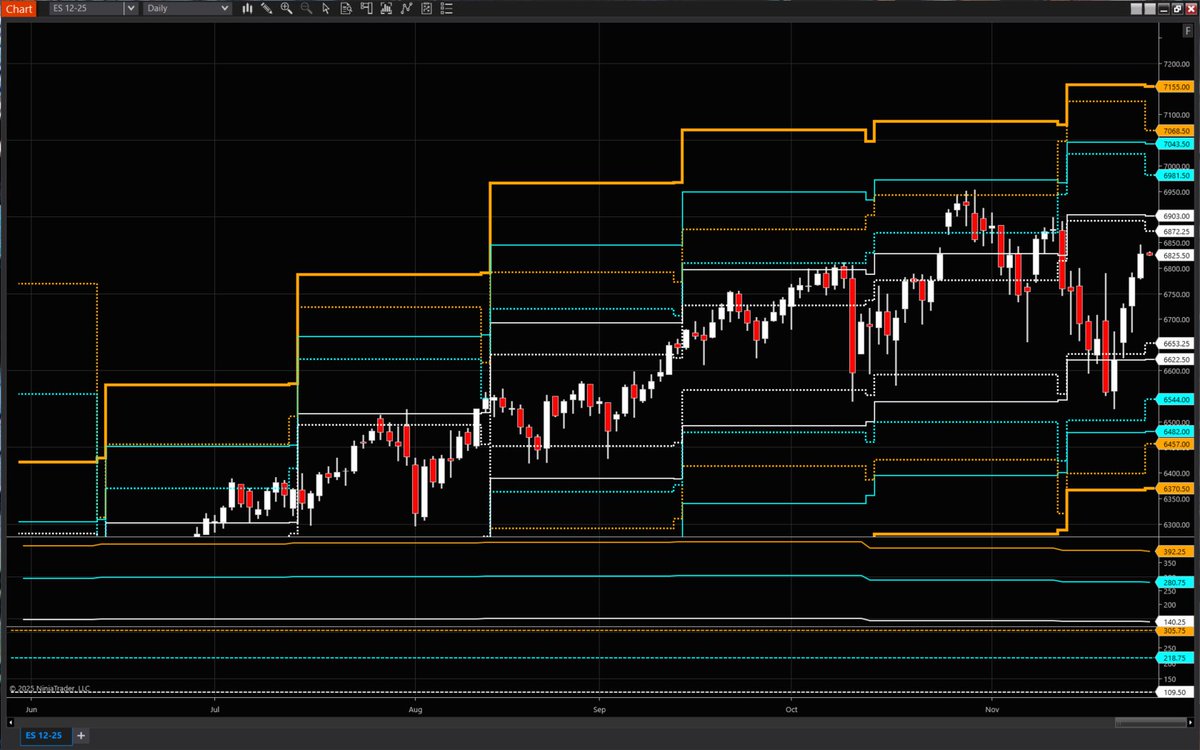
Compressed Realized Volatility: However, as illustrated by the JATS PT indicator, current Realized Volatility (RVOL) is observed to be significantly lower than Historical Volatility (HVOL). This indicates that while large swings are expected, the market is currently in a phase of compression, with actual daily price movements being more subdued than their recent average, showing that all dips should return to mean.

This RVOL < HVOL scenario is a classic precursor to volatility expansion. Markets rarely remain compressed indefinitely; a period of low realized volatility often precedes an energetic breakout as price seeks to reconcile with higher implied and historical levels.

III. Actionable Trading Strategy: Leveraging JATS PT for Dip-Buying

For institutional traders, navigating this environment requires a precise understanding of volatility distribution to identify high-probability entry points. The JATS PT indicator provides the tools to capitalize on the anticipated volatility expansion.

Applying JATS PT (22-Day Expectation Range on Daily Chart):

Using a 22-day expected range derived from the straddle, JATS PT maps critical volatility distribution levels, translating the theoretical options-implied range into actionable price zones.

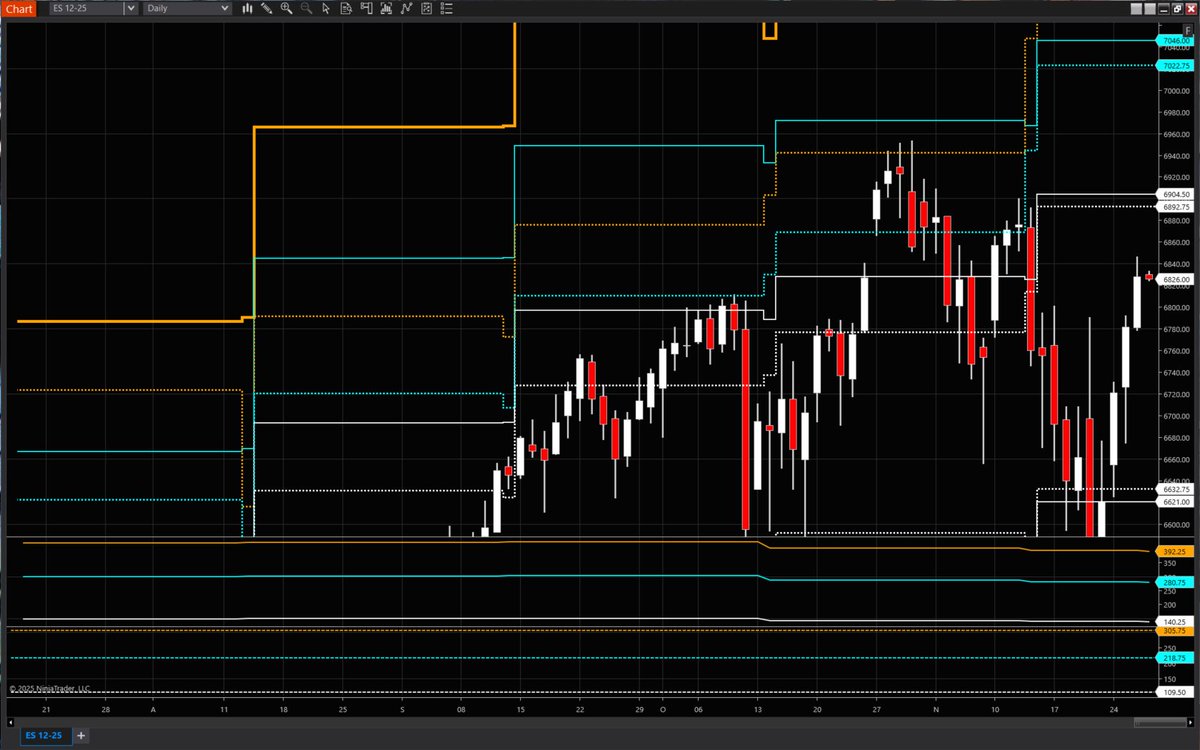
RVOL Levels (Bottom on chart):

When RVOL is significantly below HVOL, these lower RVOL distribution levels indicate zones of volatility compression and potential support. These are the areas where price tends to find short-term bottoms before a snap-back.

JATS PT1 RVOL Point Range: Approximately 109.50 (indicates initial compression boundary)

JATS PT2 RVOL Point Range: Approximately 218.75 (deeper compression, stronger support zone)

JATS PT3 RVOL Point Range: Approximately 305.75 (extreme compression, high-conviction dip-buying area)

HVOL Levels (Top on chart):

These higher HVOL distribution levels represent areas of historical volatility and potential resistance. Price often targets these levels during periods of expansion.

JATS PT1 HVOL Point Range: Approximately 140.25 (initial expansion boundary)

JATS PT2 HVOL Point Range: Approximately 280.75 (moderate expansion target)

JATS PT3-Point HVOL Point Range: Approximately 392.25 (strong expansion target, often where volatility exhaustion occurs)

The Strategy:

The divergence of RVOL from HVOL suggests that current dips are likely volatility compressions, not fundamental shifts. Utilizing JATS PT's dynamically adjusted RVOL distribution levels allows traders to pinpoint oversold conditions within this compressed environment. Accumulating long positions in these RVOL-defined lower distribution zones offers high-probability entries, anticipating a volatility expansion that will drive price back towards the 6,890 anchor or, more significantly, towards the 7,000 year-end target. This approach allows for confident execution before the market reverts to its higher historical volatility profile.

Actionable Insights

Target 7,000: A move to 7,000 is highly probable due to implied volatility, despite a flat directional anchor.
Monitor RVOL/HVOL: Current RVOL < HVOL signals impending volatility expansion.

Utilize JATS PT: Deploy JATS PT to map volatility distribution levels for precise dip-buying entries.

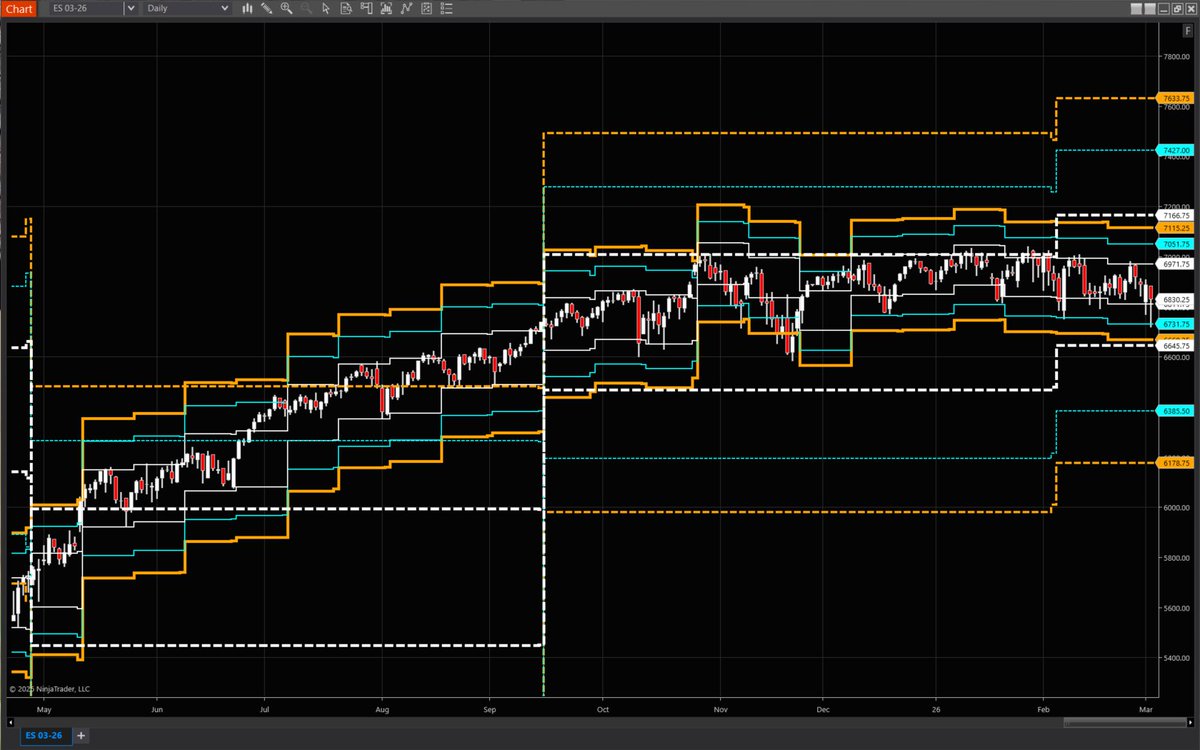
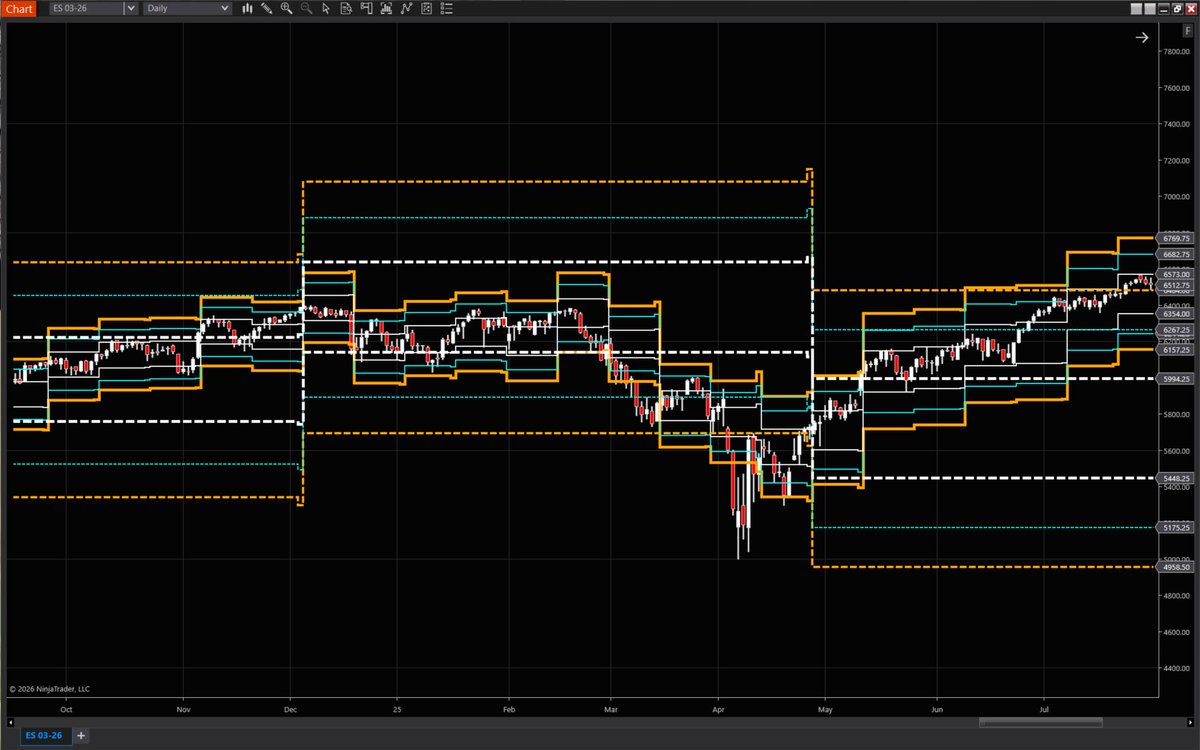
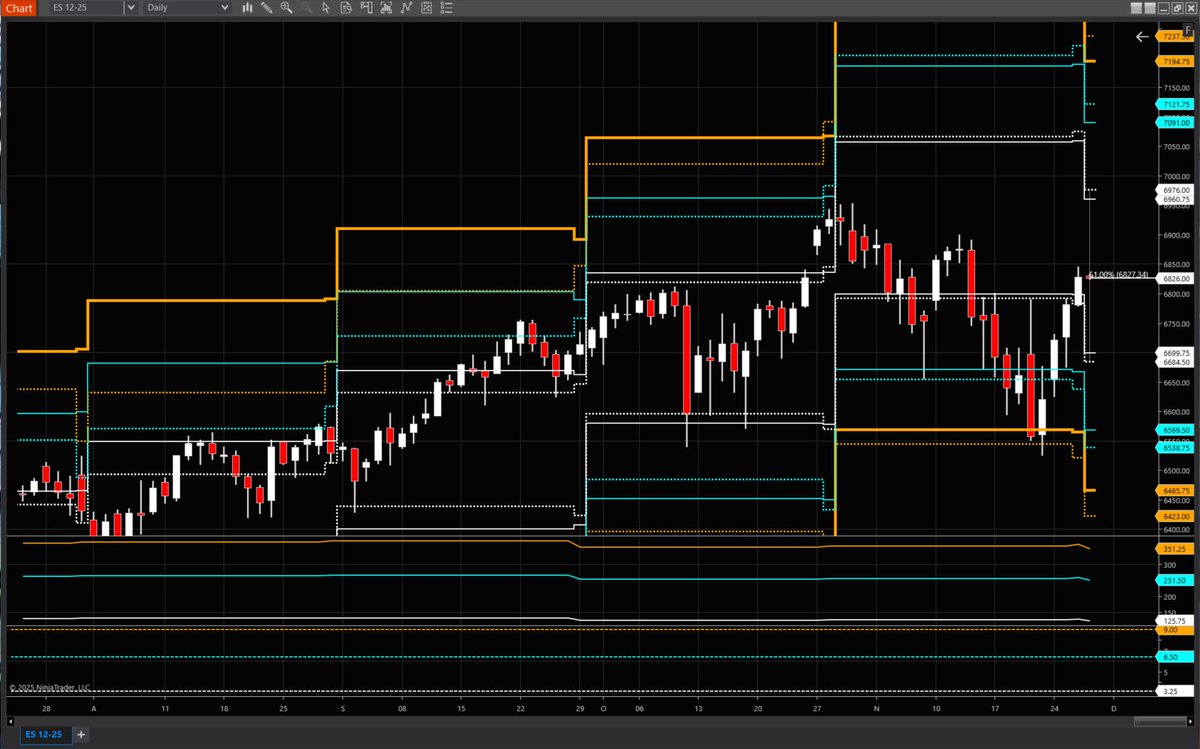
NOTE: 22 Day RVOL volatility shifted outward from 6872.25 to 6892.75, more closely aligned with 6904.50 HVOL, making this a strong resistance zone. Being that today is a holiday, we really need to look at the 21 Day RVOL/HVOL distribution to see where these levels come into play on Friday. The first two screenshots show you that JATS PT measures these volatility shifts as well. The third screenshot shows that is an entirely different picture altogether. The resistance is gone and the support is clear between 6684.50 and 6699.75 with the mean at 6827.34, EXACTLY WHERE DEALER HAS PARKED PRICE!!!!!! Is this giving you chills? It does me everytime I realize how close JATS PT is to mapping true market structure.

Capitalize on Volatility: Black Friday Sale

This analytical framework, moving from implied volatility to the precise mapping of realized distribution levels, is the foundation for successfully navigating and profiting from the current choppy, yet predictable, market dynamics. The JATS PT Indicator for NinjaTrader empowers institutional traders to accurately map these critical volatility distribution levels on their charts. As Black Friday weekend begins, we invite you to visit our website now to take advantage of our special sale on the indicator and integrate this powerful tool into your trading arsenal.

⚙️ J Auto Trading Strategies, LLC (JATS)
Think It 》 Trade It 》 Automate It
Institutional Volatility Intelligence for Active Traders™

🔹 JATS PT™ 🔹 HALO™ 🔹 HALO PZ™ 🔹 V-SNAV™

🔗 NinjaTrader → tinyurl.com/m8srzanj
🔗 NinjaTrader Prop → tinyurl.com/mr264yuj
🔗 QuikStrike → bantix.com
🔗 QuikOptions → tinyurl.com/4vappen8
📊 Indicator → tinyurl.com/4mhux9ch
🔗 Substack → jats.substack.com
🧠 Code Protection → tinyurl.com/uwkmw5a5
⚠️ Risk Disclosure → bit.ly/2qM97a7

🔒 Compliance Notice
Vendor Affiliate of NinjaTrader — may receive compensation for referrals. The JATS V-SNAV + HALO™ Framework is an educational volatility analytics system for interpreting market structure and probability ranges. It does not issue trading signals or investment advice. Examples are for educational purposes only to illustrate volatility concepts within the NinjaTrader® platform.
Past performance does not guarantee future results.
JATS is an independent vendor, not a broker, dealer, or CTA.
© 2025 J Auto Trading Strategies LLC — All Rights Reserved.Image
Image
Image
Apr 10 12 tweets 3 min read
🧵JPMorgan’s Hedged Equity Fund (JHEQX) just flipped the switch again. Here's why SPX 5290 is the most important level in the market through April 18: JHEQX runs ~$49B and uses a quarterly collar to hedge.

That includes:

– Selling OTM calls
– Buying OTM puts
– Possibly selling lower puts (for a costless collar)
Jun 19, 2022 4 tweets 2 min read
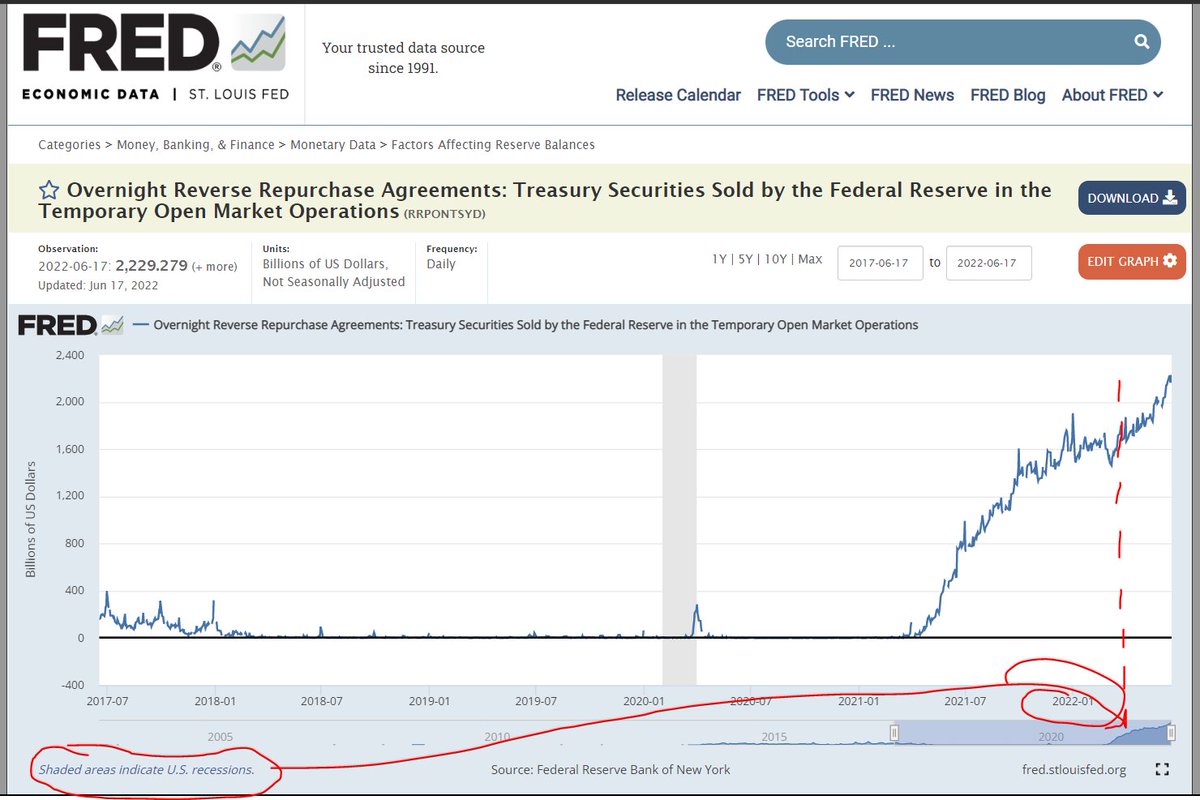
Reverse Repo Market is bank money laundering 101. Banks & big money mgrs part cash at fed & earn return. This sucks liquidity out of where it should be, in banks and in main street. Not in money market funds. One-month T bills now yield about 0.75%, below the reverse repo 0.8% This means Central Banks are going to sell their equities and park cash at fed along with everybody else.
Apr 25, 2022 7 tweets 3 min read
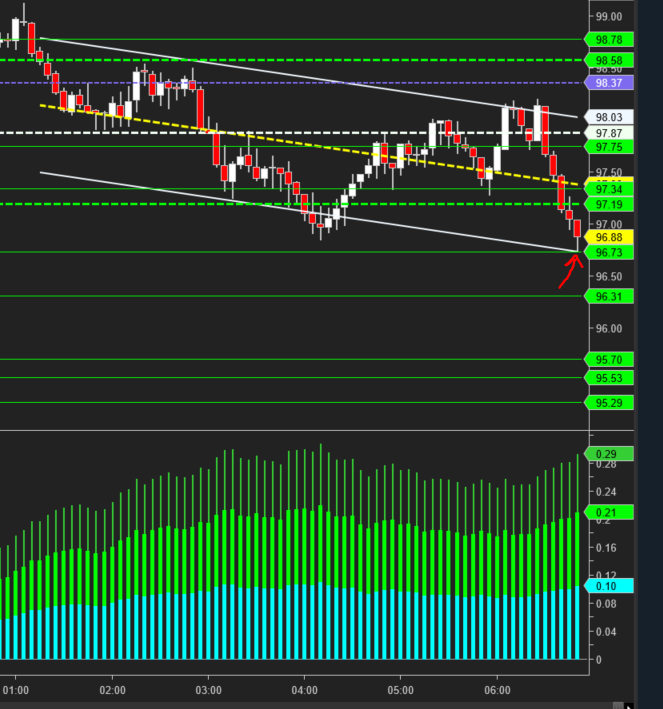
Crude sitting on Daily PT2
97.20

#CL_F #Crude #OOTT #WTI Volatility on first leg down 31;
Volatility on retest 27