
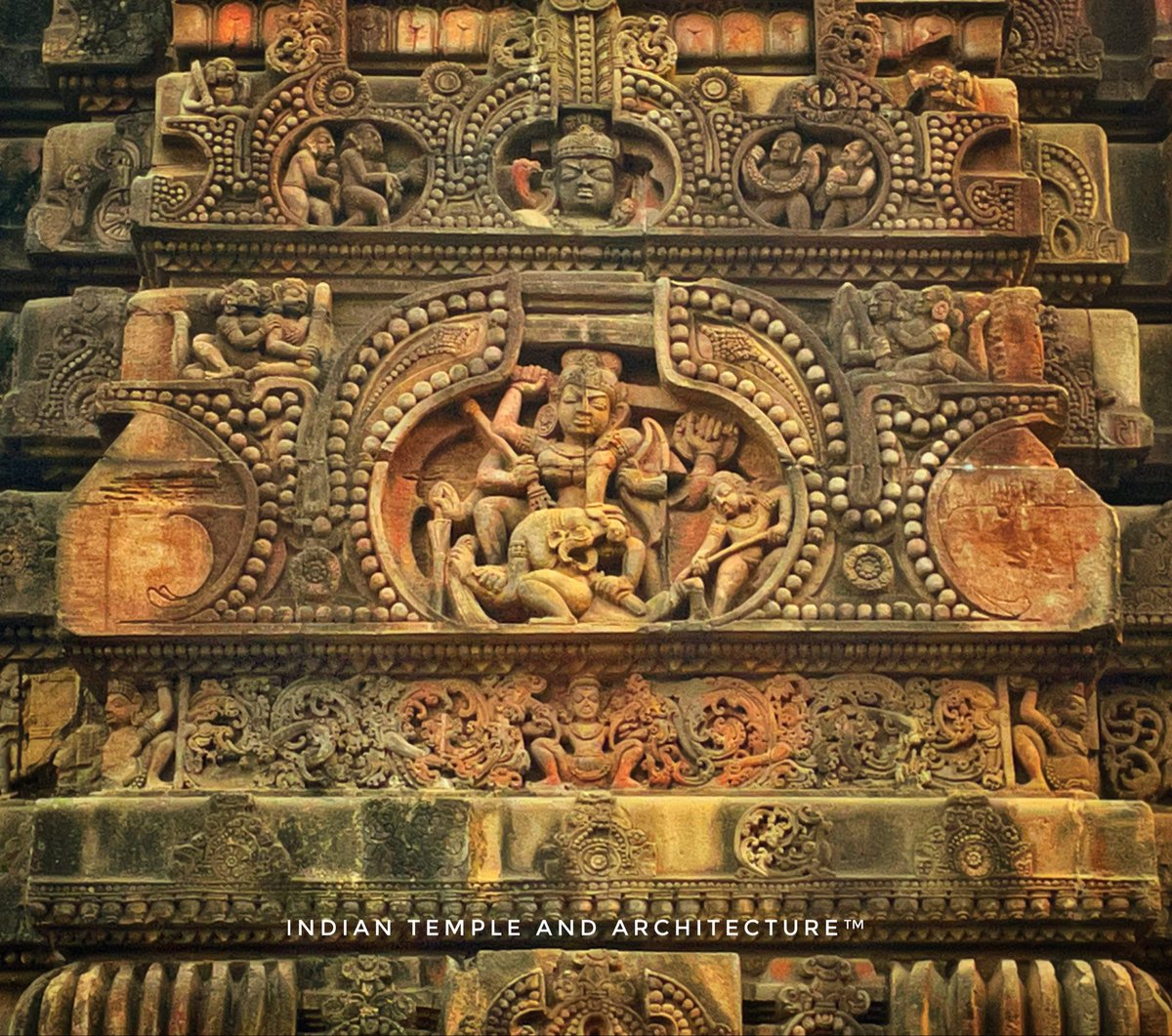
 Here, She plants her uplifted right foot on the left arm of the buffalo-demon (Mahisasur) while pushing back its buffalo-head with her major left arm. The arm is slightly bent inward suggesting great force.
 He is ornately bejewelled with a double-strand necklace having various shaped hanging pendants, a yajitopavita formed of interlocking chain-links, a pearl-string waist-belt, chain-like girdle, jewelled arm-bands with dripping festoons, anklets and bracelets.
 Here also He is seated in ardhaparyanka asana plucking sweets from a modaka-patra held in his lower left hand. His major right hand, resting on his knee, holds the radish (kandamula in Odia). His uplifted back hands hold the rosary and kuthara (quite similar like the last
 His main right hand is resting on his knee, holds a rosary (it’s missing now but the one can articulate) while the uplifted right hand holds a radish, badly damaged. The uplifted left hand holds the kuthara/kurhadi (axe).
 The temple is built in Pancharatha Style and Panchangabada elevation. The entrance to the Jagamohana has a Navagraha panel together with a sculpture of Maa Gaja-Lakshmi.


 When Adi Shankaracharya built a Surya-Kunda to specify the origin of river Narmada. He also installed the murty of Bhagvan Shiva at Pataleshwar. The Pataleshwar Temple was built later by Kalchuri king “Karna Deva” (1041-1073 CE). The construction of the “Karna Mandir”
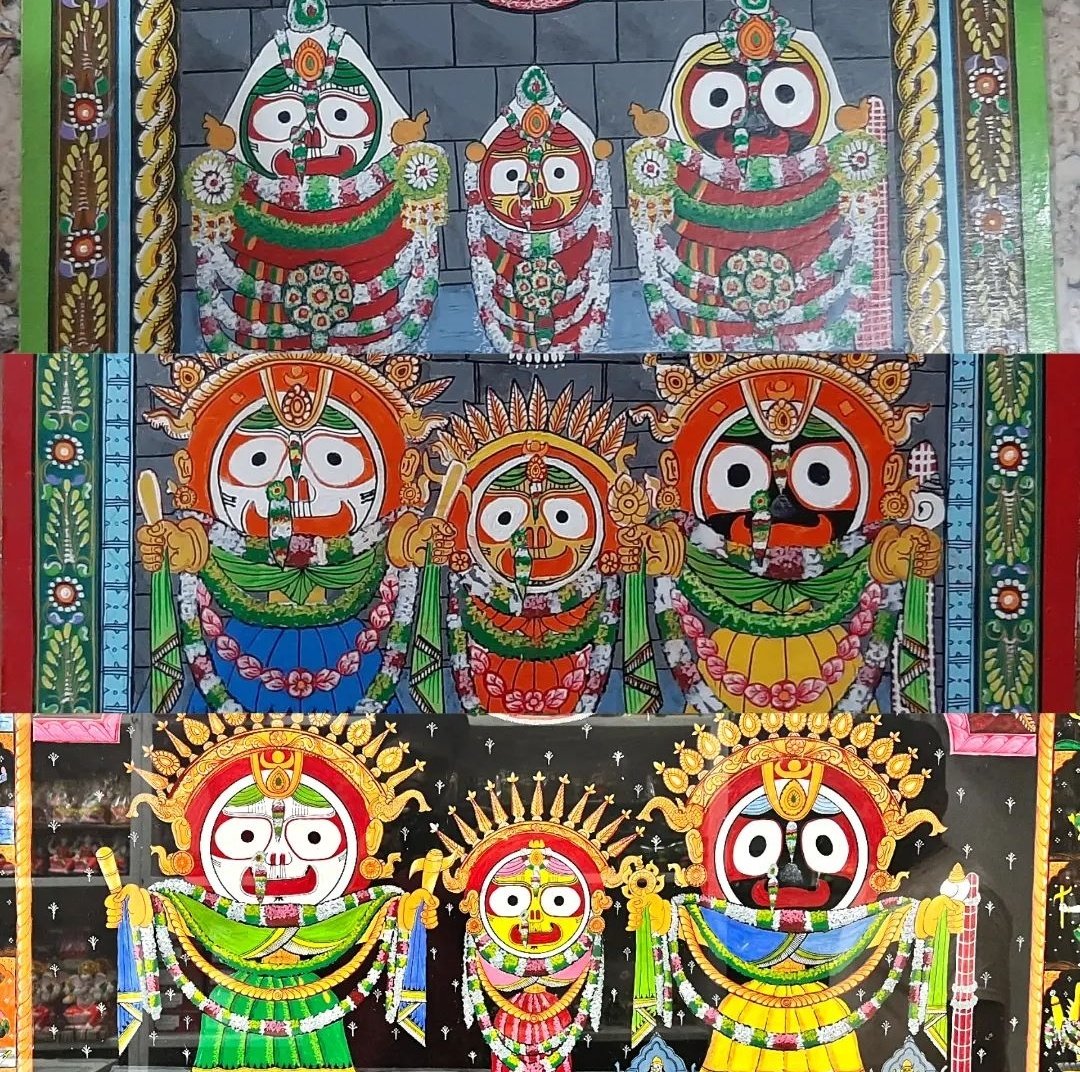 (b) Pattachitra based on different episodes of the Ramayana, Mahabharata, Bhagavat Geeta and other Puranas or Kavyas.
 one 2 of the oldest sects of Shaivism. Lakulisha has also been mentioned as ‘Nakulisha’ in several places. Around the 2nd century CE, Lakulisha was born in a Brahmin family and lived in Kayavatara or Kayavarohan (Present day Karvan), located in Vadodara district of Gujarat.
 The temple is located on a hillock which offers a magnificent view of the sea. The temple complex is famous for its tall Shiva statue which is around 37 m high and is the tallest Shiva statue in India. The temple gopura at 237 ft is the 2nd tallest in India.
 At these three places the murtis are ‘swayamvyakt-moorthies’ i.e. they have not been made by man but were believed to be self-manifested. The scared place of Shree Ranganatha in the West is considered to be a very holy place by the ‘Devas’ including Bramha Rudra and by the
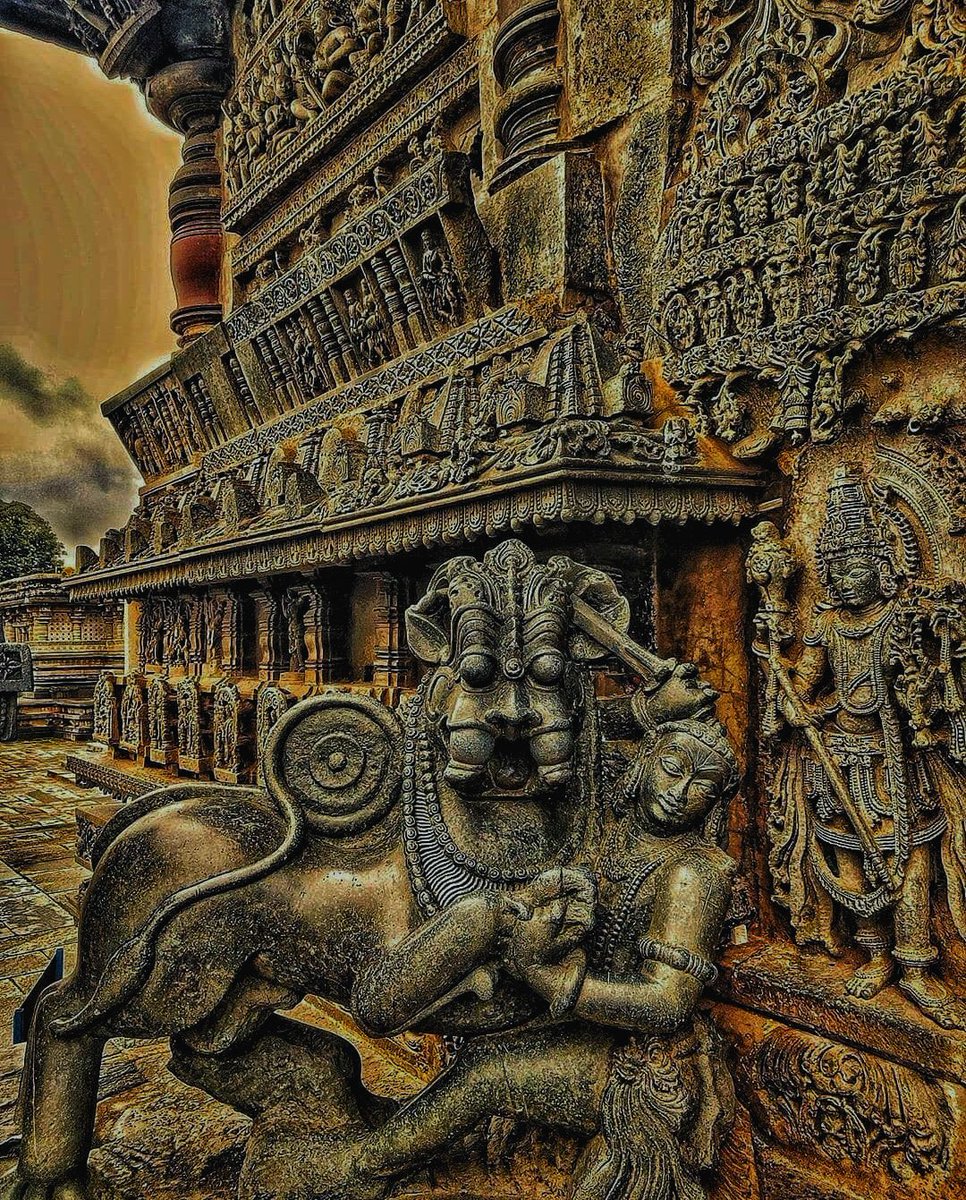 Karnataka between 1022 – 1342 CE. The legend of Sala who killed the lion to save his Jaina preceptor Sudatta and had won a kingdom for himself ideally fitted into the animal-slayer motif already in vogue. As a result of the victory of the Hoysalas over another dynasty,
 the five elements, in which it is especially connected with the element ‘Agni’. The temple is ideally situated at the bottom of the Arunachala hill in Thiruvannamalai, Tamil Nadu.
 1. The original name of the deity was Rajarajeshwar. It was the Marathas who gave it the name Brihadeeshwara or the Great Ishwara.
 As I had proclaimed before that; the day I get 15K family, shall unveil about the truth of this account;
  (emerged from Samudra Manthan). Devarishi Narada, who delighted in sowing discord, brought a flower of this tree to Dwaraka and presented it to Shree Krishna. He waited to see to which of his wives Krishna would give the flower.
  In this version of the Mahabharata, the Navagunjara is a form that Vishnu had taken in order to appear as a manifest being in front of Arjuna all of a sudden on the Manibhadra mountain in the Madhyaparva of Odia Mahabharata.
 or Hingulaksi is being worshipped. It is for this reason that the presiding deity of Talcher in the village 'Gopalprasad' who bears the form of fire is named Devi Hingula. Such peethas of Maa Hingula are also situated even outside India in Karachi and Kabul in the name of


 After this royal bath ceremony the three Jiews are sick and they stay away from the public view for a period of 15 days. This period is known as 'Anasara' or 'Anavasara' period commences from Jyestha purnima and ends with Ashadha amavasya.
 and Ratha Katha Anukula ritual is performed.