Happy to announce that my new @CUP_PoliSci Elements book was published today.
I explore how Trump's rhetoric encourages some Americans to express more prejudice than they would otherwise. You can access it online for free until Nov 2 & here's a thread...
cambridge.org/core/elements/…
I explore how Trump's rhetoric encourages some Americans to express more prejudice than they would otherwise. You can access it online for free until Nov 2 & here's a thread...
cambridge.org/core/elements/…
First, an important point to make about what is happening is that there are countervailing trends in reaction to Trump's rhetoric. As @dhopkins1776 and Washington have demonstrated, many have reacted to Trump by expressing *less* prejudice in surveys.
academic.oup.com/poq/article-ab…
academic.oup.com/poq/article-ab…
But not everyone has reacted this way. As I argue, more prejudiced Republicans are not necessarily becoming even more prejudiced, but Trump's rhetoric may make them more likely to express that prejudice to others. 

I see this in panel data, where the same Trump supporters were interviewed just before the election and then after Trump's inauguration. Those Trump supporters expressed more sexism and more anti-immigrant sentiment after Trump's victory.


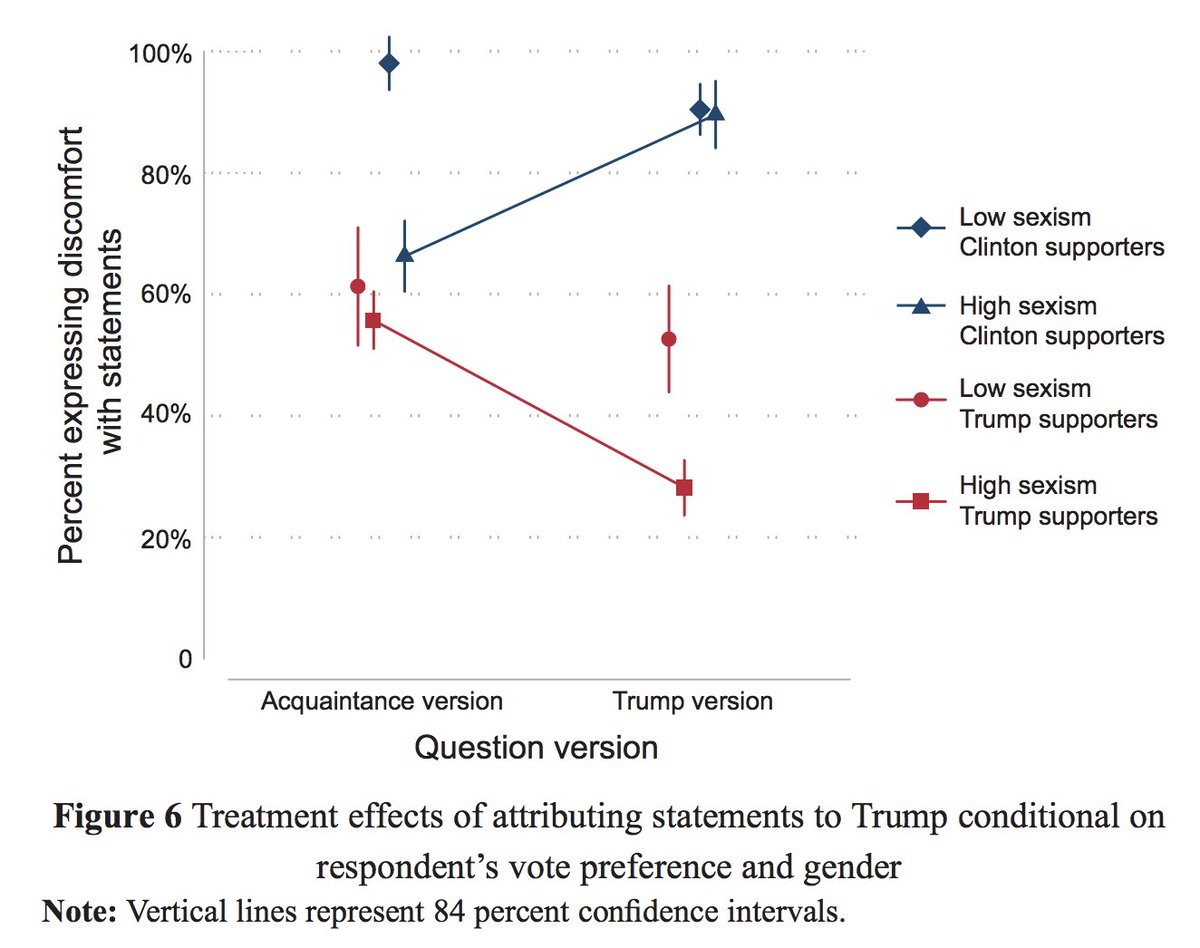
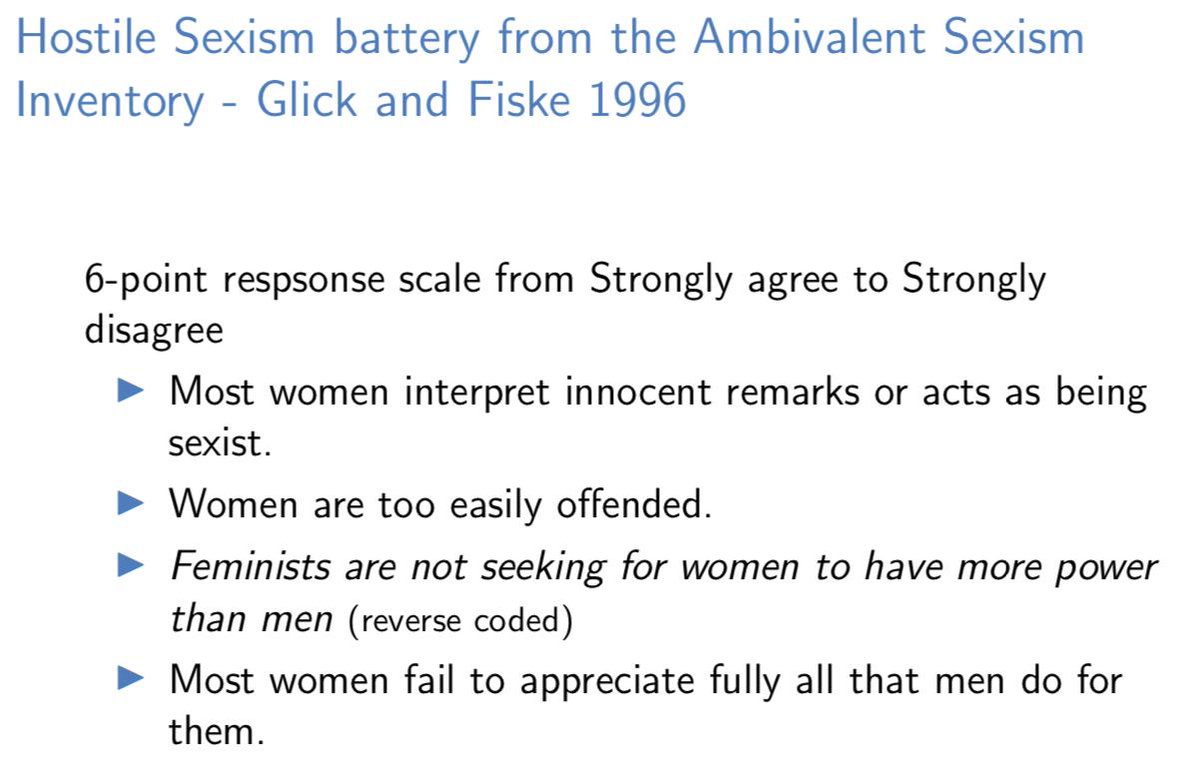
The book also includes a series of experiments to test for this "Trump effect." I find that when sexist remarks are attributed to Trump (rather than an acquaintance), Trump supporters are MUCH less likely to express discomfort with those statements.
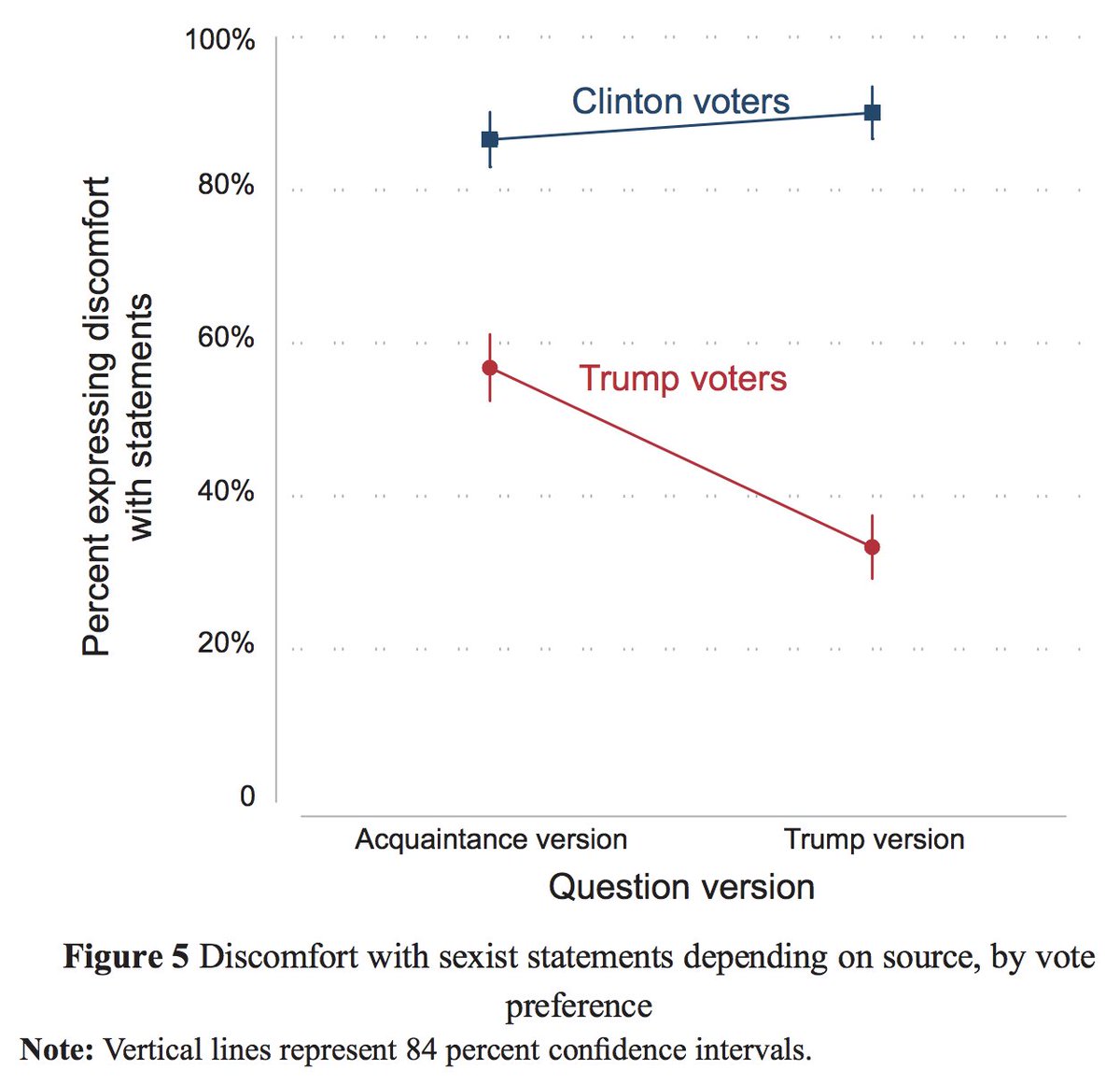
Importantly, this experiment provides insight on how partisan motives can either reinforce or undermine the acceptance of prejudice. When sexist statements are attributed to Trump, sexist Republicans express much less discomfort while sexist Democrats express much more discomfort

I then present results from a novel experiment I conducted in 2016 where I randomly assigned exposure to two of Trump's offensive quotes. When people saw Trump's infamous quote about Mexicans, they were more likely to write offensive things about Mexicans (and Millennials!).

I also present results from 2 experiments testing the effects of a generic politician (rather than Trump) saying it is ok to make sexist or ethnic jokes. When subjects hear this statement from a politician, they are less likely to endorse norms against the expression of prejudice

These experiments provide more direct evidence that the mechanism at play is likely related to signals about norms. This builds on the great work of @ChrisCrandall16 showing how understandings of norms influences whether people express their prejudices. journals.sagepub.com/doi/abs/10.117…
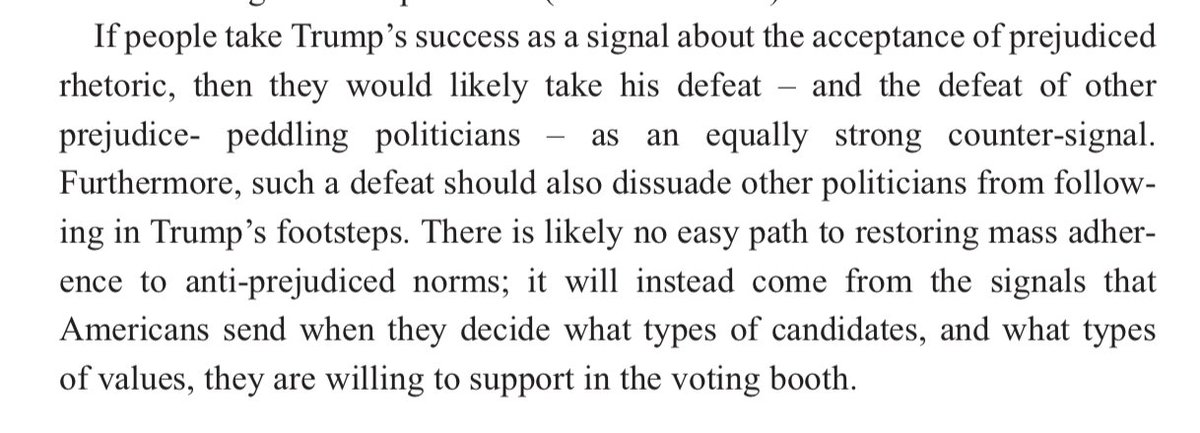
For me, this makes what happens on Nov 3 all the more important. Of course, a definitive Trump defeat will not be a defeat of prejudice in America, but it would at least be an important signal about what a majority of Americans are unwilling to tolerate.
There is much more to see & it's free to access for the next 2 weeks, so dig in!
Many thanks to editors Frances Lee & @SaraDoskow for supporting the manuscript, not to mention the many people who provided feedback on this project over the past 4 years. cambridge.org/core/elements/…
Many thanks to editors Frances Lee & @SaraDoskow for supporting the manuscript, not to mention the many people who provided feedback on this project over the past 4 years. cambridge.org/core/elements/…
PS: a link to the online Supplementary Information can be found here. Hoping to have a replication archive up relatively soon as well. sites.google.com/view/brianfsch…
• • •
Missing some Tweet in this thread? You can try to
force a refresh