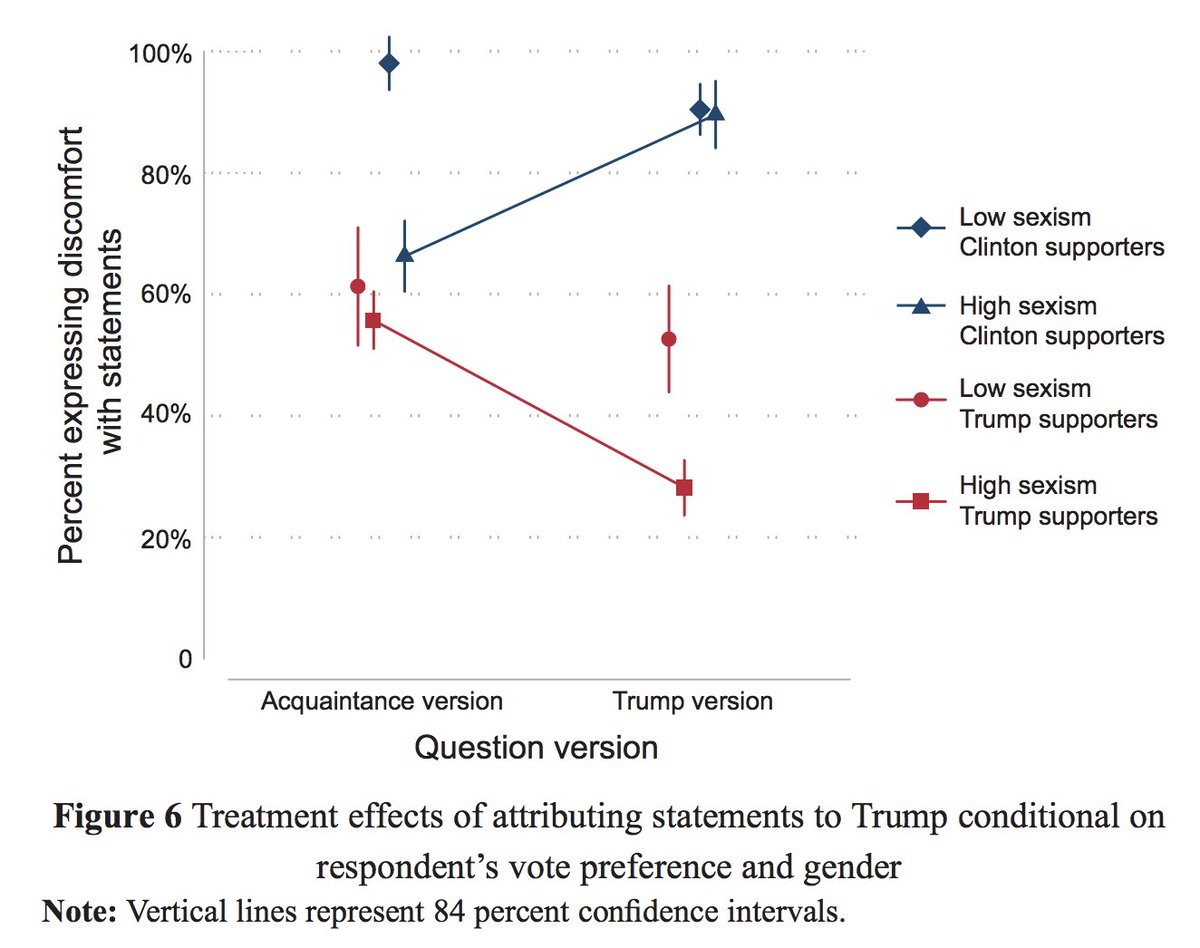
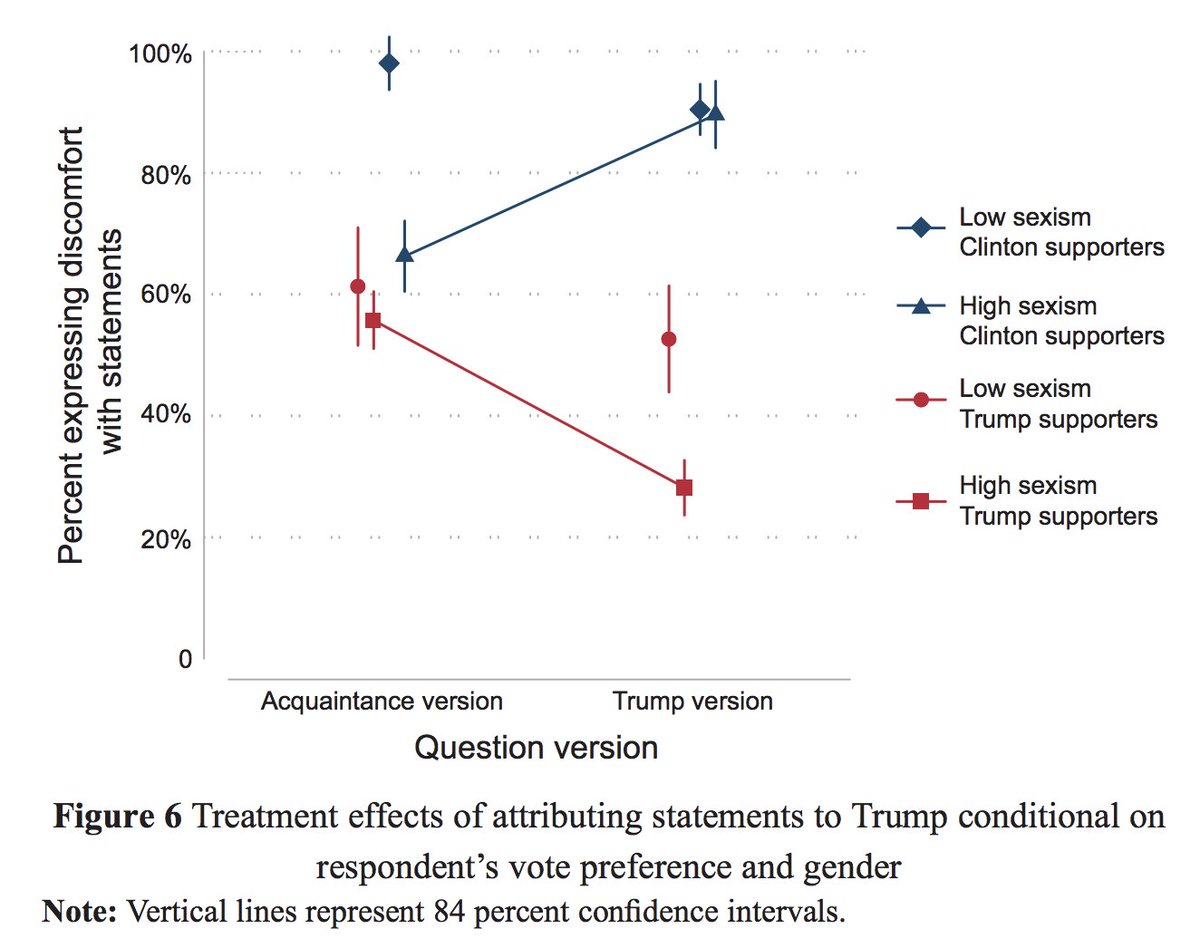
There are 17 figures in my new @CUP_PoliSci Element, but this is the one I keep thinking about because I think it can say a lot about what we've seen happen in reaction to Trump's expressions of prejudice over the past four years. 
Many have noted that Ds in particular appear to be trending toward giving more progressive responses to questions regarding racial stereotypes (@dhopkins1776) or racial resentment (@_amengel) or other measures of xenophobia (@johnmsides, Tesler, @vavreck).
This movement -- termed "the Great Awokening" by @mattyglesias, has received a lot of attention, even while others have been worried about a "Trump effect" which leads Trump supporters to express *more* prejudice.
vox.com/2019/3/22/1825…
vox.com/2019/3/22/1825…
In this experiment, we can see partisan motives intersecting with underlying prejudice/resentment. Sexist Ds react to sexist remarks just like sexist Rs do when they are not attributed to Trump. But when Trump is the source, you see vastly different responses.
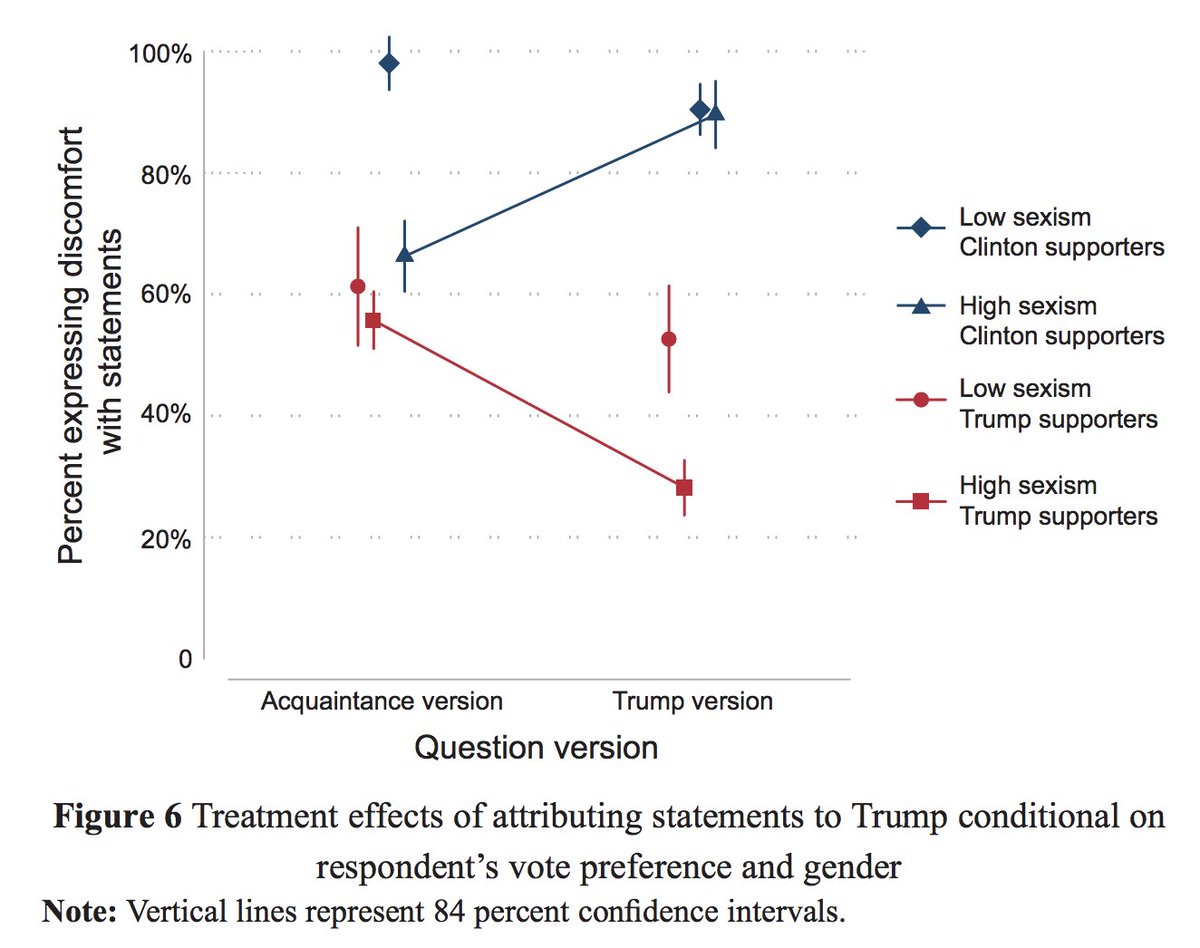
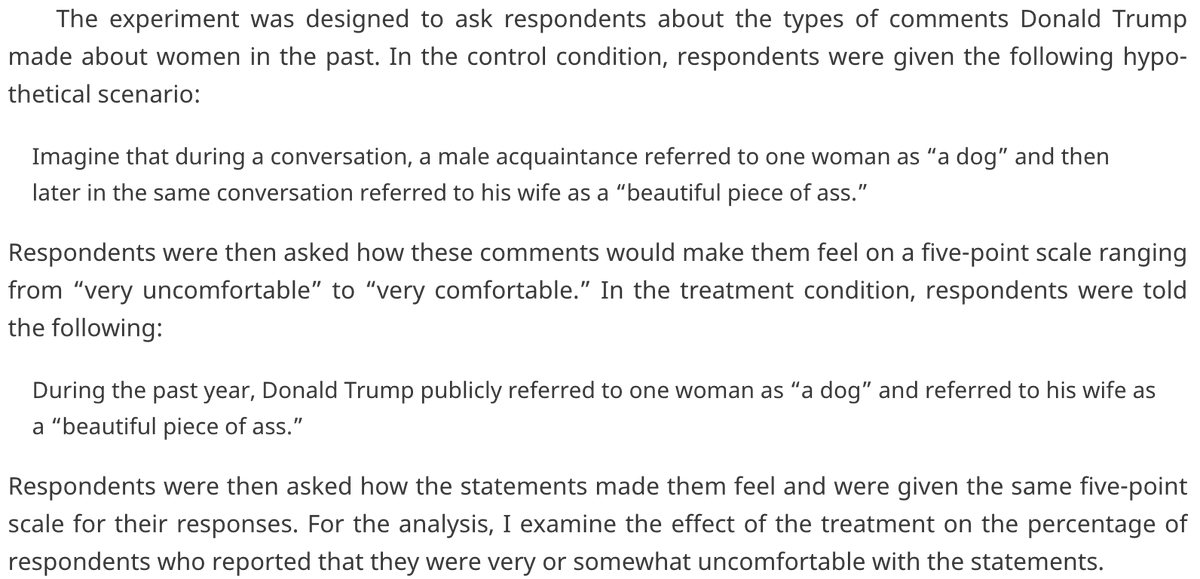
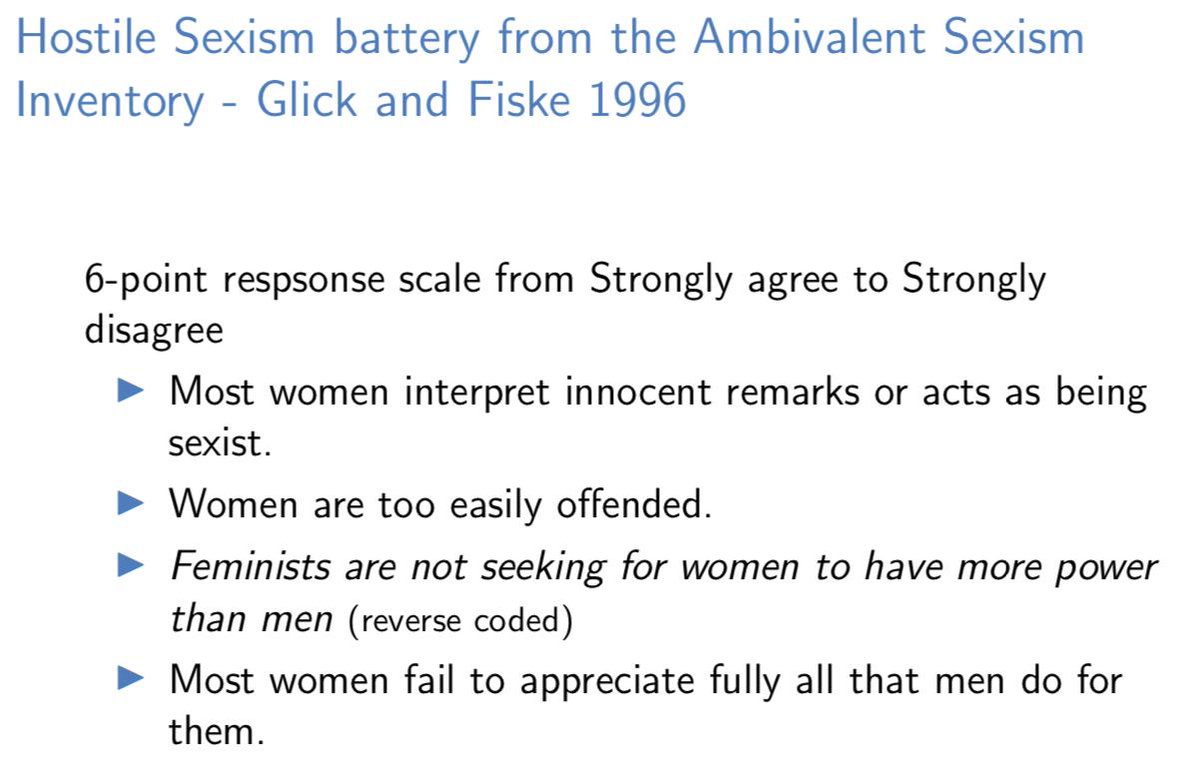
What does this mean? Sexist Ds in the Trump condition are just like sexist Ds in the acquaintance condition (they both give, on avg, sexist responses to items from the hostile sexism scale), but they appear to be more motivated to suppress their sexism when Trump is the source.
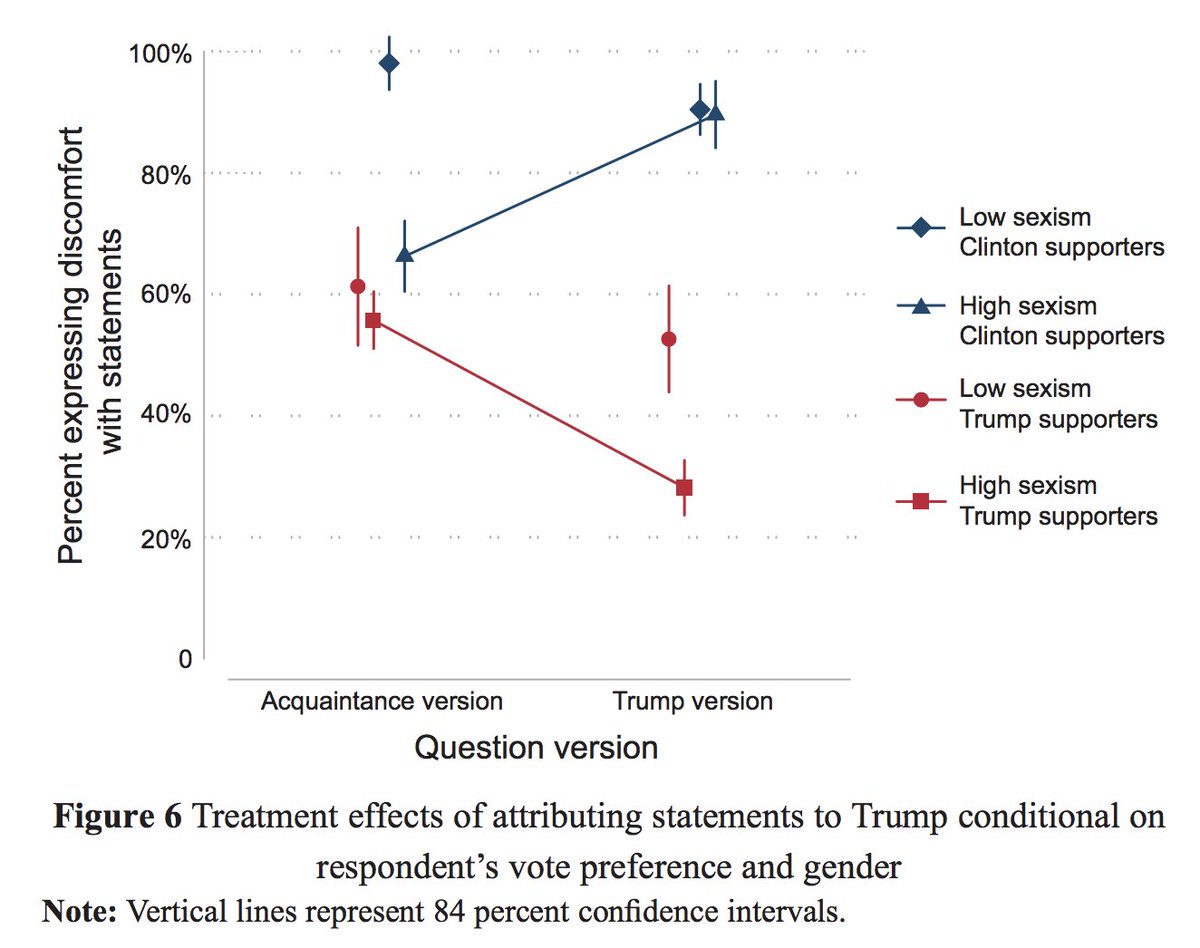
In fact, when the sexist quotes are attributed to Trump, sexist Ds express just as much discomfort with them as non-sexist Ds. The partisan motives by connecting the quotes to Trump essentially erase the differences between sexist and non-sexist Ds.
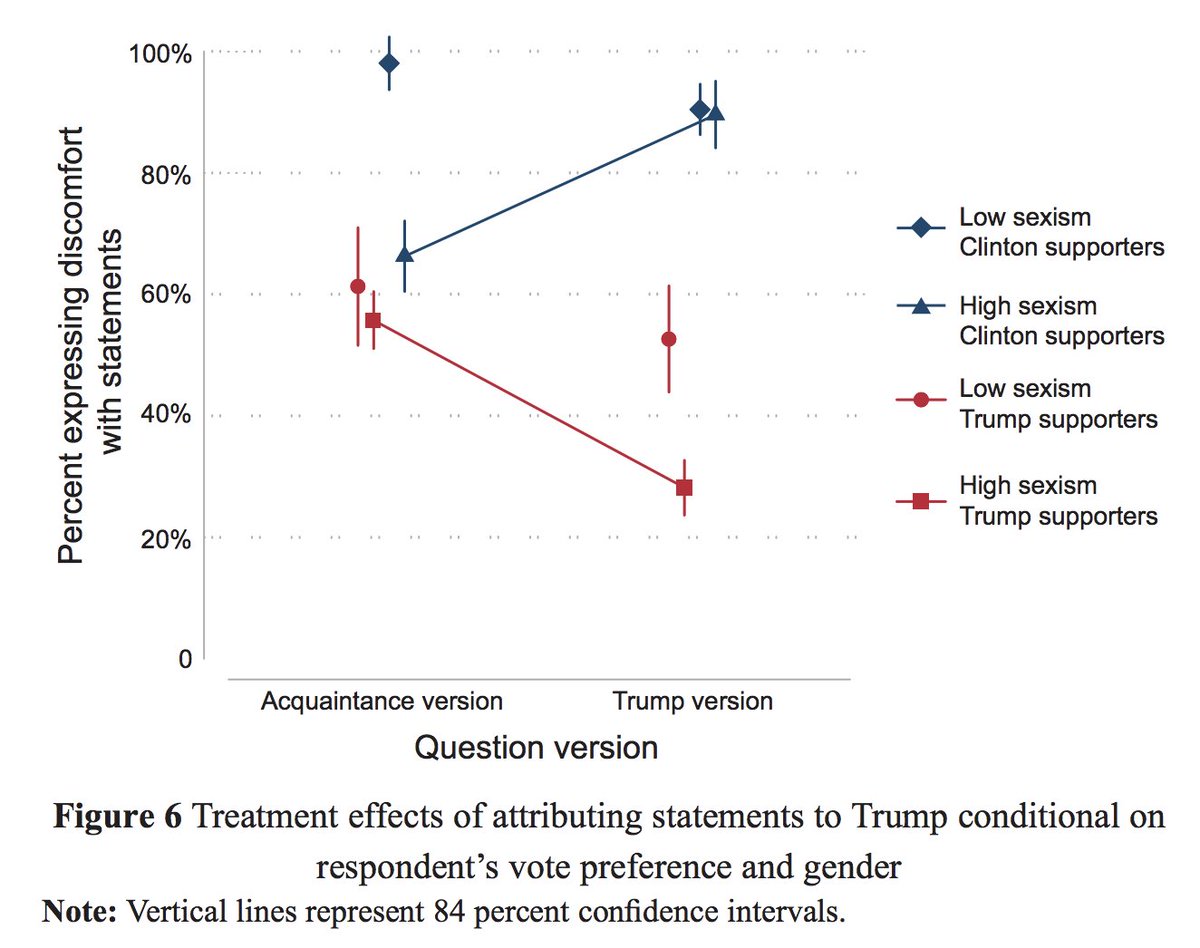
For sexist Rs, when the sexist quotes are attributed to Trump, they express even more tolerance for the remarks than they did in the acquaintance condition. The connection to Trump is motivating them to express even more sexism than they would otherwise!
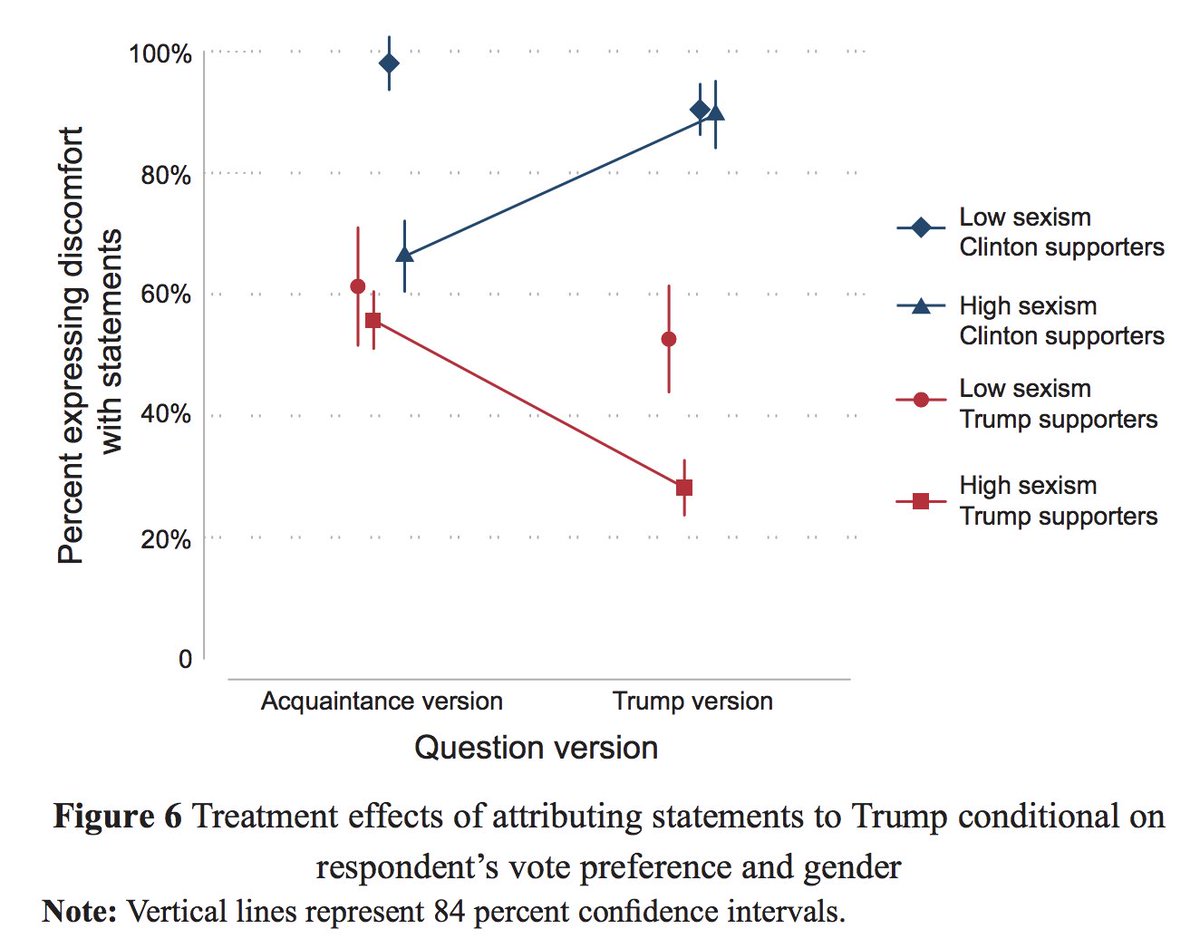
This fits with the broader trends we've seen in surveys. A big part of Trump's brand is the frequent and explicit expression of prejudice. This pushes prejudiced Ds to express more "woke" views while encouraging some Rs to express even more prejudice than they would otherwise.
This is obviously a worrisome pattern. While it does mean a rise in "wokeness" -- whether genuine or expressive -- among some Americans, it also appears to be further fueling identity-based polarization identified by @LilyMasonPhD (& others), with quite troubling consequences.
The full short book is freely available from @CUP_PoliSci for the next 11 days, so access it here if you are interested in reading more: cambridge.org/core/elements/…
• • •
Missing some Tweet in this thread? You can try to
force a refresh