1/15 - “The first days and weeks of the pandemic were crucial. So why was no action taken? Through a six-month investigation in the city, the FT has uncovered the answers.[...] This is the first part of a major Financial Times series. ft.com/content/82574e…
2/15 - “During the investigation, some of the people approached were threatened by police, who said that the FT had come to the city with “malicious intent”, raising doubts about whether Xi Jinping’s administration is really willing to facilitate the impartial investigation.”
3/15 - “For the first three weeks of January, Chinese officials said there were only a few dozen confirmed cases and downplayed the risk of human transmission.”
4/15 - “It was shocking. By the time the situation in Wuhan was totally out of control, other cities just one hour’s drive away were totally unprepared . . . A lot of things could have been avoided if people had only been told the truth about the virus.”
5/15 - “The sudden appearance of Wuhan-linked cases in Bangkok and, a few days later, Tokyo suggested that Wuhan’s official case count, which stayed at only a few dozen through mid-January, was nonsense.”
6/15 - “Yet during this critical week a large annual legislative meeting went ahead and a now infamous pre-Chinese new year dinner, attended by 40,000 families, was held in the city on January 18.”
7/15 - “The Chinese government and the WHO also downplayed growing concerns about whether the disease could be transmitted readily between humans. Zhong Nanshan, a government adviser, finally confirmed on January 20 that the virus could actually spread between people.”
8/15 - “President Xi Jinping’s administration sought to downplay the potential threat of the virus and initially lobbied against “excessive actions”, such as the early declaration of a global health emergency and travel bans aimed at Chinese nationals.”
9/15 - “It’s like David and Goliath, you’ve got big China and you’ve got Tedros . . . there’s an asymmetry of power there.”
10/15 - “The government knew how bad the virus was at an early stage but didn’t give a public warning and chose to cover up the truth. That has cost so many lives.”
11/15 - “Finding the original coronavirus patient — the man, woman or child who ate the bat-bitten cat, pangolin or other as yet undetermined intermediate host — is as difficult as finding the first person to contract a seasonal flu.”
12/15 - ““Patient Zero could be someone who spread to another 30 patients but never knew he was infected.”
13/15 - “The Chinese government, especially at local levels, lacks the ability to effectively communicate with the public in crisis situations.”
14/15 - “One of the biggest mysteries about the initial stages of the pandemic is why Wuhan-sized clusters did not emerge all over the country.”
15/15 - “Every province in China got infected within a month [of the Wuhan outbreak] and [their official case counts] generally settled into triple figures because their lockdowns were harsh. So it did spread across China, but they just shut it down.”
• • •
Missing some Tweet in this thread? You can try to
force a refresh
1/9 - “Denmark, one of the star performers in Europe’s first wave of #COVID19, is having a chastening November and December.” ft.com/content/f99f19…
2/9 - “First came the botched cull of its 17m mink, which continues to have political, legal, economic and environmental repercussions. Then this week Danish PM Mette Frederiksen ordered a second national lockdown from Christmas Day as cases of coronavirus continue to spiral.”
3/9 - “We thought we could manage it the Danish way. The Danish mentality is: when there’s a storm around the world it’s a slight wind in Denmark. We thought we had the magic formula in place.”said Soren Riis Paludan, prof. in the department of biomedicine at Aarhus University.”
2/21 -IMPORTANT NOTE: Without providing explanations @ECDC_EU has decided to stop collecting worldwide data on daily basis. We are therefore no more in position to deliver our daily epidemic forecasting from this European source of data. We'll continue with JHU data (origin: USA)
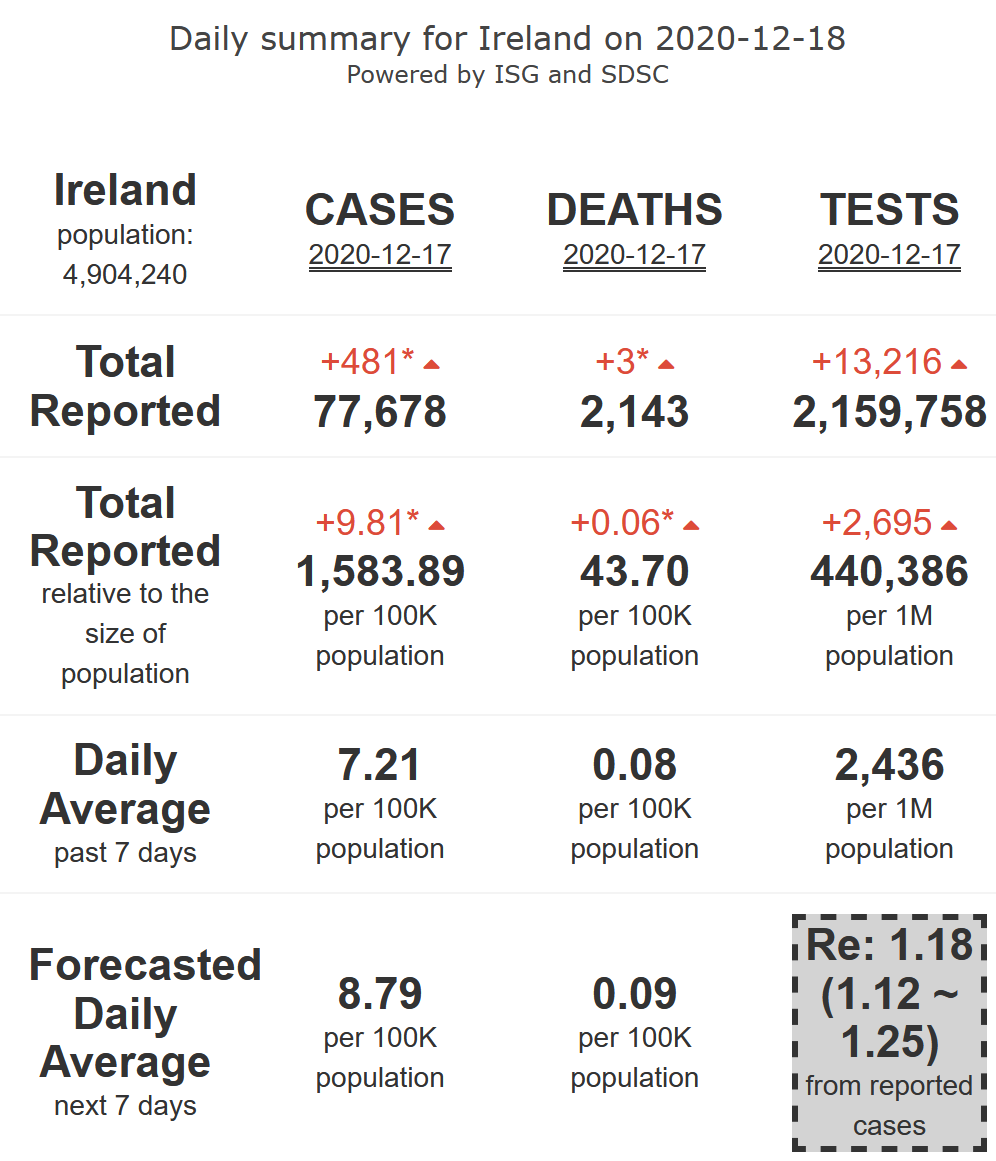
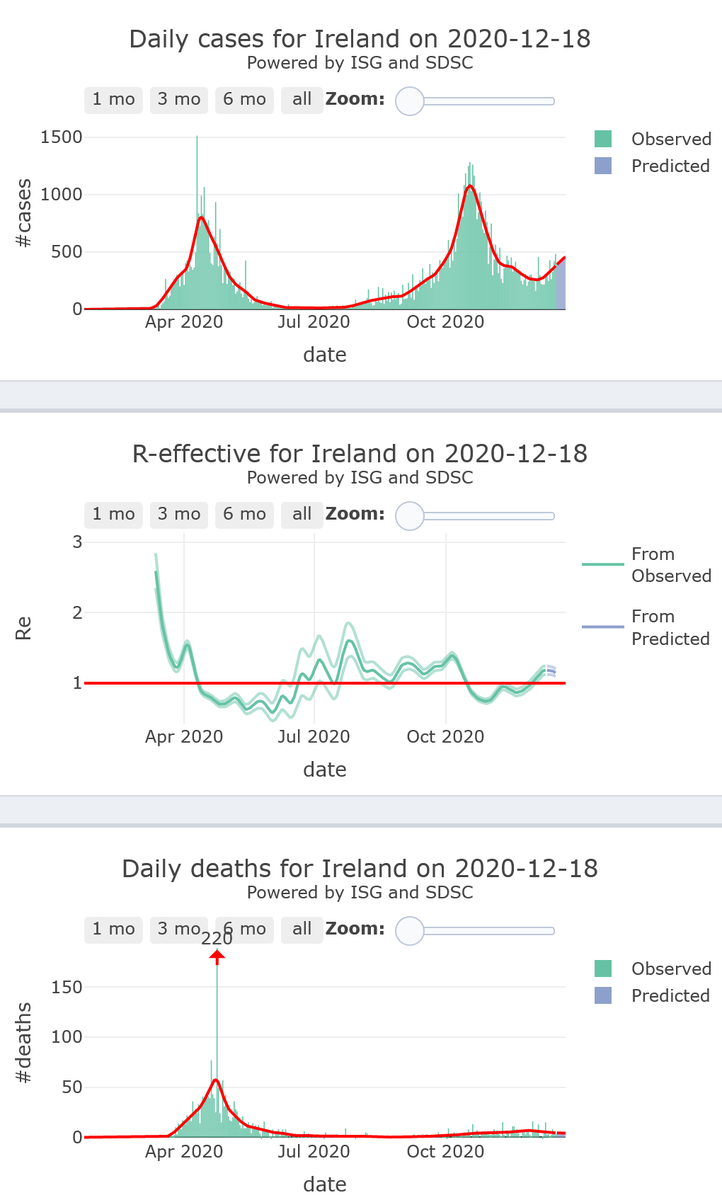
3/21. Ireland is rising again in its #COVID19 epidemic activity (R-eff=1.18), having left its safety zone, at medium level, with low levels of mortality, for 7 more days.
Staggered easing of lockdown restrictions.
0/4 - “What the Trump administration has done to diminish the CDC will take a long time to repair. Even if all four of these suggestions were implemented tomorrow, rebuilding trust in the agency will be a gradual process, taking years of sustained effort.” healthandcommunications.com/articles/rehab
1/4 - “Make the CDC an Independent Federal Agency
There really is no objective argument that can be made to politicize the control and prevention of diseases.”
2/4 - “Appoint the Director from an Independently-Generated Shortlist, Stagger the Director’s Term.
The Director of the CDC, who does not require Senate confirmation, is appointed by the Secretary of Health and Human Services, with the White House making the actual selection.”
1/9 - “Sweden’s king has admitted that the Scandinavian country has failed with its #COVID19 strategy, which has left it with a far higher death toll from the pandemic than its Nordic neighbours.” ft.com/content/d1e581…
2/9 - “Carl XVI Gustaf told Swedes in his annual Christmas address that the country had suffered “enormously in difficult conditions” and that it was “traumatic” that many relatives of the almost 8,000 people to die with #COVID19 had not been able to say goodbye to them.”
3/9 - ““I think we have failed. We have a large number who have died and that is terrible. It is something we all have to suffer with,” the king added.”
2/21 -IMPORTANT NOTE: Without providing explanations @ECDC_EU has decided to stop collecting worldwide data on daily basis. We are therefore no more in position to deliver our daily epidemic forecasting from this European source of data. We'll continue with JHU data (origin: USA)
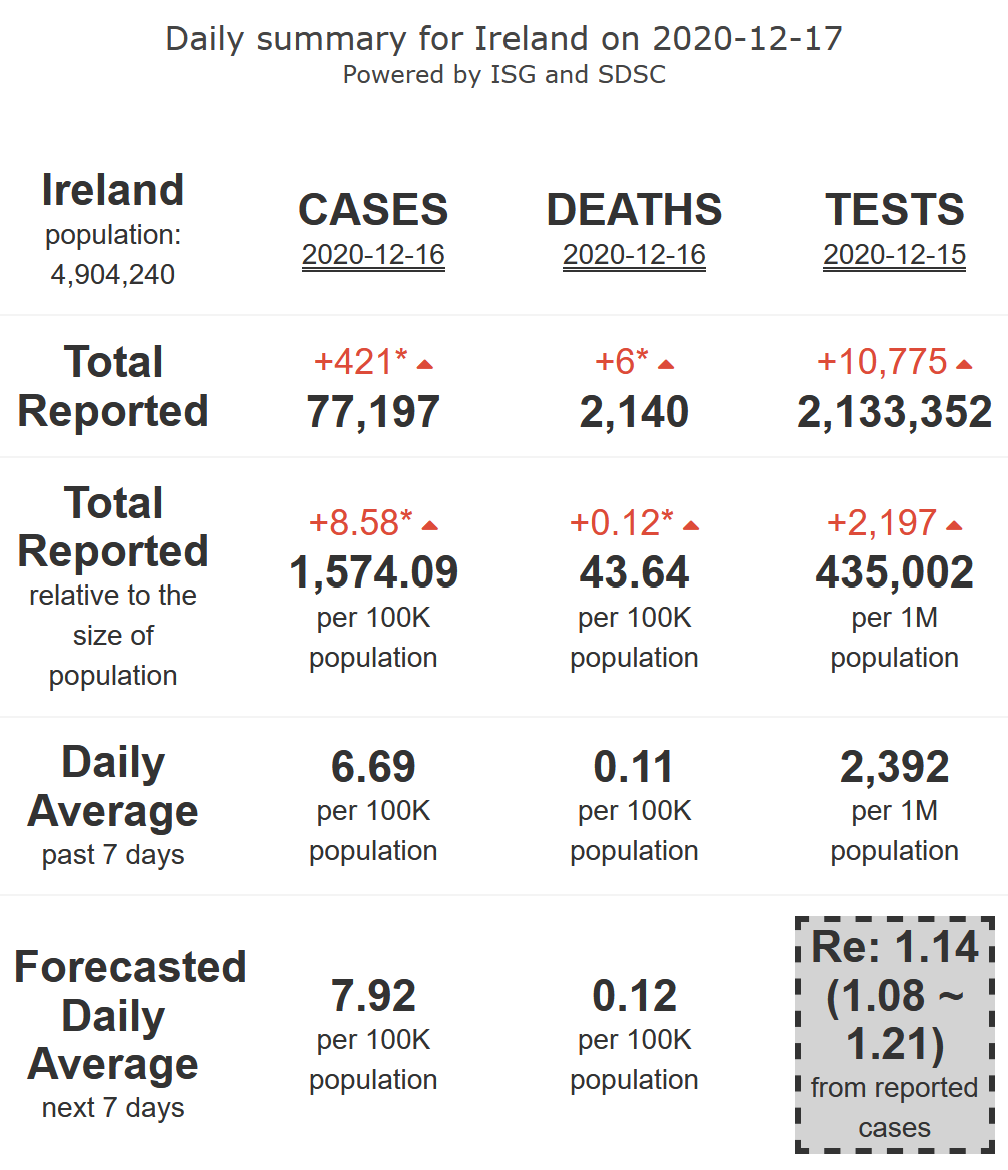
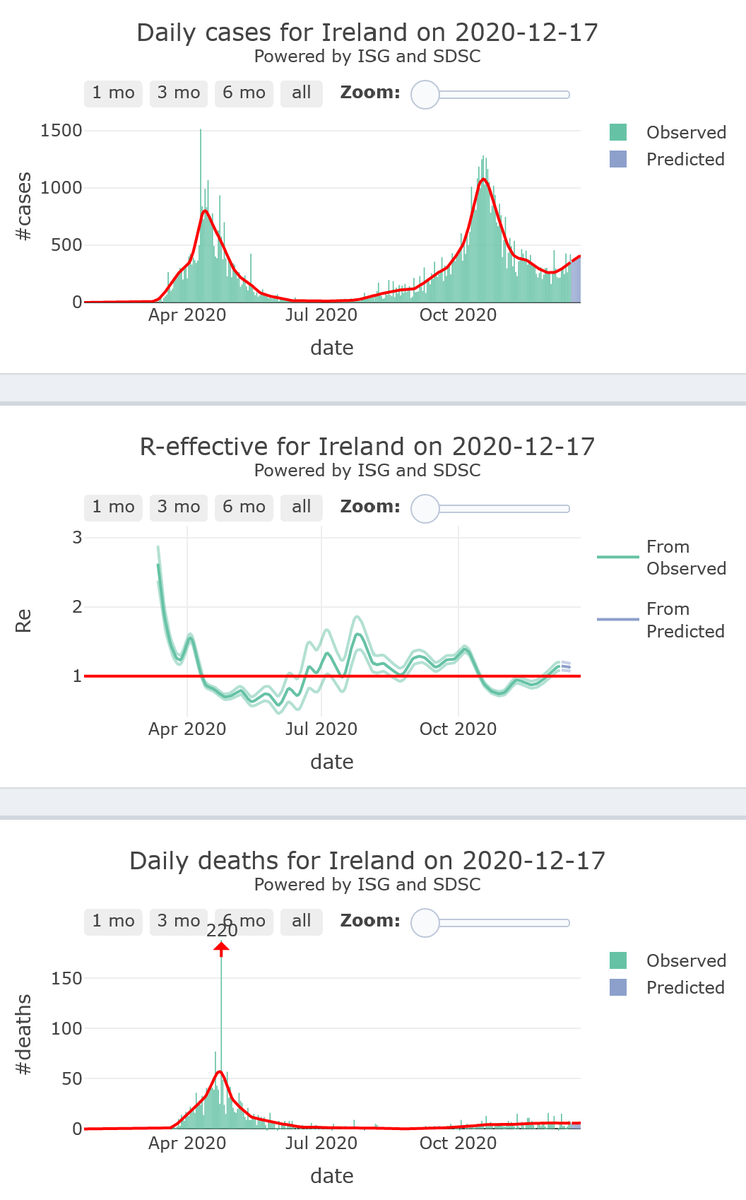
3/21. Ireland is rising again in its #COVID19 epidemic activity (R-eff=1.14), having left its safety zone, at medium level, with medium levels of mortality, for 7 more days.
Staggered easing of lockdown restrictions.
1/7 - “#COVID19 has accelerated the world into the future. Here are five powerful forces that were at work before #COVID19, that intensified during the pandemic and will still affect the world in 2025, and far beyond.” ft.com/content/dd3593…
2/7- “First, technology. The march of computing and communications technology continues to reshape lives and the economy. Now, broadband communications, together with Zoom and similar videoconferencing software, has made it possible for a huge number of people to work from home.”
3/7 - “Second, inequality. Many higher-paid office workers have been able to work from home,while most others could not. In western countries,many of those most adversely affected are also members of ethnic minorities. Meanwhile,many of the those already powerful have prospered.”