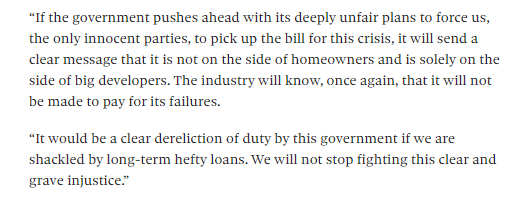
So we have a plan from Labour on cladding ahead of tomorrow's debate and vote on the crisis in the commons tomorrow.
Here is a thread with some explanation and a bit of background reading because who has anything better to do on a Sunday evening right?
Here is a thread with some explanation and a bit of background reading because who has anything better to do on a Sunday evening right?
https://twitter.com/PeteApps/status/1356008693683388417
The approach Labour are calling for is essentially modelled on the approach in Victoria, Australia. This is sensible, because it's the only approach that has even remotely worked. Here's the basics of what the Victoria taskforce does: 
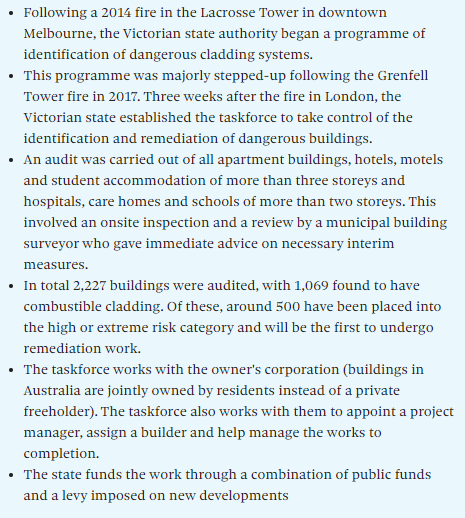
Note with whatever emotion you want to pick on a range of exasperation to utter rage that they set this up ::three weeks:: after Grenfell and we're just now at the stage of the opposition party calling for it, but there we go
If you want more on Australia, I've written about it here I've written about it twice, here (2020) insidehousing.co.uk/insight/insigh… and here (2019) insidehousing.co.uk/insight/insigh…
The point here is that Labour are really calling for a change in approach: Victoria has made the whole of the cladding crisis (from identification to remediation) the state's responsibility to solve. The default position of the UK has been to limit the scope and delegate
I tried to explain that in this (lengthy) piece from June which spoke to everyone I could find who has been behind the scenes with MHCLG. Our govt has wanted a quick fix to an easy problem and has simply refused to take control at a central govt level
insidehousing.co.uk/insight/insigh…
insidehousing.co.uk/insight/insigh…
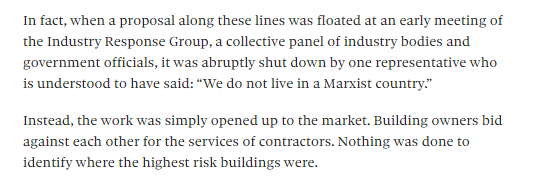
(A nugget: the taskforce-style idea was originally knocked down by some wag who said "we don't live in a Marxist country")
One of the key missing elements of this failure to take central control is the lack of good data on the scale of the problem or any genuine effort to prioritise buildings by risk. Instead we rely on advice notes telling building owners to basically get on with it.
So rather than pinning down the (eg) 500 worst fire traps and stripping the cladding off as fast as humanly possible, you have thousands of buildings fighting it out a scrap of public funding which is allocated first come, first served
We're in the absolutely ludicrous position that a building with a thin strip of ACM cladding will get taxpayer funding and a building with floor to ceiling polystyrene might well miss out despite both materials being similarly awful in fire tests
The govt did have a go at gathering this data in 2019, but it consisted of telling under-resourced local authorities to email building owners and ask what sort of cladding they have. Surprisingly, hasn't worked out very well: insidehousing.co.uk/insight/insigh…
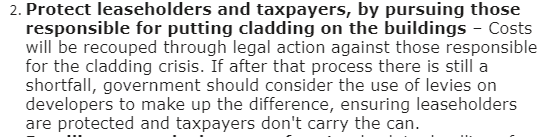
I do have some criticisms of Labour's position: they aren't very clear on how they would protect both the taxpayer and leaseholders from the cost. Legal action is not going to do it. 'Considering' levies isn't really strong enough
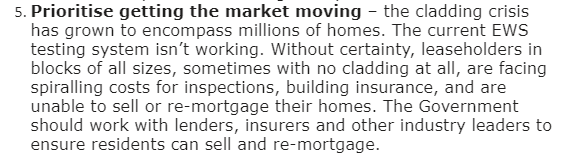
Also, they have evidently not yet worked out an easy way out of the EWS/mortgage freeze debacle beyond just saying 'this shouldn't happen'. But I can't go particularly hard on them for that, because I don't have any better ideas and neither does anyone else
Anyway a reminder: the vote tomorrow is largely symbolic, the point is Labour has decided to make a big thing of this fight and that will play out over the next few months not just tomorrow.
ALSO - gratifying the extent to which Labour's thinking is aligned with EOCS campaigning and a lot of the themes in IH's coverage generally. Obviously many others saying the same stuff, but it's good to know we're contributing to the old marketplace of ideas.
Also also - I'm aware of the political reasons why they are cautious on the solutions front. They're opposition, time in the political cycle, make it hard for govt to oppose yadda yadda yadda. Its still my job to point out the bits that are less strong.
• • •
Missing some Tweet in this thread? You can try to
force a refresh