Qwest - Wikipedia
In 2002, Qwest agreed to sell its directory operations, QwestDex, to private equity firms The Carlyle Group and Welsh, Carson, Anderson & Stowe for $7 billion. The sale allowed Qwest to generate cash to fend off a bankruptcy filing to en.wikipedia.org/wiki/Qwest
In 2002, Qwest agreed to sell its directory operations, QwestDex, to private equity firms The Carlyle Group and Welsh, Carson, Anderson & Stowe for $7 billion. The sale allowed Qwest to generate cash to fend off a bankruptcy filing to en.wikipedia.org/wiki/Qwest
After two years, Villalpando left government service again and, in August 1985, took up the position of senior vice president – as well as partner and large shareholder – at Communications International, Inc. (CII), a Norcross, Georgia-based telecommunications firm.[6][10] CII
was run by its founder, Joseph Profit, a former Atlanta Falcons running back and popular businessman in Georgia who had served in various appointed capacities in the Reagan Administration and, later, the first Bush Administration. Villalpando was one of several high-profile
Republicans that Profit brought on board who helped the company garner millions in federal contracts.
Founded in 1996 by Philip Anschutz, Qwest began in an unconventional way. Anschutz, who owned the Southern Pacific Railroad at the time, established the subsidiary Southern
Founded in 1996 by Philip Anschutz, Qwest began in an unconventional way. Anschutz, who owned the Southern Pacific Railroad at the time, established the subsidiary Southern
Pacific Telecommunications Company and began installing the first[where?][citation needed] all-digital, fiber-optic infrastructure along his railroad lines and connecting them into central junctions in strategic locations to serve businesses with high-speed data and T1 services.
In 1997, the Southern Pacific Railroad was merged into the Union Pacific, in which Qwest gained access to UP's railroad lines to lay fiber-optic cable for its telecom network. At that time Anschutz had a contract with MCI to lay nationwide fiber for them along the railway lines;
he took advantage of this situation and laid his own fiber along with that of MCI. In 1995, SP Telecom moved from San Francisco to Denver after acquiring Dallas-based Qwest Communications Corp., a digital microwave system owner, taking over its name and facilities. The Qwest
headquarters were at 555 17th Street.
The Sprint Corporation traces its origins to two companies, the Brown Telephone Company and Southern Pacific Railroad.[14]
Brown Telephone Company
Edit
Brown Telephone Company was founded in 1899 by Cleyson Brown, to deploy the first
The Sprint Corporation traces its origins to two companies, the Brown Telephone Company and Southern Pacific Railroad.[14]
Brown Telephone Company
Edit
Brown Telephone Company was founded in 1899 by Cleyson Brown, to deploy the first
telephone service to the rural area around Abilene, Kansas.
The Browns installed their first long-distance circuit in 1900 and became an alternative to the Bell Telephone Company, the most popular telephone service at the time.[citation needed] In 1911, C. L. Brown consolidated
The Browns installed their first long-distance circuit in 1900 and became an alternative to the Bell Telephone Company, the most popular telephone service at the time.[citation needed] In 1911, C. L. Brown consolidated
the Brown Telephone Company with three other independents to form the United Telephone Company.[16] C. L. Brown formed United Telephone and Electric (UT&E) in 1925. In 1939, at the end of the Great Depression, UT&E reorganized to form United Utilities.[
In 1964, Paul H. Henson became president of United Utilities; two years later, he was named chairman.[17] When Henson began working at the company in 1959, it had 575,000 telephones in 15 states and revenues of $65 million.[18][19][17] Henson is credited with creating the first
major fiber optic network, having recognized it as a way to handle more calls and provide better quality sound.[17]
In 1972, United Utilities changed its name to United Telecommunications.[
In 1972, United Utilities changed its name to United Telecommunications.[
Sprint also traces its roots back to the Southern Pacific Railroad (SPR), which was founded in the 1860s as a subsidiary of the Southern Pacific Company (SPC).
By the mid 1970s, SPC was beginning to take business away from AT&T, which held a monopoly at the time.[14] A number
By the mid 1970s, SPC was beginning to take business away from AT&T, which held a monopoly at the time.[14] A number
of lawsuits between SPC and AT&T took place throughout the 1970s; the majority were decided in favor of increased competition.[20] Prior attempts at offering long-distance voice services had not been approved by the U.S. Federal Communications Commission (FCC), although a fax
service (called SpeedFAX) was permitted.
In 1982, it was announced that GTE Corp. had reached an agreement to buy SPC's long-distance telephone operation, including Sprint. The deal was later finalized in 1983.[23][24]
In 1986, GTE Sprint merged with the United Telecommunications Inc. property, US Telecom.[25]
In 1986, GTE Sprint merged with the United Telecommunications Inc. property, US Telecom.[25]
The joint venture was to be co-owned by GTE and United Telecom named US Sprint Communications.
In 1993, Sprint entered into a strategic alliance with Call-Net Enterprises, a Canadian long-distance service, and bought 25 percent of the company.[
In 1993, Sprint entered into a strategic alliance with Call-Net Enterprises, a Canadian long-distance service, and bought 25 percent of the company.[
In 2005, Call-Net and Sprint Canada's 600,000 customers were acquired by Rogers Communications.
In March 1993, Sprint merged with Chicago's Centel Corp. Centel remained in the Chicago area and was renamed Sprint Cellular Co.
In March 1993, Sprint merged with Chicago's Centel Corp. Centel remained in the Chicago area and was renamed Sprint Cellular Co.
In 1994, Sprint spun off their existing cellular operations as 360° Communications to comply with an FCC regulatory mandate.[33] In 1998, 360 Communications was acquired by Alltel,[34] which was in turn acquired by Verizon in 2009.[
In September 1996, Sprint announced a deal with RadioShack, and in 1997, Sprint stores opened at RadioShack to offer communications services and products across the United States.[38]
On October 5, 1999, Sprint and MCI WorldCom announced a $129 billion merger agreement between
On October 5, 1999, Sprint and MCI WorldCom announced a $129 billion merger agreement between
the two companies. In 1999, Sprint began recombining its local telecom, long-distance, wireline, and wireless business units into a new company, in an initiative known internally as "One Sprint". In April 2004, the separately traded wireless tracking stock PCS was absorbed into
the New York Stock Exchange FON ticker symbol, Sprint's former ticker symbol (FON stood for "Fiber Optic Network", but was also a homophone of the word "phone").
Rooted in the successful 1945 launch of the centrist daily, Clarín, by the late Roberto Noble, the group is active
Rooted in the successful 1945 launch of the centrist daily, Clarín, by the late Roberto Noble, the group is active
within the publishing, newspaper, television, radio, and telecommunications industries. Its largest shareholder is Ernestina Herrera de Noble. Other major shareholders include Héctor Magnetto, José Antonio Aranda, Lucio Rafael Pagliaro, and the investment bank Goldman Sachs.
After the Sprint-Nextel merger, the company maintained an executive headquarters in Reston, Virginia and operational headquarters in Overland Park, Kansas.
On October 14, 2012, the Japanese telecommunications company SoftBank announced it intended to purchase 70% of Sprint
On October 14, 2012, the Japanese telecommunications company SoftBank announced it intended to purchase 70% of Sprint
Nextel Corporation for $20.1 billion.
SoftBank Group Corp.[6][7] is a Japanese multinational conglomerate holding company headquartered in Minato, Tokyo. SoftBank owns stakes in many technology, energy, and financial companies. It also runs Vision Fund, the world's largest
SoftBank Group Corp.[6][7] is a Japanese multinational conglomerate holding company headquartered in Minato, Tokyo. SoftBank owns stakes in many technology, energy, and financial companies. It also runs Vision Fund, the world's largest

technology-focused venture capital fund, with over $100 billion in capital.
SoftBank was founded in September 1981 as a SOFTBANK Corp. by then-24-year-old Masayoshi Son, originally as a software distributor. They went into the publishing business in May 1982 with the launches
SoftBank was founded in September 1981 as a SOFTBANK Corp. by then-24-year-old Masayoshi Son, originally as a software distributor. They went into the publishing business in May 1982 with the launches
of the Oh! PC and Oh! MZ magazines, about NEC and Sharp computers respectively.[15] Oh!PC had a circulation of 140,000 copies by 1989.[16] It would go on to become Japan's largest publisher of computer and technology magazines and of trade shows.
In 1994, the company went public
In 1994, the company went public
and was valued at $3 billion.[16] In September 1995, SoftBank agreed to purchase US-based Ziff Davis publishing for $2.1 billion.
SoftBank bought COMDEX from The Interface Group on 1 April 1995 for $800 million, and ZDI on 29 February 1996.[18][19] SoftBank sold COMDEX to
SoftBank bought COMDEX from The Interface Group on 1 April 1995 for $800 million, and ZDI on 29 February 1996.[18][19] SoftBank sold COMDEX to
Key3Media, a spin-off of Ziff Davis, in 2001.
The company was founded by William B. Ziff Company publisher Bill Ziff Sr. with Bernard Davis. Upon Bill Ziff's death in 1953,[1] William B. Ziff Jr., his son, returned from Germany to lead the company. In 1958, Bernard Davis sold
The company was founded by William B. Ziff Company publisher Bill Ziff Sr. with Bernard Davis. Upon Bill Ziff's death in 1953,[1] William B. Ziff Jr., his son, returned from Germany to lead the company. In 1958, Bernard Davis sold
Ziff Jr. his share of Ziff Davis to found Davis Publications, Inc.;[2] Ziff Davis continued to use the Davis surname as Ziff-Davis.[
From 1999 through 2000, as part of an effort to restructure Ziff-Davis Inc, SoftBank would sell ZDTV to Paul Allen's Vulcan Inc. which would
From 1999 through 2000, as part of an effort to restructure Ziff-Davis Inc, SoftBank would sell ZDTV to Paul Allen's Vulcan Inc. which would
later be renamed to TechTV, and spin off ZD and ZDNet.
Vulcan Northwest was formed in Bellevue, Washington in 1986 to manage the business affairs, investments, and philanthropic affairs of Paul Allen.
Vulcan Northwest was formed in Bellevue, Washington in 1986 to manage the business affairs, investments, and philanthropic affairs of Paul Allen.
Paul Allen and Vulcan Inc. 4INFO, Alibaba Group, Charter Communications, DreamWorks, Magic Leap, Redfin and Tri Alpha Energy, Inc. are among the companies Vulcan Capital has invested in.[16][17] Vulcan Capital's CEO is Jo Allen Patton.[
The idea of a modern census was devised by Elephants Without Borders and supported, both financially and logistically, by Paul G. Allen. It was also supported by other organizations and individuals, including African Parks, Frankfurt Zoological Society, Wildlife Conservation
Society, The Nature Conservancy, IUCN African Elephant Specialist Group, Howard Frederick, Mike Norton-Griffith, Kevin Dunham, Chris Touless, and Curtice Griffin with the report released in September 2016.
Prior to the survey, many countries had not conducted surveying flights in as many as 10 years. Dozens of researchers flying in small planes captured comprehensive observational data of elephants and elephant carcasses.[41] The census was completed in 2016
. To establish itself in foreign markets, Ziff Davis asks its local partner to hold events. Popular past events include IGN Convention Bahrain, Abu Dhabi, and Qatar.[41]
In September 2019, Ziff Davis acquired Spiceworks.
In September 2019, Ziff Davis acquired Spiceworks.
The company was formed in January 2006 by Scott Abel, Jay Hallberg, Greg Kattawar and Francis Sullivan,[3] former executives at Motive.[4][10][11] The group had originally gathered in 2005, envisioning a social methodology in which to do IT.
The official mascot for Spicework is "SpiceRex."[27] SpiceRex is an orange Tyrannosaurus rex. The creation was a result of Spiceworks community member, IT pro, and blogger Andy "akp982" Phelps.
Spiceworks has hosted SpiceWorld, a conference for its users, every year since 2008.[11][29] The conference was originally held at the Alamo Drafthouse movie theater.[29] The conference later moved to the AT&T Executive Education & Conference Center at the University of Texas.
Starting with SpiceWorld 2013 and on, the conferences have been held at the Austin Convention Center.
With a growing international community, Spiceworks opened up a London office in 2012. The first SpiceWorld London took place in May 2012 in Vinopolis in London's Bankside.
With a growing international community, Spiceworks opened up a London office in 2012. The first SpiceWorld London took place in May 2012 in Vinopolis in London's Bankside.
In the Elizabethan period, because of its location outside the jurisdiction of the City of London, the area of the Clink and Paris Garden were outside of the City of London's authority and so became occupied by the bear baiting pits and playhouses, including the Rose, the Hope
Theatre, the Swan and the Globe Theatre of which a replica was constructed in the late 1990s
The Bankside Farmers were a group of five men who established themselves along the Long Island Sound south of Fairfield, Connecticut in 1648. The area is now known as Greens Farms, a section of Westport, Connecticut.
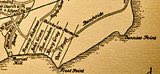
In 1648 the Town of Fairfield officially gave five farmers, collectively known as the Bankside Farmers, permission to settle the fertile land that the Pequot people were living in.The Bankside Farmers purchased the land from the Pequot who called it Machamux ("beautiful land")
The land that the Pequot sold, then within the original boundaries of the Town of Fairfield, stretched from "Frost Point an English mile along the seacoast toward Compaw, and six or seven miles inland."[4] The Pequot moved to an area "elevated back east of this strip".[4]
The first three settlers were Thomas Newton, Henry Gray and John Green. Daniel Frost and Francis Andrews later joined the Bankside Farmers making five in total.
Over the next 50 years, more land was bought from the Indians and the community grew. In 1711 the "West Parish of
Over the next 50 years, more land was bought from the Indians and the community grew. In 1711 the "West Parish of
Fairfield" was established with church and civil functions. In 1732, the area was renamed "Green's Farms" in honor of John Green, one of the original five Bankside Farmers.
During the American Revolution, British soldiers burned down the Meeting House in a raid that also destroyed 15 houses and 11 barns.[1] The only church property saved was the communion service that Deacon Ebenezer Jesup rescued by hiding it in his well. For the next 10 years,
members of the church met in private homes. In 1789 a new church building was erected at the church's current site at Hillandale Road. To raise money, pews were auctioned off. That building was replaced and, in April 1852, a fire forced another replacement the next year.[7]
Burial Hill Beach was acquired by the Town of Westport in 1893.
In 1950, strong winds toppled the Congregational Church steeple, sending it through the roof of the Sunday School room, now the church parlor. The repair effort was expanded to include lighting for the steeple and
In 1950, strong winds toppled the Congregational Church steeple, sending it through the roof of the Sunday School room, now the church parlor. The repair effort was expanded to include lighting for the steeple and
a new Sunday School room which would double as a church social hall and the construction of a Sunday School wing. In 1961, the present social hall was added, together with more classrooms, a church office, ministers' offices and a choir room
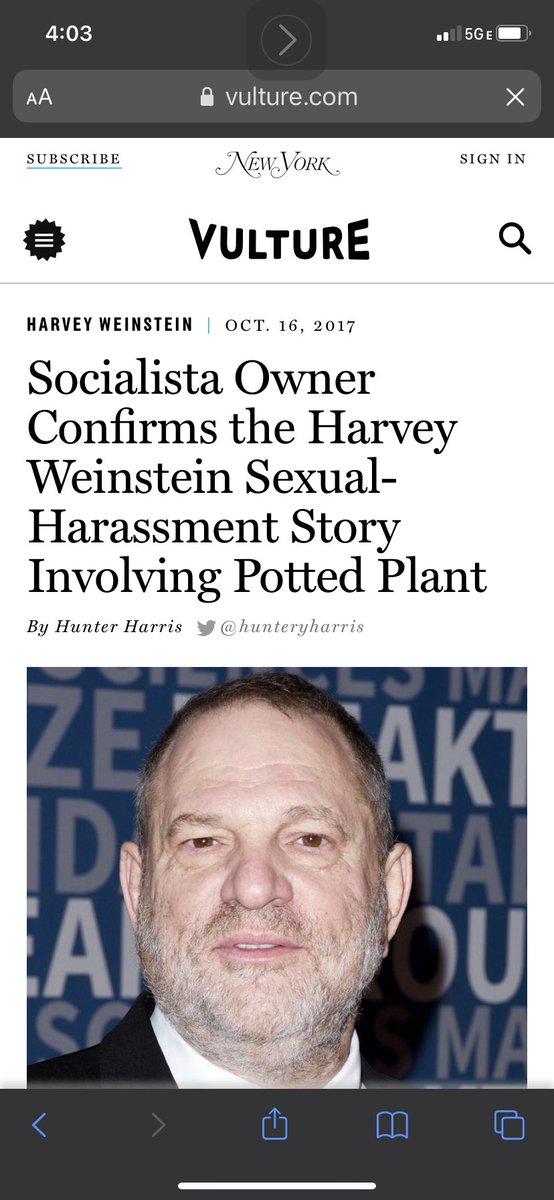
Famous residents of the neighborhood include or included actress Gene Tierney, writer Peter Straub, Marlo Thomas, Phil Donahue, comedian Rodney Dangerfield, film producer Harvey Weinstein and the radio talk-show host Don Imus. Martha Stewart once owned a home on Turkey Hill Road,
from which she taped a television program, but she moved after long-running controversies about the effect of her television production business on the neighborhood.


• • •
Missing some Tweet in this thread? You can try to
force a refresh