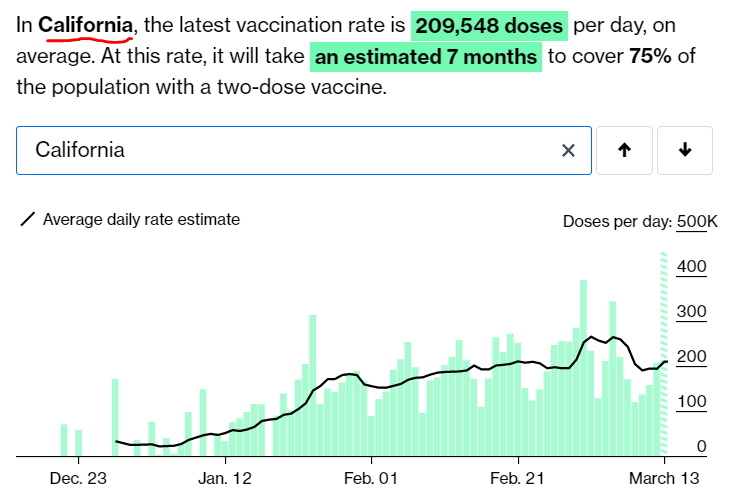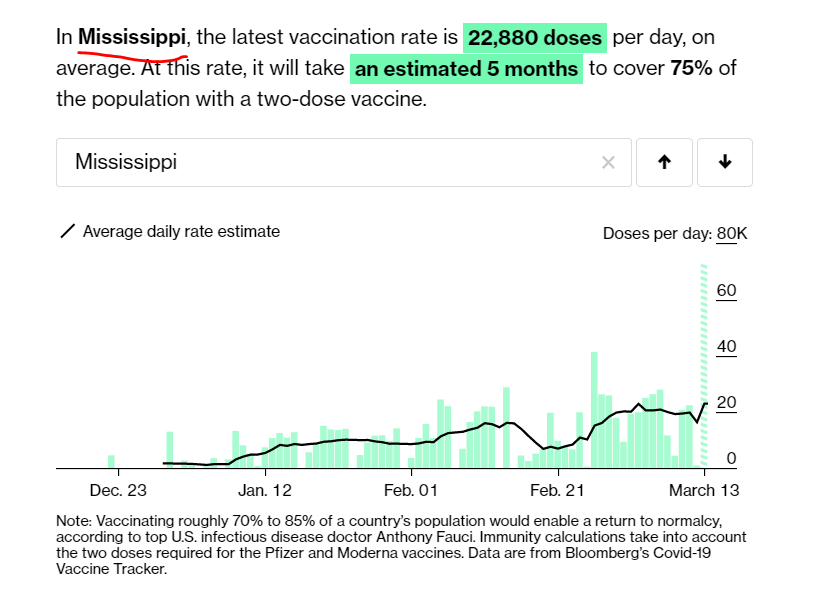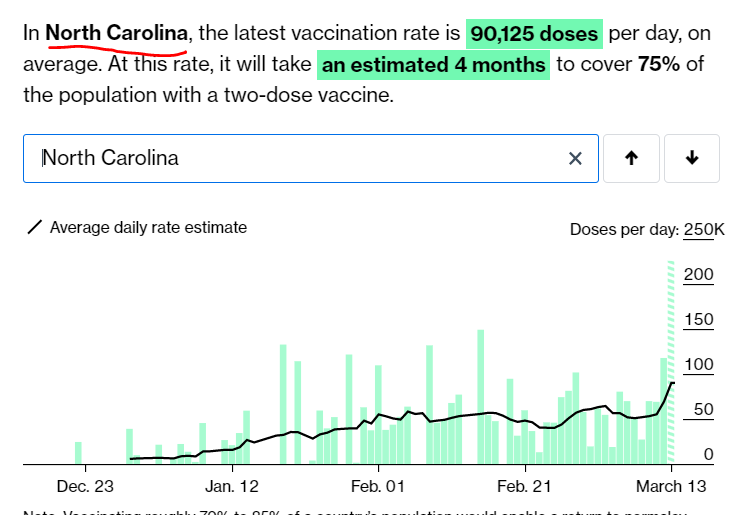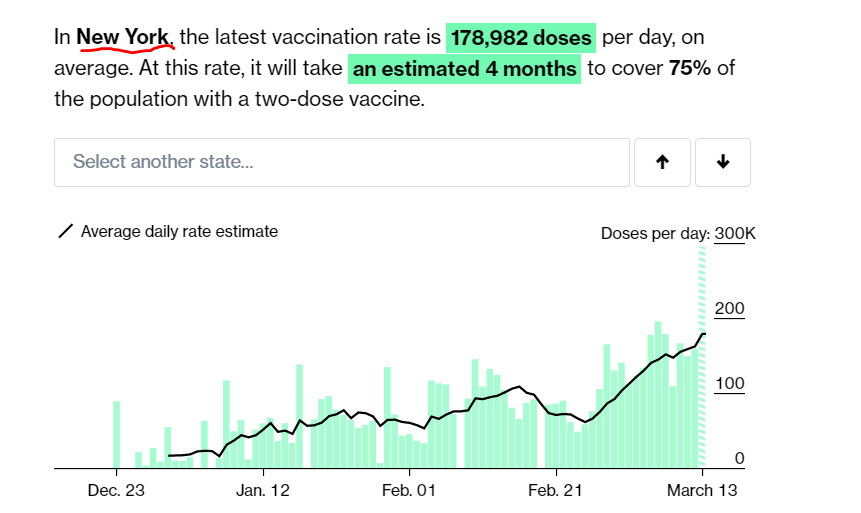
💉VACCINE DATA UPDATE (March 12)💉
⭐️The U.S. has crossed the 100M-dose mark, less than 3 months into the vaccination campaign
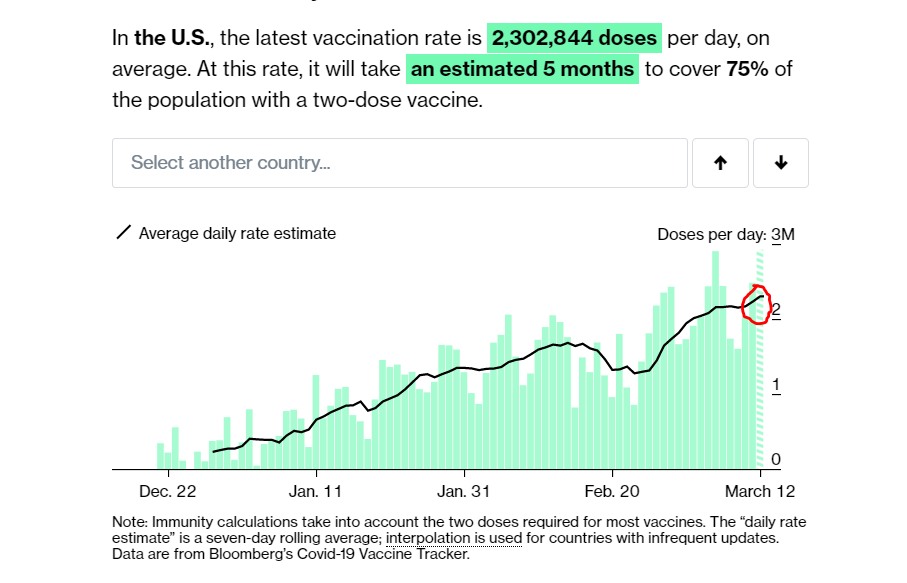
📊2.9M doses today; 7-day avg=2.3M/day
🇺🇸US: 101M doses total
👨👩👧👦66M people w/ at least 1 dose
Full data: bloomberg.com/graphics/covid…
⭐️The U.S. has crossed the 100M-dose mark, less than 3 months into the vaccination campaign
📊2.9M doses today; 7-day avg=2.3M/day
🇺🇸US: 101M doses total
👨👩👧👦66M people w/ at least 1 dose
Full data: bloomberg.com/graphics/covid…

(Deleted prior tweet w/ the XXXX templated material)
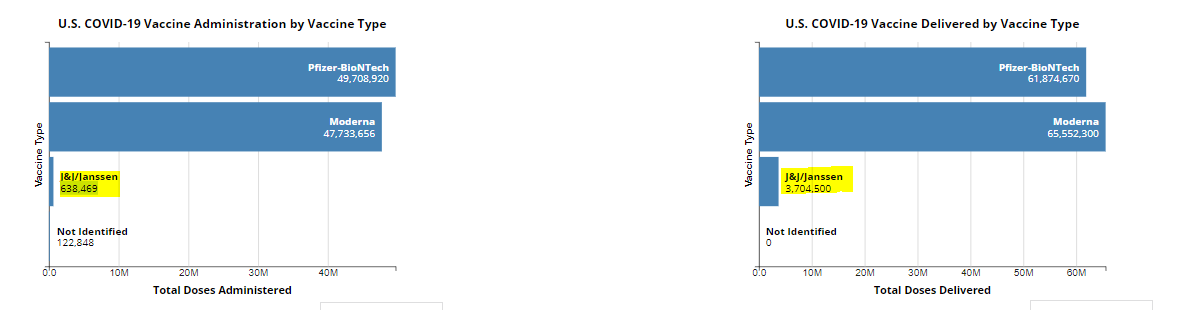
In the U.S. numbers, there certainly could be the start of another inflection. It's unclear, for now. But with J&J doses, plus more Pfizer + Moderna coming online, it's very possible. Watch this angle:
I'd encourage people to look at the rest of our data. At this point, most of the work we put in is collecting international reports (which is much more challenging than in the U.S., now).
bloomberg.com/graphics/covid…
bloomberg.com/graphics/covid…
Many countries have not had the success that the U.S. has. The EU was just told by AstraZeneca that it won't get its planned supply -- which is a reminder as well of what could quite easily go wrong here, too.
astrazeneca.com/content/astraz…
astrazeneca.com/content/astraz…
• • •
Missing some Tweet in this thread? You can try to
force a refresh