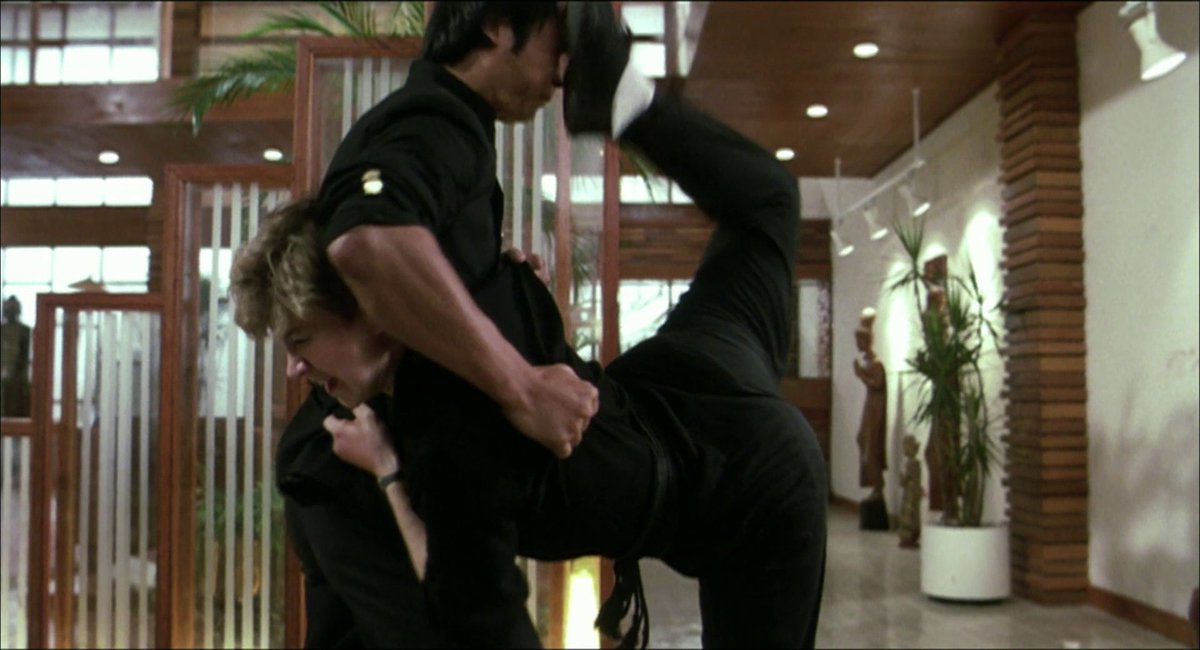
What makes Hong Kong action movies so compelling? Why do we feel supercharged after watching them? To me, it's a combination of musical editing, impact-focused images, and the constant renewal of camera set-ups. Let's take a short example from YES, MADAM! (Corey Yuen, 1985):
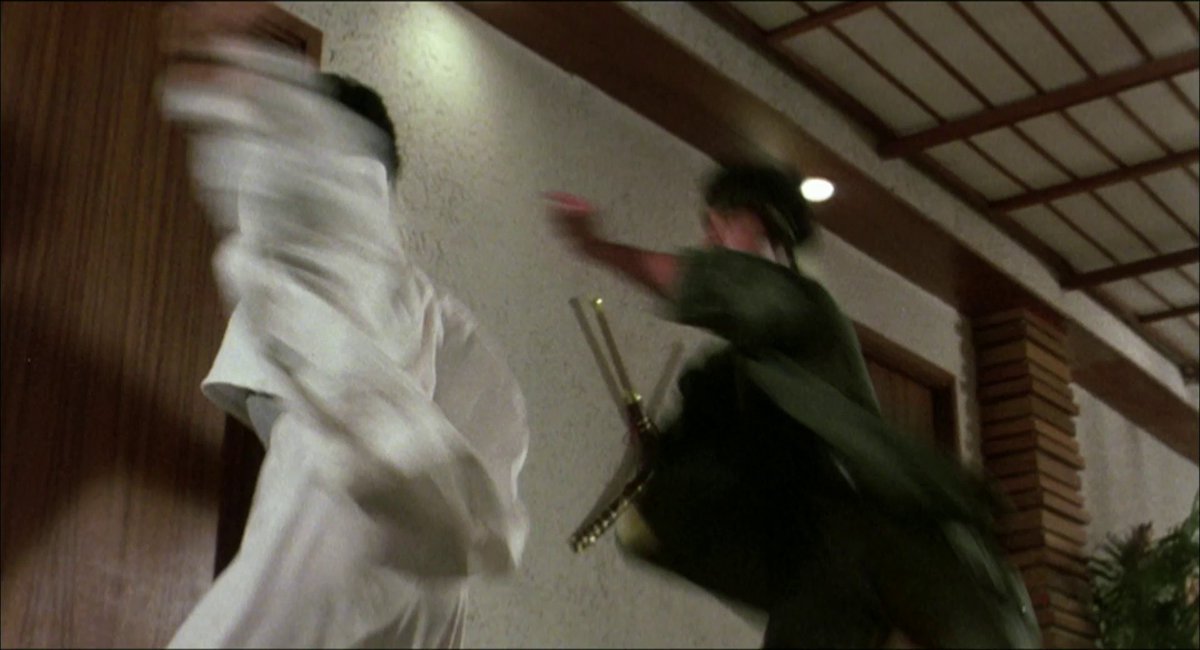
The visual phrase dedicated to Cynthia Rothrock's fight ends with her impressive back kick to Dick Wei's face. With Corey Yuen, when a visual phrase ends, contrast is used to kick-start the following one. We left Cynthia on a horizontal slo-mo shot, meaning we jump to Michelle... ImageImageImageImage
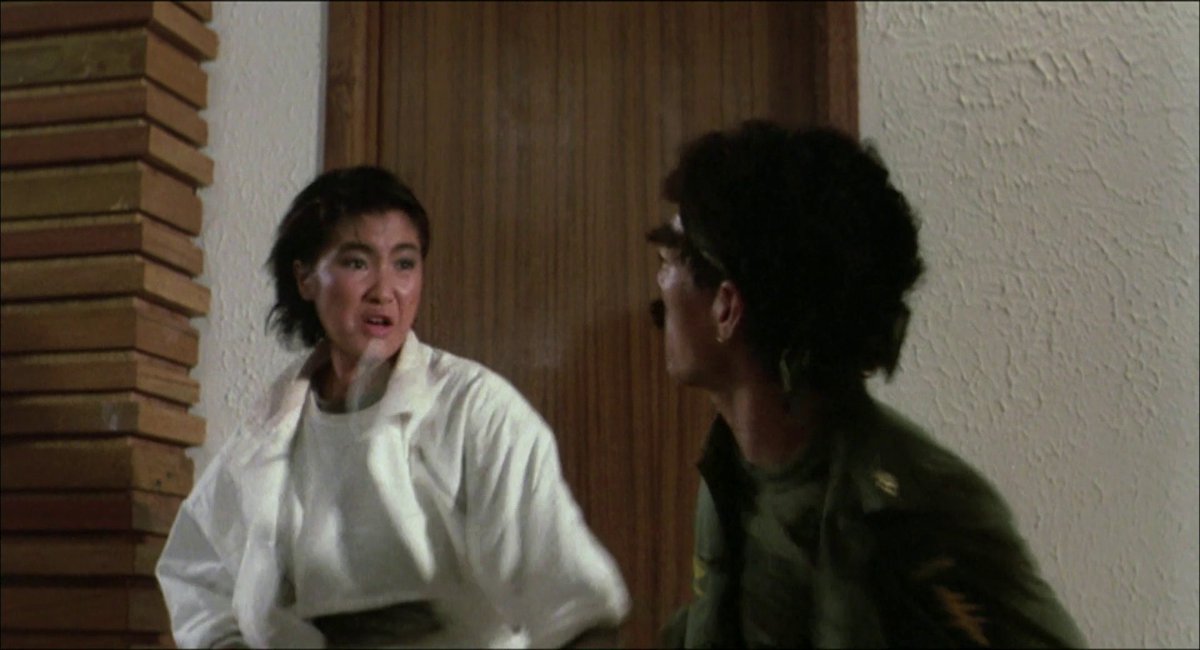
Yeoh's fight with a standard-speed, low-angle shot. The images contrast, but the movement is continuous: the last Cynthia frame and the first Michelle frame are similarly composed in terms of blocking, and the momentum is never lost. This creates a sense of continuity through... ImageImage
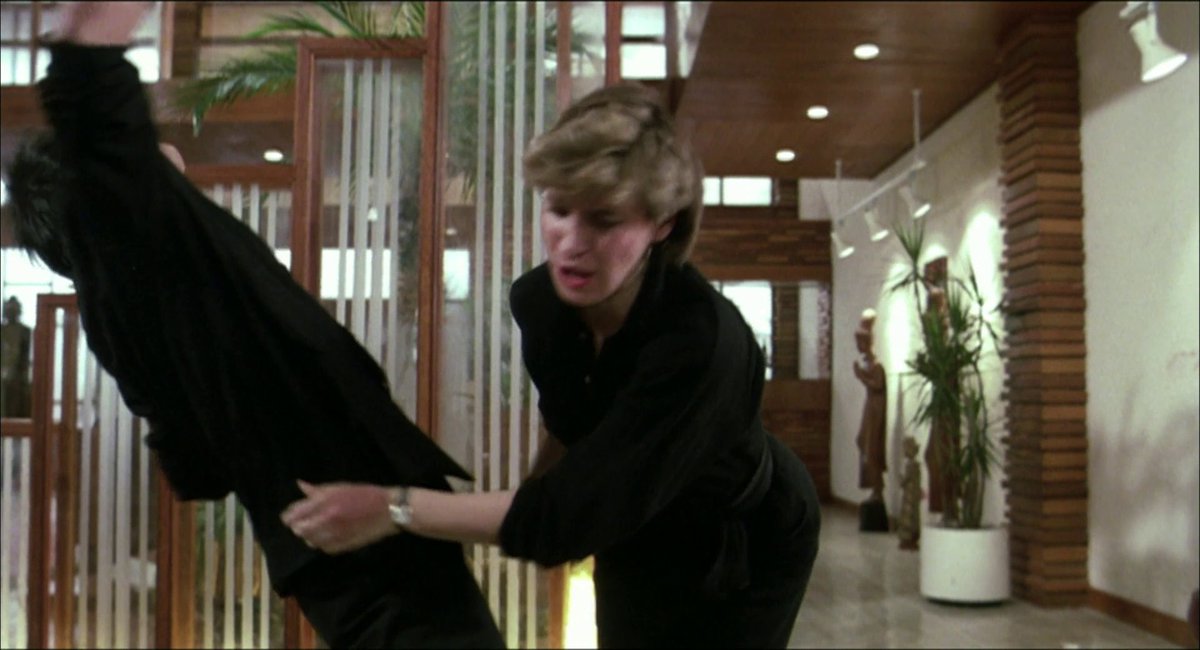
...the kinetic aspect of the images. Things are moving and we're jumping around, but everything remains crystal clear because each shot maintains complete legibility, and the editing uses contrasted parallel cuts to transition between places. Then, most importantly, each shot...
...leads into the next, and a different set-up is used for every shot. This is absolutely essential, and Corey Yuen used to do this often. Not one set-up is used twice (or if they are, very rarely, then far apart). There is no master shot split up by inserts and close-ups: each.. ImageImageImage
...unit of action is given its own shot. The result is an impression of overwhelm. The brain registers every change in set-ups and associates it with one action (or one action unit = one meaningful sequence of hits and parries), which feels more eventful than a long series of... ImageImage
..actions captured in one longer shot. Look at this GIF. It's one complete visual phrase (+ last note of previous phrase if count Cynthia's kick), resulting in 9 shots in 8.6 seconds (10 in 10.7 sec if we count Cynthia's). Rapid editing doesn't always mean bad action, quite the..
..opposite. What matters is not the duration of a shot, but how it is used, and Yuen and many Hong Kong directors used them as notes on sheet music: they combined visual logic (zero to very little gaps in continuity) with melodic images. What shot makes sense after this one? To..
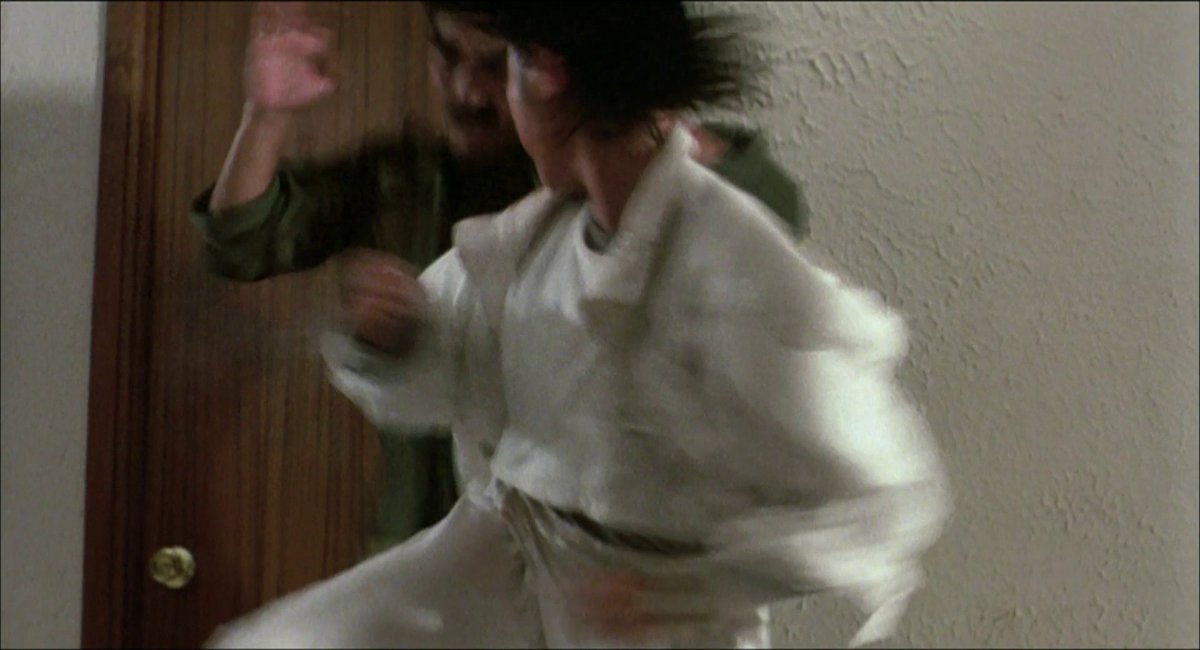
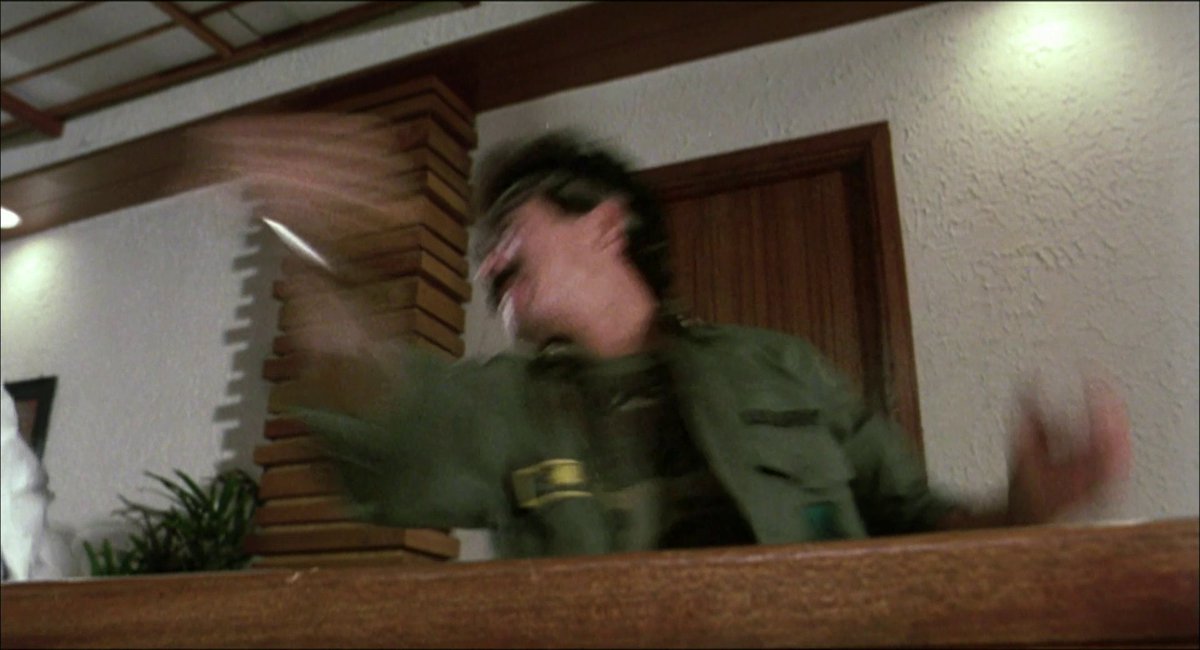
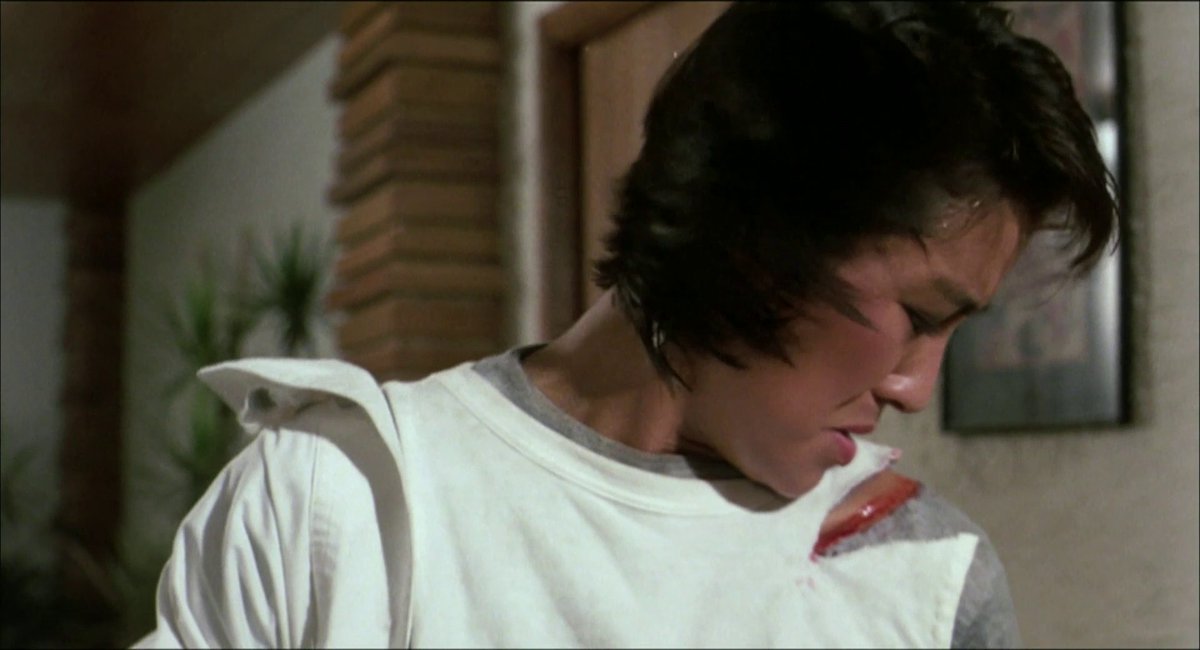
...go back to our Michelle Yeoh scene, Yuen conveys a ridiculous amount of information in less than 9 seconds, without overcutting. There aren't too many cuts, but exactly the right number: Michelle and her opponent (Chung Fat) swap positions within the frame in a single shot,... ImageImageImageImage
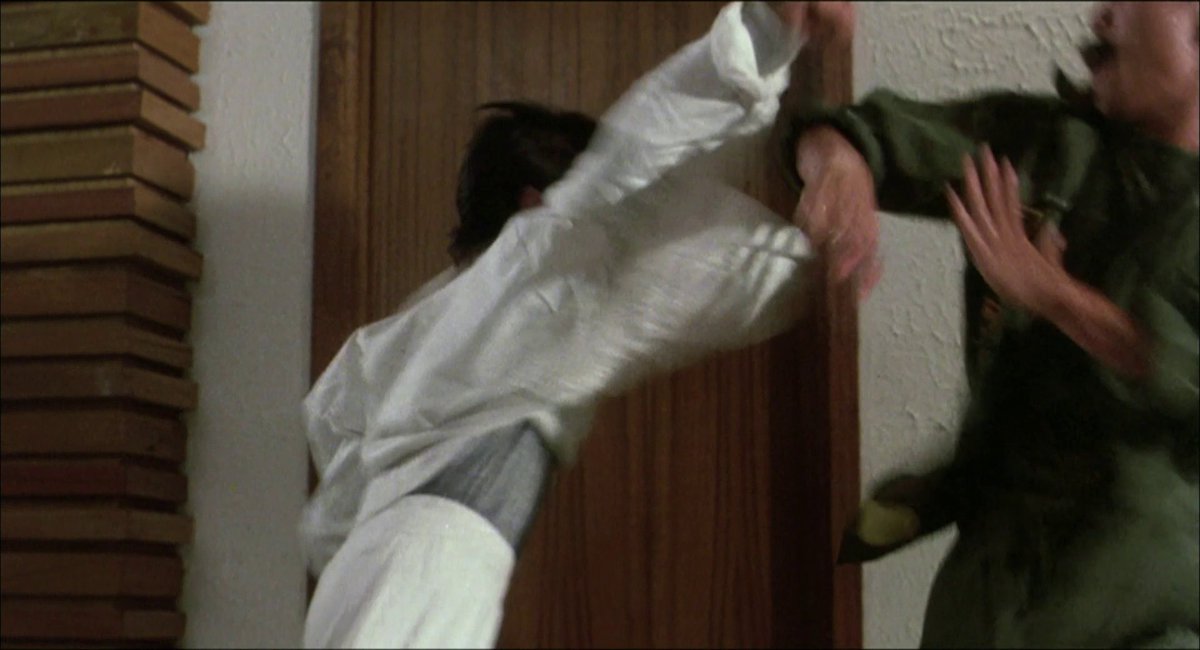
which leads to the main event: a series of 5 shots (in 2.1 seconds!) that heighten the scene's energy by breaking down each movement through highly expressive camera angles. The same action filmed in a single master shot would look bad because it would've no added momentum. Here
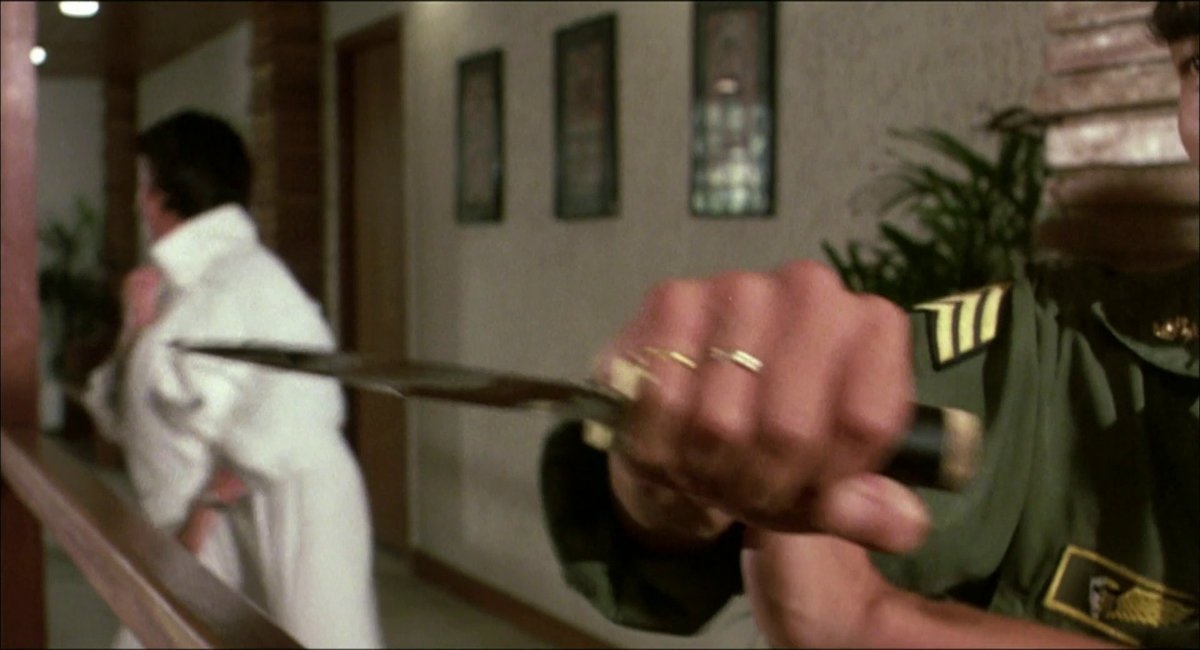
momentum is added with each new shot! What would usually be considered inserts in a more conventional fight scene (like the knife plunging down toward Michelle) becomes a shot of equal importance as the others on the overall rhythm of the scene, once again amplifying the... Image
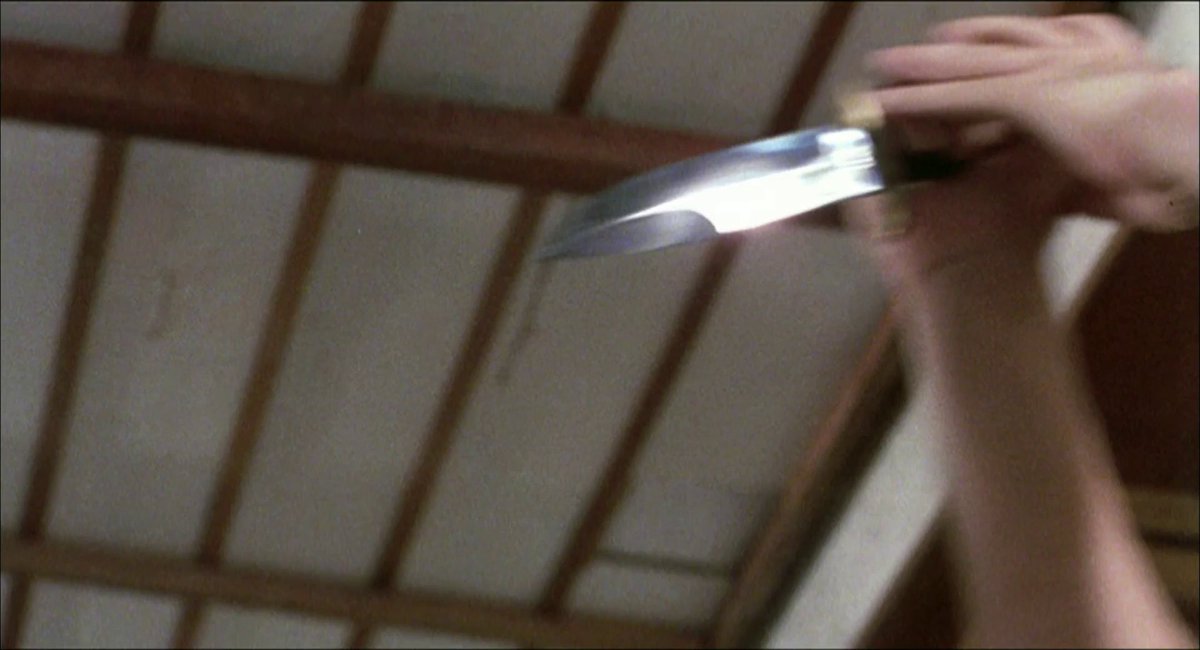
...effect on the audience. I love this little detail here of the knife circling back toward the camera after it has cut Michelle's shoulder. For a fraction(!) of a second, the action lingers on a detail that shouldn't be essential to the reading of the scene: Yuen could have cut ImageImageImageImage
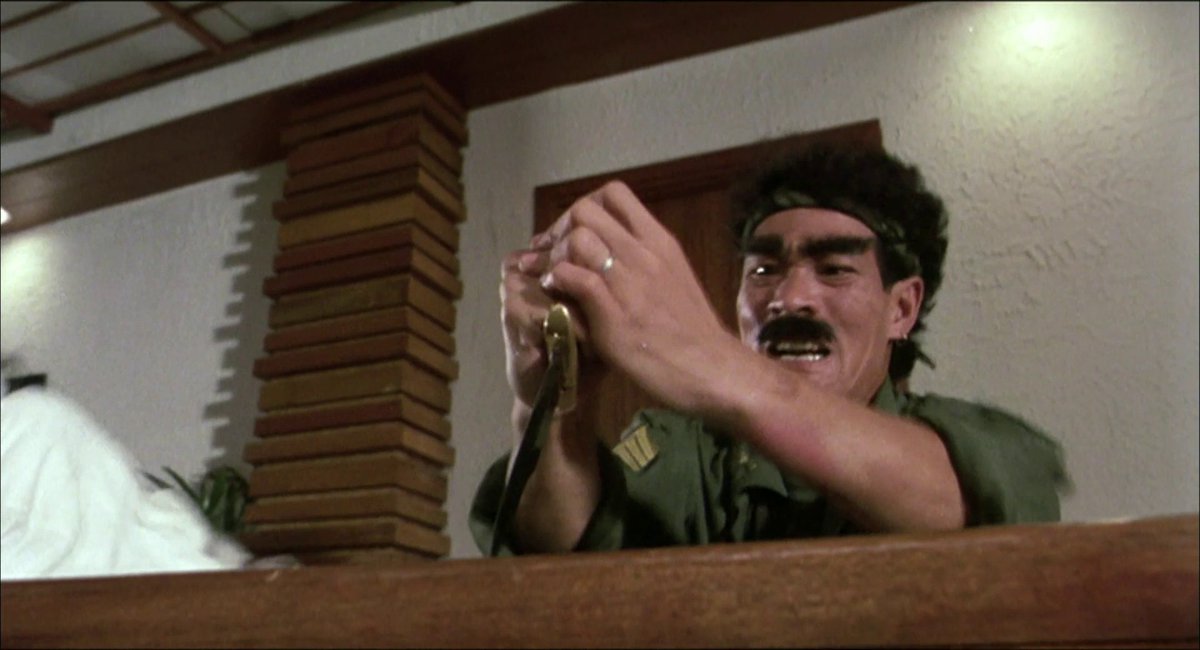
...slightly before, leading from Chung Fat's arm movement to Michelle's reaction, but he decided to include that extra beat, and it makes a huge difference to how the scene plays. Adds dynamism without slowing things down, and makes the audience register the cut before actually.. Image
...showing it. The concluding shot is pause/burst/pause 101: The heroine looks at her wound, then at her enemy: shit's about to go down (even more!). A lot is said of Hong Kong cinema's unique way of cutting around the hits rather than on them (as Hollywood used to do a lot), and ImageImage
...it is absolutely true, but there is a lot more to HK action than just that. The whole cinematic language that came with it was different than the one used in western films, which often gave a diffuse feeling of exciting things happening rather than actually show these things.
In our scene here, momentum is maintained and even ramped up because motion is king: when we cut from one place to another, all the fighters on screen are still/already in motion, while the editing ensures logical continuity and visual stimulation. Anyway...
...watch YES, MADAM!

(And hire me to write in-depth shot by shot analyses! No one will read it, but it'll look cool on your website! 😇) Image

• • •

Missing some Tweet in this thread? You can try to force a refresh

 

Keep Current with One Perfect HEADshot

One Perfect HEADshot Profile picture

Stay in touch and get notified when new unrolls are available from this author!

Read all threads

This Thread may be Removed Anytime!

PDF

Twitter may remove this content at anytime! Save it as PDF for later use!

Try unrolling a thread yourself!

how to unroll video
  1. Follow @ThreadReaderApp to mention us!

  2. From a Twitter thread mention us with a keyword "unroll"
@threadreaderapp unroll

Practice here first or read more on our help page!

More from @HeadExposure

26 Jun
30 shots:

14 inserts
7 close-ups
5 medium to close shots
3 cutaways
1 wide shot

Distilled action can work. No master shot, overlapping editing, stretched out timeline. And yet, still awesome because:
-Clear causality
-Sustained visual momentum
-John Woo
The only wide shot here is used because Woo needs to pass on new spatial information. One character has changed position relative to the others, which leads to an action that would be incomprehensible without a shot establishing that fact. Less than a second long is enough. Image
Visual momentum depends on a dialogue between images. That means creating visual sentences that give rhythm to the scene. This is one such sentence: 3 shots, 1 general direction. The *feeling* of kinetic unity combined with the clear *understanding* of their diegetical meaning.
Read 6 tweets
14 Jun
The very first fight of RUROUNI KENSHIN (2012) is important because it serves two purposes: to introduce us to the Hitokiri Battōsai, and to serve as a reference to create contrast with later scenes. Therefore it must: showcase the hero's power, and instantly be seared to memory.
The fight opens with a close-up of the protagonist. It keeps things mysterious and intriguing, and tells the audience: this is who you must keep your eyes on. Pay attention to him. He then exits the frame from the right hand side. His movement marks the start of the battle. Image
Motion becomes the main driving force behind the scene from its first shot, and the second one confirms that: the sliding movement is continued through editing. A match-on-action, but in addition, the movement of the actor transforms into the movement of the camera itself...
Read 11 tweets
21 May
HIGHLANDER holds a special place because of Mulcahy's fearless visuals. Critics said he made "an everlasting music video"... So what? That's *precisely* why the film endures, it tore the veil between two art forms. Look at this scene. Never a dull moment:

For Mulcahy, HIGHLANDER was an opportunity to continue what he’d done on his videos on a bigger scale, with less oversight. Cinema is a rich medium, and juxtaposing moving pictures can be done to achieve various affects. Sometimes the musicality of images overrides visual logic.
Look at the relationship between these shots. It doesn't matter if they don't connect seamlessly, the point is to keep the momentum going. Mulcahy insisted on having the rain and the backflips even though no one on set understood why. They got it when they saw the film.
Read 10 tweets
6 May
I love how DIE HARD wastes no time in establishing its tone, hero, and plot. Takes only 15 shots (≈7 setups) and 90 sec to:
-Establish classic Hollywood codes
-Introduce three major character traits
-Introduce one major plot point

Let's go through them:
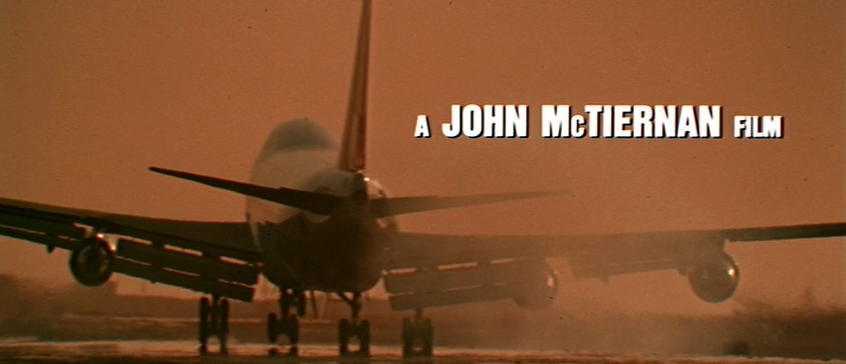
The first shot is that of an arrival, which is a common trope of classic Hollywood movies. It's no accident that the last shot will show a departure. McTiernan bookends his film like this to create the sense of being welcomed into the story. We feel at ease. We feel at home.
The second (!) shot starts introducing major character traits and plot points. It's rare enough to be noted. How many movies wait a whole act or more before we get to know something substantial about our protagonist? Well, we may not know our hero's name yet, but after a few...
Read 8 tweets
16 Feb
The Chateau fight scene from MATRIX RELOADED remains one of the most impressively crafted pieces of action cinema I've ever seen: exciting, precise, meaningful, kinetic. Every detail in this scene is important. Its place in the story, its set, its props, its direction. Thread ⬇️
I remember some friends at the time complaining that this scene was pointless: at this stage in the series, Neo is omnipotent, invincible. Why show us a fight against nameless fighters? The answer lies in the images themselves. In the matrix, the colour red is associated with...
...truth. See: the red pill, the woman in red, etc. Neo bleeds 3 times while in the matrix, once each film. In the 1st and the 3rd film, he bleeds from the mouth when fighting Agent Smith. So the truth is spoken in red: "My name is Neo" / "Because I choose to". These words...
Read 23 tweets
18 Feb 20
Late to the party so sorry if it's been said before but the Bruce Lee scene in ONCE UPON A TIME IN HOLLYWOOD is shot as a one take until the very moment Cliff throws Lee into the car. Plus, the set suddenly becomes empty for no reason. It could suggest unreliable recollection or
perhaps the fact that the scene suddenly becomes a fantasy, an imagined outcome to this encounter. Why would everyone but one extra disappear from the scene after the one take ends? That makes no sense story-wise, so the reason must be something else. Maybe Cliff convinced...
himself that he "beat" Bruce Lee and the images going through his mind reflect this fictionality. It's like the set becomes a hyper-set, the stage for a new play within the film, a form of meta-narrative signifier. 🤔
Read 4 tweets

Did Thread Reader help you today?

Support us! We are indie developers!


This site is made by just two indie developers on a laptop doing marketing, support and development! Read more about the story.

Become a Premium Member ($3/month or $30/year) and get exclusive features!

Become Premium

Too expensive? Make a small donation by buying us coffee ($5) or help with server cost ($10)

Donate via Paypal Become our Patreon

Thank you for your support!

Follow Us on Twitter!

:(