More than five years ago I decided to take tech blogging more seriously, and started The Pragmatic Engineer.
This year I’ve made more directly and indirectly from writing books than my comp would have been at Uber. None of this would have happened without starting that blog.
I get questions from people one day hoping to do something similar.
A few things: 1. I never planned for it. I quit my job at Uber for a variety of reasons, and enough savings to get by for a few months, while I write @EngGuidebook, that is a bucket list item of mine (cont'd)
2. Few people give away quality resources for years, consistently. My blog did this, helping many people in various ways.
3. Distribution is the biggest barrier for writing any book. The fact that I had a large group of people who trusted me (see #2) made a large difference.
4. So if you want to do something similar, what advice do I have?
Start today by sharing your expertise, on a platform that will probably not take your content away from you. Blog, YouTube, etc.
Do it for yourself, the first year(s). Try to help a few people. It's what I did.
5. Just to add: my goal never was (and still is not) to be a full-time writer/content creator etc.
I just view it as a nice bonus that I can take some time doing a hobby I really enjoy, while also have it pay the bills.
But took years of investing my time to make this happen.
• • •
Missing some Tweet in this thread? You can try to
force a refresh

7 mobile eng industry predictions after months of research for my book, Building Mobile Apps at Scale:
1. Kotlin Multiplatform will become the de facto *native* way to share code between iOS and Android. KMM is maturing rapidly & is easy for iOS engineers to also pick it up.
2. Flutter will become the most popular way to build cross-platform apps.
The only downside is having to learn Dart. Otherwise, it's fast & tooling is solid. Google has gone all-in, building many of their own apps 100% Flutter. Cannot say the same with RN & other alternatives.
3. Full-native mobile development is not going anywhere with large apps with millions of users.
Having full control of the UX & the ability to immediately make use the latest APIs will be key for many apps and platforms.
Flutter, RN, and others will not take over all the space.
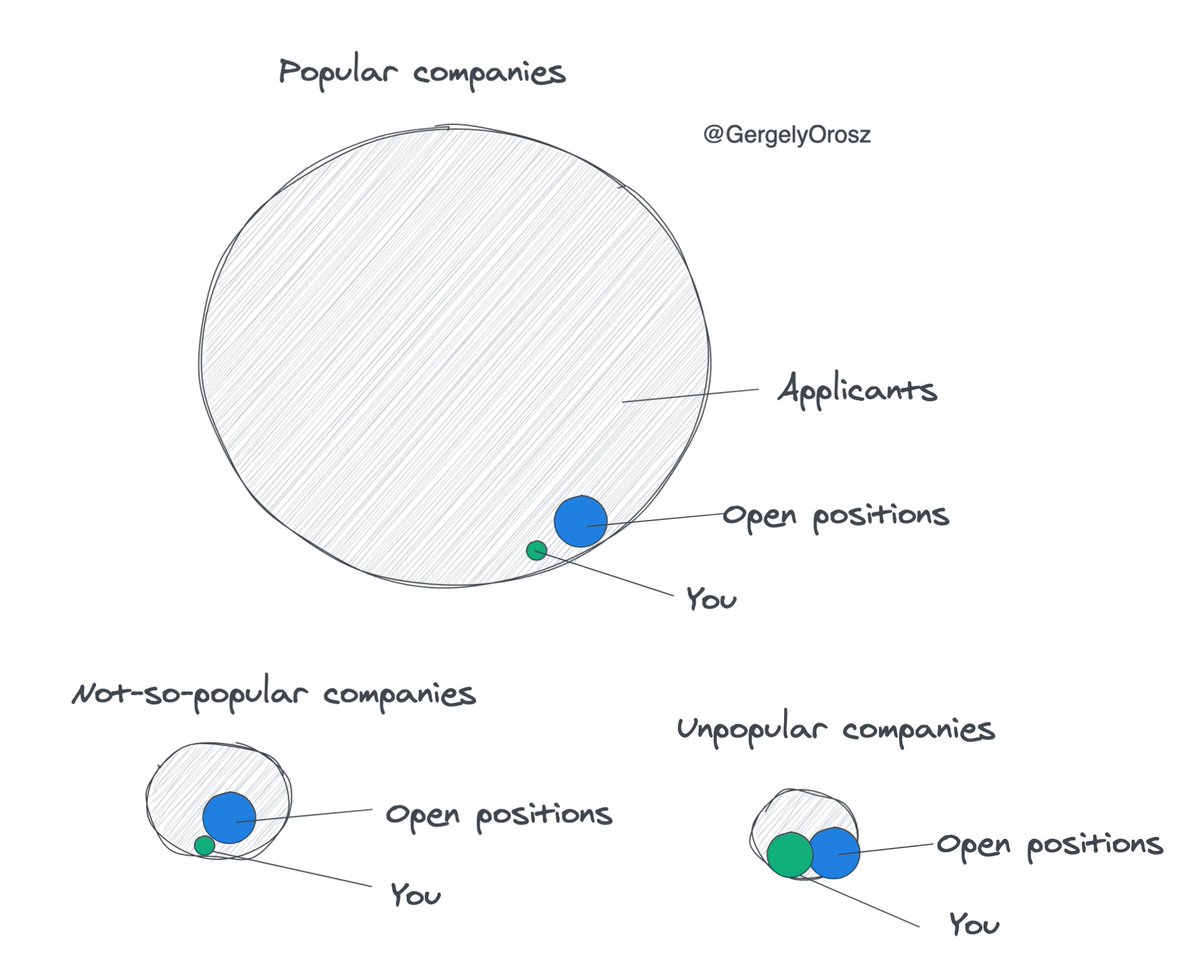
The two-sided marketplace nature of job seekers/jobs, how you should use it to your advantage, and how the explosion with remote work (in software engineering) is changing this balance for juniors & seniors.
Thread for anyone job searching now, or in the future.
The job market *always* starts from the companies who hire. They have the budget, and need someone with a specific skillset. They post a job, and get (and often also source) qualified applicants.
There's a huge difference between popular & unpopular ones though:
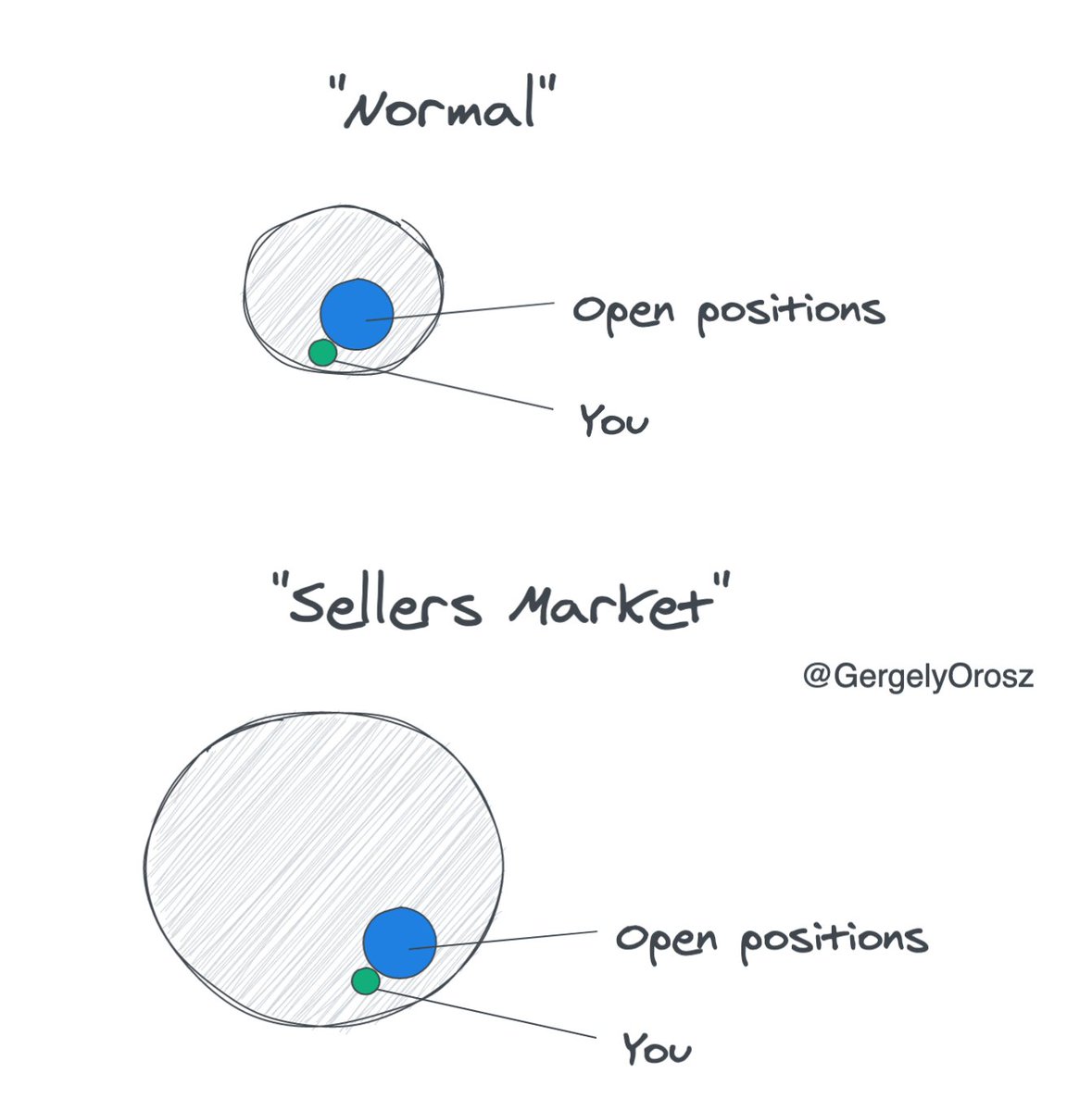
The job market is a "sellers market" when there are a lot fewer jobs than qualified ppl who want to apply or change jobs. Recessions are good examples of this (in software: 2001, 2008, and some sectors now).
When this happens, even less popular companies see a lot more interest.
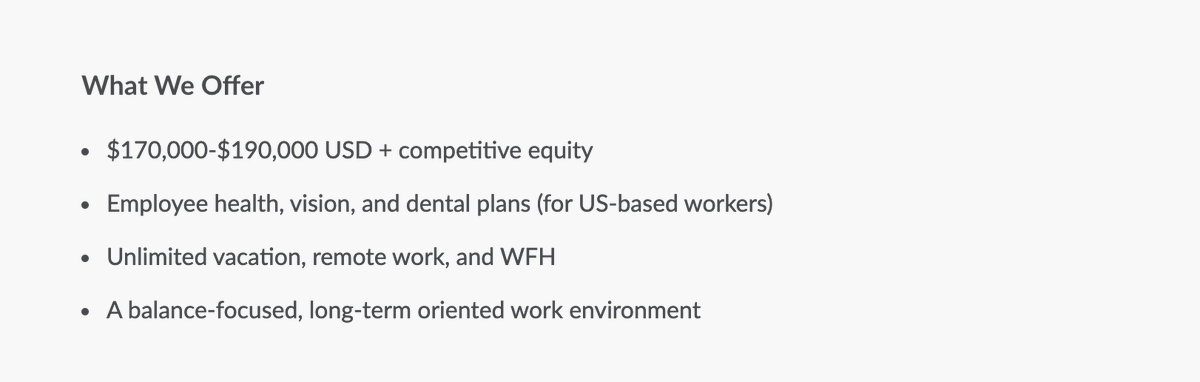
One of the best engineering manager job adverts I've seen.
1. No unnecessary requirements beyond "having done some level of a similar job" 2. A very clear 30-60-90-180 days plan (the majority of the ad) 3. A salary range 4. Paid the same wherever you are based (even outside US!)
I assume decent job ads like this (that also offer terms that should be standard but are not, like remote, with the same, NY-like salary) will get lots of applications.
I heard the team is split between the East Coast and EU: I assume the timezone will be important.
Just know that honest job ads like this can generate a LOT of interest. Take it from @dhh - Basecamp saw 400+ applications for a senior engineer: m.signalvnoise.com/the-worst-part…
Two small reasons to consider working at a company that has a high-quality engineering blog:
1. A sign of a transparent engineering culture (important!)
2. Some of your work & impact can become public (writing on the eng blog), possibly creating future opportunities for you.
High-quality eng blogs:
- Share in-depth details about eng challenges, approaches, learnings.
- Talk about (internal) tools used & specifics. Often with screenshots, code samples.
- *Always* display names of the engineers authoring the post
A company with a high-quality engineering blog typically:
- Supports engineers attending engineering conferences, talking about their learnings
- Has much larger internal awareness of who does what ("have you read their blog post?")
- Can attract industry-known talent more
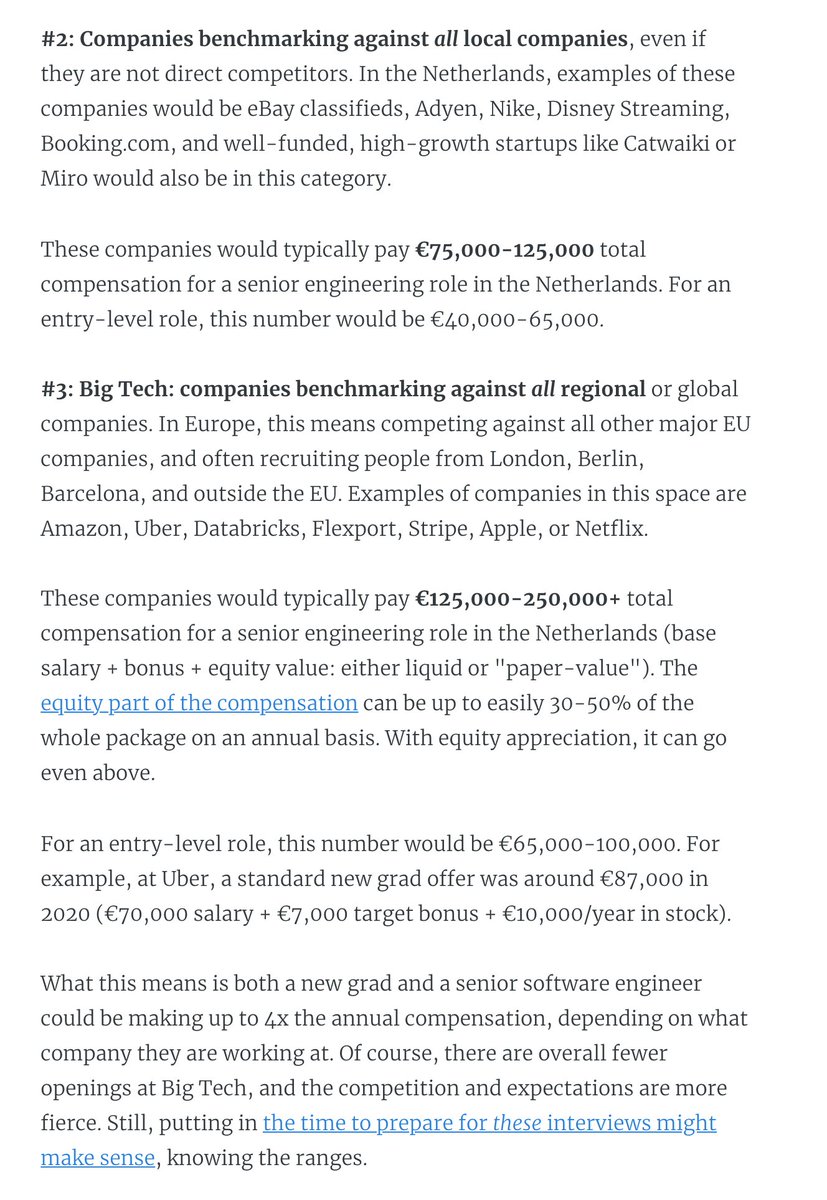
I've been tiptoeing on software engineering compensation in the Netherlands and Europe because... I was on the high end of it. Me and many others.
I'm starting to talk about how this system works, starting with why compensation is "tripolar". And why this is important (cont'd):
Silicon Valley is having a *huge* effect on the market going up. It might also help reverse people leaving from the EU to the US to make massive salary gains, now that the "top of the market" is going up. By a LOT.
Don't take how important it is to talk about salaries from me. Take it from a DM from a person who told me he wished he knew about these things *years* earlier.