May 16, 2021
This money magazine is now willing to accept money for articles. At this point, no one should believe a word they write.
Forbes
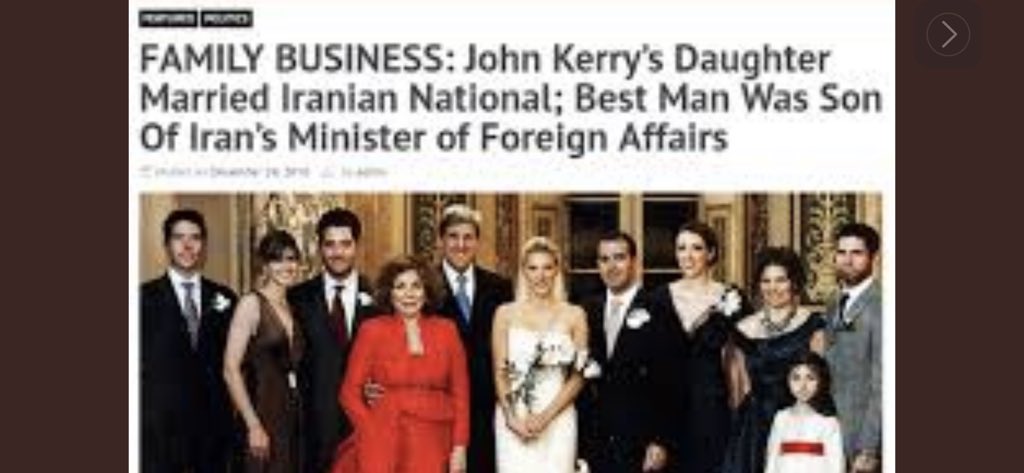
Forbes was a cousin of John Murray Forbes and is a maternal great-grandfather of 2004 U.S. presidential candidate John Kerry. The
This money magazine is now willing to accept money for articles. At this point, no one should believe a word they write.
Forbes
Forbes was a cousin of John Murray Forbes and is a maternal great-grandfather of 2004 U.S. presidential candidate John Kerry. The


Forbes family actively engaged in the opium trade and in the Old China Trade during the First and Second Opium Wars, amassing a large fortune.

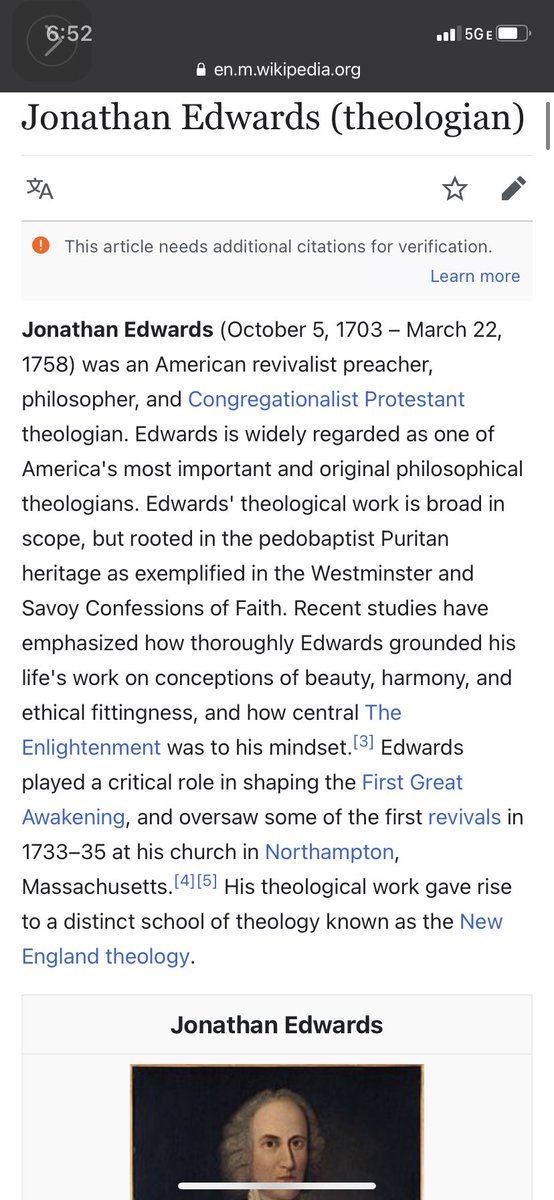
Edwards died from a smallpox inoculation shortly after beginning the presidency at the College of New Jersey (Princeton).[8] He was the grandfather of Aaron Burr,[1] the third United States vice president. t that time, the banking industry was monopolized by Alexander Hamilton's
Bank of New York and the New York branch of the First Bank of the United States. "To circumvent the opposition of Hamilton to the establishment of a bank,"[2] and following an epidemic of yellow fever in the city, Aaron Burr founded the company and successfully gained banking
privileges through a clause in its charter granted to it by the state that allowed it to use surplus capital for banking transactions. In December 1928, the 129-year-old Bank of the Manhattan Company announced a joint affiliation with the International Acceptance Bank, Inc.
(and its subsidiary, the International Acceptance Trust Company), which had been organized in 1921 by Paul Warburg. The bank merged with Chase National Bank in 1955 to become Chase Manhattan.[42] In 1996, Chase Manhattan was acquired by Chemical Bank, which retained the Chase
name, to form what was then the largest bank holding company in the United States.[43] In December 2000, the bank acquired J.P. Morgan & Co. to form JPMorgan Chase & Co.
James Paul Warburg (August 18, 1896 – June 3, 1969) was a German-born American banker. He was well known for
James Paul Warburg (August 18, 1896 – June 3, 1969) was a German-born American banker. He was well known for


being the financial adviser to Franklin D. Roosevelt. His father was banker Paul Warburg, member of the Warburg family and "father" of the Federal Reserve system. After World War II, Warburg helped organize the Society for the Prevention of World War III in support of the


Morgenthau Plan. On October 1, 1895, Warburg was married in New York City to Nina J. Loeb, daughter of Solomon Loeb, a founder of the New York investment firm of Kuhn, Loeb & Co. The Warburgs were the parents of a son, James Paul Warburg, and a daughter, Bettina Warburg Grimson.
Jacob's father, Moses Schiff, was a broker for the Rothschilds. Jacob Henry Schiff (born Jakob Heinrich Schiff; January 10, 1847 – September 25, 1920) was a German-born Jewish American banker, businessman, and philanthropist. Among many other things, he helped finance the

expansion of American railroads, and the Japanese military efforts against Tsarist Russia in the Russo-Japanese War.
In many of his interests he was associated with E. H. Harriman.
In many of his interests he was associated with E. H. Harriman.


The book quotes James Stillman of the National City Bank calling him "not a safe man to do business with, yet the Illinois Central run by Harriman was one of the best-run and most profitable in the country."
Stillman was an investor in a Fractional Warrant of the Baltimore &
Stillman was an investor in a Fractional Warrant of the Baltimore &

Ohio Railroad.
Along with Edward Henry Harriman, Jacob Henry Schiff and William Rockefeller, he controlled the most important Texas railroads (including the Texas and Pacific Railway, the Southern Pacific Railroad, the International-Great Northern Railroad, the Union Pacific
Along with Edward Henry Harriman, Jacob Henry Schiff and William Rockefeller, he controlled the most important Texas railroads (including the Texas and Pacific Railway, the Southern Pacific Railroad, the International-Great Northern Railroad, the Union Pacific
Southern Railway, the St. Louis, Brownsville and Mexico Railway, and the Mexican National Railroad).
The business was closely associated with rail baron E.H. Harriman, and for some time, was controlled by Frank Rockefeller, the brother of oil magnate John D. Rockefeller. In
The business was closely associated with rail baron E.H. Harriman, and for some time, was controlled by Frank Rockefeller, the brother of oil magnate John D. Rockefeller. In
1901, Buckeye hired Samuel Prescott "S.P." Bush as general manager.
In the spring of 1918, banker Bernard Baruch was asked to reorganize the War Industries Board as the U.S. prepared to enter World War I, and placed several prominent businessmen to key posts. Bush became chief
In the spring of 1918, banker Bernard Baruch was asked to reorganize the War Industries Board as the U.S. prepared to enter World War I, and placed several prominent businessmen to key posts. Bush became chief
of the Ordnance, Small Arms, and Ammunition Section, with national responsibility for government assistance to and relations with munitions companies.[6]
Bush served on the board of the Federal Reserve Bank of Cleveland (as well as of the Huntington National Bank of Columbus).[
Bush served on the board of the Federal Reserve Bank of Cleveland (as well as of the Huntington National Bank of Columbus).[
3] In 1931, he was appointed to Herbert Hoover's President's Committee for Unemployment Relief, chaired by Walter S. Gifford, then-President of AT&T.[7] He was once recommended to serve on the board of the Reconstruction Finance Corporation, but Hoover did not feel he was
sufficiently known nationally. The Petroleum Reserves Corporation was transferred to the Office of Economic Warfare, which was consolidated into the Foreign Economic Administration, which was transferred to the Reconstruction Finance Corporation and changed to the War Assets



Corporation. The War Assets Corporation was dissolved after March 25, 1946. Most lending to wartime subsidiaries ended in 1945, and all such lending ended in 1948.
In turn, it was abolished by Executive Order 9361, July 15, 1943, and the functions were transferred to the newly
In turn, it was abolished by Executive Order 9361, July 15, 1943, and the functions were transferred to the newly



created Office of Economic Warfare, OEM, which also assumed control of U.S. Commercial Company, Rubber Development Corporation, Petroleum Reserves Corporation, and Export-Import Bank of Washington from the Reconstruction Finance Corporation. Consolidated into the Foreign


Economic Administration, 1943. Roosevelt responded on July 15, 1943, by dissolving the BEW and reconstituting its function under a new Foreign Economic Administration, headed by Leo Crowley, a known supporter of Jones. After the bank holiday, all financially sound banks would
resume business. For persons who were unable to access their accounts, another part of the act authorized the executive branch to reorganize failed banks in order to free up frozen assets. The RFC was empowered to invest financial institution through their preferred stocks.
Seventy percent of America's banks reopened after just six days. Jones's task as the new chair of the RFC was to reopen another 2,000 banks. He began with the reorganization of two of Detroit's largest banks by collaborating with Alfred P. Sloan of General Motors. They formed a
new bank with matching investments from the RFC and General Motors, but more significantly, the RFC covered the deposits of the 800,000 frozen accounts from both failed banks with a loan of $230 million (equivalent to $3,500,000,000 in 2016)
Sometime in 1930 a drain approaching
Sometime in 1930 a drain approaching


the proportions of a run began on the large banks in Detroit. In a period of about two and one-half years prior to February 11, 1933, about $250,000,000 was withdrawn from the First National Bank of Detroit, and large sums were also withdrawn from the Union Guardian Trust
Company and the Guardian National Bank of Commerce. In order to meet these withdrawals, the First National Bank was compelled to liquidate practically all of its liquid and unpledged assets, and the Union Guardian Trust Company was compelled to borrow from the Reconstruction



Finance Corporation (RFC) and from the Ford interests. Mr. Edsel Ford was Chairman of the Board of the Union Guardian Group.
By February 1933, First National and Guardian National were on the verge of death. Through their official channels, they reached out for a loan from the
By February 1933, First National and Guardian National were on the verge of death. Through their official channels, they reached out for a loan from the
the Reconstruction Finance Corporation, a newly created initiative by Herbert Hoover to provide financing and support to struggling American businesses. The Secretary of Commerce, Roy D. Chapin (himself an auto man from Michigan), was dispatched to Detroit to ascertain the
situation and to make a decision.
Chapin approached Henry Ford, the largest depositor in these banks, and asked if he might be able to accept some level of refinancing. Ford had already done this on previous occasions, and his own company was coming off of the huge financial
Chapin approached Henry Ford, the largest depositor in these banks, and asked if he might be able to accept some level of refinancing. Ford had already done this on previous occasions, and his own company was coming off of the huge financial
losses of 1932 mentioned above. He explained that he was unable to provide further assistance, even after much pleading and negotiating from Mr. Chapin and from banking leaders. He also asserted that should the banks continue to waver, he would be forced to withdraw Ford's
assets from them. By February 13 it was clear that Mr. Ford's mind could not be changed. Furthermore there was an imminent threat of Ford triggering the collapse of these two banks himself (to save his own assets) upon resumption of business the next day, after a long weekend.
Adolf Hitler, the party's leader since 1921, was appointed Chancellor of Germany by President Paul von Hindenburg on 30 January 1933


Several of these Texas politicians became involved in the Suite 8F Group, a collection of right-wing businessmen. The name comes from the room in the Lamar Hotel in Houston where they held their meetings. Members of the group included George Brown and Herman Brown (Brown & Root),
Jesse H. Jones (multi-millionaire investor in a large number of organizations and chairman of the Reconstruction Finance Corporation), Gus Wortham (American General Insurance Company), James Abercrombie (Cameron Iron Works), Hugh R. Cullen (Quintana Petroleum), William Hobby
(Governor of Texas and owner of the Houston Post), William Vinson (Great Southern Life Insurance), James Elkins (American General Insurance and Pure Oil Pipe Line), Morgan J. Davis (Humble Oil), Albert Thomas (chairman of the House Appropriations Committee), Lyndon B. Johnson
(Majority Leader of the Senate) and John Connally (Texas politician). Alvin Wirtz, Thomas Corcoran, Homer Thornberry and Edward Clark, were four lawyers who also worked closely with the Suite 8F Group.
Brown and Root now grew rapidly as a result of obtaining a large number of
Brown and Root now grew rapidly as a result of obtaining a large number of
municipal and federal government projects. This included the Marshall Ford Dam on the Colorado River. This was worth $27,000,000. In a letter written to Lyndon B. Johnson, George Brown, admitted the company was set to make a $2,000,000 profit out of the deal. In 1940 the company
won a $90 million contract to build the Naval Air Station at Corpus Christi.
Jesse H. Jones was another important figure in this group. He was chairman of Roosevelt's Reconstruction Finance Corporation (RFC). This became a crucial post in Roosevelt's New Deal policies and Jones
Jesse H. Jones was another important figure in this group. He was chairman of Roosevelt's Reconstruction Finance Corporation (RFC). This became a crucial post in Roosevelt's New Deal policies and Jones
had the responsibility of directing billions of dollars to help support American industry. Such was his power that Jones was described as a "fourth branch of government".
Jones worked closely with John Nance Garner. On the morning of Garner's 95th birthday, November 22, 1963,
Jones worked closely with John Nance Garner. On the morning of Garner's 95th birthday, November 22, 1963,
President John F. Kennedy called to wish him a happy birthday. This was just hours before Kennedy's assassination. Dan Rather states that he visited the Garner ranch that morning to film an interview with Garner, where Miss Texas Wool was in attendance, and that he then flew
back to Dallas from Uvalde to deposit the film at then-CBS affiliate KRLD-TV (now Fox owned-and-operated KDFW-TV). During the Soviet–Afghan War, Rather was filmed reporting near the front lines while wearing a traditional mujahideen headdress and garments. Rather attracted an



Evening News audience (and was nicknamed "Gunga Dan"). The American comic strip Doonesbury spoofed his actions.
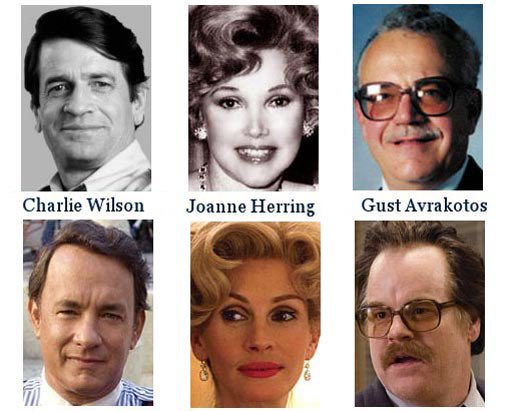
Rather's reports were later revealed to have been influential to Congressman Charlie Wilson (D-Texas), who led an effort to help the struggling mujahideen. The CIA
Rather's reports were later revealed to have been influential to Congressman Charlie Wilson (D-Texas), who led an effort to help the struggling mujahideen. The CIA



developed its largest covert operation to supply aid and advanced arms to the mujahideen. The Soviets eventually quit Afghanistan.


• • •
Missing some Tweet in this thread? You can try to
force a refresh