Erich Schumann - Wikipedia
Biological WarfareEdit
Although Hitler had ordered that biological warfare should be studied only for the purpose of defending against it, Schumann lobbied for him to be persuaded otherwise: "America must be attacked en.wikipedia.org/wiki/Erich_Sch…
Biological WarfareEdit
Although Hitler had ordered that biological warfare should be studied only for the purpose of defending against it, Schumann lobbied for him to be persuaded otherwise: "America must be attacked en.wikipedia.org/wiki/Erich_Sch…
simultaneously with various human and animal epidemic pathogens, as well as plant pests." The plans were never adopted due to opposition by Hitler. 


In the German scientific community's defense of its conduct during the war, the military's Schumann- and Diebner-led aspects of the Uranverein were minimized, ridiculed, and ascribed to Nichtskönner (incompetent scientists) and leadership that owed its positions to politics.


Additionally, the Heisenberg component of the project was made to appear as the leading and dominant element of the project. The motivations of the German scientists were to distance themselves from the military aspects of the Uranverein and, in the denazification environment,


also distance themselves from those who had visible positions under National Socialism. Regarding Schumann's scientific abilities, they are, however, attested to by the fact that members of his Habilitation committee for experimental and theoretical physics at the University of


Berlin included the eminent scientists Max von Laue, Walther Nernst, and Max Planck, and the Habilitation was well before Hitler came to power.
From 1931 to 1934, Diebner was Gerhard Hoffmann's teaching assistant at Halle University. Also at this time, the Kaiser-Wilhelm
From 1931 to 1934, Diebner was Gerhard Hoffmann's teaching assistant at Halle University. Also at this time, the Kaiser-Wilhelm
Institut für Physik (KWIP, Kaiser Wilhelm Institute for Physics, after World War II the Max Planck Institute for Physics), in Berlin-Dahlem, was placed under HWA authority, with Diebner as the administrative director, and the military control of the nuclear research commenced.
The founding of the institute traces back to 1914, as an idea from Fritz Haber, Walther Nernst, Max Planck, Emil Warburg, Heinrich Rubens. On October 1, 1917, the institute was officially founded in Berlin as Kaiser-Wilhelm-Institut für Physik (KWIP, Kaiser Wilhelm Institute
for Physics) with Albert Einstein as the first head director. 1901 he acquired Swiss citizenship, which he kept for the rest of his life, and in 1903 he secured a permanent position at the Swiss Patent Office in Bern. In 1905, he was awarded a PhD by the University of Zurich.
In 1933, while Einstein was visiting the United States, Adolf Hitler came to power. Einstein did not return to Germany because he objected to the policies of the newly elected Nazi-led government.[16] He settled in the United States and became an American citizen in 1940.[17]
On the eve of World War II, he endorsed a letter to President Franklin D. Roosevelt alerting him to the potential German nuclear weapons program and recommending that the US begin similar research. Einstein supported the Allies, but generally denounced the idea of nuclear weapons
The Einstein–Szilárd letter was signed by Einstein and posted back to Szilárd, who received it on August 9.[10] Szilárd gave both the short and long letters, along with a letter of his own, to Sachs on August 15. Sachs asked the White House staff for an appointment to see

President Roosevelt, but before one could be set up, the administration became embroiled in a crisis due to Germany's invasion of Poland, which started World War II.[13] Sachs delayed his appointment until October so that the President would give the letter due attention,

securing an appointment on October 11. On that date he met with the President, the President's secretary, Brigadier General Edwin "Pa" Watson, and two ordnance experts, Army Lieutenant Colonel Keith F. Adamson and Navy Commander Gilbert C. Hoover. Roosevelt summed up the

conversation as: "Alex, what you are after is to see that the Nazis don't blow us up."Roosevelt decided that the letter required action, and authorized the creation of the Advisory Committee on Uranium. The committee was chaired by Lyman James Briggs, the Director of the
Bureau of Standards (currently the National Institute of Standards and Technology), with Adamson and Hoover as its other members. It convened for the first time on October 21. The meeting was also attended by Fred L. Mohler from the Bureau of Standards, Richard B. Roberts of
the Carnegie Institution of Washington, and Szilárd, Teller and Wigner. Adamson was skeptical about the prospect of building an atomic bomb, but was willing to authorize $6,000 ($100,000 in current USD) for the purchase of uranium and graphite for Szilárd and Fermi's experiment.
The Advisory Committee on Uranium was the beginning of the US government's effort to develop an atomic bomb, but it did not vigorously pursue the development of a weapon. It was superseded by the National Defense Research Committee in 1940,[17] and then the
Office of Scientific Research and Development in 1941.[18] The Frisch–Peierls memorandum and the British Maud Reports eventually prompted Roosevelt to authorize a full-scale development effort in January 1942.[19] The work of fission research was taken over by the
United States Army Corps of Engineers's Manhattan District in June 1942, which directed an all-out bomb development program known as the Manhattan Project. Einstein was allowed to work as a consultant to the United States Navy's Bureau of Ordnance.
Einstein was allowed to work as a consultant to the United States Navy's Bureau of Ordnance.
Rear Admiral William D. Leahy, 1927–1931
Rear Admiral Edgar B. Larimer, 1931–1934
Rear Admiral Harold Rainsford Stark, 1934–1937
Rear Admiral William R. Furlong, 1937–1941
Rear Admiral William D. Leahy, 1927–1931
Rear Admiral Edgar B. Larimer, 1931–1934
Rear Admiral Harold Rainsford Stark, 1934–1937
Rear Admiral William R. Furlong, 1937–1941
Rear Admiral William H. P. Blandy, 1941–1943
Vice Admiral George F. Hussey Jr., 1943–1947
Rear Admiral Albert G. Noble, 1947–1950
Additionally, in direct support of the attack, the Eastern Attack Group (Task Group 77.3) was assigned under the command of Captain Albert G.
Vice Admiral George F. Hussey Jr., 1943–1947
Rear Admiral Albert G. Noble, 1947–1950
Additionally, in direct support of the attack, the Eastern Attack Group (Task Group 77.3) was assigned under the command of Captain Albert G.
Noble; this Task Group formed part of Rear Admiral Daniel E. Barbey's US and Australian Task Force 77, which was assigned to support landings at Aitape, Hollandia and Tanahmerah Bay.[11][12] Eight escort carriers provided air support to the landing, while several squadrons of
United States Army Air Force attack bombers were also allocated, or placed on standby to assist if needed. Naval gunfire support in the immediate vicinity of the landing beaches was provided by a force of five destroyers, nine high-speed transports and one Liberty Ship.
It was adopted as a Merchant Marine Act design, and production awarded to a conglomerate of West Coast engineering and construction companies headed by Henry J. Kaiser known as the Six Companies. Liberty ships were designed to carry 10,000 long tons (10,200 t) of cargo, usually
one type per ship, but, during wartime, generally carried loads far exceeding this.[6]
On 27 March 1941, the number of lend-lease ships was increased to 200 by the Defense Aid Supplemental Appropriations Act and increased again in April to 306, of which 117 would be Liberty ships
On 27 March 1941, the number of lend-lease ships was increased to 200 by the Defense Aid Supplemental Appropriations Act and increased again in April to 306, of which 117 would be Liberty ships
Six Companies Inc. was composed of:
1Henry J. Kaiser Co. of Oakland, California and Bechtel Corporation of San Francisco (Bechtel-Kaiser): 30%
2MacDonald and Kahn of Los Angeles, California: 20%
3Utah Construction Company of Ogden, Utah: 20%
1Henry J. Kaiser Co. of Oakland, California and Bechtel Corporation of San Francisco (Bechtel-Kaiser): 30%
2MacDonald and Kahn of Los Angeles, California: 20%
3Utah Construction Company of Ogden, Utah: 20%
4Morrison-Knudsen of Boise, Idaho: 10%,
5Pacific Bridge Company of Portland, Oregon: 10%
6J.F. Shea Co of Portland, Oregon: 10%
5Pacific Bridge Company of Portland, Oregon: 10%
6J.F. Shea Co of Portland, Oregon: 10%
In 1929, Warren's son, Stephen, urged his father to embark on the company's first pipeline project. Bechtel began working with California Standard Oil Company to build pipelines and refineries. In 1987, Bechtel was awarded a contract for project management services of an
undersea tunnel linking the UK and France called the Channel Tunnel or "Chunnel." The tunnel was completed in 1994. Brendan Bechtel is Chairman and CEO and is the fifth generation of the Bechtel family to lead the company.[198] Jack Futcher is president and chief operating

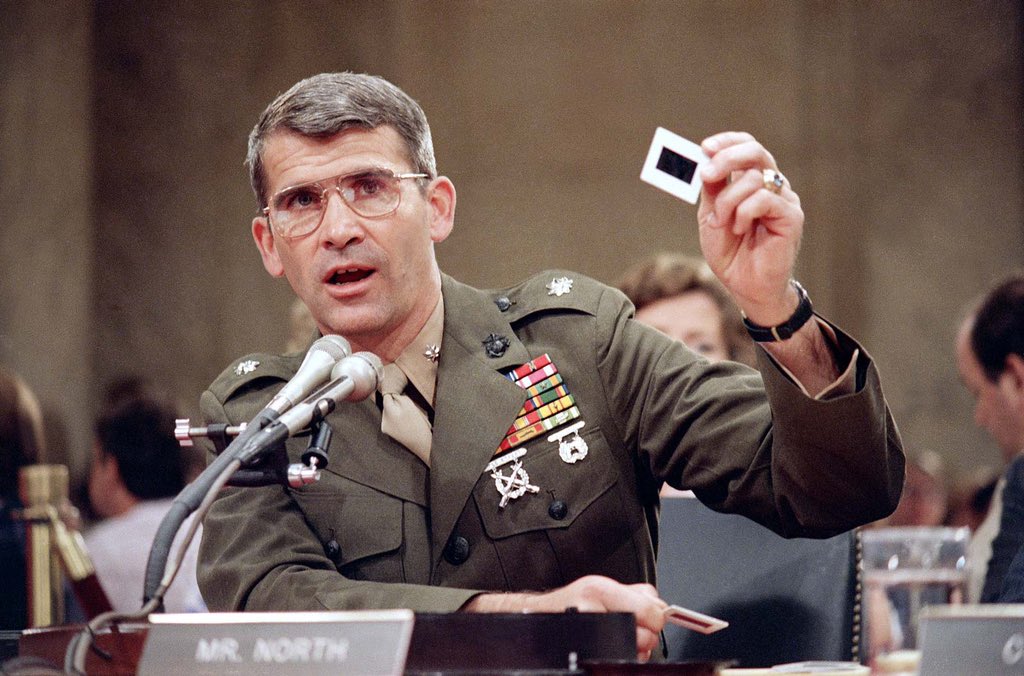

From 1974 to 1982, he was an executive of the Bechtel Group, an engineering and services company. In the 2010s, Shultz was a prominent figure in the scandal of the biotech firm Theranos, continuing to support it as a board member in the face of mounting evidence of fraud. Shultz
left the Nixon administration in 1974 to become an executive at Bechtel. After becoming president and director of that company, he accepted President Ronald Reagan's offer to serve as United States Secretary of State. He held that office from 1982 to 1989. Shultz pushed for
Reagan to establish relations with Soviet leader Mikhail Gorbachev, which led to a thaw between the United States and the Soviet Union.
He served on the Global Commission on Drug Policy, California Governor Arnold Schwarzenegger's Economic Recovery Council, and on the boards
He served on the Global Commission on Drug Policy, California Governor Arnold Schwarzenegger's Economic Recovery Council, and on the boards
of Bechtel and the Charles Schwab Corporation. Shultz was born December 13, 1920, in New York City, the only child of Margaret Lennox (née Pratt) and Birl Earl Shultz. He grew up in Englewood, New Jersey.[8] His great-grandfather was an immigrant from Germany who arrived in the
United States in the middle of the 19th century. Contrary to common assumption, Shultz was not a member of the Pratt family associated with John D. Rockefeller and the Standard Oil Trust. His house "Killenworth" at Glen Cove was one of the larger Pratt family mansions, built in
1913 in a Tudor style, with 39 panelled rooms, thirteen bathrooms, twelve fireplaces, five cellars, a swimming pool, and flower beds tended by 50 gardeners. It was designed by Trowbridge and Ackerman. By the 1950s it was purchased by the then Soviet Union to serve as the retreat
for the Russian delegation to the United Nations. In 1951, the estate was purchased by the Soviet Union and used as the country retreat of its delegation to the United Nations.[7][8] The presence of the Russians made the property the target of demonstrations, requiring the
City of Glen Cove to provide additional police protection that was not reimbursed.[7] When Soviet leader Nikita Khrushchev visited Killenworth in 1960, crowds reportedly threw tomatoes at his party's limousines. Other residents simply watched the procession in silence.[9] Cuban
leader Fidel Castro also visited Killenworth in Glen Cove while in the United States. In December 2016, the Obama administration announced that two Russian diplomatic facilities, one of which was on Long Island, would be closed as part of the retaliation for the Russian
interference in the 2016 United States presidential election. It was initially reported that Killenworth might be the Long Island site,[12] but the designated facility turned out to be another mansion owned by the Russians called Norwich House[13] in nearby Upper Brookville, New
York.[9][14] Killenworth is still used by the Russian delegation. a set of discreet meetings which had been taking place since June 1918 in New York City, under the name "Council on Foreign Relations". The meetings were headed by the corporate lawyer Elihu Root, who had served
as Secretary of State under President Theodore Roosevelt, and attended by 108 "high-ranking officers of banking, manufacturing, trading and finance companies, together with many lawyers". In the late 1930s, the Ford Foundation and Rockefeller Foundation began contributing large
amounts of money to the Council.[4] In 1938, they created various Committees on Foreign Relations, which later became governed by the American Committees on Foreign Relations in Washington, D.C., throughout the country, funded by a grant from the Carnegie Corporation.
The security and armaments group was headed by Allen Welsh Dulles, who later became a pivotal figure in the CIA's predecessor, the Office of Strategic Services (OSS). CFR ultimately produced 682 memoranda for the State Department, which were marked classified and circulated
among the appropriate government departments. Vietnam created a rift within the organization. When Hamilton Fish Armstrong announced in 1970 that he would be leaving the helm of Foreign Affairs after 45 years, new chairman David Rockefeller approached a family friend, William
Bundy, to take over the position. In November 1979, while chairman of CFR, David Rockefeller became embroiled in an international incident when he and Henry Kissinger, along with John J. McCloy and Rockefeller aides, persuaded President Jimmy Carter through the State Department
to admit the Shah of Iran, Mohammad Reza Pahlavi, into the US for hospital treatment for lymphoma. This action directly precipitated what is known as the Iran hostage crisis In his book White House Diary, Carter wrote of the affair, "April 9 [1979] David Rockefeller came in,
apparently to induce me to let the shah come to the United States. Rockefeller, Kissinger, and Brzezinski seem to be adopting this as a joint project". Members of CFR's board of directors include:[10]
•David M. Rubenstein (Chairman) – Cofounder and Co-Chief Executive
•David M. Rubenstein (Chairman) – Cofounder and Co-Chief Executive
Officer, The Carlyle Group. Regent of the Smithsonian Institution, chairman of the board for Duke University, co-chair of the board at the Brookings Institution, and president of the Economic Club of Washington.
•Blair Effron (Vice Chairman) – Cofounder, Centerview Partners.
•Blair Effron (Vice Chairman) – Cofounder, Centerview Partners.
•Jami Miscik (Vice Chairman) – Chief Executive Officer and Vice Chairman, Kissinger Associates, Inc..
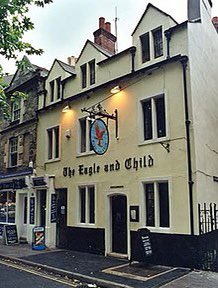
Ultimately, the British and American delegates formed separate institutes, with the Americans developing the Council on Foreign Relations in New York.
The British Institute of
Ultimately, the British and American delegates formed separate institutes, with the Americans developing the Council on Foreign Relations in New York.
The British Institute of
International Affairs, as it was then known, held its inaugural meeting, chaired by Robert Cecil, on 5 July 1920. In this, former Foreign Secretary Edward Grey moved the resolution calling the institute into existence:
"That an Institute be constituted for the study of
"That an Institute be constituted for the study of


International Questions, to be called the British Institute of International Affairs."[19]
These two, along with Arthur J. Balfour and John R. Clynes, became the first Presidents of the Institute, with Lionel Curtis and G. M. Gathorne–Hardy appointed joint Honorary Secretaries.
These two, along with Arthur J. Balfour and John R. Clynes, became the first Presidents of the Institute, with Lionel Curtis and G. M. Gathorne–Hardy appointed joint Honorary Secretaries.

St James's Square is the only square in the St James's district of the City of Westminster and is a garden square. It has predominantly Georgian and Neo-Georgian architecture. For its first two hundred or so years it was one of the three or four most fashionable residential


streets in London. It now has headquarters of a number of well-known businesses, including BP and Rio Tinto Group; four private members' clubs, the East India Club, the Naval and Military Club, the Canning Club, and the Army and Navy Club; the High Commission of Cyprus; the


London Library; and global think tank and peace-promoter Chatham House.
No. 1: BP head office. Also occupies the site of the former No. 2 and several demolished houses in Charles Street.
No. 4: The Naval and Military Club in a Georgian house of 1726–28 by Edward Shepherd.
No. 1: BP head office. Also occupies the site of the former No. 2 and several demolished houses in Charles Street.
No. 4: The Naval and Military Club in a Georgian house of 1726–28 by Edward Shepherd.
•No. 5: Present house by Matthew Brettingham 1748–9. Refronted in stone, porch added, and attic converted into a full storey in 1854. Now offices; former Libyan embassy, site of the 1984 Libyan Embassy Siege.
•(Under Demolition[6]) No. 6: Rio Tinto Group head office.
•(Under Demolition[6]) No. 6: Rio Tinto Group head office.
Modern. This building was the home of the Hervey family Nos. 9 to 11: Numbers 9, 10 and 11 were built in the 1730s on the site of the former Ormonde House, once the largest house in the square. Henry Flitcroft supervised number 10 and probably also numbers 9 and 11. No. 10 is


Chatham House, former home of British Prime Minister William Pitt the Elder and of the Earl and Countess of Blessington.
No. 31: Norfolk House – the London residence of the Dukes of Norfolk for many generations. Replaced between the wars with a neo-Georgian office building of
No. 31: Norfolk House – the London residence of the Dukes of Norfolk for many generations. Replaced between the wars with a neo-Georgian office building of
the same name which was U.S. General Dwight D. Eisenhower's headquarters during World War II, where Operation Torch and Operation Overlord were planned.
Norfolk House remained in the ownership of the Dukes of Norfolk until 1938 when it was pulled down and replaced by an office
Norfolk House remained in the ownership of the Dukes of Norfolk until 1938 when it was pulled down and replaced by an office
building. During the Second World War this building served as offices for senior officers from a variety of Allied armed forces, including the Canadian 1st Army and the Supreme Headquarters Allied Expeditionary Force under General Dwight D. Eisenhower.
After the war McNaughton
After the war McNaughton
chaired the United Nations Atomic Energy Commission from 1946 to 1948; served as Canada's Ambassador to the United Nations from 1948 to 1949; and chaired the Canadian Section of the International Joint Commission from 1950 to 1962. On 14 June 1946, the United States
representative to the Commission, Bernard Baruch, presented the Baruch Plan, wherein the United States (at the time the only state possessing atomic weapons) would destroy its atomic arsenal on the condition that the U.N. imposed controls on atomic development that would not be
subject to United Nations Security Council veto. These controls would allow only the peaceful use of atomic energy. The plan was passed by the Commission, but not agreed to by the Soviet Union who abstained on the proposal in the Security Council. Debate on the plan continued
into 1948, but by early 1947 it was clear that agreement was unlikely.
Camp X was established December 6, 1941 by the chief of British Security Co-ordination (BSC), Sir William Stephenson, a Canadian from Winnipeg, Manitoba and a close confidant of Winston Churchill and.
Camp X was established December 6, 1941 by the chief of British Security Co-ordination (BSC), Sir William Stephenson, a Canadian from Winnipeg, Manitoba and a close confidant of Winston Churchill and.
Franklin Delano Roosevelt On the day before the attack on Pearl Harbor and America's entry into the war, Camp X had opened for the purpose of training Allied agents from the Special Operations Executive (SOE), Federal Bureau of Investigation (FBI), and American Office of
Strategic Services (OSS) intended to be dropped behind enemy lines for clandestine missions as saboteurs and spies. Known by his wartime nickname "Guy," or his code name "Commandant Guy", following his specialised training at Camp X, Colonel Maurice Buckmaster, the SOE
commander, wrote in his file that Biéler was the best student SOE had.
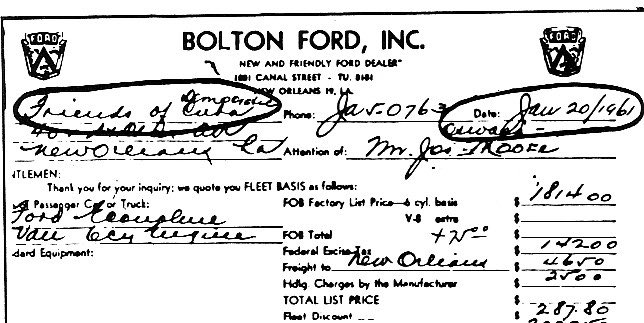
Apart from his war service, he was a corporate manager with the French branch of the Ford Motor Company, in the postwar years serving in Dagenham.
Apart from his war service, he was a corporate manager with the French branch of the Ford Motor Company, in the postwar years serving in Dagenham.



On 17 March 1941, Buckmaster was appointed to SOE's French section and following an attachment to T-Section, the Belgian Section, to assist Hardy Amies from July 1941, he was noted as a future head of F Section.[14] This section recruited agents from among those Frenchmen who


had not chosen to directly ally themselves with General Charles de Gaulle. A separate section of SOE, RF Section, worked with those members of the French Resistance who were clearly Gaullist in their loyalties. There was often considerable tension between F and RF sections.[
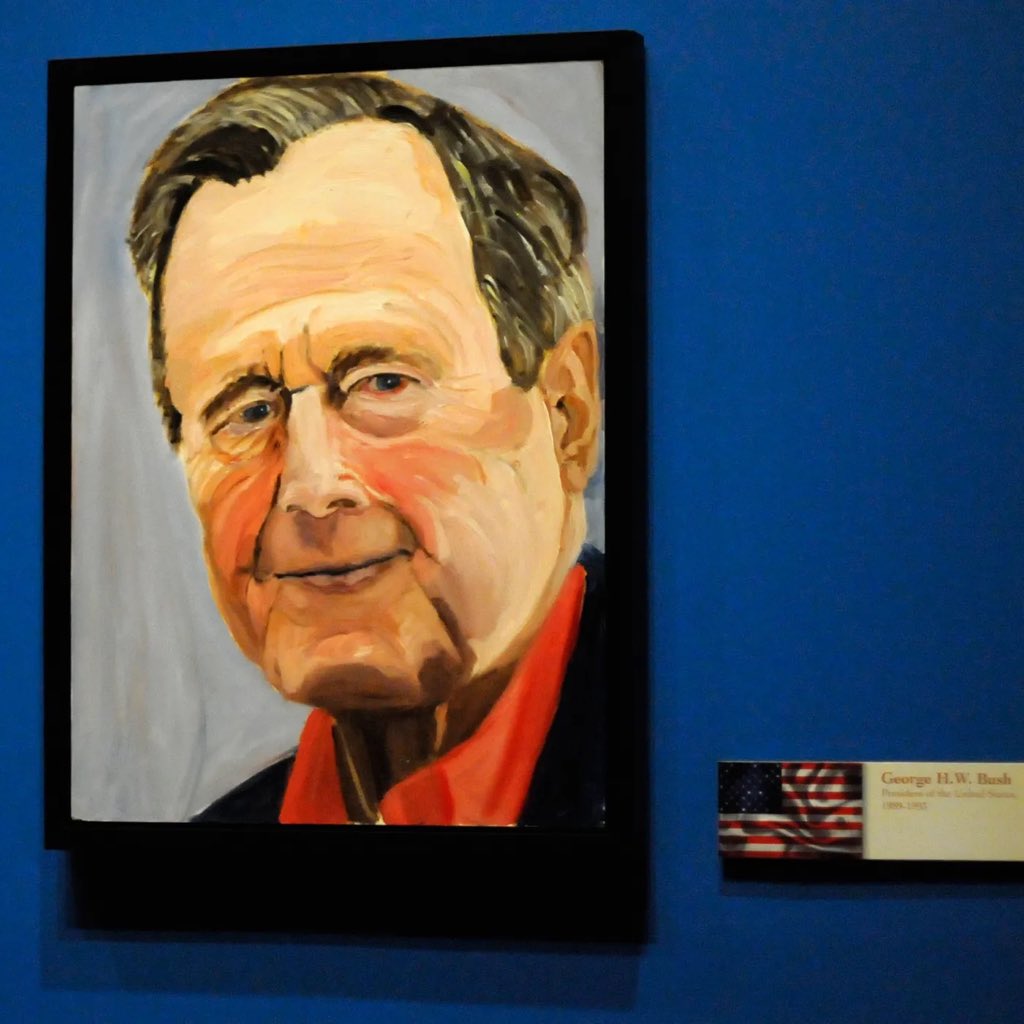
He co-founded the Safari Club, a "private intelligence group [which was] one of George H. W. Bush's many end-runs around congressional oversight of the American intelligence establishment and the locus of many of the worst features of the mammoth BCCI scandal."[2] The Club
involved a number of states, including Saudi Arabia (which financed the operations), Morocco, Egypt and Iran, and was intended to counter Soviet operations in the Middle East and Africa.
An interlocutor with many heads of state in the world and a close friend of King Hassan II of
An interlocutor with many heads of state in the world and a close friend of King Hassan II of
Morocco, he was elected member of the Academy of Morocco. After the election of Ronald Reagan to the presidency of the United States, he would have become, according to the American journalist Colley, one of his closest advisers doing business in Afghanistan.
Marenches wrote in
Marenches wrote in


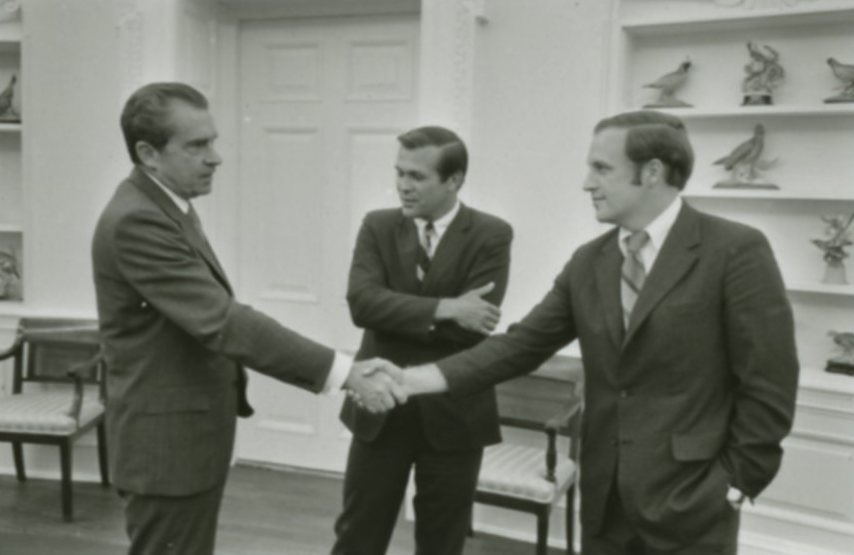
Dans le secret des princes that he predicted the Soviet invasion of Afghanistan to an American journalist, who immediately reported his conversation to US National Security Advisor Zbigniew Brzezinski and left for Kabul, "arriving in the same time as the Soviet tanks did".
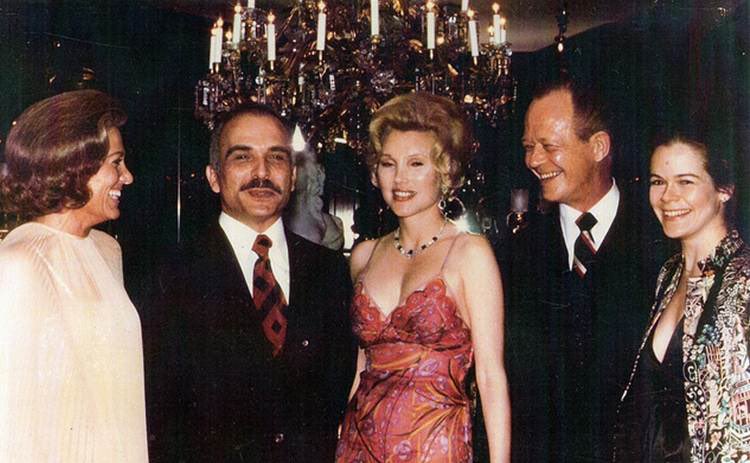
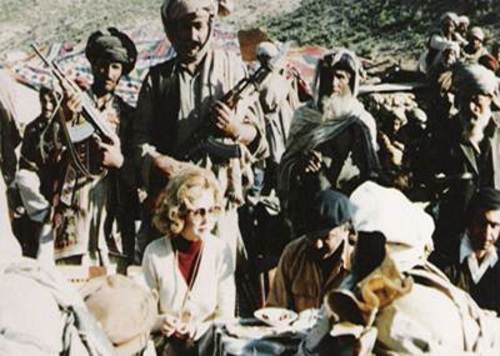

He also conceived Operation Moustique or Mosquito. In a meeting with Reagan at the White House, he suggested for the Drug Enforcement Administration to take all the drugs confiscated and supply them covertly to the Soviet army in Afghanistan. In a few months, he explained, they


would be demoralized, and their fighting ability would be gone. The Safari Club could not continue as it was when the 1978–1979 Iranian Revolution neutralized the Shah as an ally.[2] However, arrangements between the remaining powers continued on the same course. William Casey,


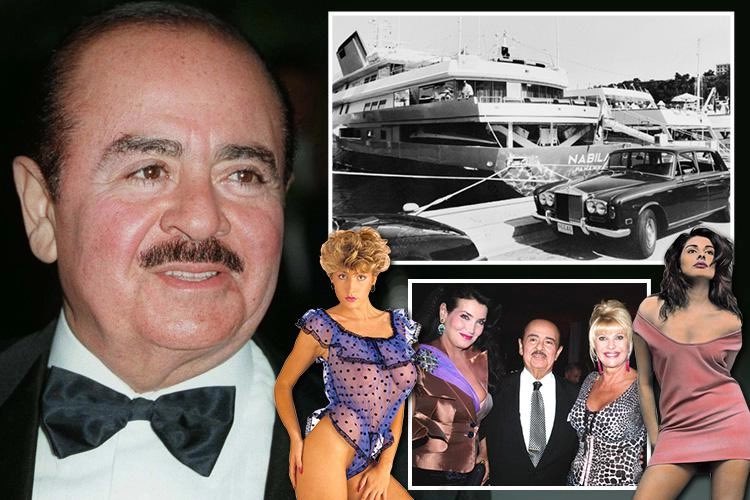
Ronald Reagan's campaign manager, succeeded Turner as director of the CIA. Casey took personal responsibility for maintaining contacts with Saudi intelligence, meeting monthly with Kamal Adham and then Prince Turki.[16] Some of the same actors were later connected to the


Iran–Contra affair. Peter Dale Scott has classified the Safari Club as part of the "second CIA" — an extension of the organization's reach maintained by an autonomous group of key agents. Thus even as Carter's new CIA director Stansfield Turner attempted to limit the scope of

the agency's operations, Shackley, his deputy Thomas Clines, and agent Edwin P. Wilson secretly maintained their connections with the Safari Club and the BCCI.

• • •
Missing some Tweet in this thread? You can try to
force a refresh